Last updated on June 11th, 2026
The Olympic National Park UNESCO World Heritage Site in Washington state offers visitors breathtaking mountain vistas, windswept coastal beaches, thundering waterfalls, shimmering lakes, and mysterious forests. It’s a place of both great natural beauty and fragile ecosystems.
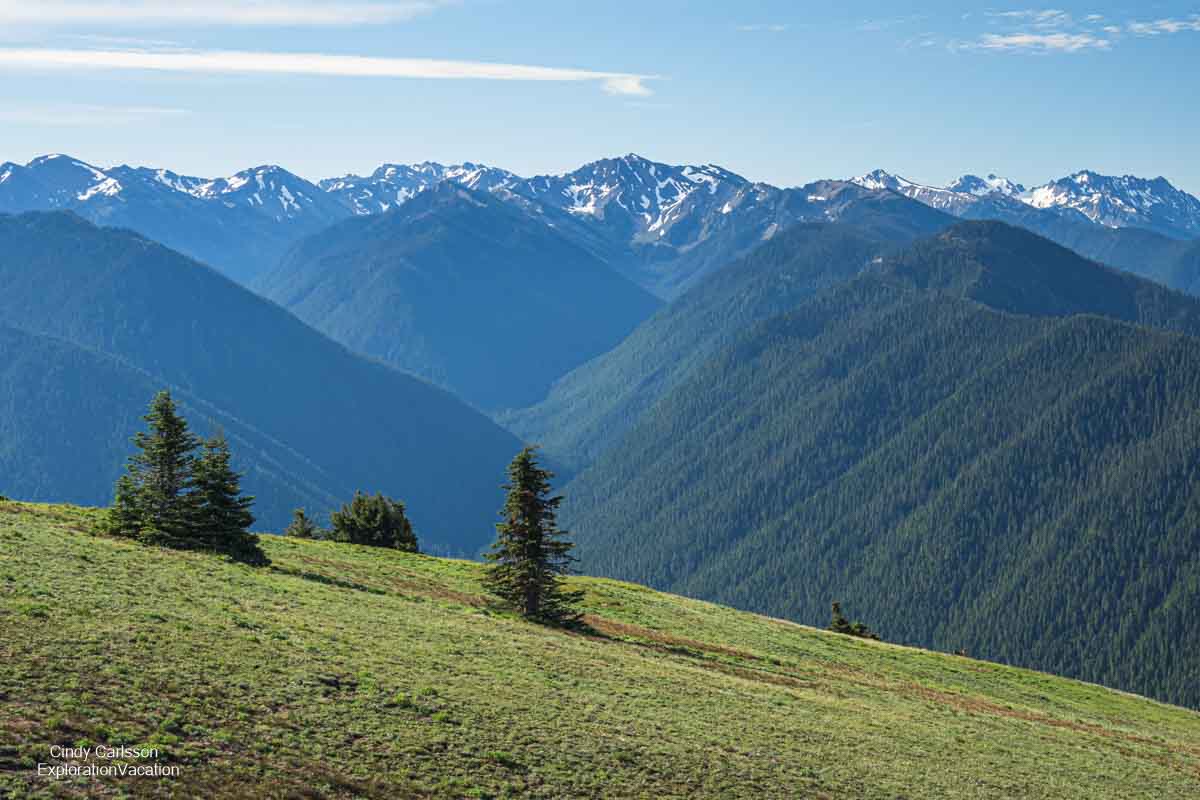
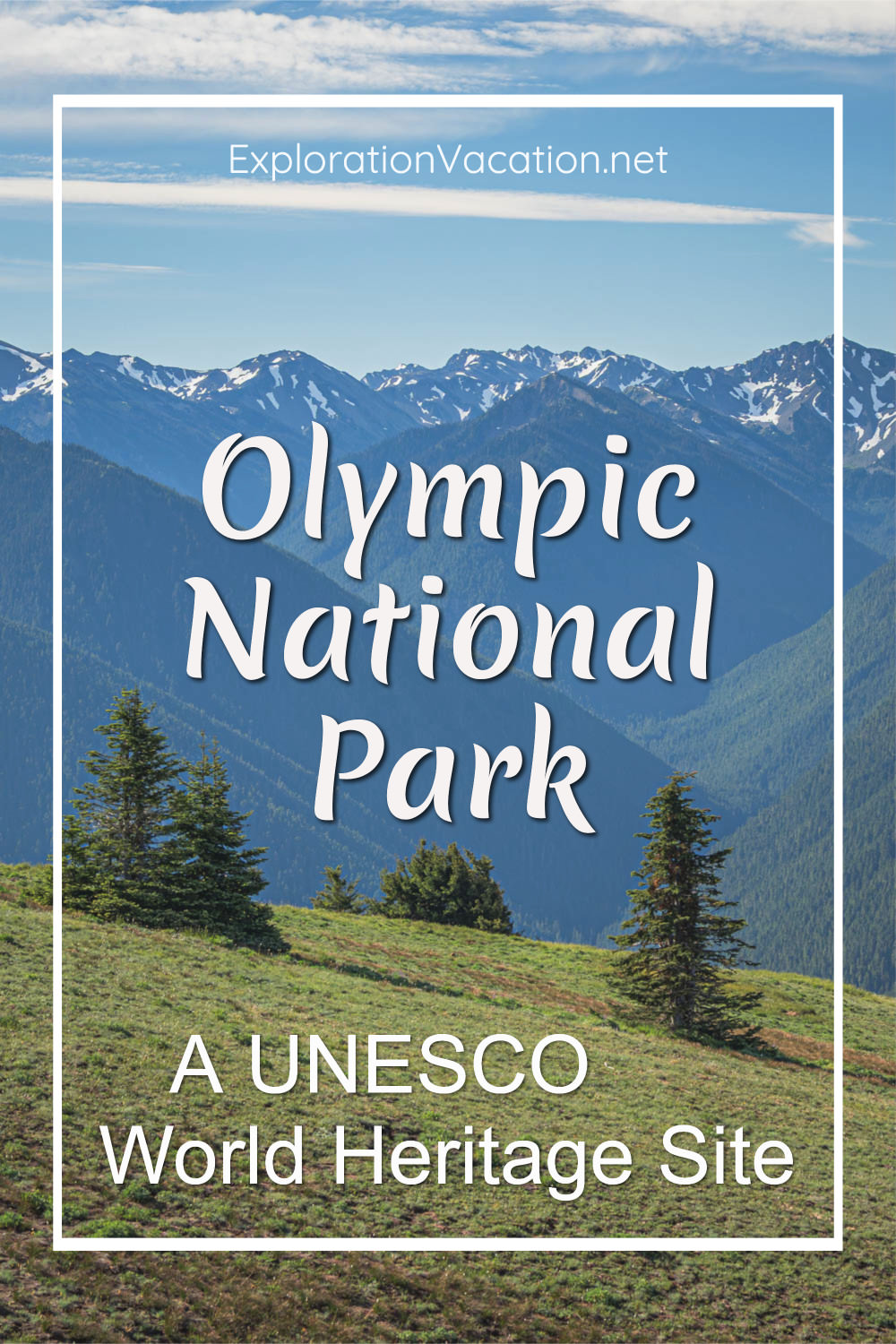
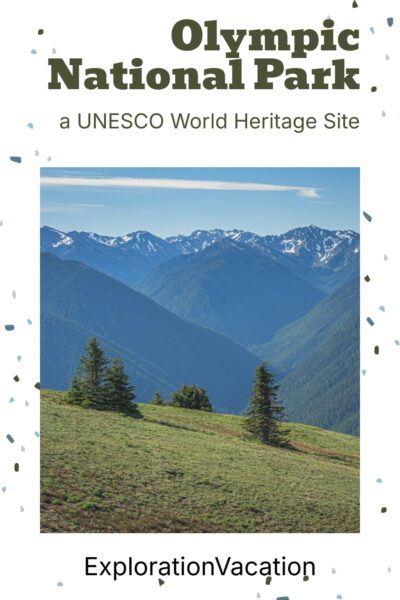
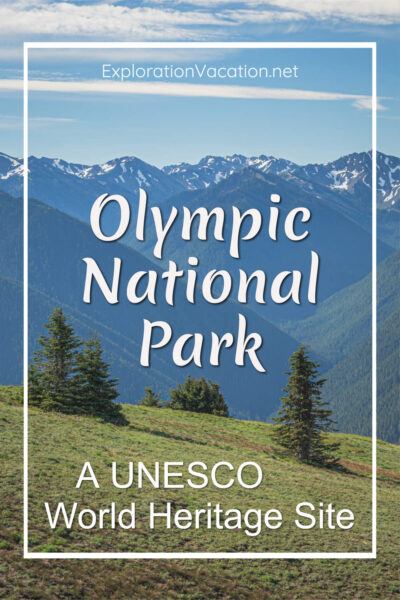
Alpine meadows and mountain views along Hurricane Ridge in Olympic National Park.
With breathtaking mountain vistas, windswept beaches, and hushed forests, visitors will find plenty to see and do. Given all that, it’s probably not surprising that Olympic National Park is not a place you can visit for a day or two and see all of it. Or even see all the highlights! I’ve visit on a couple of short multi-day trips over the years, but there’s still so much I haven’t seen.
This article has affiliate links. I use links to provide additional information, but a few also pay me a small amount if you use them to make a reservation or purchase. You don’t pay extra, but it helps keep this website running without intrusive ads. To learn more, see my policies and disclosures.
(A version of this post was first published on World Heritage Sites, a website with information to help you plan your World Heritage travels.)
What is Olympic National Park?
Located at the northwestern edge of the United States, Olympic National Park protects a variety of ecosystems. These range from beaches along the Pacific coast to old growth forest, temperate rain forests, alpine meadows, and towering mountain peaks. At about 1,400 square miles (3,626 sq km) in size, the park covers much of the Olympic Peninsula and Pacific coastline. It shares its boundaries with several other protected areas and is also designated as the Olympic Biosphere Reserve.
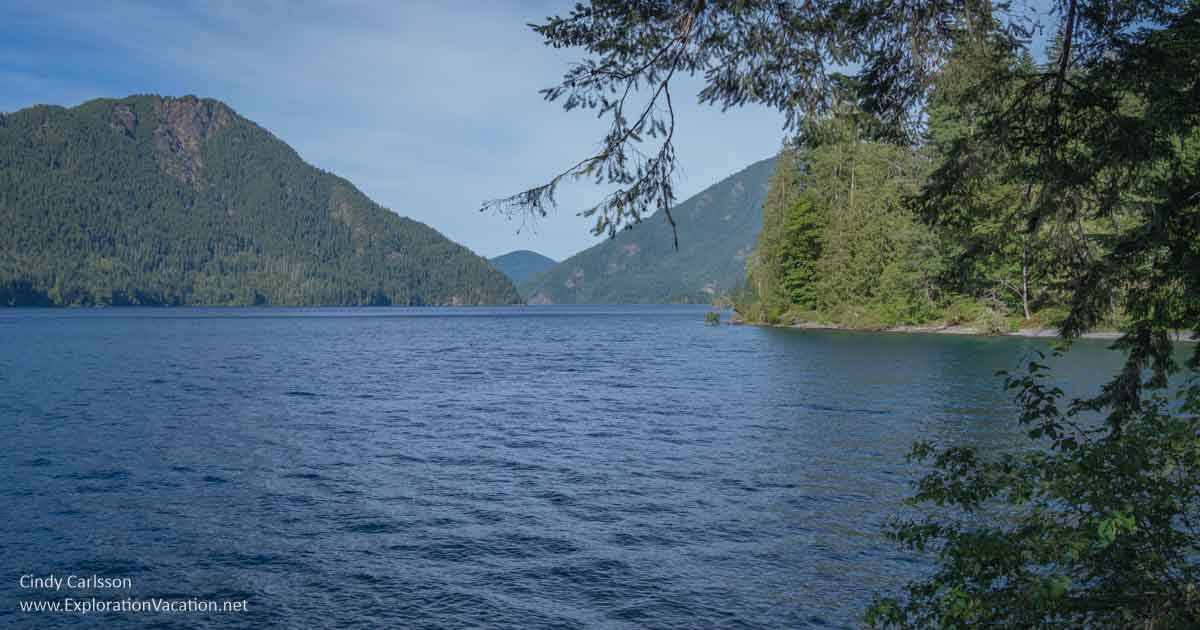
Get out on the water at Lake Crescent . . . or just enjoy the view from shore.
Why is Olympic National Park a UNESCO World Heritage Site?
While most visitors come to Olympic National Park for its wild beauty, the park’s UNESCO World Heritage designation is mostly due to the diversity and significance of the park’s ecosystems.
UNESCO explains:
The park’s varied topography from seashore to glacier, affected by high rainfall, has produced complex and varied vegetation zones, providing habitats of unmatched diversity on the Pacific coast. The coastal Olympic rain forest reaches its maximum development within the property and has a living standing biomass which may be the highest anywhere in the world. The park’s isolation has allowed the development of endemic wildlife, subspecies of trout, varieties of plants and unique fur coloration in mammals, indications of a separate course of evolution.”
What can you expect on a visit to Olympic National Park?
Olympic National Park has three general components: the mountains and old-growth forests accessed from the north and southeast, temperate rain forests accessed from the south and west, and the Pacific Coast beaches (and Ozette Lake) located to the west of the rest of the park.
No roads run all the way through this very large park. That means driving around the perimeter of the park and going into the park (and back out again) to see most of the features accessible via roadway. Since you cannot see the entire park in a day, the best plan is to focus on one region at a time.
Highlights of the Olympic National Park World Heritage Site generally fall into three groups: Northern forests and mountains, waterfalls, southwestern rain forests, and beaches.
Northern forests and mountains
From the north, visitors can easily get to four different areas noted for their forests, trout streams, mountains, and waterfalls.
Hurricane Ridge
Probably the park’s best-known feature, Hurricane Ridge its named for the fierce winds that blow through here. While it can get over 30 feet (10 m) of snow in a year, this is the most accessible mountain area in the park. That’s because a paved road lets you drive right up to alpine meadows and stunning mountain views.
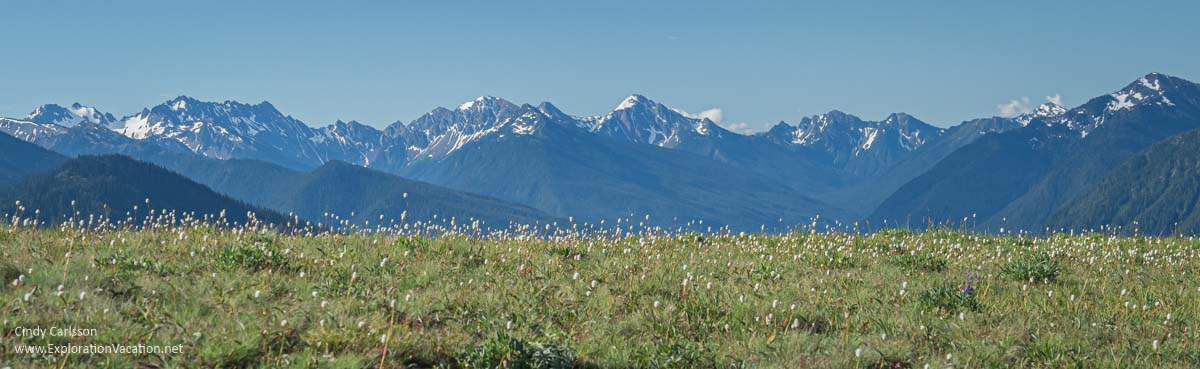
Alpine meadows lead to mountain views along Hurricane Ridge
But it isn’t a fast drive up. It’s a slow 20-mile (32 km) crawl through the forest with very few places to stop until you reach the parking area where the Hurricane Ridge Visitor Center was once located. (The historic Day Lodge burned down in spring 2023. Plans to replace it have stalled.)
From the parking area, a variety of trails (including a few easy ones) wind through forests and alpine meadows with stunning views of the mountains. Many trails are interconnected loops, which makes it relatively easy to find routes that work for everyone.
Spring and summer bring meadows are filled with wildflowers. You’re also likely to see a lot of deer in this area at any time of year. (They’ll let you take all the pictures you want as long as you don’t get too close!)
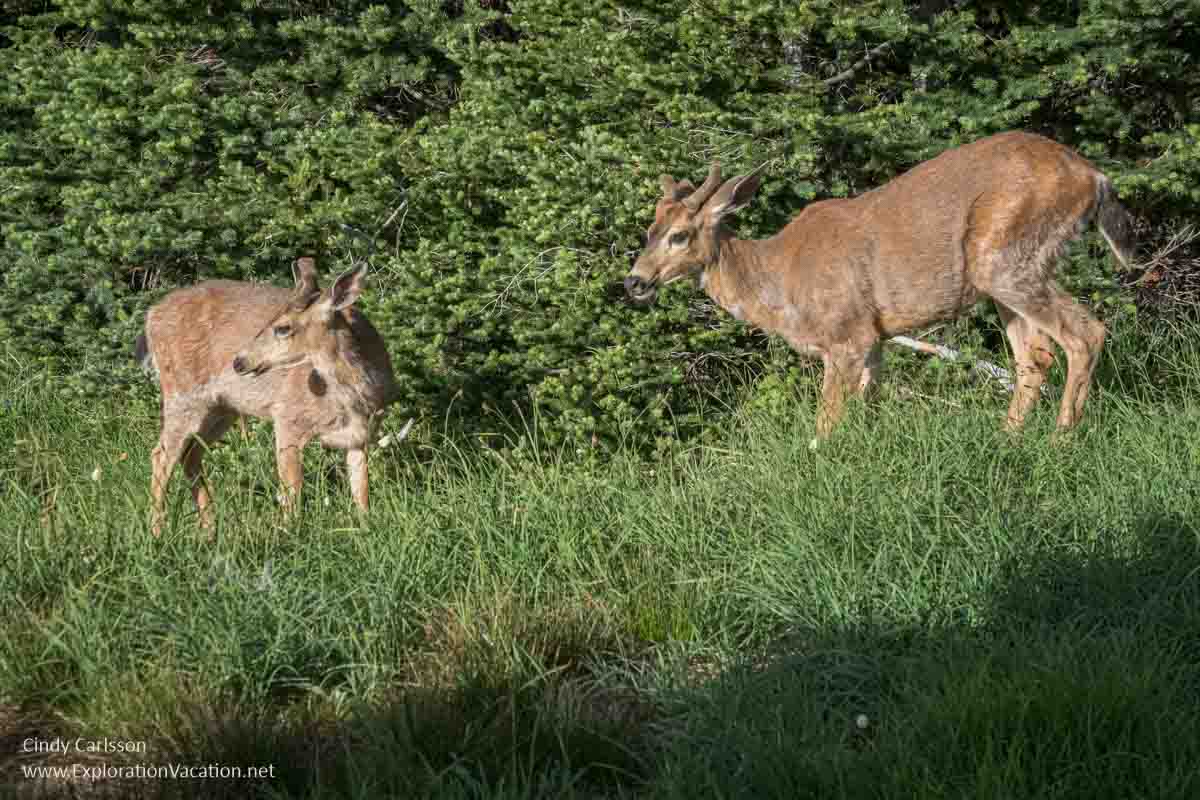
Deer along a trail at Hurricane Ridge.
Waterfalls
Waterfall fans will find three notable waterfalls in the northern part of Olympic National Park.
Madison Falls
One of the most picturesque is Madison Falls in the Elwha Valley. It’s easy to get to Madison Falls, but the valley beyond is currently accessible only by foot after the road washed out. The valley itself is undergoing a transformation as salmon return following the removal of dams on the Elwha River. This is another area where you’re likely to find a lot of wildlife.
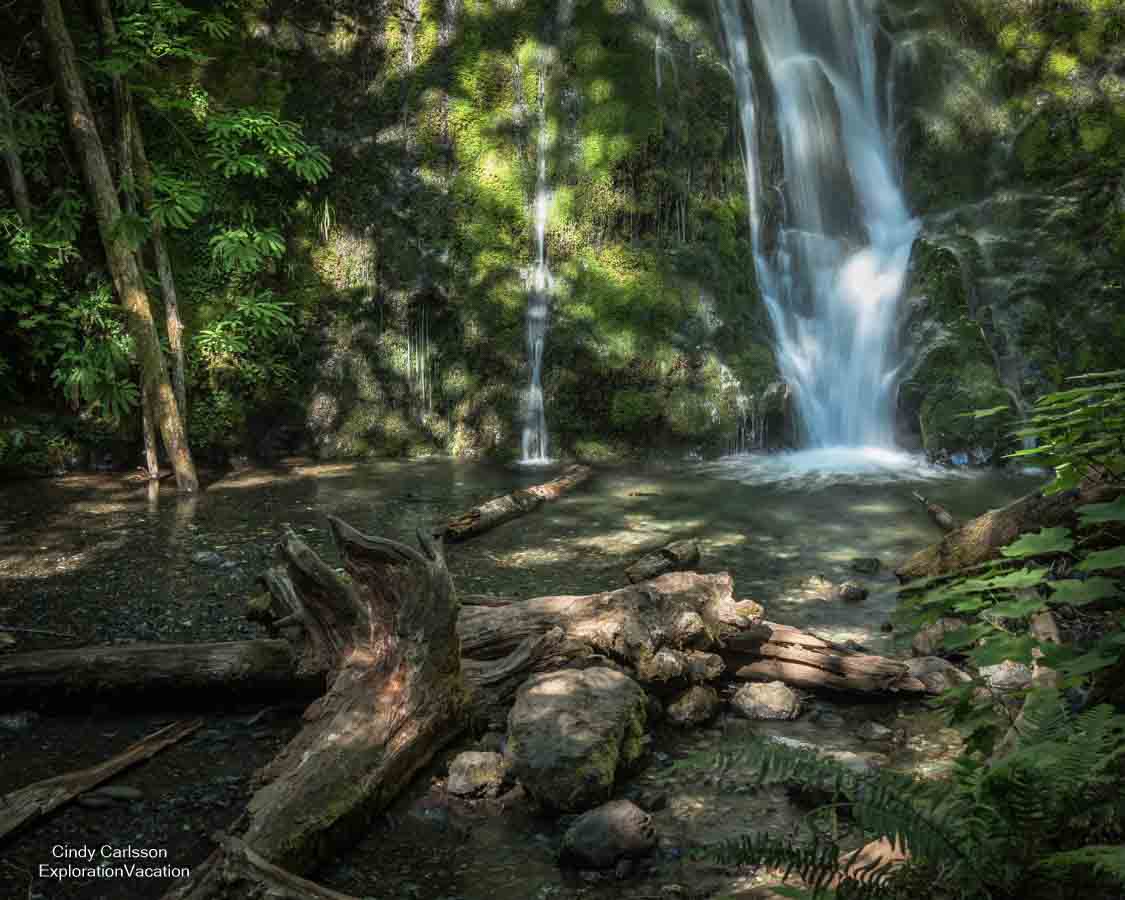
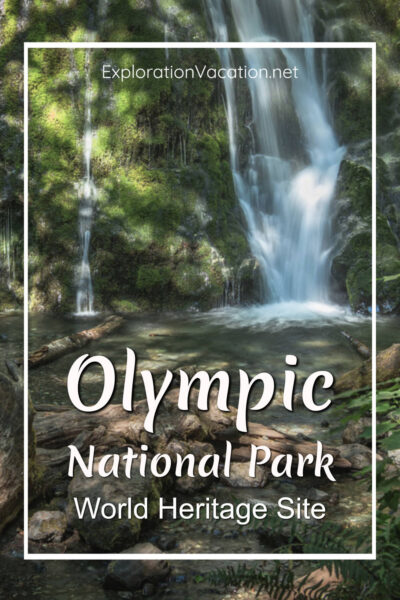
It’s an easy hike to pretty Madison Falls.
👉 Read more tips about the waterfalls in Olympic National Park
Sol Duc Falls
The most dramatic waterfall is, located far down the busy Sol Duc Valley. It’s a longer hike, but still easy. And it’s a lovely trail that winds through moss-draped forests. At the waterfall, a bridge and viewing platforms make it easy to observe the falls as it plunges into a narrow canyon.
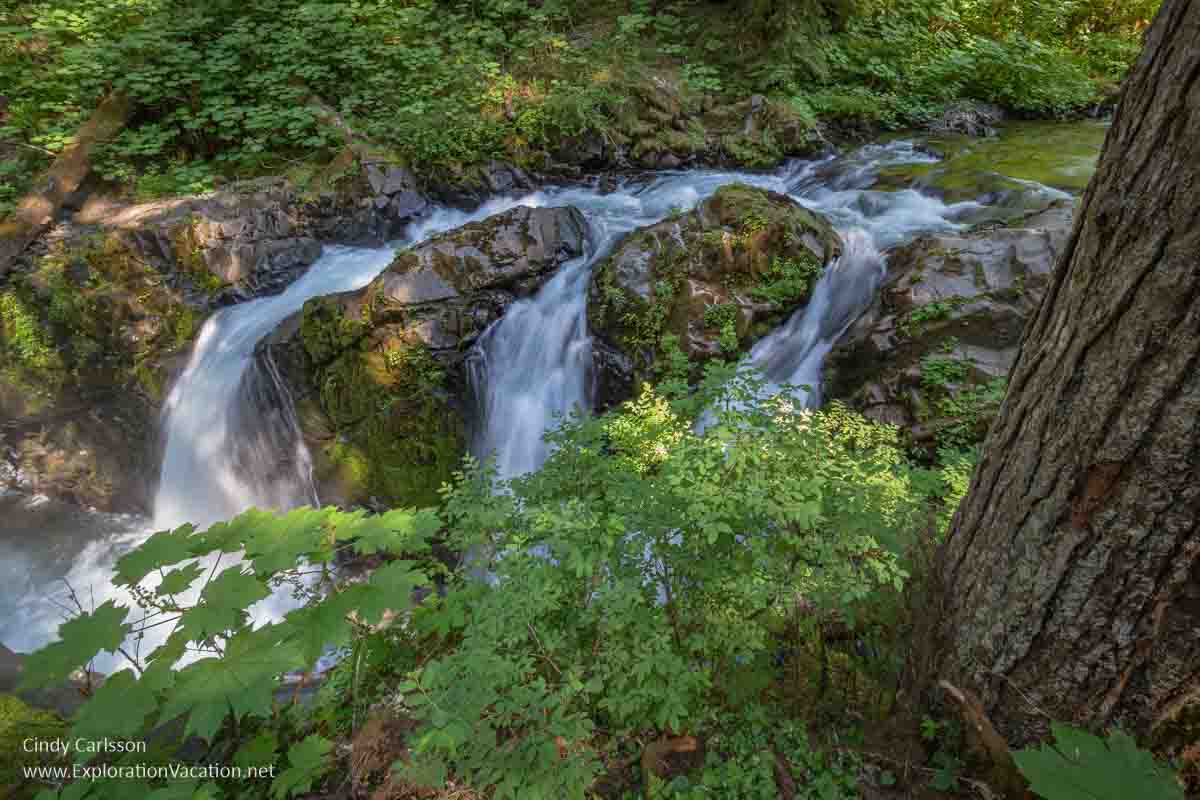
Looking down at Sol Duc Falls. (It’s bigger than it looks through a wide angle lens!)
Like the Elwha River, the Sol Duc is an important salmon stream. Unlike the Elwha area, the Sol Duc area has several lodging and camping options. It also has swimming and hot mineral pools available for use by both resort guests and day visitors.
Marymere Falls
Along the way you’ve undoubtedly noticed Lake Crescent. With several pull-outs along the highway, this is an easy photo stop as you head west. (It’s much more challenging to find a safe spot to stop if you are traveling the other direction.)
While the lake is best known for water recreation, the trailhead for picture-perfect 90-foot/27-meter Marymere Falls is also located not far from the lakeshore. There’s also a variety of lodging available in this area, making it a good base for exploring this part of the park.
👉 Read less
Southwestern rain forests
Intact temperate rain forests are rare. The fact that Olympic National Park retains these ecosystems is part of the reason it is a UNESCO World Heritage site. You can experience a temperate rain forest on a day visit to any of three areas: the Hoh Rain Forest, Queets Valley, and the Quinault Rain Forest.
Of these, the Hoh and Quinault areas are the easiest to access and offer the most services. Both have trails bursting with ferns and dripping with the moss that hangs on every surface. The short Hall of Mosses Trail in the Hoh Rain Forest gives visitors with limited time an outstanding look at this lush ecosystem. If you have more time, follow the Hoh River Trail. Or continue down to the Quinault Valley, where you can drive a scenic loop road along a lake and through the rainforest along the Quinault River. This gorgeous area also has hiking trails of various lengths, as well as a few historic sites.
Beaches
Separated from the rest of Olympic National Park, the Pacific coast is lined with wild beaches, most of which have sea stacks, enormous piles of driftwood, a wide variety of birds and wildlife, and tidepools filled with odd sea creatures – all backed by coastal forests. All of these are part of both the national park and the Olympic Coast National Marine Sanctuary. A few are on or accessed through tribal land.
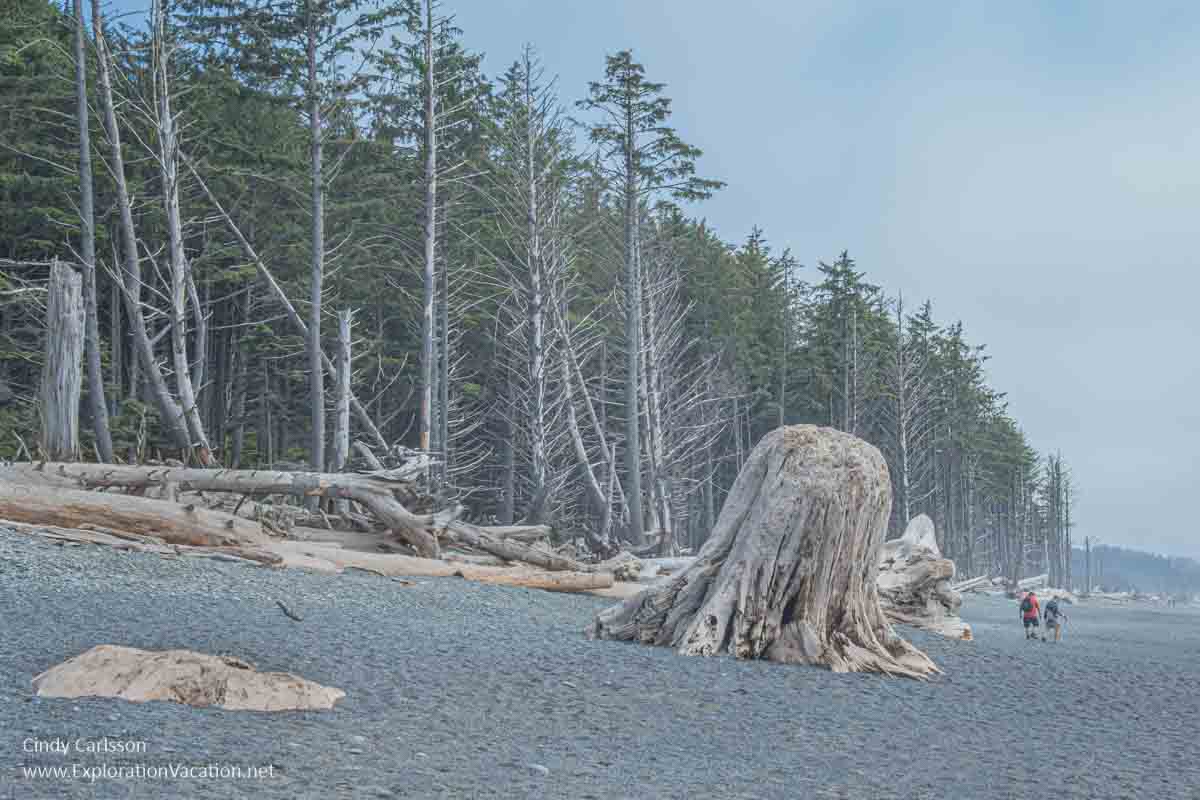
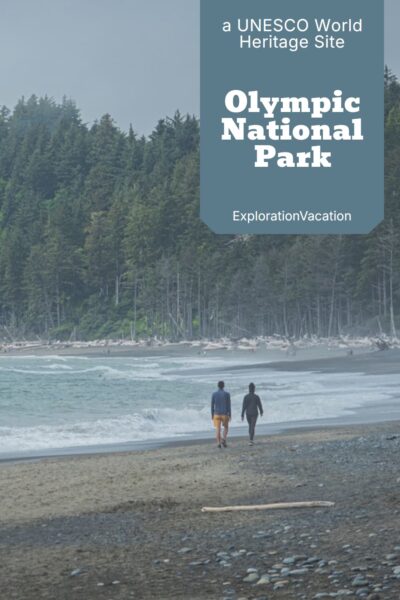
A foggy day along Rialto Beach.
Coming from the south, the Kalaloch area has a variety of mostly sand beaches numbered 1-4. All have sea stacks and most have tide pools. Beach 1 has a nice trail that wanders through spruce trees with mysterious burls (giant lumps) on their trunks. Beach 4 is said to have great tide pools.
Just beyond, Ruby Beach is a gem with a broad stretch of sand, towering sea stacks, tidepools, and well-weathered driftwood tree trunks. Like many Pacific coast beaches, this isn’t a great swimming beach, as it is cold and has dangerous riptides, but at low tide it has a wonderful sandbar. It’s also a beach that seems particularly prone to fog.
You’ll find First, Second, and Third beaches further up the coast just south of La Push. First Beach is part of the Quileute Indian Reservation, and its convenient parking makes it popular with both visitors and residents. Second and Third beaches require a bit of a hike, but the trade-off is sharing them with fewer people. Note that while all three beaches are near each other, you can’t walk between them.
Rialto Beach is located just north of La Push. One of the most popular beaches in the Olympic National Park, it features a mostly rocky beach, absolutely enormous piles of driftwood, many birds, and a few seals. But it’s best known for Hole in the Wall, a rock formation that is accessible when the tide is low. You’ll also find tide pools in the Hole in the Wall area.
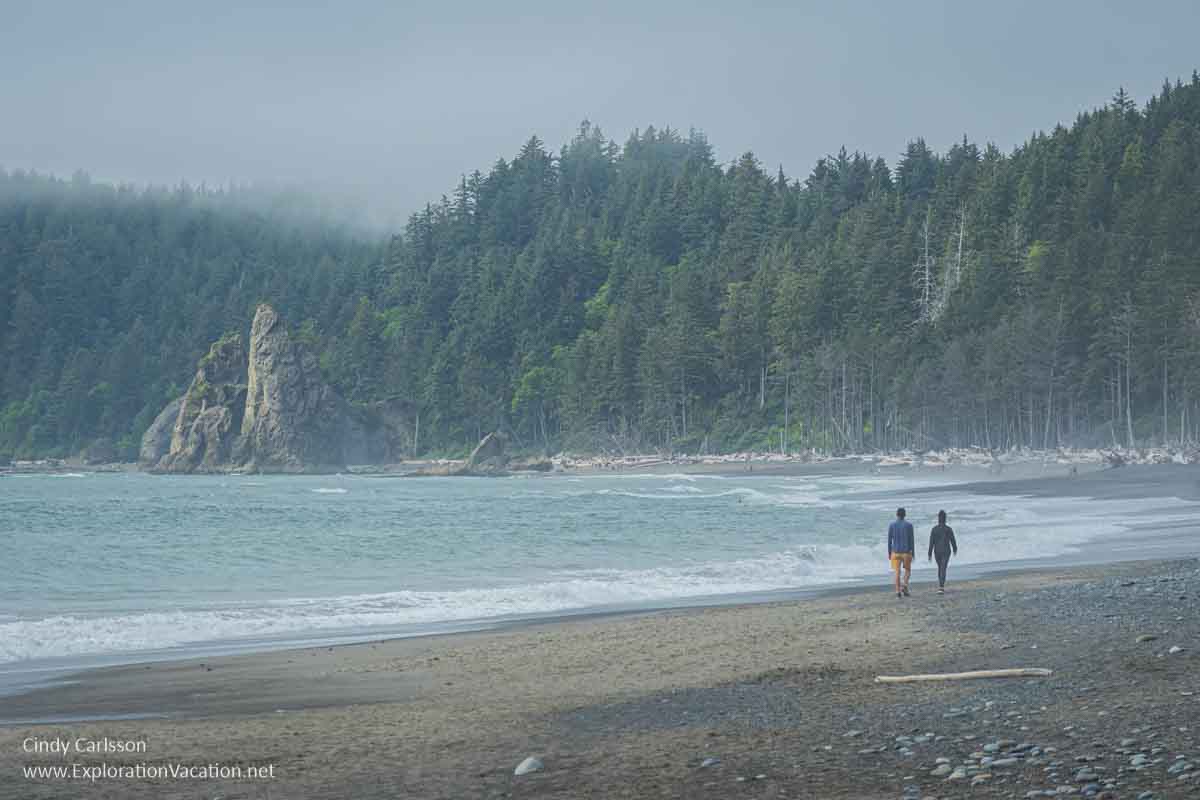
Rialto Beach as the Hole in the Wall formation emerges from the fog.
Of course, there are more beaches, but these are some of the best and easiest to reach.
Is Olympic National Park worth visiting?
Olympic National Park is definitely worth visiting. However, for many travelers, it may not belong at the top of their World Heritage bucket list.
Despite its proximity to Seattle, this isn’t a park where you can pop over on a quick day trip. At least, not if you want to see much. The National Park Service suggests visiting Hurricane Ridge, Rialto Beach, and the Hoh Rain Forest (three of the park’s signature attractions) in one very long day. And that is doable, but it will be a very, very long day. And you’ll only get to spend a very brief amount of time at each spot. . . if you get to them at all. Parking limits mean both Hurricane Ridge and the Hoh Rain Forest often require waiting in a very, very long line of cars before you can even drive into the site.
Olympic National Park is unique not for having the best example of any specific feature, but for having so much variety so close together. But you can see those individual elements in other places; places that may be easier to get to and more satisfying to explore if you are short on time.
So, while Olympic National Park is a wonderful place, casual visitors may have a better experience seeing similar features and wildlife in other North American UNESCO World Heritage sites, including Waterton-Glacier International Peace Park, Redwood national and state parks, and the Canadian Rocky Mountain Parks, as well as at other state and provincial parks.
None of this means Olympic National Park isn’t worth visiting. (I’ve been there twice and have seen most of the park’s main features at least once, but will return again.) The backcountry hiking trails are said to offer stunning scenery, and a walk through the Hoh Rain Forest or along Rialto Beach is fabulous. But it’s not really a destination for anyone in a hurry.
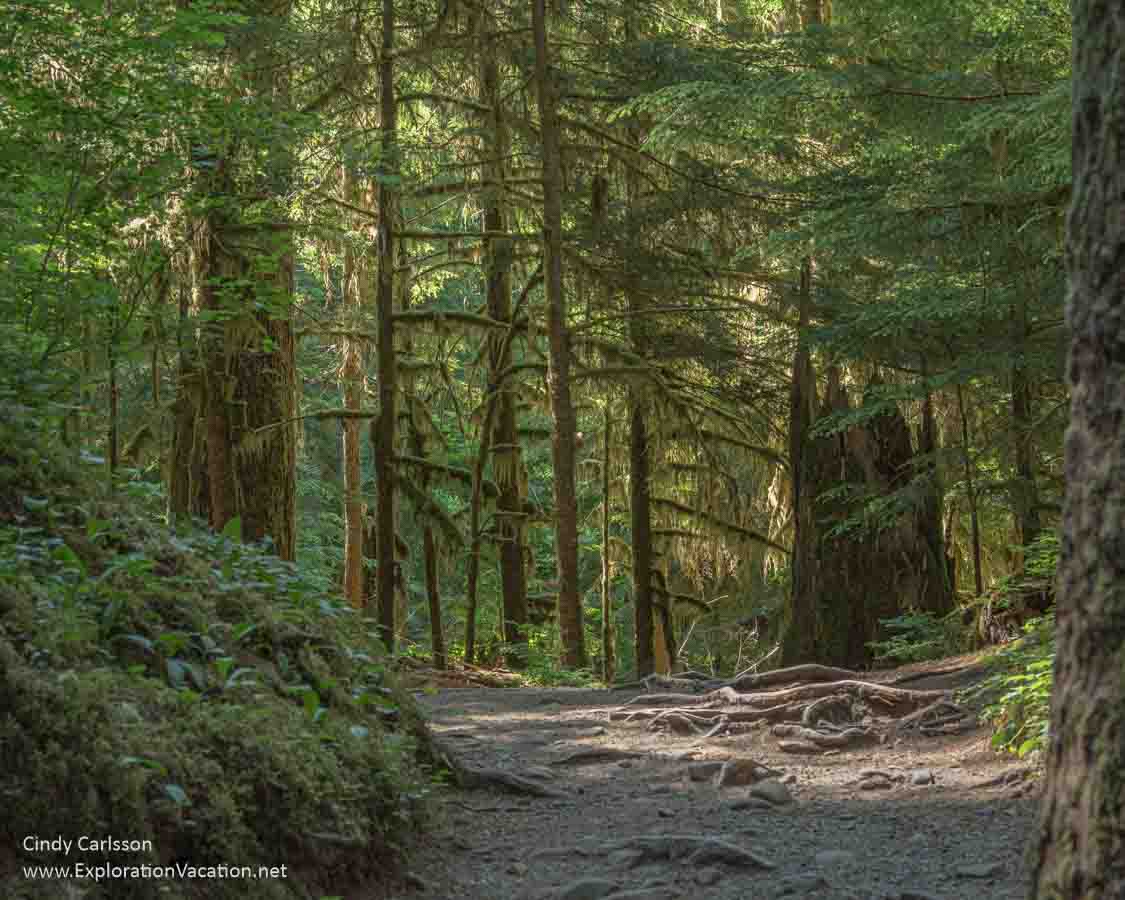
Hiking trail through Sol Duc.
What sorts of travelers would like Olympic National Park?
While it has a few historic and cultural sites, Olympic National Park is a destination for nature lovers, nature photographers, and outdoor enthusiasts. (Particularly hikers and anglers.)
Plan your trip to the Olympic National Park World Heritage Site
Where is Olympic National Park?
While the Olympic National Park World Heritage Site covers most of Washington’s Olympic Peninsula, it doesn’t cover a contiguous area. The bulk of the park is located in the center of the peninsula, while the beaches huddle separately along the Pacific coast. That means there are many access points into the park – once you get to the peninsula.
Getting to the park
The ideal way to visit Olympic National Park is as a road trip. But you have a few options if you don’t want to drive.
Getting to the park if you have a car
If you’re flying into the area through the Seattle-Tacoma International Airport, pick up your rental car (Book it here!) and head south to enter the park at Quinault (2½ hours), or head north along the park’s eastern boundary to see some less-visited areas on that side of the park.
Otherwise, continue up and around to the visitor center in Port Angeles (also 2½ hours) or Hurricane Ridge (3 hours) on the north. Although it looks longer to get to the northern part of the park by driving south from the airport, it’s faster than driving up to Seattle first.
👉 Read more about getting to Olympic National Park even if you don't have a car
If you are already in Seattle, drive time to the Port Angeles visitor center is about the same (depending on the time of day) whether you take the same loop south or head north and pick up any number of ferries out of Seattle or the Kingston Ferry out of Edmonds. The ferry schedule will determine whether or not it takes longer to get there. But it’s more fun than driving, and you’ll get to see some lovely towns along the way.
From Canada, it’s cheap and easy to take the ferry from Victoria, British Columbia, to Port Angeles. It’s also fast, at just 90 minutes.
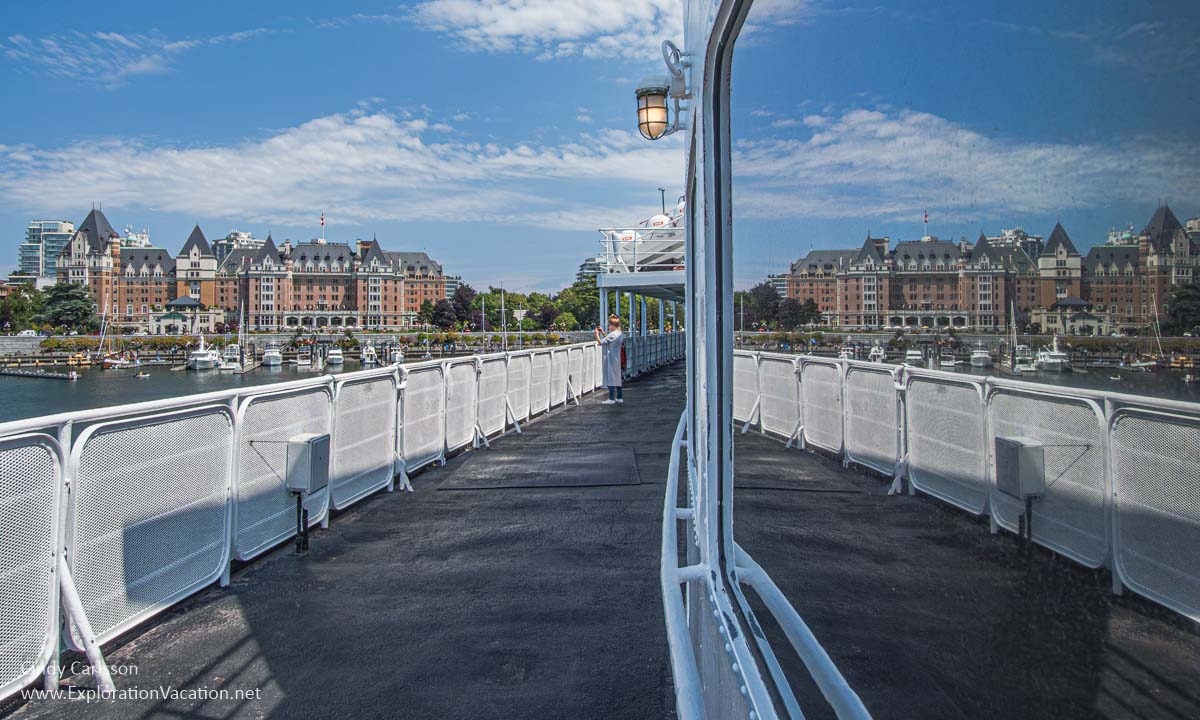
Victoria from the ferry.
From Portland, Oregon, the Quinault area is a 3-4-hour drive. It’s about 4 hours to go straight to Port Angeles.
Get to the park by bus
Your options are rather limited if you want to visit Olympic National Park, but don’t want to drive. Buses run from Seattle to Port Angeles. Once there, the Clallam Transit System runs both the Hurricane Ridge Shuttle and regular buses that serve destinations in and around the northern part of the park. Several companies also run hiker shuttles to other areas in the park.
Get to the park on a tour
Various private and small group tours are available. Most leave from Seattle, although a few are out of Port Angeles. These usually take 9-12 hours and include a few sites in the northern part of the park. A number of local companies offer versions of these tours.
You can get a sense of what is available on Viator, which mostly allows you to search for tours from either Port Angeles or Seattle, or GetYourGuide, which mixes them together. But book directly with the individual tour operator when possible.
👉 Read less
Choose your lodging to maximize your time
To spend less time driving and more time enjoying the park, stay in different parts of the peninsula during your stay:
- Port Angeles and Lake Crescent offer good access to northern areas of the park and northerly coastal areas. Check your options on Booking.com.
- Forks offers the best access to the western part of the park, including coastal areas and the Hoh Rain Forest. Check options on Booking.com. (Book early. Forks books up quickly because it gets both park visitors and Twilight fans.)
- Kalaloch and the Quinault area have good access to the southern coastal beaches and the Quinault area, however, lodging options here are very limited unless you are staying in the park..
- Check any and all areas on Expedia. (Use map view to search a specific area.)
Four lodges are also located in the park.
Camping is available within the park.
The National Park Service has some rather optimistic suggestions for what you MAY be able to see in a half-day, one day, or over multiple days. They also have travel time estimates and a useful map showing where park highlights are located in relation to each other.
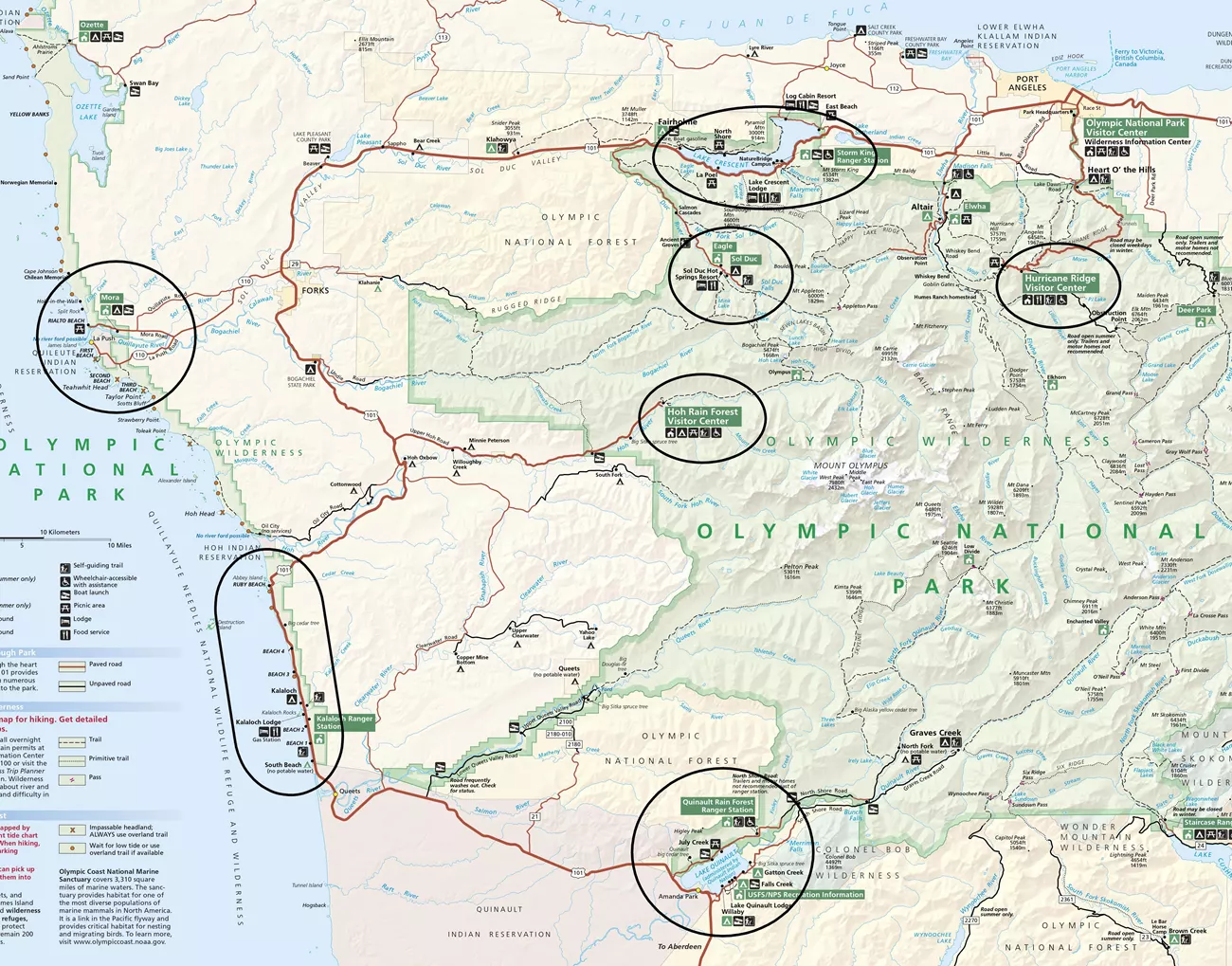
The Olympic Peninsula tourist site also has some suggested itineraries that seem more realistic. These include sites both in and outside the park.
Tips for visiting Olympic National Park
Allow far more time than you think you’ll need just to get from place to place within the park.
Weather on the Olympic Peninsula can vary considerably from place to place and can change quickly. The park gets up to 170 inches/432 centimeters of rain along the coast and western valleys, but (usually) little of that falls in summer. Still, even in summer, always check the weather for the part of the park you plan to visit before setting out for the day. And be aware that snow is possible at Hurricane Ridge even in summer and weather can change quickly anywhere in the park.
It’s illegal to pick flowers or take shells, rocks, driftwood, pine cones, or other natural materials from anywhere in the park. Likewise, it’s illegal to touch any wildlife, including critters living in tidepools.
You’ll be traveling through tribal land as you travel around the park. If you stop to use tribal parks and beaches, an additional fee or permit is usually required. Please respect tribal rules and customs as you travel.
A park pass is required to visit most areas of the park. Buy it online before you go. They aren’t available in all locations once you get to the park.
Due to the fire that destroyed the Hurricane Ridge Day Lodge, access to Hurricane Ridge is likely to be severely limited for some time to come. Even before the fire, limited parking there and at the Hoh Rain Forest often resulted in very long waits to drive into these areas during the peak summer season. Early morning offers the best chance of getting into these areas. (You can drive up to Hurricane Ridge before the “gate” opens at 7 am.)
- Really, really want to visit Hurricane Ridge but don’t want to be up at the crack of dawn? Take the shuttle from Port Angeles. It operates spring through early fall, parking is free, and it continues taking people up to Hurricane Ridge even when the road closes to private vehicles. A winter shuttle is also available on Saturdays from December through March.
Expect to climb over at least some driftwood to reach most beaches. And check the tide table for the Strait of Juan de Fuca before heading out on a beach walk or tide pooling.
Even many short trails in Olympic National Park seem to be unusually poorly marked. Have a map whenever you leave your car.
Cellphone service is not available in many areas in and around the park. Another good reason to keep a map with you.
Accessibility varies within Olympic National Park. Check the NPS website for accessibility information in specific areas in the park.]
Other things to do near Olympic National Park
While the national park covers much of the Olympic Peninsula, there are other interesting things to see and do in the area. Here’s a few of my favorites.
Cape Flattery
Located on Makah tribal lands, Cape Flattery is the furthest northwest tip of the lower 48 states. (It’s where the Strait of Juan de Fuca meets the Pacific.) An easy hike through the forest leads to overlooks with views of rocky cliffs, sea lions sunning themselves near the water, and the Tatoosh Island Lighthouse.
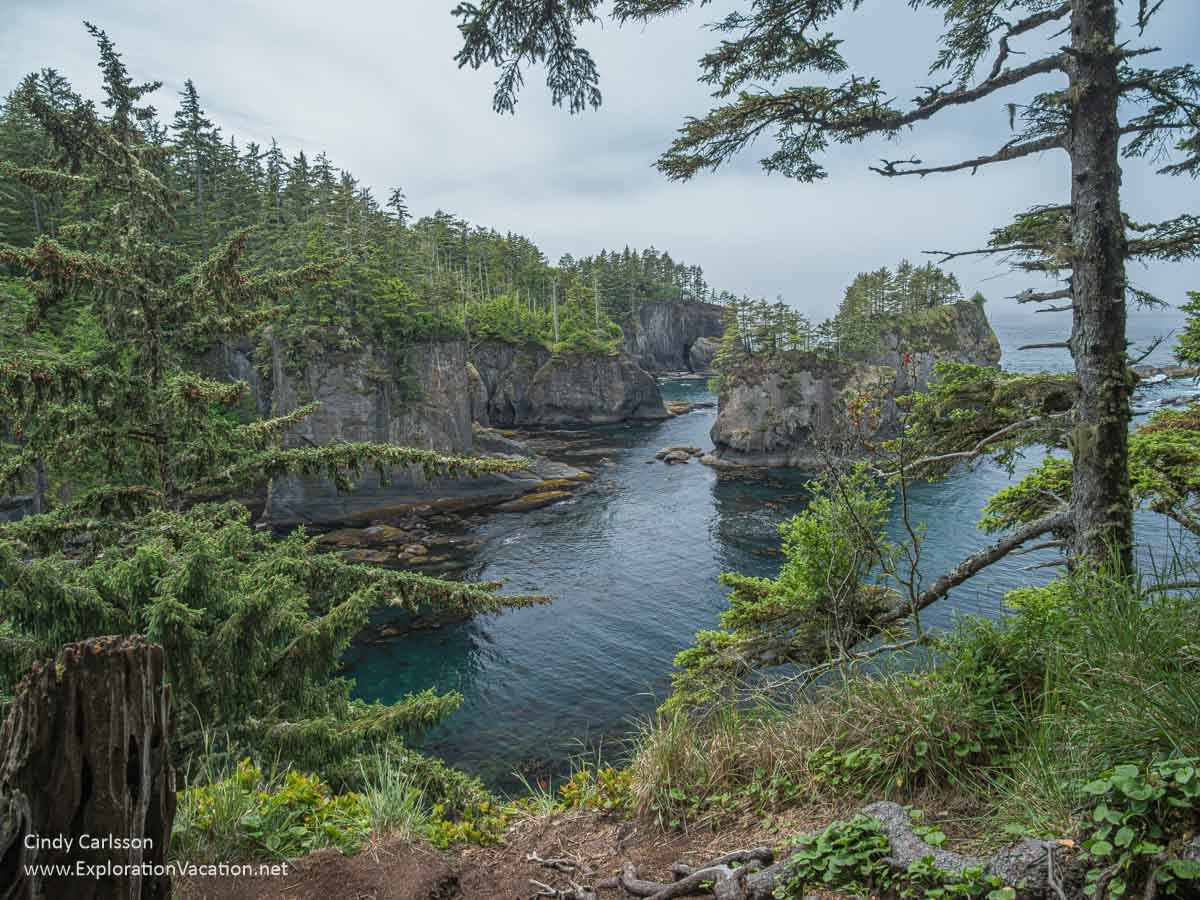
Beautiful Cape Flattery.
Be sure to get your permit at the Makah Tribal Museum or Washburn’s grocery before you head out to the start your hike.
Port Townsend
A Victorian-era port city, Port Townsend oozes charm with historic buildings, art, and more. It’s a great city for wandering, or head over to the Jefferson County Historical Society to learn more about the city and its history.
Fort Worden Historical State Park, established in 1891 to defend Puget Sound, is also in Port Townsend. It includes historic buildings, abandoned artillery batteries, a museum, the Point Wilson Lighthouse, a woodworking school, and a marine science center – as well as sandy beaches below the bluffs.
Take the ferry to Canada
Victoria on British Columbia’s Vancouver Island (not to be confused with the city of Vancouver) is a pretty town that still feels a bit like old England, but with plenty of of First Nations and only-in-Canada aspects. Don’t want to spend time in a city no matter how charming it is? There’s a whole island to explore, including stunning Butchart Gardens not far outside the city.
And it’s only a short ferry trip from Port Angeles.
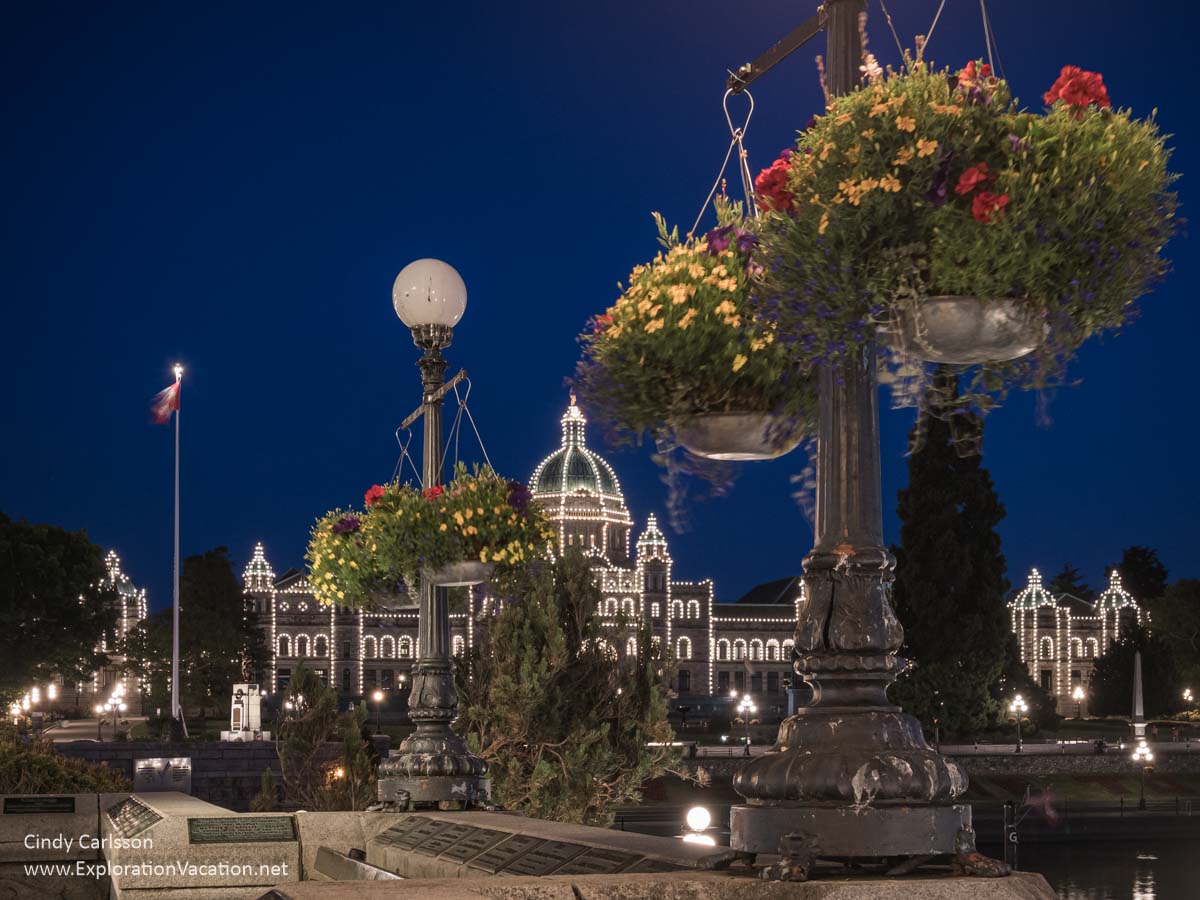
The parliament building near the harbor in Victoria.
Just make sure you bring your passport!
For more information on Olympic National Park
For more information about the Olympic National Park UNESCO World Heritage site, its opening hours and admission fees, see the Olympic National Park website or use the NPS app. (As of spring 2025, the app has more up-to-date travel information than the website.)
Native peoples have lived in the lands now in Olympic National Park for thousands of years. Today, eight tribes have traditional associations to those lands: The Hoh, Jamestown S’Klallam, Lower Elwha Klallam, Makah, Port Gamble S’Klallam, Quileute, Quinault, and Skokomish. Despite the changes wrought upon them, area tribes work to sustain their traditions. The National Park Service also works with local tribes to protect not only the amazing natural resources of the area, but also cultural connections with park land and resources. (Adapted from the NPS statement.)