Last updated on March 28th, 2026
A quiet gallery devoted to Canadian Inuit and First Nations art is tucked inside the stark towers of Mies van der Rohe’s Toronto-Dominion Center (the TD Center) in downtown Toronto, Canada.
Now called the TD Gallery of Indigenous Art (formerly the TD Gallery of Inuit Art), step inside to see classic Inuit sculpture, as well as more recent work by a variety of Inuit and other indigenous Canadian artists. It’s a great place to relax and enjoy some art.
And it’s free.
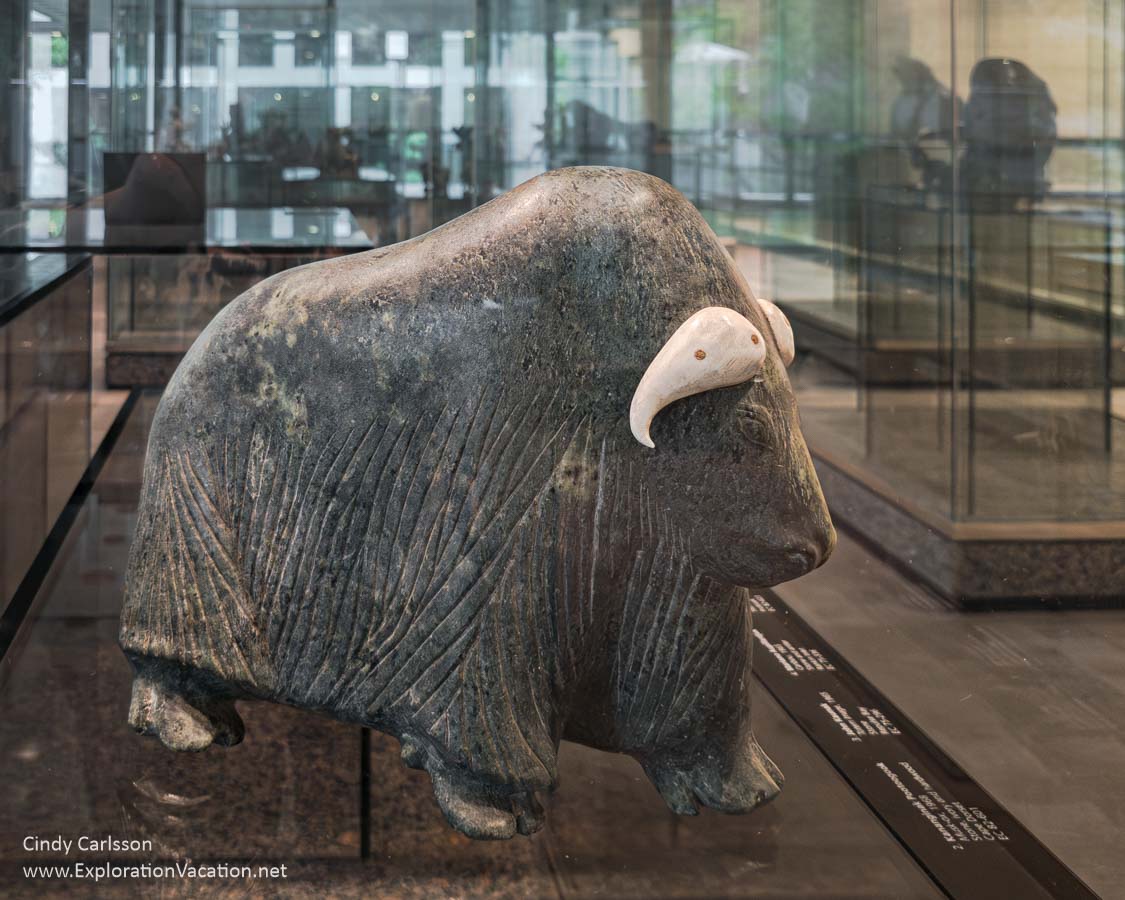
The gallery includes work by famous Inuit artists, like this musk ox carved by Kananginak Pootoogook.
Here’s a peek at what you’ll see at the TD indigenous art gallery and tips for visiting.
This story may have affiliate links. I use links to provide additional information, but a few also pay me a small amount if you use them to make a reservation or purchase. To learn more, see my policies and disclosures.
A range of indigenous Canadian art, but mostly Inuit
Inuit art is just one part of TD’s indigenous art collection. However, it’s the oldest part of the collection and still makes up the vast majority of the art displayed in the indigenous gallery at the TD Center in Toronto.
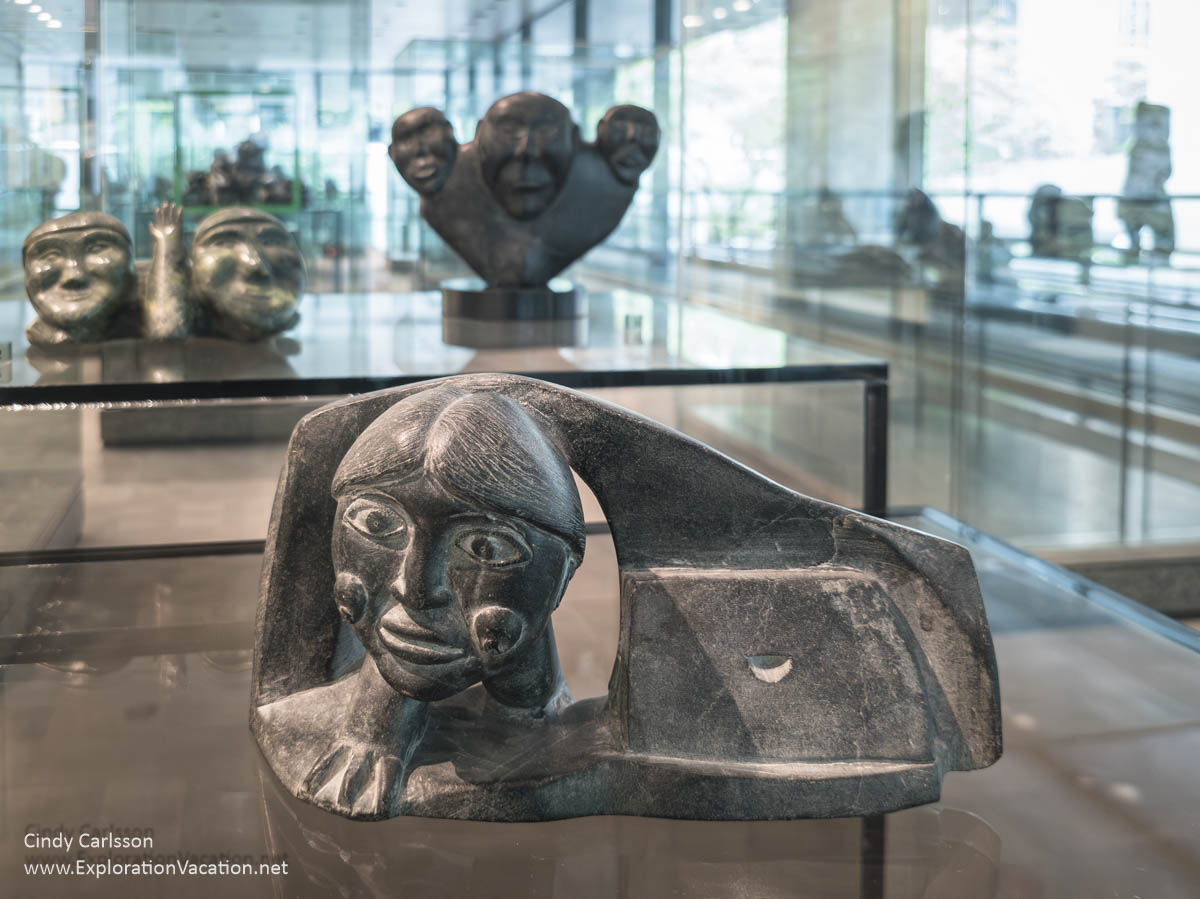
Inuit artist Davidialuk Alasua Amittu’s “Kajutoyak” (Female Spirit) from 1959.
Most of the Inuit art on display was produced between the end of World War II and 1967. It was part of an large Inuit collection created to celebrate the bank’s centennial in 1967.
While the bank still collects work by Inuit artists, over time the focus expanded to include a wide variety of Indigenous Canadian art. In doing so, TD aims to “support the historical and ongoing cultural contributions of Indigenous artists in Canada” and “serve as a catalyst for conversation.” (TD Gallery of Indigenous Art Self-Guided Tour PDF) To accomplish this, pieces from this large collection of indigenous art are displayed in TD facilities where the local community can enjoy it.
First Nations and Inuit art share the main floor
When you walk into TD’s South Tower, you enter a vast lobby. And, most likely, the first thing you will notices is a massive drawing above the reception desk.
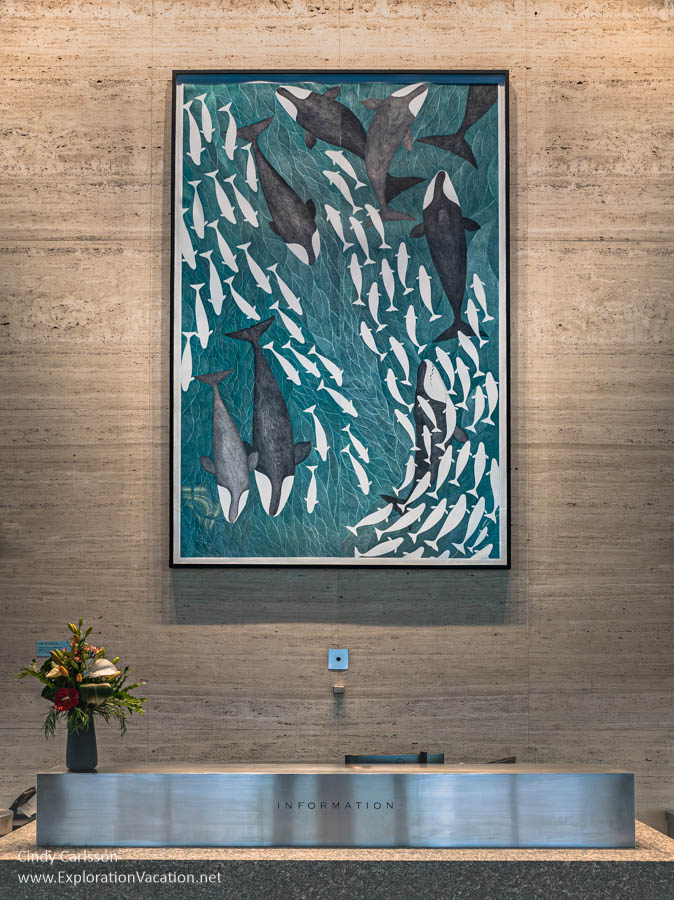
It may not look massive in this photo, but this is a large counter with a VERY large pencil and crayon drawing called “Swimming with the Giants” by Inuit artist Tim Pitsiulak.
(I’m guessing they don’t change this piece very often, but even if it’s a different piece when you visit, you should still have a pretty good idea that you are in the right place.)
Display cases of various sizes are located on either end of the lobby area. In spring of 2025 this part of the gallery displayed a mix of Inuit and First Nations art.
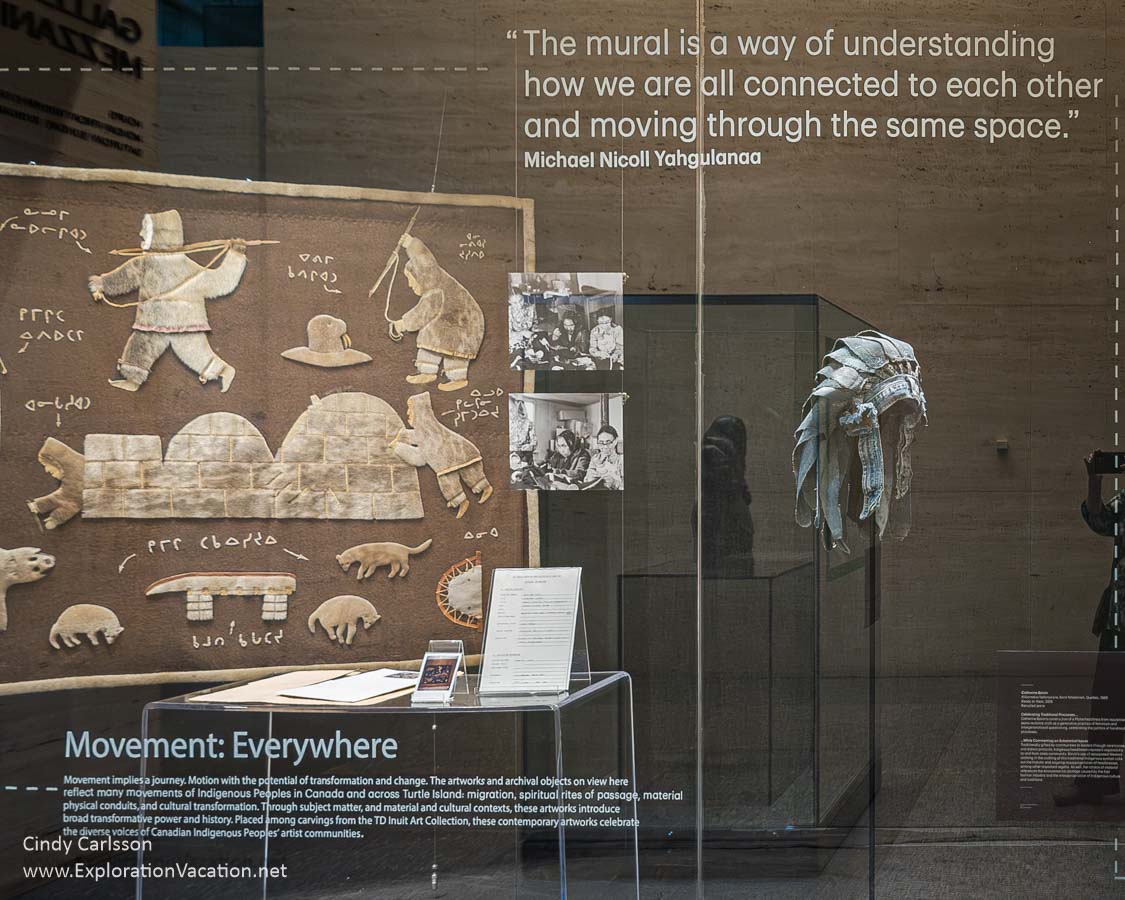
“Ready to Wear,” a contemporary headdress by Atikamekw Nehirowisiw artist Catherine Boivin, and “Winter Life,” a vintage textile by Inuit artists Mary Cookie and Alice Margeyok, share a display case on the main floor.
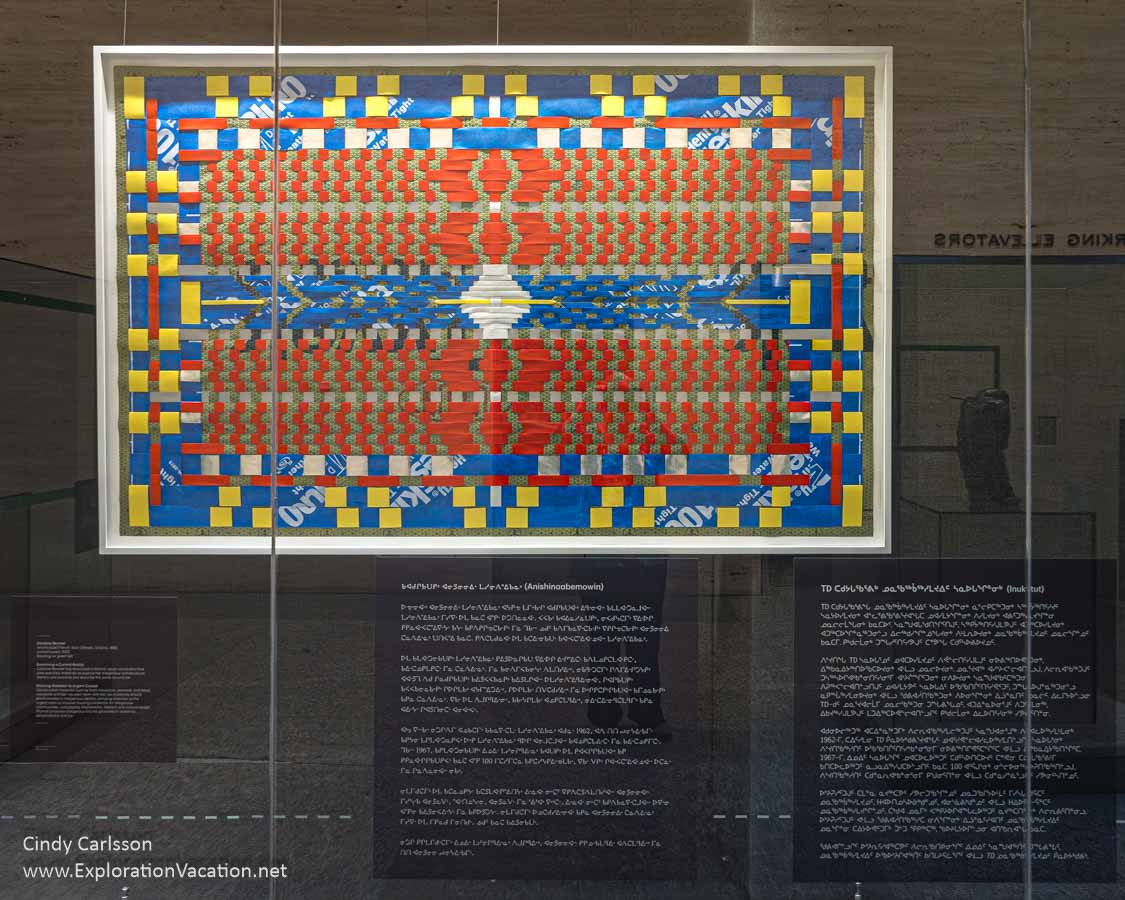
“Uninterrupted” by Anishnaabe/French artist Caroline Monnet was created from scrap material usually sent to the trash.
There are some wonderful pieces here, both Inuit and First Nations. However, unless I missed something, pretty much all the First Nations work was displayed on this level when I visited. That means there really isn’t a lot of First Nations art on display.
But there is a lot more classic Inuit art up in the mezzanine gallery.
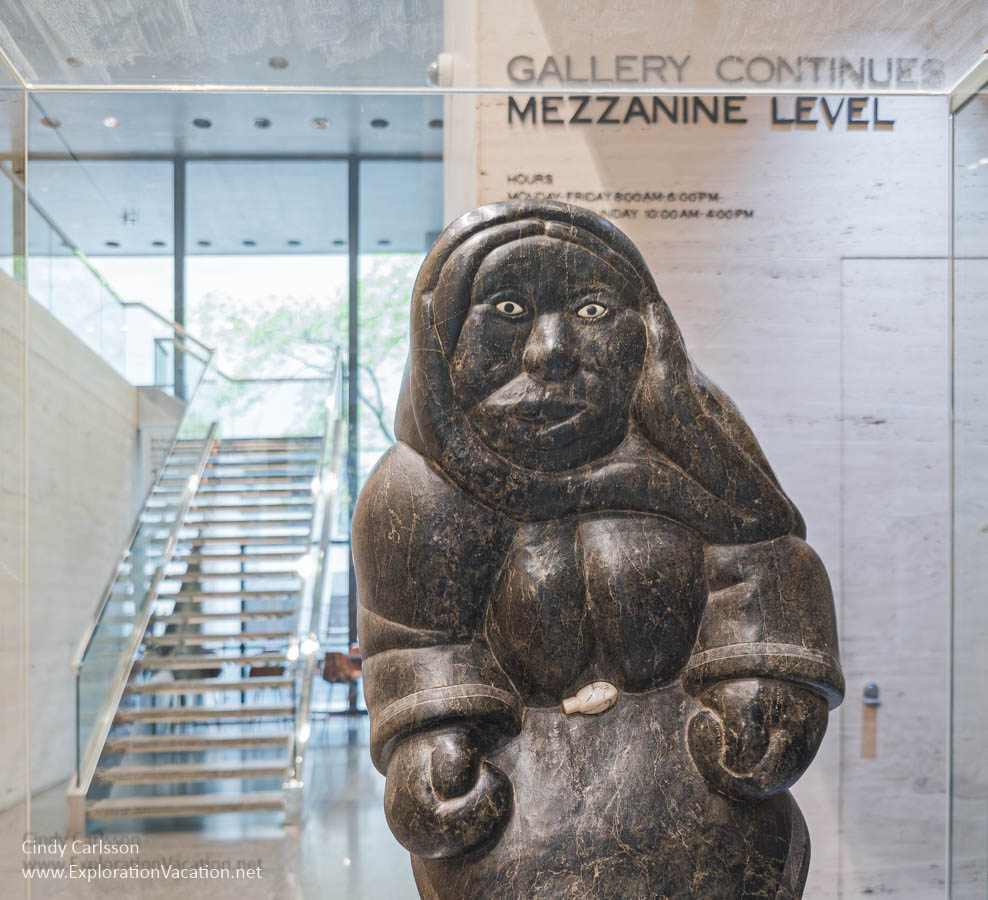
Inuit artist Johnny Inukpuk’s “Tattooed Woman” stands near the stairs to the Mezzanine. You’ll find lots more Inuit sculpture up there.
Inuit art in the mezzanine gallery
The mezzanine-level gallery was created in the 1980s and is still devoted to pieces from the bank’s original Inuit collection, now referred to as the Heritage Collection.
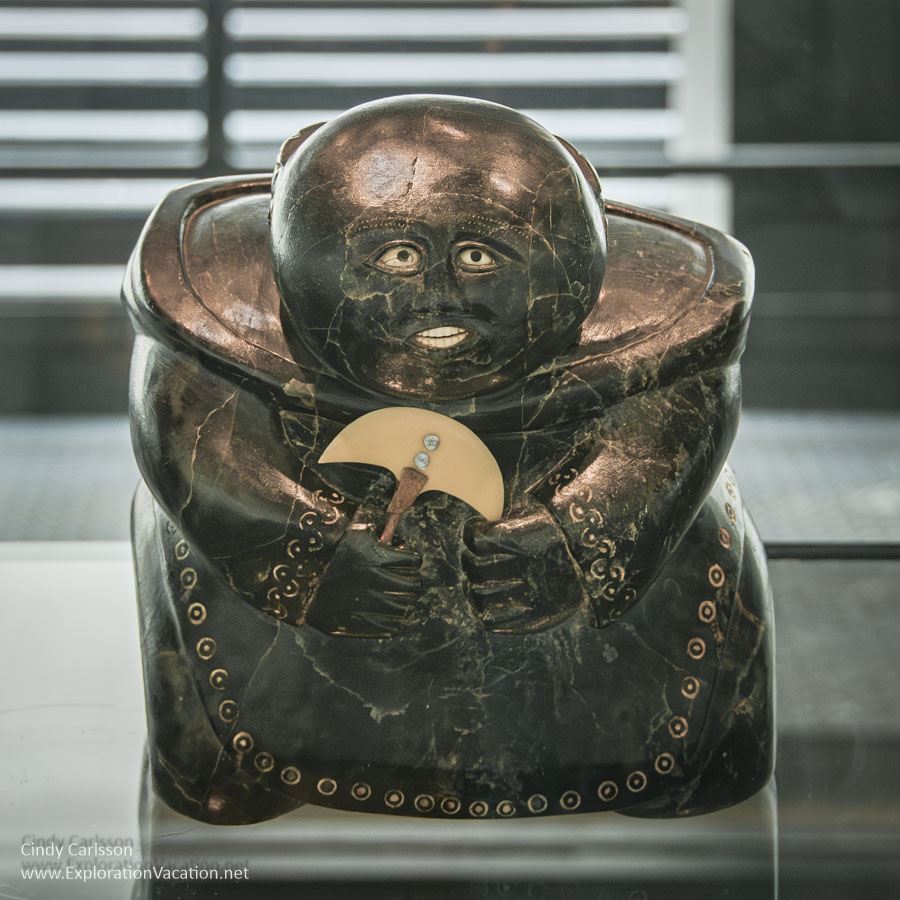
Most pieces in the heritage collection were collected before the 1970s and portray traditional Inuit life and legends, like this caving of a woman with an ulu (a type of knife) attributed to artist Eil Weetaluktuk.
While the items on exhibit when I visited this time were almost all sculptures, there are prints and a few more unusual items in the collection.
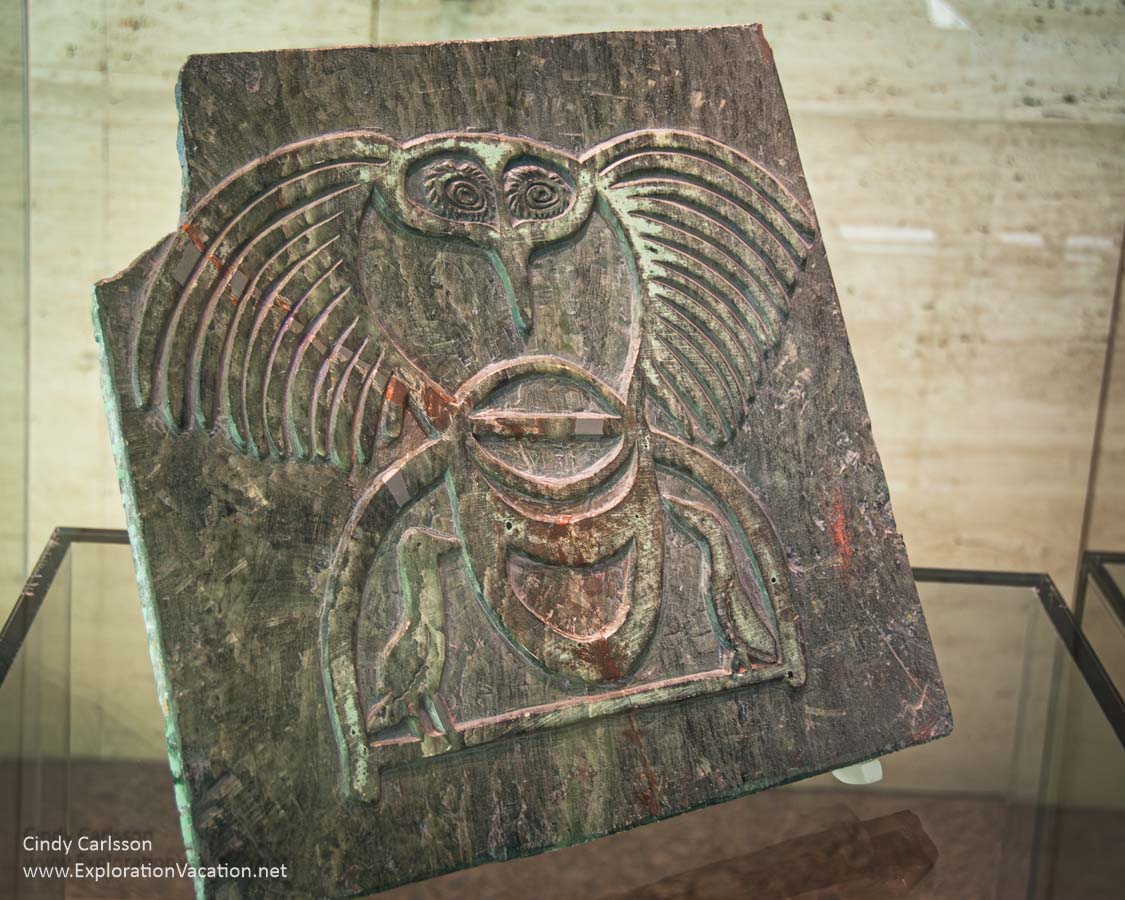
Cape Dorset has a long history of printing stonecuts – prints made using carved stones like this one. It’s rare to see one of these printing stones. The TD collection also includes a print made from this stone.
I first visited this gallery in 2013, and it looks pretty much the same today as it did then. A couple of significant pieces were missing this time (apparently temporarily), but I don’t think I saw much (anything?) on display this summer that wasn’t here on that first visit. But there are some great pieces here and it was fun to see see them again.
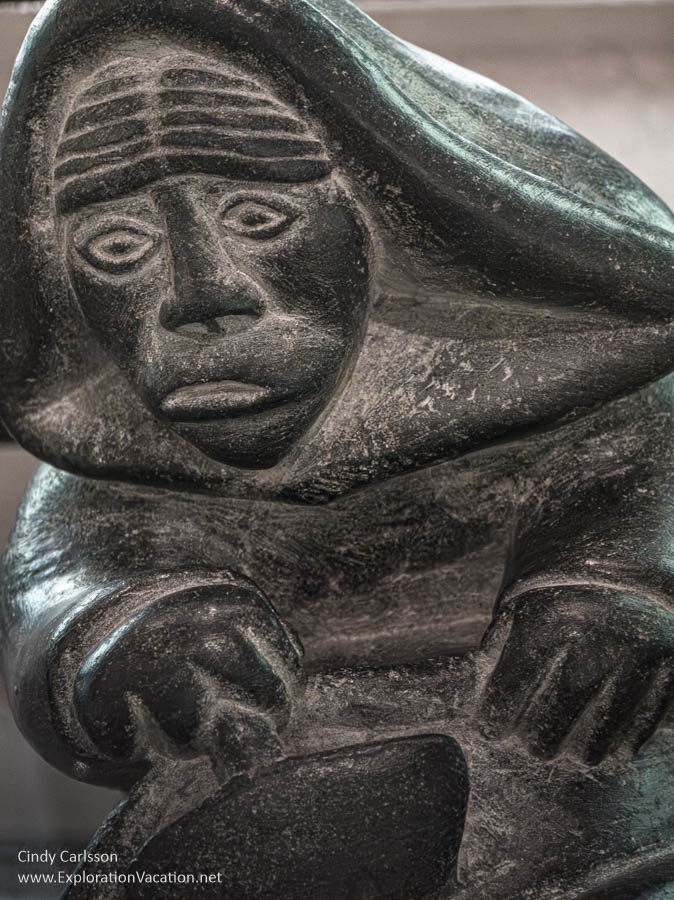
A close-up of “Woman Cutting Seal” by Abraham P. O. V. – this is one of many sculptures I photographed on both gallery visits.
When I first wrote about TD’s Inuit gallery in 2013, it displayed about 200 pieces. That seems to be about what here is today as well. In the 1970s, the Inuit collection included about 650 pieces, including some significant ones. Some of those have traveled to other institutions for major exhibits and/or were included in signature publications. While all of these signature pieces are likely still part of the collection, it’s unclear whether the bank retains all of the original collection.
This is only a tiny fraction of TD’s art holdings
The items displayed in the TD indigenous art gallery represent only a tiny portion of TD’s corporate art collection. Today that collection has about 6,500 works of art. These represent a wide variety of artists from around the world. (And they are buying more all the time.)
The original collection was created for display in private offices, meeting rooms, and public lobbies and gallery spaces. It focused on contemporary Canadian art, and work by Canadian artists is still purchased for use in both private and public areas of TD facilities. TD’s collecting goals include acquiring art for all facilities both in Canada and internationally that represents the local community. Recent acquisitions include work by contemporary indigenous artists from both the US and Canada, as well as work by a wide range of other US and Canadian artists.
While most of us will never see much of this art on display, the bank seems to have a genuine commitment to both the art and artists represented in its vast collection. It’s an approach that actively seeks to “help support and amplify new underrepresented and diverse voices in arts and culture.” Part of that is accomplished by only purchasing the work of living artists. Of course, that’s also where some of the best value is found.
Tips for visiting Toronto Dominion’s Gallery of Indigenous Art in Toronto
The TD Gallery of Indigenous Art is located at 79 Wellington Street West (TD’s South Tower) amid downtown Toronto’s skyscrapers. While the gallery is in a more recent building, it’s part of the TD Center, a complex still dominated by Mies van der Rohe’s stark black towers.
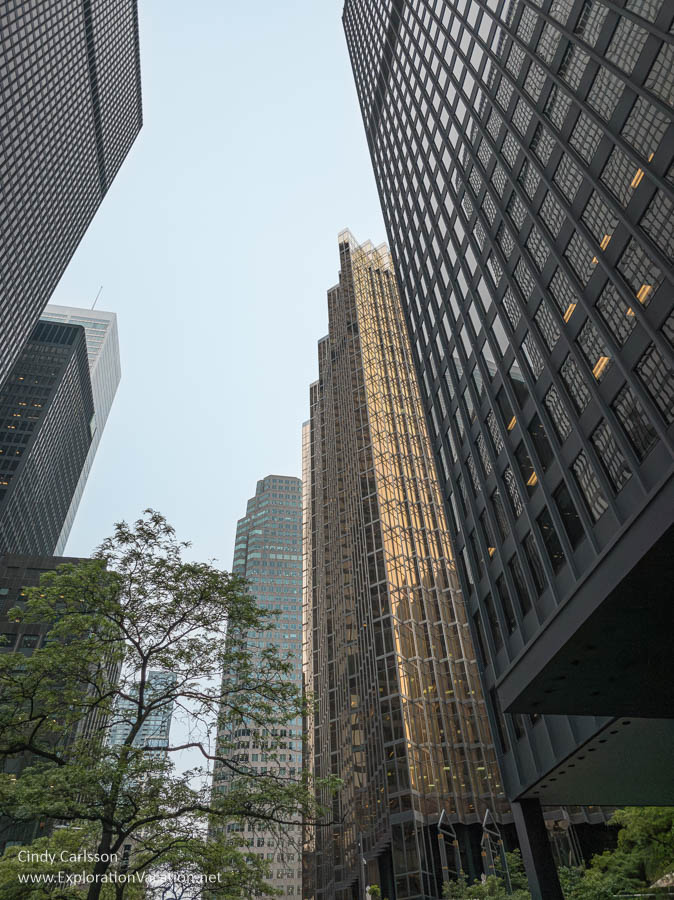
While there are green spaces in downtown Toronto’s business district, skyscrapers dominate. But Mies van de Rohe’s black towers are hard to miss even as others rise around them.
Getting there
If you use Google Map’s walking directions, it may try to direct you through an upper-level pedestrian plaza en-route. When we visited, this plaza was completely inaccessible to the general public.
But you can probably forget about Google. Walk or take transit to the downtown business district, then just head toward the black skyscrapers. Once you find Wellington Street (running through the south side of the complex), follow it to the main public entrance at number 79. You’ll also see directional signs at various points nearby that will lead you right there.
Inside the building
Once you find the right building entrance, you can go in and look at the displays in the large entry lobby and upstairs on the mezzanine without checking in at the desk.
The TD indigenous art gallery is open daily, so it makes a great Monday visit when many museums and art galleries are closed. It even opens early in the morning on weekdays, giving you an art option before anything else opens for the day.
Both the main floor and mezzanine galleries are free.
The main level gallery is completely accessible. Despite what I’ve seen on various online sites, there is elevator access to the Mezzanine – just ask at the desk.
These are bright, airy galleries. Generally that would be a good thing, but all that light bouncing around on highly reflective glass cases creates both loads of reflections and glare. The combination makes it almost impossible to even see some of the pieces. And, on the mezzanine level, weird green boxes outlined on some cases add to the viewing challenge.
- If you really want to get a good look at the art in this gallery, wear black to tame some of the glare and reflections. (That’s a good idea in any museum, but especially one with walls of glass windows.)
For more information on the collection
For more on the history of the collection and TD bank in general, see “An inside look at the TD collection of art by Indigenous Peoples.” To take an (abbreviated) virtual tour, download the TD Gallery’s self-guided tour (pdf). The TD Art website has some news features. Unfortunately, it also has quite a few bad links and is generally a little buggy.
For an outside perspective on TD’s current art collecting, check ARTnews.
The TD Gallery of Indigenous Art is located on the traditional territory of many nations, including the Mississaugas of the Credit, the Anishnabeg, the Chippewa, the Haudenosaunee, and the Wendat Peoples, and is now home to many diverse First Nations, Métis, and Inuit peoples.
All Toronto posts