Last updated on June 11th, 2026
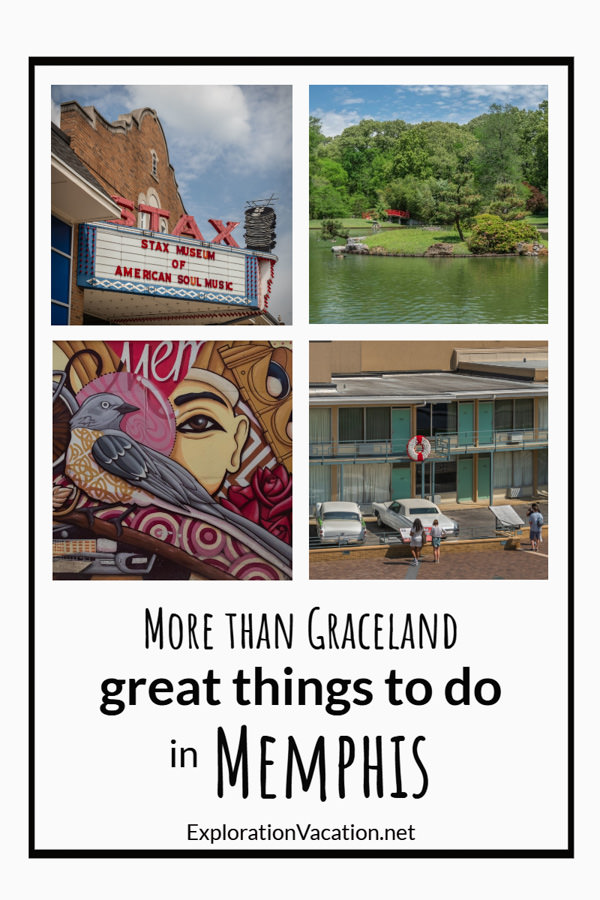
Think Memphis, Tennessee, is just Graceland? Then you’ll be pleasantly surprised by the wide variety of great things to do in Memphis!

Some links in this post may be affiliate links. They will pay me a small commission if you use them to reserve a room, rent a car, or purchase goods or services. You don’t pay anything extra, but it helps keep this website running. To learn more, review this website’s policies and disclosures.
I visited many Memphis museums and attractions as a guest of Memphis Tourism. However, all information and opinions presented here are my own and do not necessarily represent those of my hosts.
You won’t run out of things to do in Memphis
Given its history, it’s not surprising Memphis is best-known for music. But the city offers plenty more.
Here are the things I did – or wish I had done – while in Memphis. (Four days was not enough time to do everything!)
Listen to music
Music is a big part of Memphis past and present, so there are lots of opportunities to hear live music. To find out who’s playing where, check the listings on the Memphis Flyer website or try the Memphis Music, DoMemphis, or Beale Street apps.
Beale Street
It seems as there is always music somewhere on Beale Street, but the end of the week offer the best variety. There is an equally wide variety of venues. Just wander until you hear something you like and then head inside to enjoy the show.
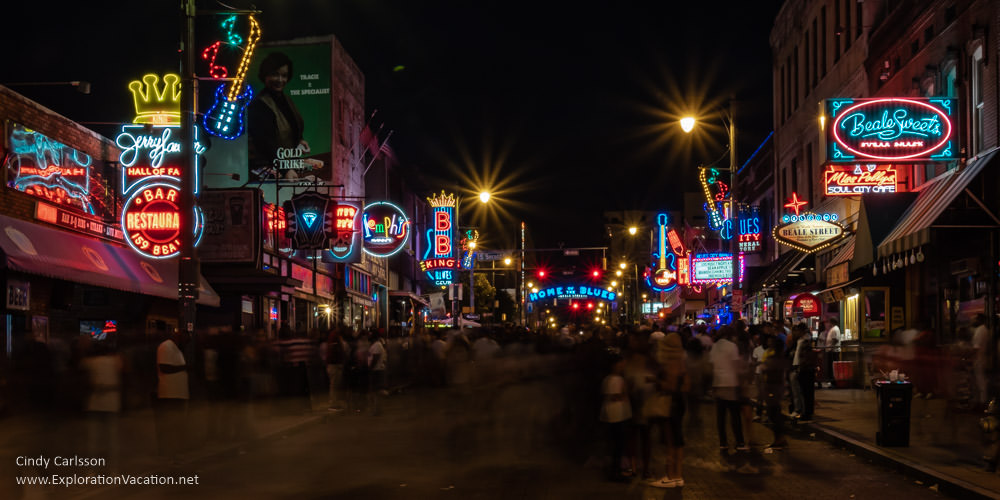
On Friday and Saturday nights you’ll find the most (and probably some of the best) music, but also lots of people and alcohol. Sunday night brings out local families.
Beale Street itself is mostly closed to traffic for the blocks where most of the bars, music halls, and restaurants are located. Here you’ll find a mix of modern chains (including a Hard Rock Café) and tourist places, but also a few spots (including retail shops) that appear to have been here since the days when this was the commercial and entertainment heart of the city’s African American community.
Even if you have no interest in stopping in for a drink and music, it’s worth walking along Beale once during the day and again at night just to see the signage. It’s one of the best (and most compact) collections of working neon you’ll find anywhere. If you don’t like crowds, visit any morning and on a Monday or Tuesday evening when it’s sure to be quiet.
Beyond Beale
For an even wider range of musical offerings, look beyond Beale Street.
Many downtown bars and restaurants off of Beale also offer music a few nights a week, usually at the end of the week.
In addition, the Overton Square and Cooper Young neighborhoods had a number of interesting listings when we were in town. (I found them too late to actually get there.)
The Roadtrippers website has a nice piece on specific venues (with a map) in these neighborhoods and downtown to get you started.
Visit a museum
My four days in Memphis was not nearly enough time to visit all of the city’s museums.
While it’s possible to make a relatively quick visit to most Memphis museums, many offer opportunities to take a deep dive into history. And some almost demand a lot more time. It’s not hard to spend a half day or more at the National Civil Rights Museum, the Rock and Soul Museum, or Graceland.
Music Museums
The Memphis music museums are an ideal way to learn more about the music of the Mississippi Delta and how rock and roll grew from those roots. They also offer fans a chance to connect with the people and places associated with the music.

And all of them include a lot of great music!
👉 See more music musuems
Rock n Soul Museum
If you only visit one music museum in Memphis, make it the Rock n Soul Museum.
It covers the full story of music in Memphis, including informative exhibits (with music) on early music in the Mississippi Delta, the rise of Sun, Stax, and other Memphis studios, and why Elvis was so unique. And, since it is affiliated with the Smithsonian Institution, there are lots of interesting artifacts to go along with the music.
Stax Museum of American Soul Music

Like the Rock n Soul Museum, the Stax Museum begins with the earlier forms of music that led to soul before walking through the rise and fall of Stax records.
Exhibits overflow with great music without glossing over the personal losses, societal changes, and business mistakes that eventually led to the label’s decline. Visiting is an unexpectedly emotional experience.
Blues Hall of Fame Museum

The Blues Foundation’s Blues Hall of Fame Museum features memorabilia and recordings linked to a who’s who of the most significant blues artists, recordings, promoters, scholars and more.
While the exhibit area is fairly small, a wide variety of music is available and there are knowledgeable volunteers to answer questions. Listening rooms allow visitors to sit down with old favorites or discover new ones.
Sun Studio
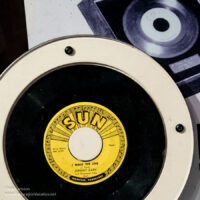
The smallest of the “museums” on this list, Sun Studio is also the only music museum in Memphis where you can visit the actual place where history was made.
It’s a shrine to the label’s golden days, but it’s also a museum and working recording studio. And the small (but packed) exhibit area is more than made up for by a knowledgeable “tour guide” and the chance to go into the actual studio and stand on the exact spot where musical magic happened.
Memphis Music Hall of Fame
The Memphis Music Hall of Fame includes exhibits and music related to a broad range of past and current performers, promoters, etc. with a connection to Memphis. It’s the one music museum I didn’t get to, so I’m not sure how much material they have on display. However, it is inexpensive to visit and conveniently located right on Beale Street.
👉 Read less
Graceland

Part shrine, part museum, Graceland is a must-see for Elvis fans.
While fans may swoon to see the actual rooms where Elvis lived, I was more intrigued by the differences between the public and private life of Elvis and how the trappings of celebrity have changed. I discovered Elvis was a lot more interesting – and more human – than I would have guessed. It’s an expensive museum and it’s pretty much all about Elvis, but there is a lot here even if you aren’t that into Elvis.
History Museums
As a city, Memphis has survived more than its share of economic ups and downs. From it’s founding in 1819, through the Civil War, yellow fever and economic collapse, segregation, and the Civil Rights Movement, Memphis has a lot of history to explore.

👉 See more civil rights museums
The National Civil Rights Museum

Built around the Lorraine Motel where Dr. Martin Luther King Jr. was assassinated in 1968, the National Civil Right Museum covers the story of the African American Civil Rights Movement from the beginning of slavery in America to today.
The museum includes the motel room where Dr. King spent his final hours, making the site a memorial as well as a museum. Every American should visit this informative, often heartbreaking, museum.
Slave Haven Underground Railroad Museum
While the early economy of Memphis was deeply tied to the slave trade, there were abolitionists in the city. One of them, Jacob Burkle, operated a way station on the Underground Railway where he provided refuge to runaway slaves in his home as they fled north. Today his home is the Slave Haven Underground Railroad Museum. Located just outside the downtown area, I didn’t get there, but it’s high on my list for next time.
Cotton History Museum

Located in the former Cotton Exchange building, the Cotton History Museum traces the development of the cotton industry and its economic importance to Memphis and beyond.
The building is gorgeous and the factual information about how cotton was (and is) grown, harvested, and processed is interesting. In addition, historic photo displays often (unintentionally) highlight the vast gulf between those who got rich from cotton and the people who made that wealth possible. However, the story is told almost entirely (and without any signs of remorse) by the people who got rich (and continue to get rich) from cotton. Definitely worth visiting, but keep your critical thinking skills handy.
Mississippi River Museum
The Mississippi River Museum on Mud Island covers 10,000 years of the river’s history, including the river’s role in the Civil War. It includes a wide variety of artifacts, including full-size replicas of two boats. The surrounding park includes a scale model of the Mississippi River (complete with water suitable for splashing in) and spectacular views of Memphis and the river. The museum reopened after a cosmetic re-do just after we left the city, so I didn’t get there. However, the museum promises to help explain how the river has and continues to shape Memphis – a valuable service.
Withers Collection
Ernest Withers was a Memphis photographer who covered the civil rights movement and African American athletes and musicians. That makes his photographs both art and important historical documents. Although the Withers Collection is located right on Beale Street, I got distracted by signage and forgot to track it down. It seems to be a family-owned and operated affair, so I’m not sure how it functions as a museum, but the photos are going to be worth seeing no matter how they are curated and displayed.
House Museums
Decades of urban development demolished most of the city’s historic downtown and African American neighborhoods. However, Memphis still has a number of historic districts (including Cotton Row and Victorian Village) and a number of house museums.
- The Pink Palace Museums includes two house museums, the authentically furnished Victorian Mallory-Neely House and the much more modest 1830s Magevney cottage.
- The Woodruff-Fontaine House Museum is another elegant Victorian home. In addition to the house and its furnishings, the museum also displays pieces from its extensive textile collection.
While house museums can be found in any city, they can provide a meaningful look at how people actually lived in a specific place at a specific time. That’s particularly true of museums that preserve middle class homes, like the Magevney cottage.
I didn’t get to any of these Victorian Village house museums due to my limited time and their limited schedules.
👉 Read less
Art Museums
Memphis, like every major city, has a selection of art museums. I live in a city with amazing art museums and have visited art museums all over the world, so I wasn’t in Memphis for the art. That means we only got to one art museum. However, all of these appear well-worth taking the time to visit and I really regret not having time for all of them.
👉 See more art museums
Belz Museum of Asian and Judaic Art

The one art museum I visited in Memphis was the Belz Museum of Asian and Judaic Art. And even there I only got through part of the museum before running out of time. However, what I saw while there was amazing.
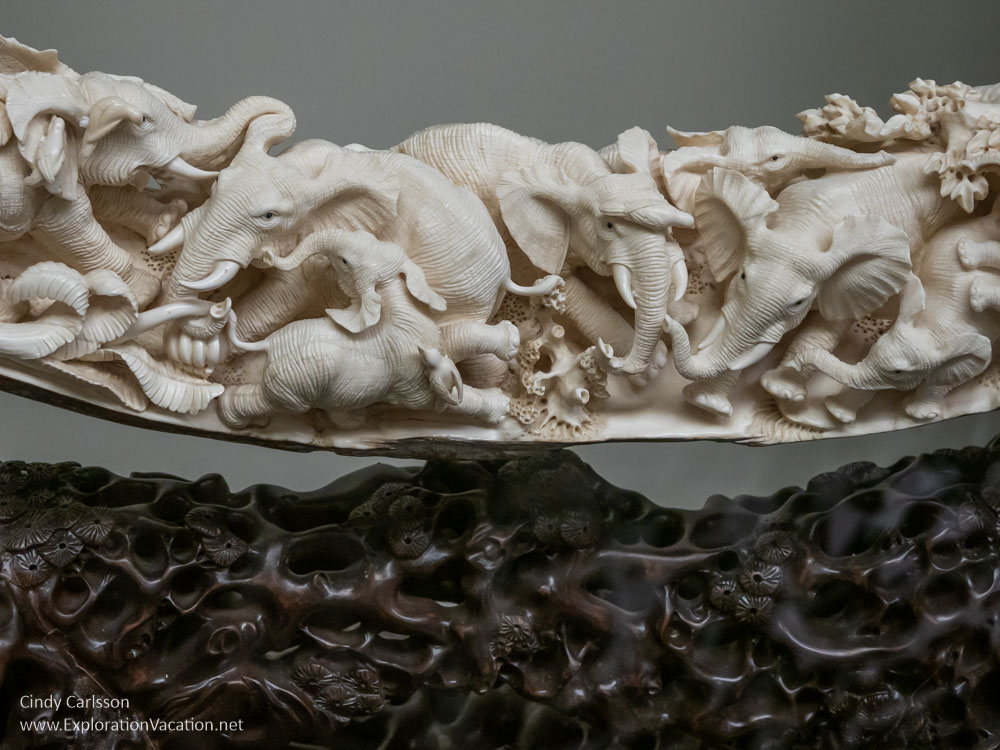
The Asian art, mostly Chinese from the 19th century or earlier, includes many elaborately carved sculptures in jade and ivory, unusual clay pieces, and more. It’s a great collection but, with little information about most pieces on display. The Judaic exhibition largely consists of contemporary pieces in wide variety of media, including a display of bronze relief sculptures and many paintings. It’s a gorgeous collection with better signage than the Asian collection. Both sections are very much worth seeing.
Memphis Brooks Museum of Art
The Memphis Brooks Museum of Art is the largest and most comprehensive art museum in the city. Its collection includes a mix of European and American fine art, American decorative arts, European antiquities, pre-Columbian art, and African art. There are also temporary exhibits. I wish we had gotten here, as the pre-Columbian and African collections sound particularly unusual and interesting.
Dixon Gallery and Gardens

The heart of the collection at the Dixon Gallery and Gardens is French impressionist and post-impressionist painting, although regular exhibits also include prints and drawings and historic porcelain. Special exhibits may include work by contemporary artists.
We didn’t have time to explore the galleries, but a quick walk through a bit of the grounds offered a glimpse of some really beautiful gardens!
Metal Museum
Art and craft of ornamental metalwork are the focus of the Metal Museum. The museum is located along the river just south of Memphis on the site of a historic US Marine Hospital. Its collection includes historic objects and contemporary hollowware, sculpture, and jewelry. The museum offers exhibits, a sculpture garden, library, working blacksmith shop, and a foundry. This is a top priority for our next visit.
👉 Read less
Enjoy the great outdoors
Had enough time indoors at concerts and museums? Memphis offers a wide range of outdoor activities for everyone from garden enthusiasts to serious athletes. Of course, my personal choices tend to be on the lazy side!

Admire flowers in a botanical garden
Memphis has two major gardens: Dixon Gallery and Gardens (mentioned above) and the Memphis Botanic Garden.
Memphis Botanic Garden

If you’re seeking flowers, there’s no better place to look than the Memphis Botanic Garden.
Covering 96 acres, there are 31 specialty gardens featuring plants from near and far, including a Japanese Garden, rose garden, butterfly garden, azalea trail, and more. Of course, this being Memphis, there are also concert stages and plenty of lawns to spread out on!
Hunt for street art

Memphis is home to a wide variety of street art, from traditional bronze sculptures to colorful murals. The Memphis Art Project tells you where to look via an interactive map and visual guide. To see them all, you’ll want a car, because this map covers all of the Memphis area. For a great map and pictures of the just the downtown area (which you can visit on foot and street car), check the map and photos on the Downtown Memphis Mural Guide. If you are just interested in touring a small area, grab a map that covers just the very walkable South Main Mosaic Artwalk.
Get out on the water
It wouldn’t be Memphis if there weren’t a paddle wheeler out on Mississippi. But these days the paddle wheelers are all ferrying tourists instead of cotton! Mississippi Riverboats offers 90 minute cruise tours on modern versions of old-fashioned paddle wheelers. I haven’t done the tour in Memphis, but I’ve similar tours at the other end of the Mississippi and other rivers at home in Minnesota. It’s a pleasant way to relax and learn a little history.
For those who want to get closer to the water, the Mississippi and the smaller rivers around Memphis offer an opportunity to explore by kayak, canoe, or paddle board. You can rent one and go off on your own, but tours are also available through several companies. Some of the backwaters and lazy rivers around Memphis look like they would be wonderful for bird watching, so some time on the water is probably going to be on the list for next time.
Bike around Memphis or across the Mississippi River
Memphis has more than 60 miles of bike trails and lanes, including the Big River Crossing bicycle and pedestrian bridge across the Mississippi.
I saw lots of bike lanes, and biking looks like an excellent way to get around the city. You can find information on routes and services on the Memphis Travel website.
(The downtown area also has lots of dockless scooters for short trips.)
Relax (or have an adventure) in a park

Downtown Memphis sits above the Mississippi River, and almost the entire riverfront, as well as Mud Island, is park land.
That means there are plenty of places to stop for a lunch break, take a walk, or watch the sun set and wait for the lights to start dancing along the Hernando de Soto and Big River Bridges.
The more adventurous should head to Shelby Farms Park or Meeman-Shelby Forest State Park.
Discover local oddities
While Memphis has plenty of unique things to do, see, and hear, there are a couple “say what?” experiences you may want to check out.
(I didn’t get to either of these this time, but there’s always next time.)
The Peabody Ducks

The elegant Peabody Hotel has seen a lot of Memphis history since 1925, but today the (beautifully restored) hotel is probably most famous for the Peabody ducks.
Yes, ducks. A small flock of five mallard ducks lives in the hotel. They split their time between a rooftop penthouse (at night) and the elaborately carved marble fountain in the hotel lobby/bar (during the day). Twice a day the ducks march between their abodes – a march which has become quite a tourist attraction.
The ducks march at 11 am and 5 pm each day. Unfortunately, that never really fit into our sightseeing schedule, so we opted for a late-night drink at the hotel instead. After all, the first ducks marched through the Peabody’s lobby in 1940, so I’m guessing this tradition will continue a bit longer.
(The Peabody ducks only spend three months at the hotel. After that they move on to life as a wild duck on the farm where they were raised.)
Bass Pro Pyramid
I hate hunting and could care less about fishing, but a 32-story pyramid with multiple aquariums, a cypress swamp (complete with live alligators), a glass-floored observation deck with views over the Mississippi and downtown Memphis, and an “underwater” bowling alley just might be worth seeing. There may or may not be a duck aviary. There are definitely stuffed ducks. And lots and lots of fishing and hunting gear.
If if hunting and fishing is your thing, you can book a hotel room in the pyramid and wallow in the exhibits, shooting ranges, and retail space for a day (or more).
A special thanks to Milton Howery at Memphis Tourism for providing the incentive I needed to finally make the trip to Memphis I’d been thinking about for so many years. I loved my time in the city and my husband and I are both looking forward to returning someday. I expected to like Memphis, but I didn’t expect to like it nearly as much as I did!



I had no idea there were so many things to do in Memphis! Beale Street looks like a place I’d like to hang out in. I think a road trip is in order!
Patti – Road tripping along the Mississippi or through the deep south was always part of my plan. Someday! I think it would be fascinating. And Beale Street is a great place to hang out — great music and people watching! Put it on your list.
I’ve never really thought of Memphis as a place I’d want to visit, but with all those art and history museums I might think again…
Karen, I think you’d find some things that interest you. There’s really a wide range of options. And there’s some great food — not just BBQ!
Thanks for enlightening us that there’s more to Memphis than Graceland and the blues. I suspected as much, but it’s not a widely covered destination in the travel press. I’m pinning this to my southern US travel board on Pinterest so I’ll be sure to be able to find it again.
Suzanne, that was what I had seen as well – Graceland BBQ and the blues. (Although Sun has been on my personal list since I was a kid.) Memphis seems to attract a lot of weekend Beale Street visitors, but they aren’t getting nearly the attention they should get as an all-around destination. I was afraid that four full days would be too much time, but we easily could have spent an entire week. Keep it on your list for when you get down that way!
Thanks for sharing these great ideas of things to do in Memphis. We have been considering a visit and this article shows that there is plenty to see and do.
I guarantee you will not be bored. There really is something for everyone. Have a great time when you get there!
We will not forget our enjoyable time in Memphis with Graceland, the Sun Studios’ unbelievable tour, the Peabody Ducks, the Pyramid, and then Beale Street at night!
Yeah, I didn’t think I was the only one to have a great time in Memphis!