Last updated on June 15th, 2026
The landscaped grounds of the Memphis Botanic Garden feature an ever-changing array of greenery and colorful flowers to delight visitors throughout the year.
I use links to improve your browsing experience. Some may be affiliate links that pay me a small commission if you use them to reserve a room, rent a car, or purchase goods or services. You don’t pay anything extra, but it helps keep this website running without intrusive advertisements. To learn more, review my policies and disclosures.
I visited the Memphis Botanic Garden for free as a guest of the garden and Memphis Travel. However, as always, all information and opinions provided here are entirely my own.
Garden history
Unlike many botanical gardens that trace their origin back to the Victorian garden craze, the botanic garden in Memphis didn’t get its start until 1953.
But the community has made sure that it’s continued to grow since then.
👉 Read more about the garden's history
Memphis resident Marion Ketchum was a college-educated woman (the only female graduate of the class of 1898) who learned to grow irises and create new hybrids. She and her husband (a prominent lawyer and judge) hybridized irises in their home garden throughout their lives. They even registered several of their hybrids, although none are in commercial production today.
Following their deaths, 2,500 irises from their garden were donated to the city of Memphis and planted in what was then called Audubon park.
This was the first of the formal garden beds found around the fountain today and the beginning of the Memphis Botanic Garden.
Just a few years later, in 1957, an arboretum was established in the park to honor another Memphis resident and active gardener. This led to identifying a specific section of the park for future development as a botanical garden.
By 1963 the botanical garden had been gifted a magnolia garden, wildflower gardens, and a daylily collection. In addition, the existing rose garden at another city park was moved to the new botanical garden.
Later, the 1960s also brought construction of the visitor center, Japanese garden, and azalea trail.
Other gardens, trails, and facilities have been added or expanded since that time. The most recent of these is the Urban Home Garden area, which includes a chick coop and a variety of edible landscape displays.
Other existing gardens, including the original Rose Garden and Japanese Garden, were both expanded and modified recently.
But even as Memphis’ botanic garden has grown and modernized, it’s kept its close ties to the community that created it from their own beloved gardens. Along with the concerts, weddings, and other special events held in the garden, local garden clubs still work to keep it going and growing for another generation of visitors.
👉 Read less
A garden for every taste
The Memphis Botanic Garden features 31 specialty gardens on 96 acres. A visitor center, a chapel-like pavilion, several working greenhouses (not open to the public), a concert stage, and a variety of event spaces are also located on the property.
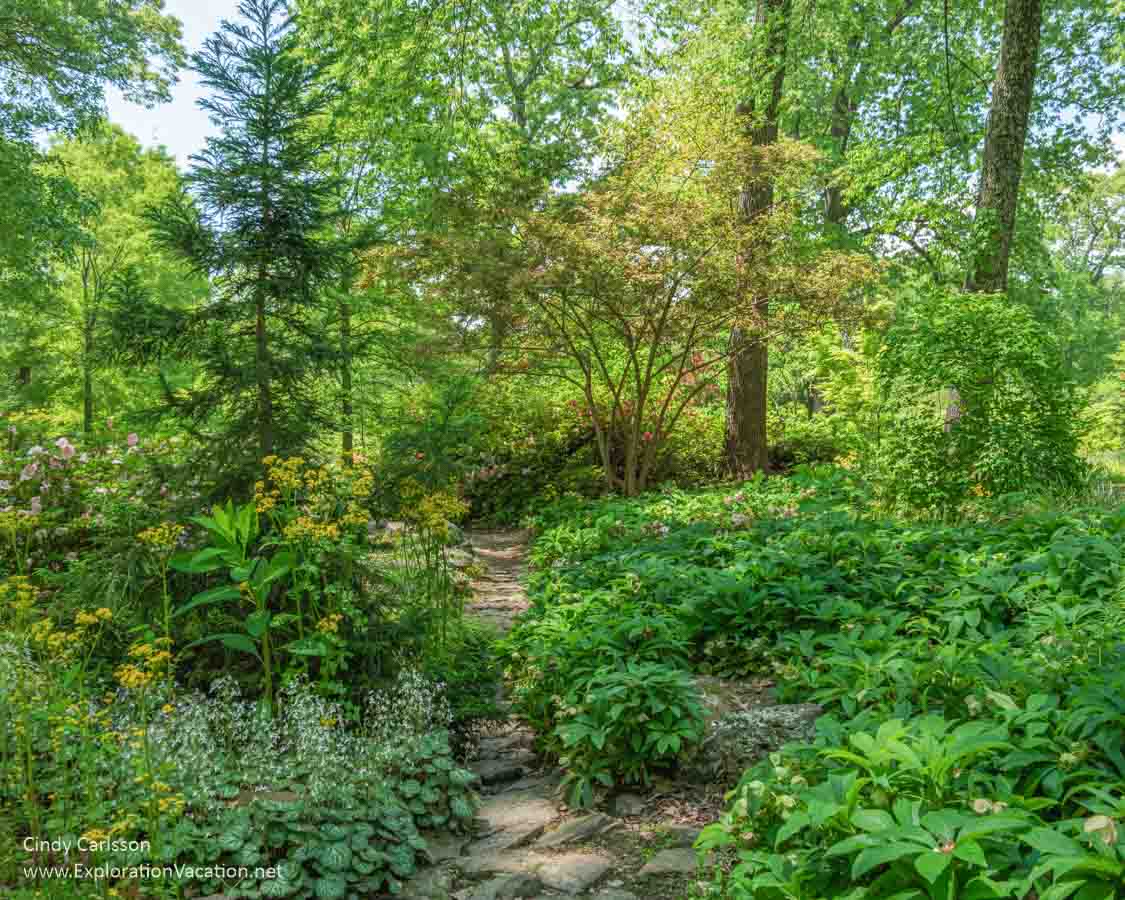
Much of the garden’s property is wooded, with a pleasant mix of trees and flowering shrubs. This makes wandering through it a continual surprise, as wooded trails with natural landscaping connect to various formal gardens. It also makes the garden a lovely spot to escape the heat of a Memphis summer!
The Botanic Garden’s website includes a map with links to more information on many of the gardens.
The Rose Garden
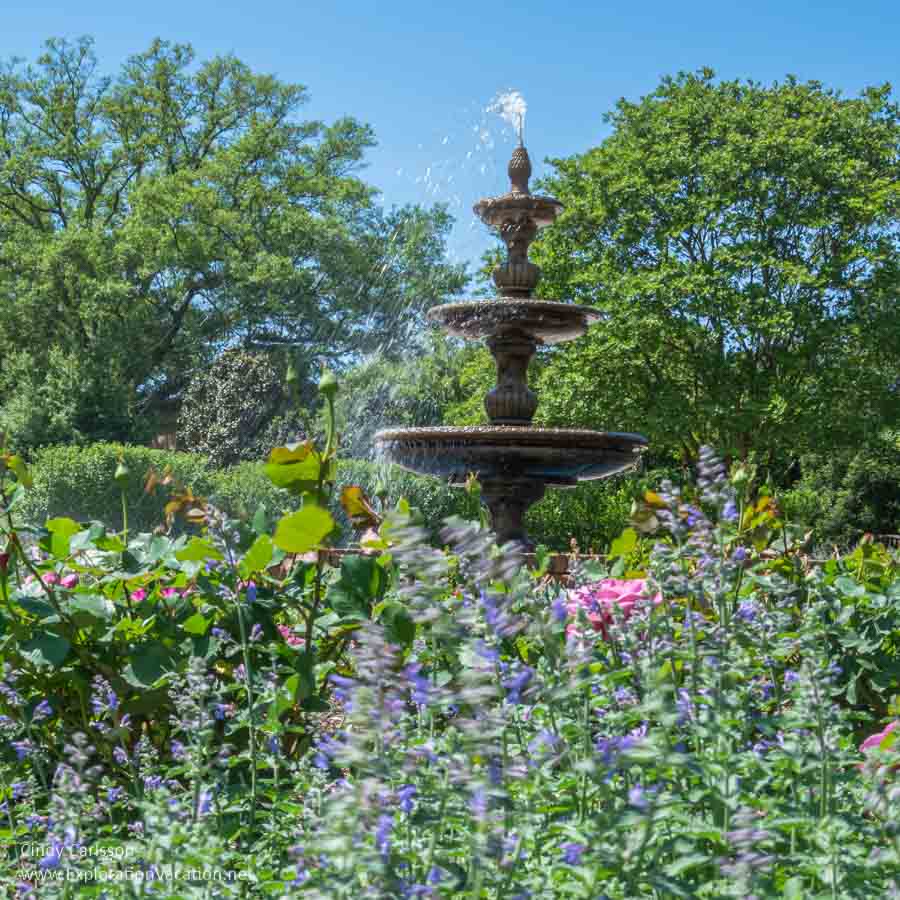
Leaving the Visitor Center, visitors pass through an interesting little Sculpture Garden before arriving at the formal Rose Garden.
No longer just a rose garden, the gardens around the central fountain feature a mix of roses and perennials to ensure color throughout the growing season.
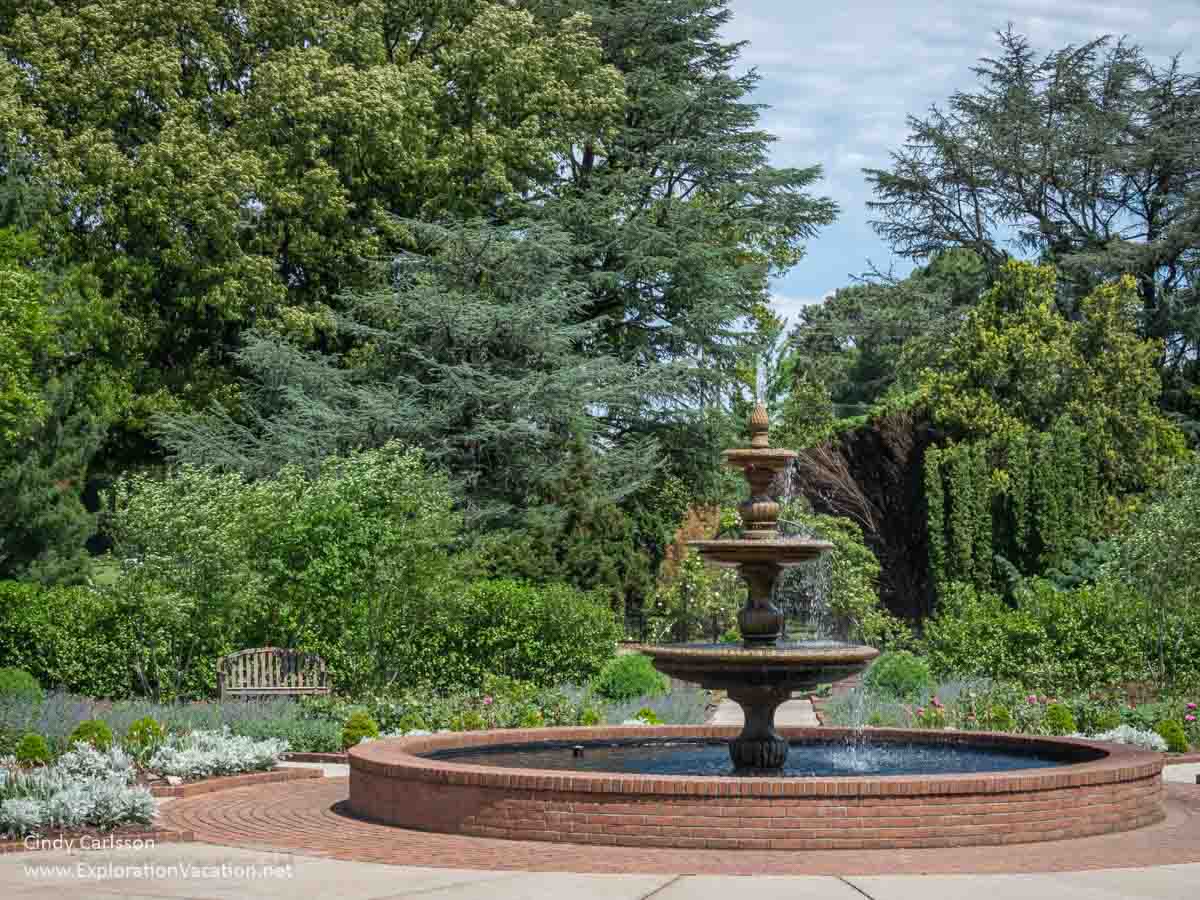
But don’t worry, there are plenty of roses too!
Not only are there plenty of roses, but the gardens serve as a visual guide to the history of rose cultivation. Visitors can see roses that range from some of the earliest varieties from Europe to the latest hybrids. In addition, there is at least one rose from more than 20 classes of roses, including china roes, hybrid teas, musk roses, and more.
You can find at least a few blossoms in the Rose Garden from the end of March through Thanksgiving.
Japanese gardens
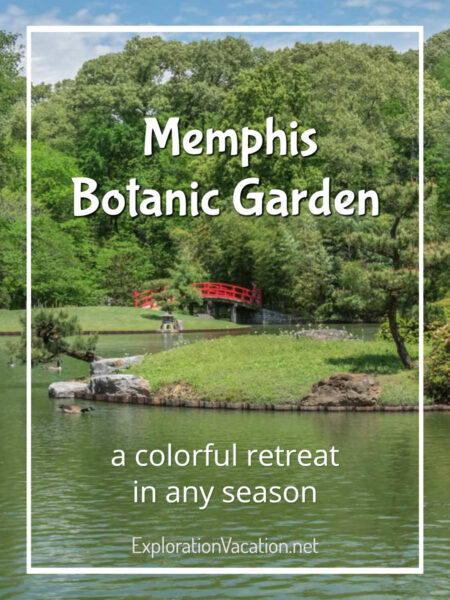
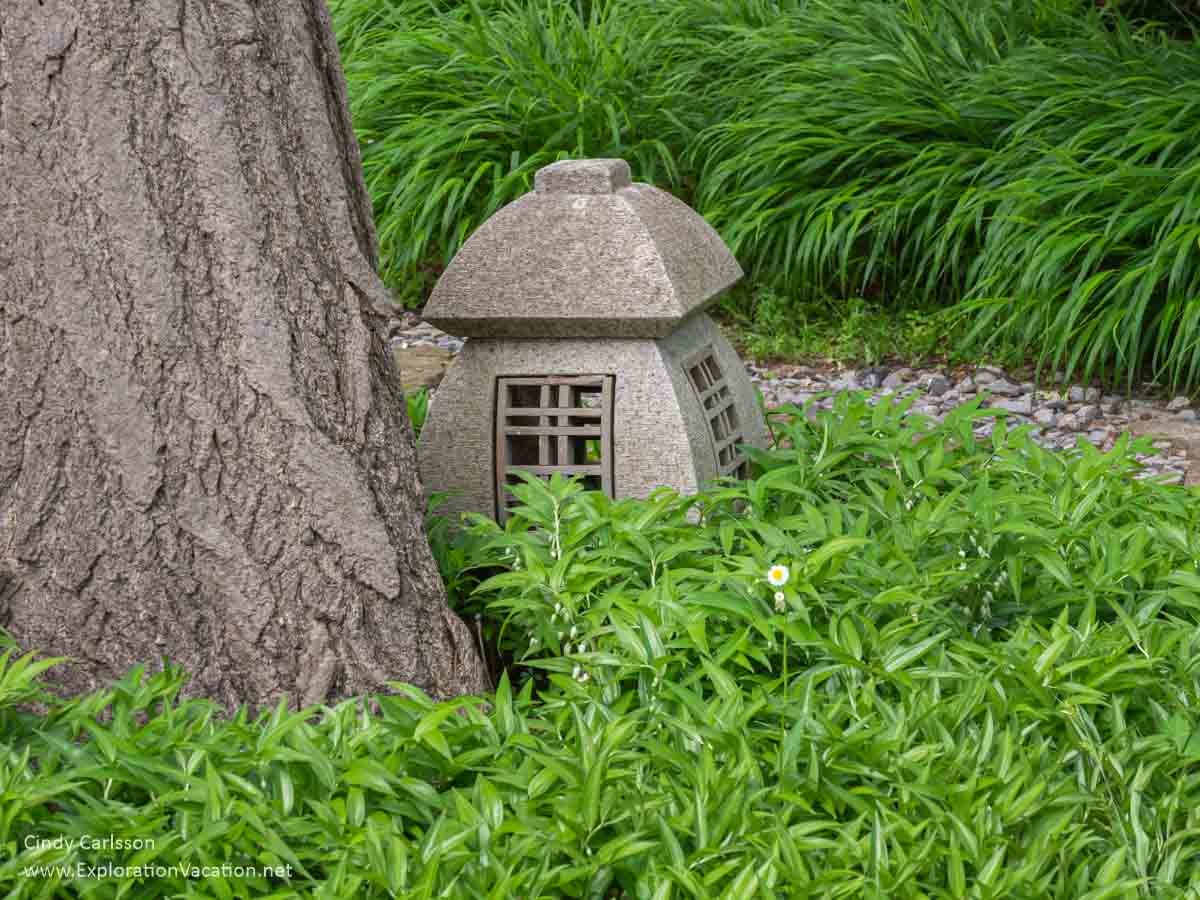
On the other side the garden, a large Japanese-inspired landscape wraps around a lake. Perfect for strolling, the Japanese Garden of Tranquility (Seijaku-En), features rolling lawns along the lake, islands, bridges, Japanese lanterns and sculpture, and a variety of both Japanese and native plants.

It’s also home to a lot of turtles, a flock of Canadian geese, a variety of ducks, and some hungry koi!

Shade gardens of all types
The Memphis Botanic Garden has an impressive number of shady trails. They connect gardens featuring a variety of trees, flowering shrubs (particularly hydrangeas, camellias, dogwood, and azaleas), and woodland flowers with more traditional formal and demonstration gardens.
In the midst of all this greenery, the Blecken Pavilion rises like a magical remnant of a long-lost world.

Be sure to keep an eye on the ground as well, since it’s easy to miss many of the beautiful woodland wildflowers.
Of course, there’s also an entire hosta glen in another shady part of the garden.
Color through the year at the Memphis Botanical Garden
Even the chill of winter doesn’t completely end the garden’s flowering. Besides the greenery and colorful berries that last through the winter’s chill, hardy hellebores (also known as Lenten Rose or Christmas Rose) beginning blooming during winter.
Early spring brings the first magnolias and cherry blossoms. But the display changes quickly, with azaleas, spring bulbs, and the first wildflowers briefly brightening the landscape before fading.
Daffodil Hill is usually at its best in March and April, but by the time I visited in the last days of April, spring was already moving on. The daffodils were gone, as were the spring ephemerals. In their place the first roses were opening and many perennials were beginning to bloom the sunny rose garden.
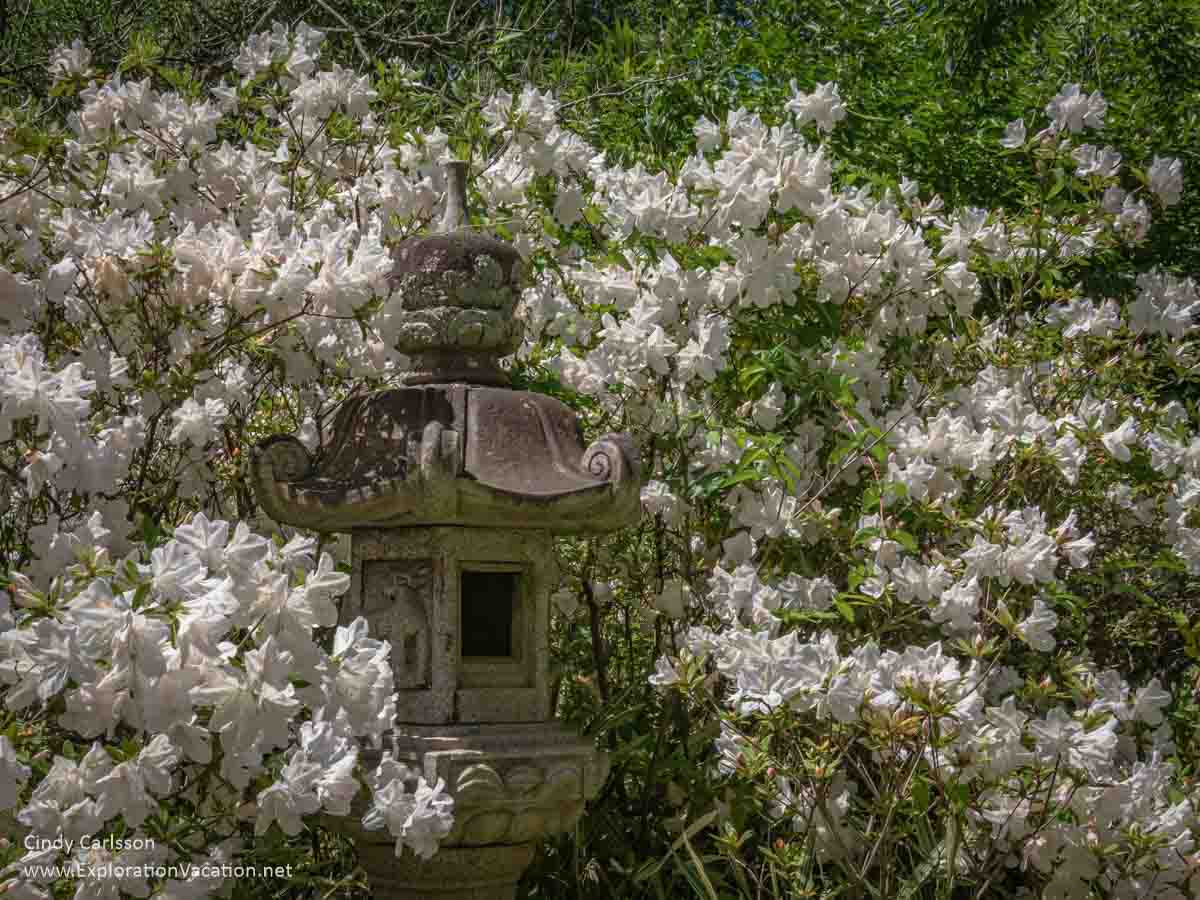
Meanwhile, some azaleas still bloomed (as others will throughout the growing season) in the Japanese Garden and along shady trails.
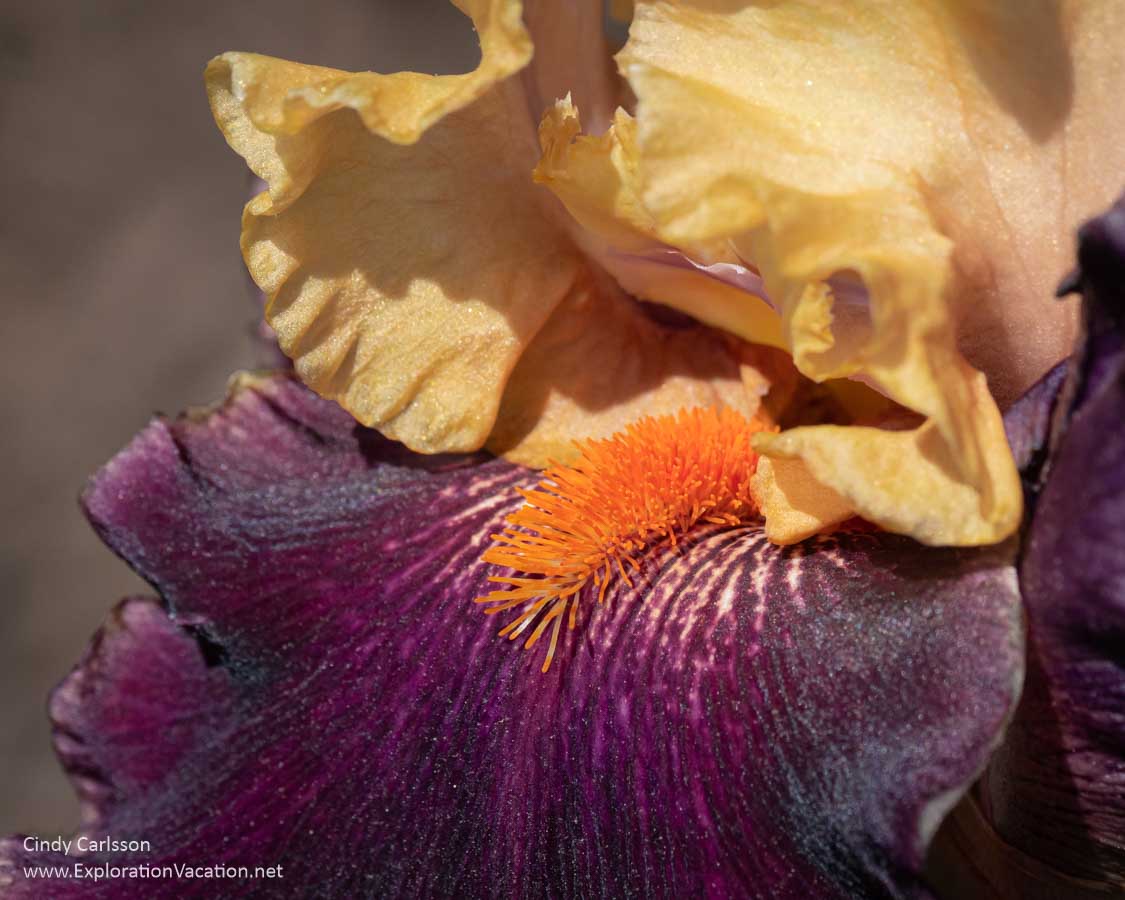
But the real stars were the irises.
In formal plantings, the bearded irises showed off their often-flamboyant mix of colors.
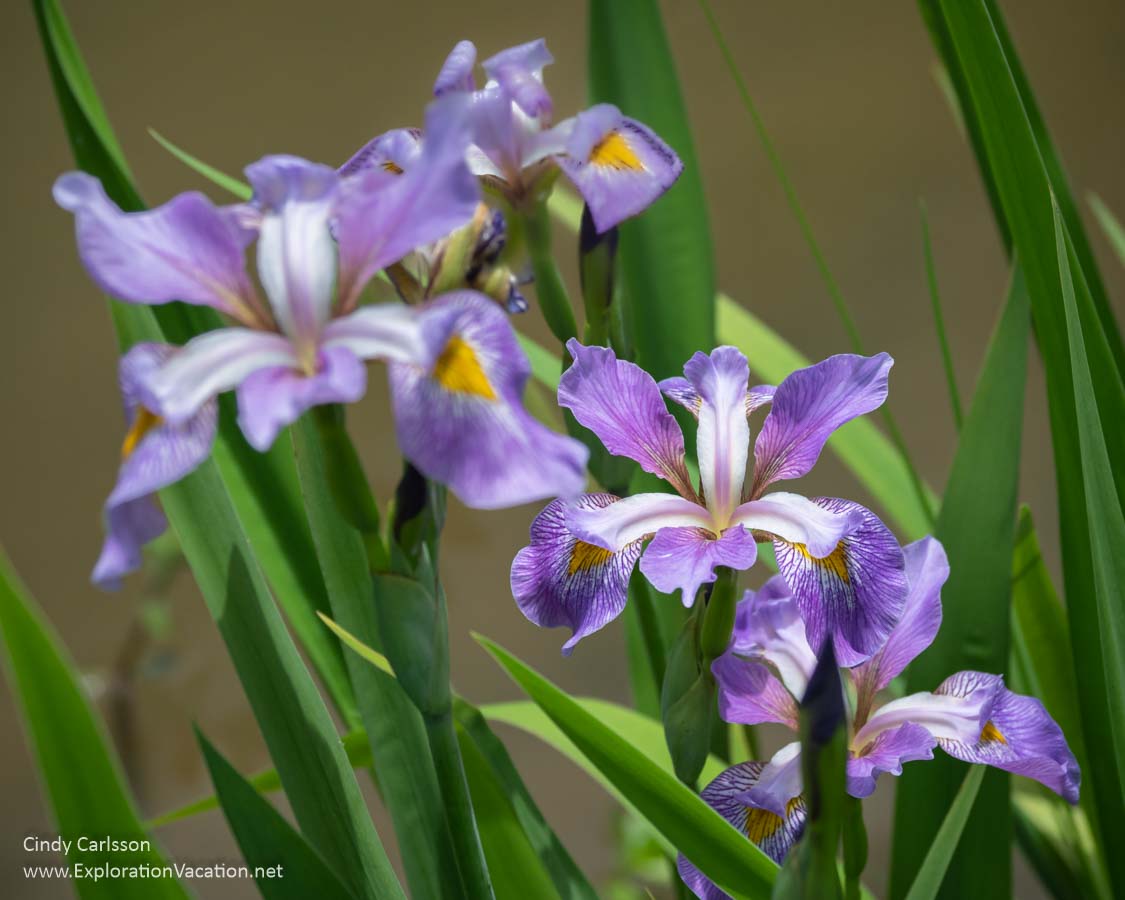
And, over along the water’s edge, dainty Japanese irises created soft swaths of color.
Had I arrived just a bit later in the season, the roses would have been in full-bloom, along with many more perennials.
Still later, as summer’s heat settles in, bold colored annuals will show off. They’ll be joined by cone flowers, rubeckias, and other native plants beloved by bees and butterflies. And, of course, the heat-loving waterlilies should also put on quite a show!
Fall brings colorful leaves to the woodlands along with its own mix of late season blossoms.
Plan your visit to the Memphis Botanic Garden
The botanic garden in Memphis, Tennessee, is located in East Memphis, about 8 miles from the heart of downtown.
The Memphis Botanic Garden is an event space as much as a garden. That makes it a great for a lot of purposes, but less enjoyable as a garden.
At 96 acres, there is quite a bit of space here, but it seemed smaller. That’s despite rather haphazard paths that required back-tracking and large, uninteresting lawns (used for various events) I generally tried to avoid. The formal gardens tend to be small and scattered throughout the site. There’s more here than it seems, but less than one might expect from the map.
When to visit
The Memphis Botanic Garden is open year-round.
The best time to visit depends in part on what you are hoping to see in bloom.
👉 Read more about planning a visit to the Memphis Botanic Garden
Unfortunately, the garden doesn’t have a neat seasonal list of what is likely to be in bloom (which can vary greatly from year to year), nor does the “what’s in bloom” page provide a lot of insight since it’s unclear when it’s updated.
The garden does have an Instagram account, but it’s more focused on events and activities at the garden than what’s in bloom at any given time. However, flowers are occasionally featured. (Daffodils, cherries, and quince have already had their moment in the sun for the year.)
It was a bit between seasons when I visited at the end of April, with spring flowers coming to an end and summer flowers just beginning to open. Had I been a few weeks earlier, I would have seen the early magnolias and a lot more azaleas. Just a bit later and there would have been more magnolias and the perennials would have been much nicer. Still, there was still plenty to keep a flower-lover happy – as I suspect there would be at almost any time of year.
The garden also offers a range of classes, events, and activities throughout the year. These are listed on their website.
Admission and rules
The garden currently charges $10 for adults to visit, with discounts for seniors and children.
Visitors are welcome to bring a picnic lunch, and they even have a designated picnic area! Of course, visitors are also welcome to spread a blanket out on the lawn and enjoy a picnic there too.
Pets are not allowed on the grounds, and bikes are not allowed on the paths.
This is a popular location for weddings, parties, and other events, so don’t be surprised to find some areas in use for these activities. That’s particularly true on weekends.
Visitor facilities
The Memphis Botanic Garden has a Visitor Center with a gift shop, café, and classroom/event space. Art is also regularly exhibited in the main Visitor Center and the café. A separate stage and performance area is used for Live at the Garden concerts and other events.
The café serves a variety of light meals. It is only open for lunch.
My Big Backyard is a children’s garden, play, and activity area.
Live at the Garden concert series
If you live in the Memphis area, you might know the Botanic Garden not for its plants, but for its concert series Live at the Garden.
Each year the series brings top entertainers to the garden to perform for six or seven thousand music fans. The concerts are held in an area designed specifically for this use, with a modern stage and space for table seating, a picnic area on the lawn, and a standing room only pit. Concert goers can order food in advance, buy it on-site, or bring their own.
👉 Read less
Lodging in Memphis
There really aren’t many hotels right around the Botanic Garden itself. The nearest ones are mostly along I-240 as it loops south and east of the garden.
But you probably aren’t going to Memphis just for the botanic garden anyway. I loved staying right in downtown Memphis, where it was easy to walk or take the trolley to many of the city’s best museums, music, and restaurants.
I enjoyed my stay at the Hotel Napoleon, a historic office building that was transformed into a cozy hotel that neatly combines the warmth of old brick with a bit of an industrial vibe. But you’ll find quite a range of hotels available in Memphis.
Enter your travel dates for accurate prices.
See more photos of the Memphis Botanic Garden at Cindy.Carlsson.com
More than Graceland: Great things to do in Memphis


Your photos are gorgeous! I’m impressed, this is a wonderful place! Thanks for sharing.
Thank you, Victoria.
SOUNDS LOVELY, CINDY! Maybe we will make it there someday but you have done a great job to whet our appetite. Thanks for ALL you postings.
Thank you, Carol. It is a lovely place, although not as showy as the Columbus Botanical Garden. But then, Memphis has so many other great things too!