Last updated on June 15th, 2026
Minnesota’s Rice Lake State Park is small in size, but during spring and fall it offers great bird watching and plenty of colorful spring flowers or fall leaves.
I use links to improve your browsing experience. Some may be affiliate links that pay me a small commission if you use them to reserve a room, rent a car, or purchase goods or services. You don’t pay anything extra, but it helps keep this website running without intrusive advertisements. To learn more, review my policies and disclosures.
The story behind Rice Lake State Park
Rice Lake State Park was once part of Minnesota’s southern oak barrens, a prairie landscape studded with burr oak trees. Rice Lake formed in a depression in this landscape and, long ago, was much, much deeper than it is today. (Human alterations to control lake levels along with natural and human-caused eutrophication created the exceptionally shallow lake that exists today.) But today’s shallow, marshy lake is ideal for waterfowl and bird watchers!
👉 Read more about Rice Lake State Park's history
The lake supported local Native Americans and white settlers
Today wild rice is associated with the lakes of northern Minnesota. But it once flourished throughout the Great Lakes region, including at Rice Lake. Historical sources indicate that rice grew naturally in the lake and was an important food source for Native Americans in the area.
Of course, Native Americans were pushed out of southeastern Minnesota as white settlers arrived.
A busy stagecoach route once ran near Rice Lake. It served the white settlers moving into the area in the mid-1800s. And those settlers created dams and channels to manage lake levels for agriculture and to provide adequate water for a nearby sawmill. In the process they destroyed the natural lake.
At one time the – now vanished – town of Rice Lake anticipated rapid growth as the railroad arrived to replace the stagecoach line. But the railroad bypassed the settlement. Soon all that remained was the abandoned church that now sits just outside the park’s northern boundary and the remains of the lake.
A park is created
Rice Lake State Park was created in 1963.
It was one of 11 new parks and several expanded or re-established park created that year, the last time the state park system was greatly expanded. But at the time, Rice Lake was made a state park largely to satisfy area residents seeking a recreational lake and swimming beach.
While Rice Lake continued to shrink and eutrophy (its maximum depth in the early 60s was six feet) in the years since the town of Rice Lake was abandoned, it was still used for recreation. After all, there aren’t many lakes in this part of the state! As was true for other parks, local residents wanted a state park because they thought the Department of Natural Resources would dredge the lake and make it suitable for swimming, boating, and fishing.
Of course, a shallow, mucky lake isn’t ever going to be a great lake for swimming. Over time the reality of the situation led to the park we see today, with its focus on habitat protection for migrating birds.
👉 Read less
Spring and fall shine at Rice Lake
Rice Lake State Park is open all year, with hiking and canoeing during the warmer months and skiing and snowmobiling during the winter.
But the best time to visit Rice Lake State Park is during the spring and fall. The park serves as a refueling stop for migrating birds (particularly waterfowl) during both the spring and fall migrations. In addition, spring brings an abundance of wildflowers, while fall brings colorful leaves along the wooded lake shore.
Bird watching
A “waterfowl observation area” (a shoreline path with signage) provides a good view of the lake. The signs have pictures and information on the waterfowl you may see throughout the year. But the wooded areas along the also attract a variety of birds, including seven species of woodpeckers.
The number and species of birds visitors may see (especially waterfowl) increases substantially during the spring and fall migration. That makes this the best time to visit, as the resident waterfowl are joined by migrating geese, diving ducks, and more.
Whenever you visit, bring binoculars and/or a very long lens. Because the marshy shore extends far into the lake, most of the birds you’ll see will be way out in open water.
You can find a checklist of birds you might see on the park’s birding checklist (PDF).
Spring flowers
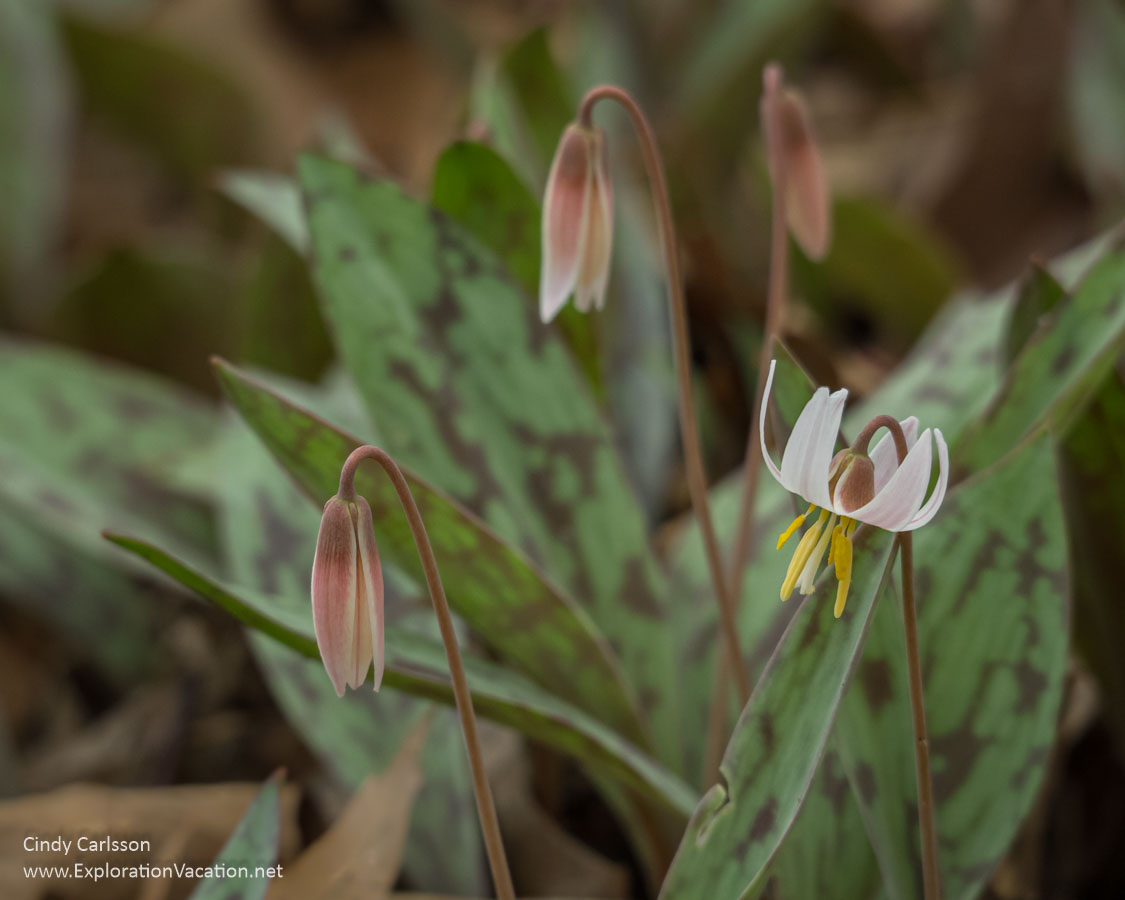
I visited Rice Lake State Park on a cold, wet day at the beginning of May. While I came expecting to find spring wildflowers, I didn’t expect to find every unpaved bit of ground blanketed in flowers!
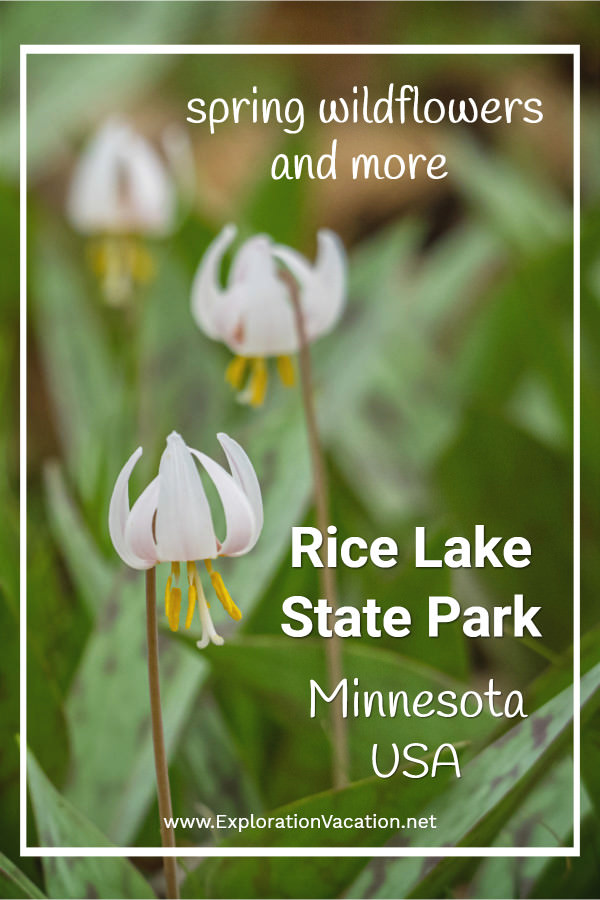
Both marshy areas and drier land along the parking and picnic area (and the picnic area itself) were swathed in layers of early wildflowers. (With more flowers yet to come.) The majority of flowers in bloom at the time were white trout lilies, but there were others as well, including bloodroot, false rue anemone, hepatica, spring beauty, and cutleaf toothwort.
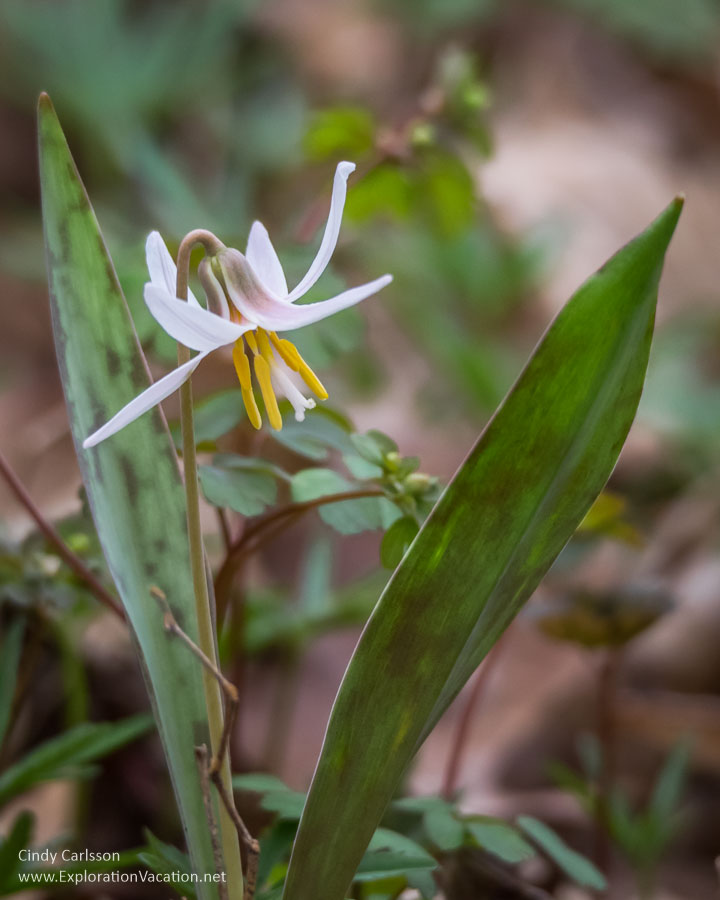
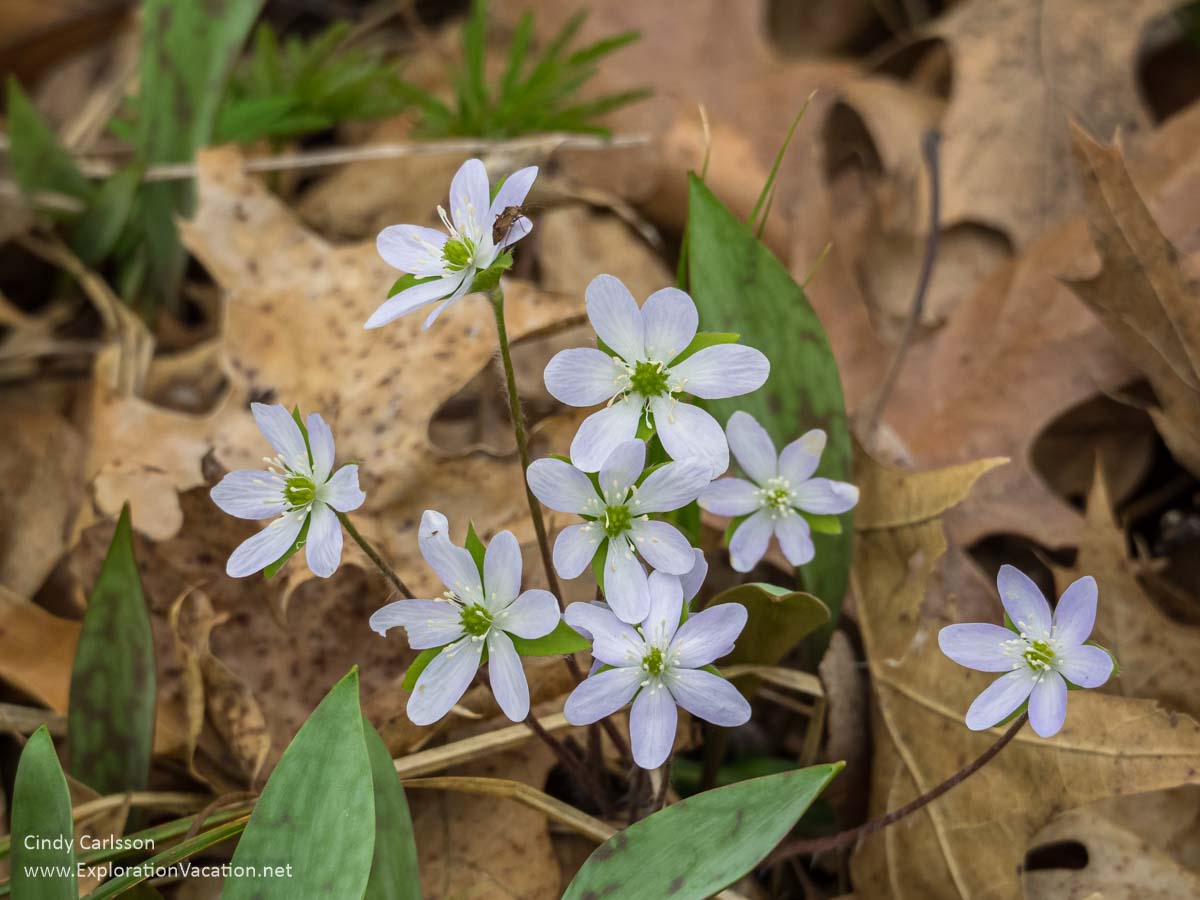
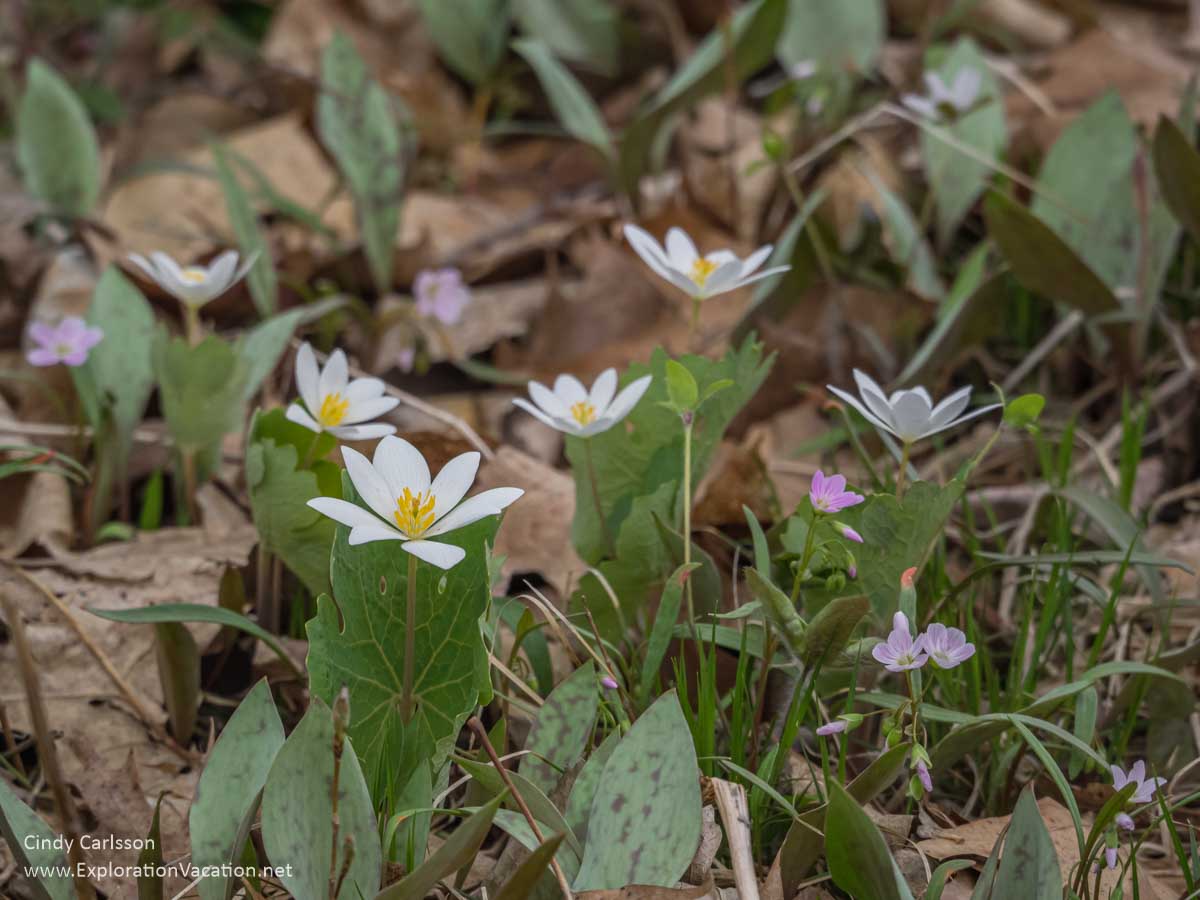
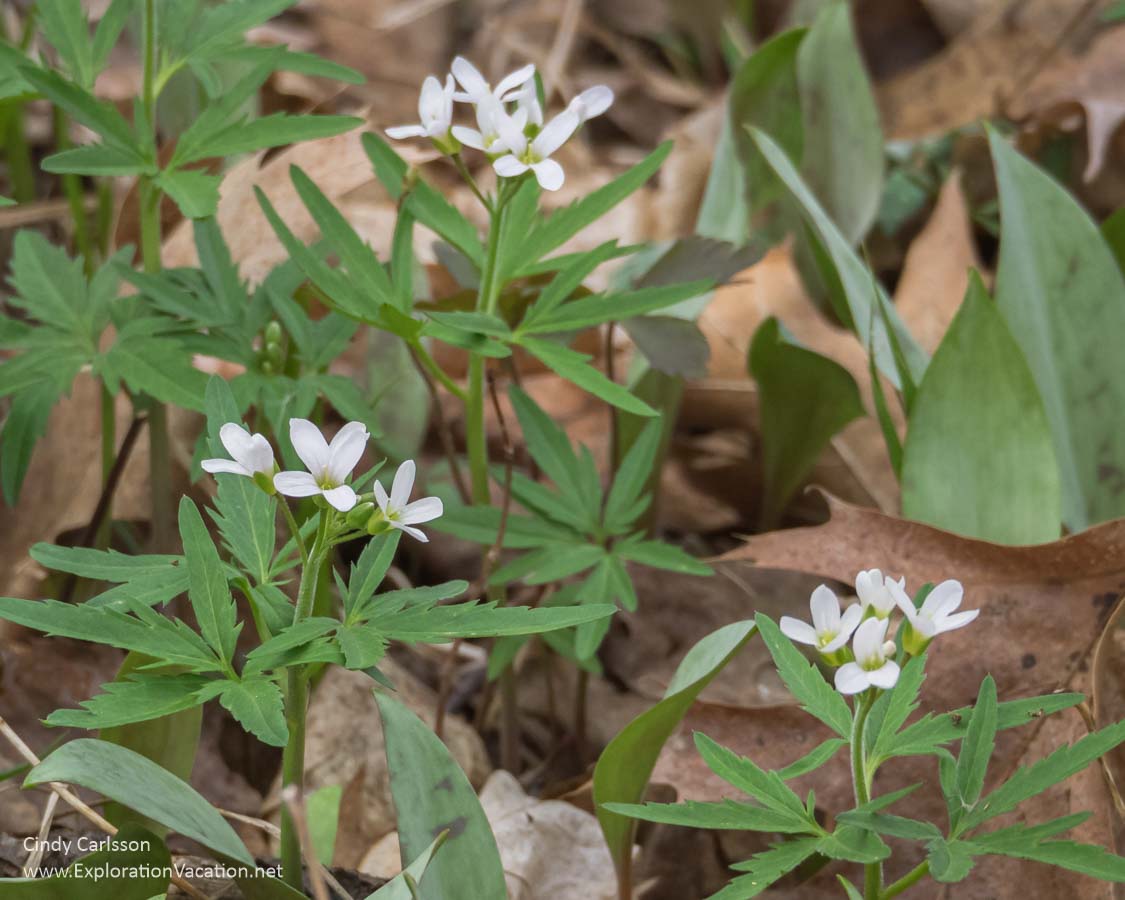
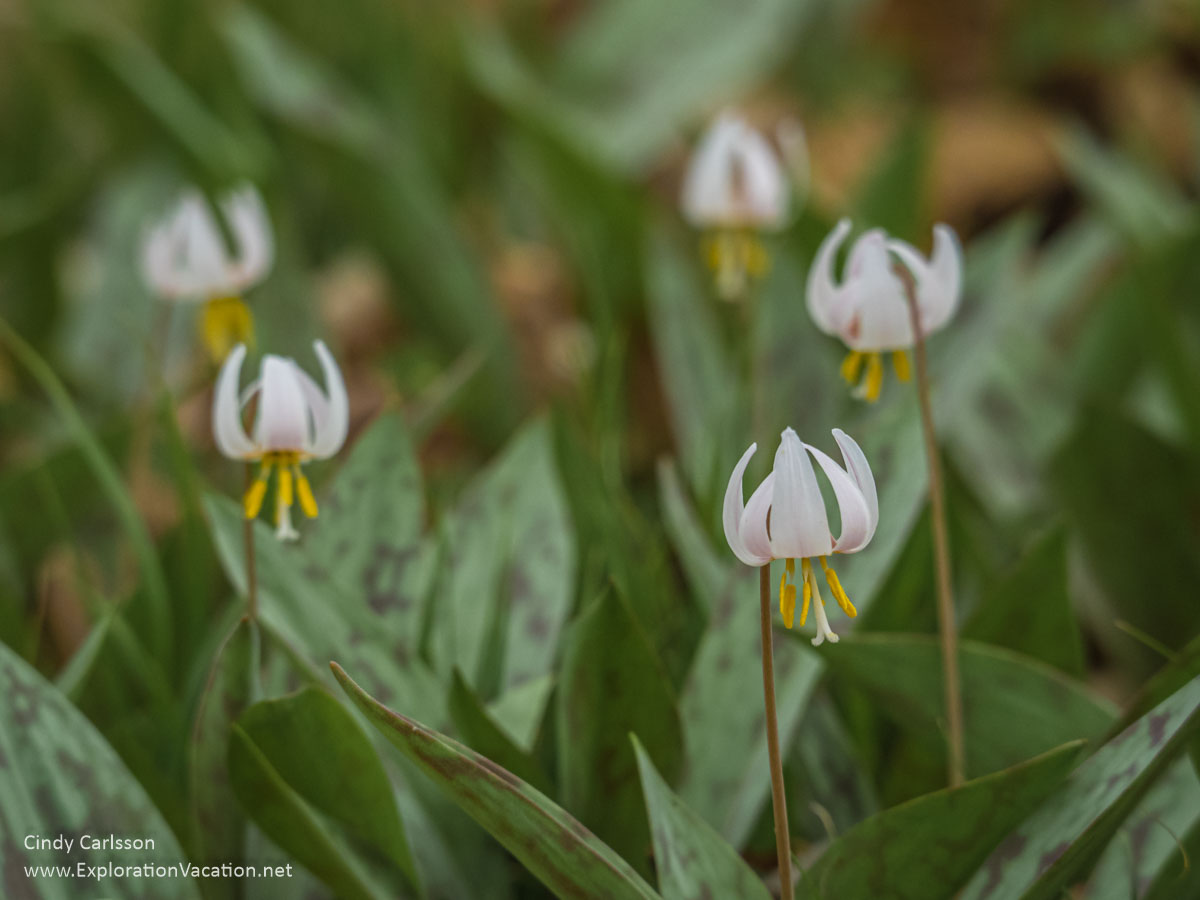
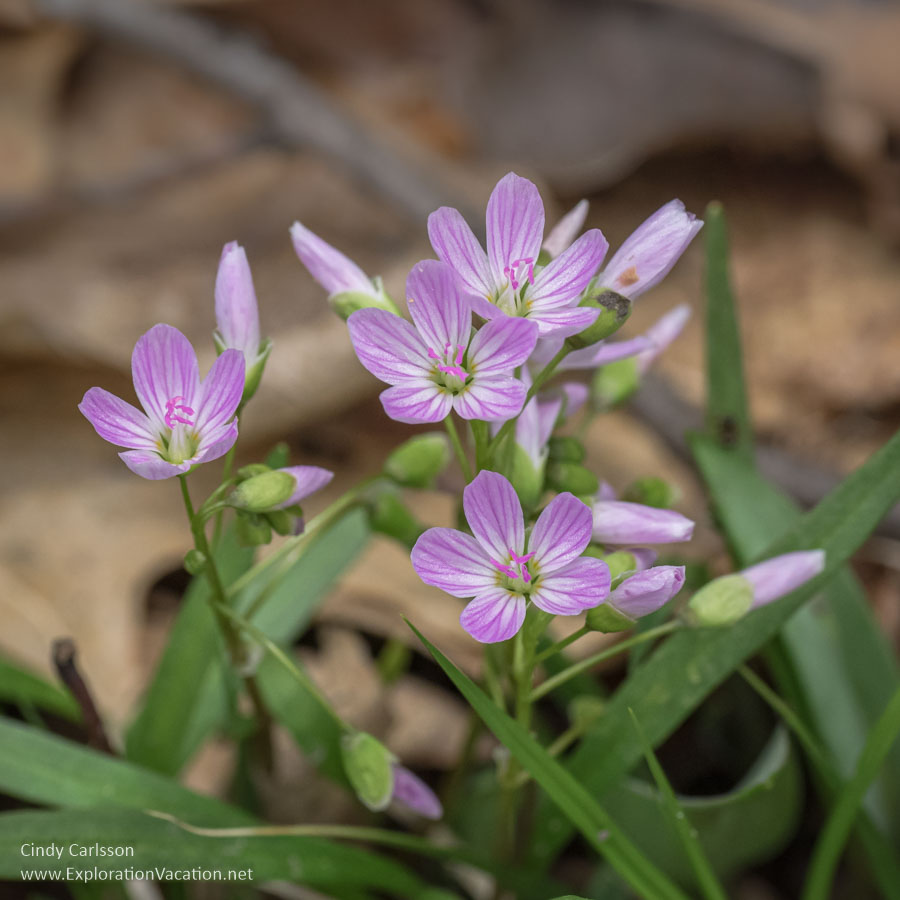
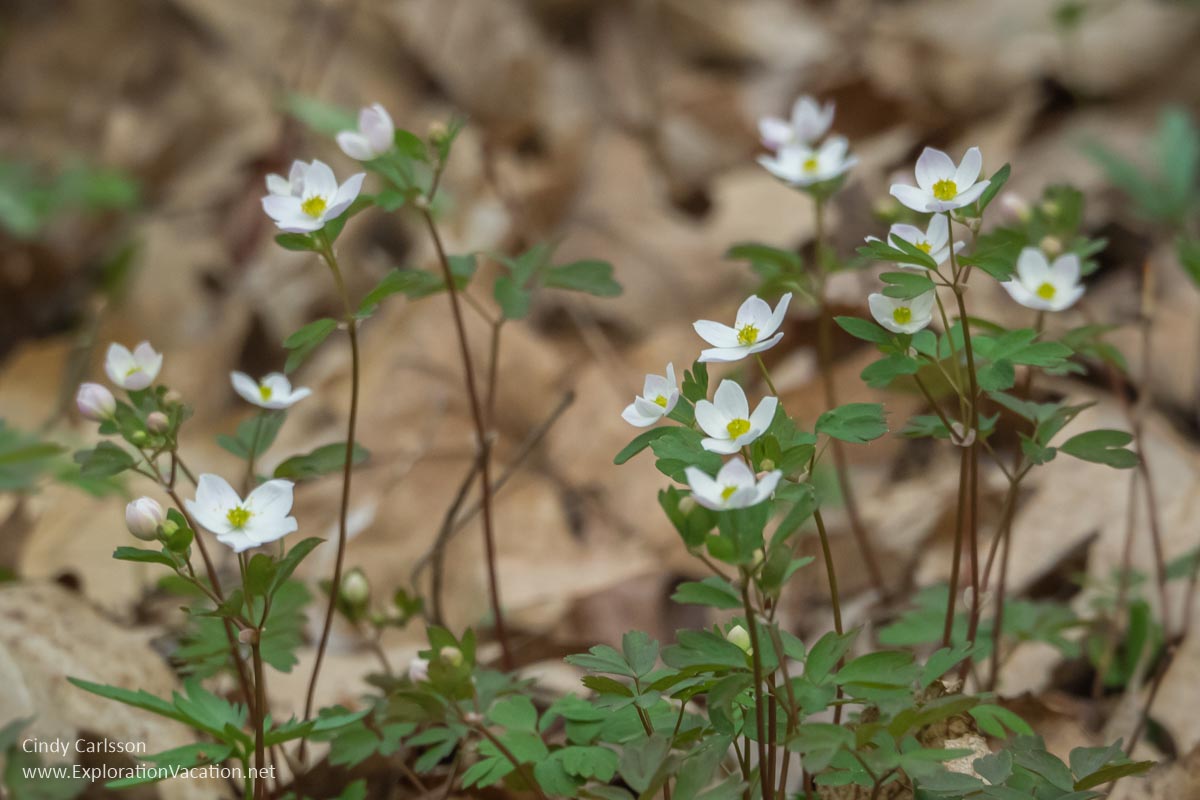
The year I visited Rice Lake, spring was a bit late, or at least, unusually cool and damp. Normally I would expect to see a lot of these flowers by mid-April.
I’ll be interested to return to see what the flower mix looks like later in the season, as I could see more sprouting. But for early spring blossoms, Rice Lake State Park is hard to beat! The flowers are plentiful and easy to spot from the parking lot.
Fall leaves
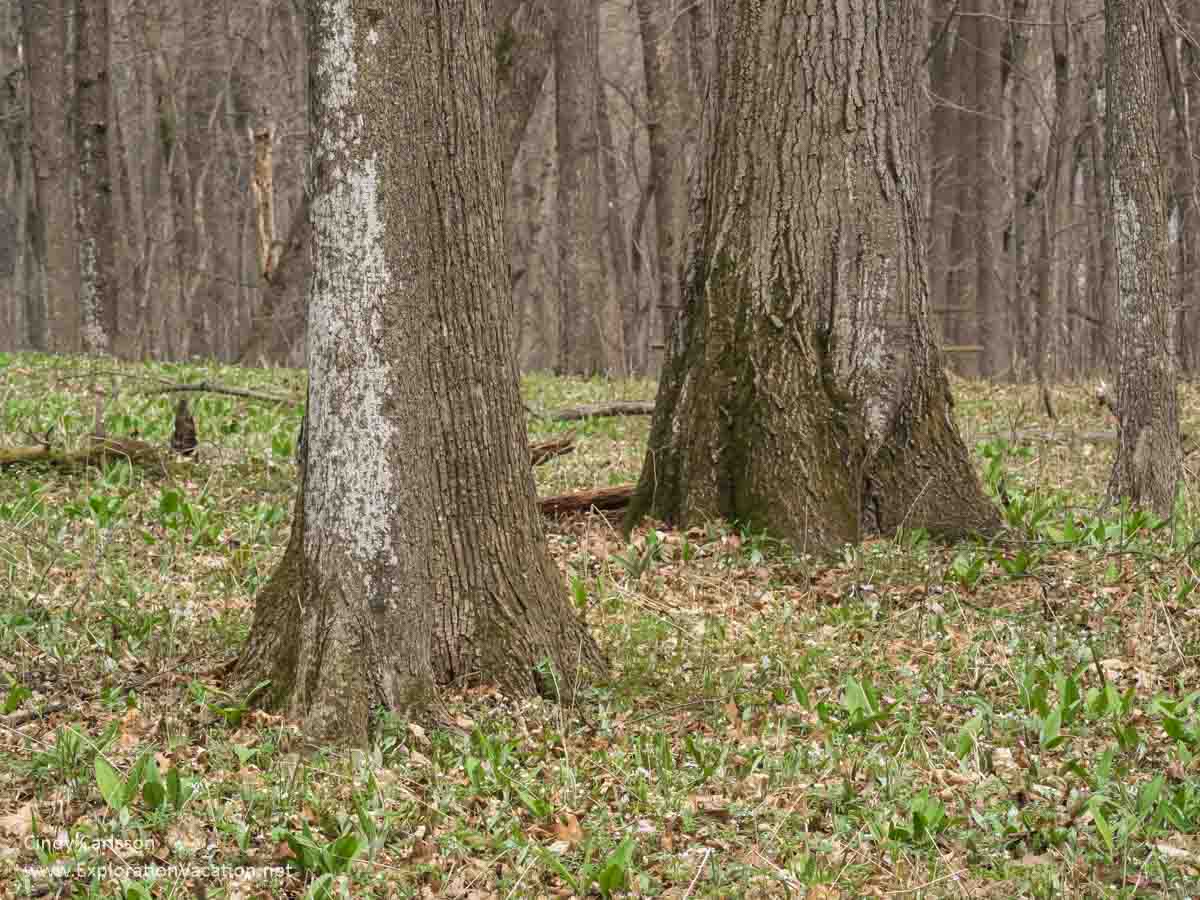
I haven’t visited Rice Lake in fall, but it has a nice mix of trees rising above the flowers. That makes it look like a pleasant spot enjoy some fall color in a part of the state that doesn’t have a lot of hardwood forests.
Plan your visit to Rice Lake State Park
Rice Lake State Park is located near Owatonna in southern Minnesota.
Although largely surrounded by agricultural land, the park itself includes the lake and a mix of shoreline marshes, prairie, and woodlands. Lakes of any type are rare in this part of the state, which is one reason the park attracts so many waterfowl.
This is largely a natural area. There is NO swimming beach.
The park is open year-round, but with limited staffing and services during the winter season.
Getting to Rice Lake State Park
This is a small park located in south-central Minnesota.
👉 Read more planning a trip to Rice Lake State Park
It’s about 10 miles east of Owatonna, 35 miles west of Rochester, and 75 miles south of the Minneapolis-Saint Paul Twin Cities metro area.
You’ll need a bike or car to get to the park itself.
Park services
Rice Lake State Park is largely a natural area with campgrounds and picnic tables.
There’s no beach, although there is a play area for children. Walking, boating, and bird watching are about the only warm-season activities available. It’s not really a spot for fishing either, as the lake lacks game fish.
Picnic areas
The park has a large picnic area with views of the lake. The picnic area, including the picnic shelter, is wheelchair accessible.
The picnic area is wooded and offers views of the lake. It also has swings, a slide, large sandbox, and other equipment in a fairly large children’s play area.
Trails
The park has about five miles of hiking trails. The Hiking club trail is 2.4 miles long and takes visitors through all of the park’s landscapes. Almost none of the short trail system is wheelchair accessible.
In winter visitors will find about three miles of ungroomed cross-country trails. An equal amount of snowmobile trail connects to the nearby state trail.
All trails are pretty flat, making for easy walking or skiing, and most are along or lead to the lake.
Boating
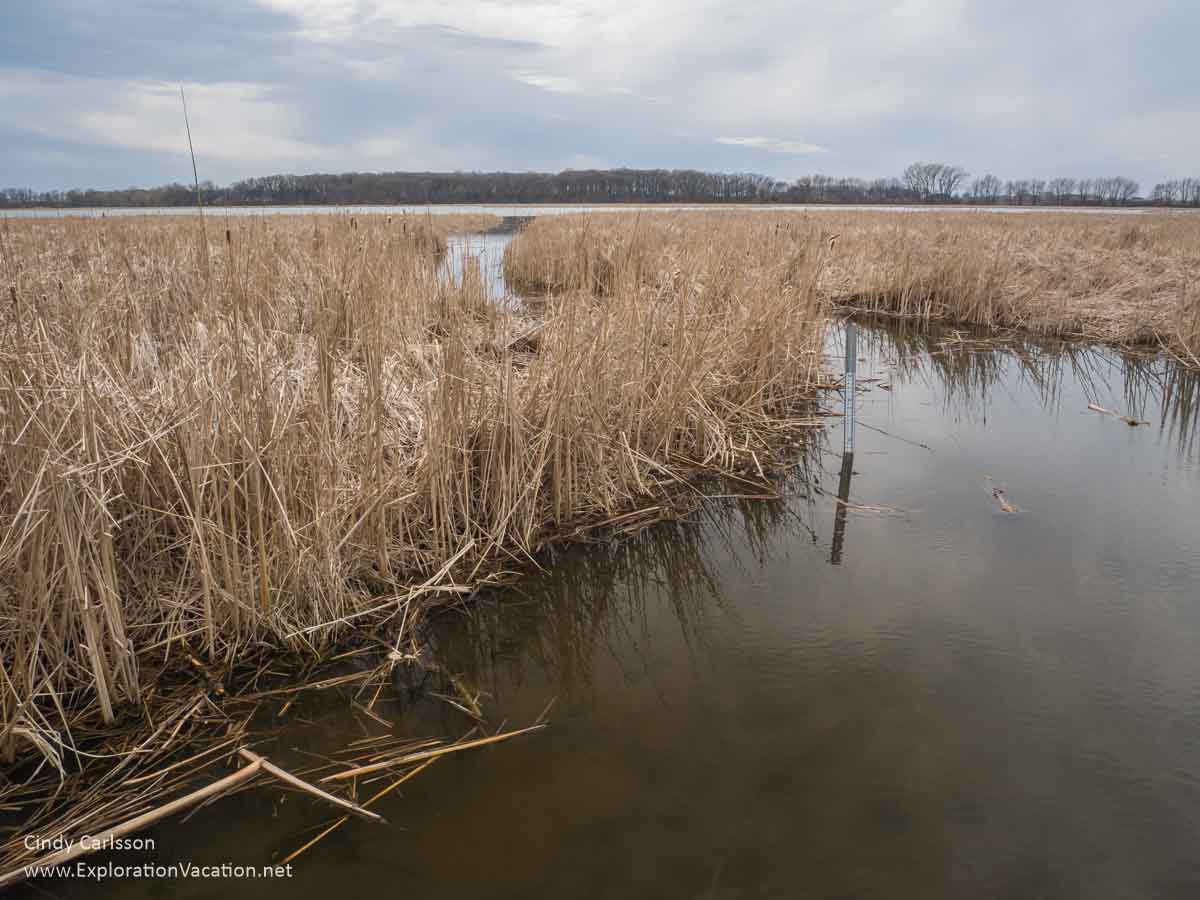
Rice Lake is shallow and marshy. Motor boats are allowed on the lake, but with an average water depth of 3-5 feet, the lake isn’t suitable for large boats.
Canoes and kayaks can be rented at the park from spring through fall, but check with the park for days and hours. Canoe campers who need to rent a canoe should contact the park to make arrangements as soon as they book their campsite.
The park maintains a path through the marshy growth along the shore to allow small boats, canoes, and kayaks to easily access open water from the boat ramp.
Winter activities
During the winter, Rice Lake State Park is open for snowshoeing, cross-country skiing, and snowmobiling. Snowmobile trails are groomed along with the state trail that runs past the park. Cross-country ski trails are not groomed.
A heated warming house is available during the fall hunting season and for winter snowshoeing, skiing, and snowmobiling.
The Snow Depth and Groomed Trail Conditions webpage provides reasonably up-to-date information on winter trail conditions.
Good to know
The Rice Lake State Park webpage includes links to information about the park, current hours, alerts, and contact information.
Seasonal hours and services
Although Rice Lake State Park is open daily between 8 a.m. and 10 p.m., campgrounds and various services are seasonal.
The park office is often open on a limited basis. When it is open, it has a gift shop that will loan visitors binoculars and field guides.
Drinking water is available year-round behind the park office.
Vault toilets are available throughout the park all year. Flush toilets are only available in the main campground area and only from spring through fall.
Fees
As with all state parks, a daily vehicle permit or an annual Minnesota Park Pass is required in the park. Either can be purchased at a self-serve station outside the park office.
Firewood
Please protect our forests by only using approved firewood in the park!! Firewood is available for sale in Rice Lake State Park. Bringing non-approved firewood into a state park or other Department of Natural Resources land can lead to a $100 penalty.
Pets
Pets must be kept on a leash no longer than six feet long and attended at all times. Please pick up after your pet!
Insects
Southern Minnesota has a high number of deer ticks, which can carry Lyme disease. Tick season now includes much of the entire time between spring thaw and the fall freeze. Park visitors should protect themselves from tick bites.
Summer visitors should expect plenty of other insects as well. With many marshy areas and wetlands along the lake, there will be bugs. But all those bugs provide food for the birds, so that’s a good thing. Bring plenty of insect repellent.
Hunting
Duck and other waterfowl hunters use the lake during the fall hunting season. All hunting must be carried out on the lake itself, not from the park’s shore.
👉 Read less
Looking for more park information?
The Rice Lake State Park website includes resources for planning your time in the park:
- Rice Lake State Park map (PDF) is the same paper map you’ll (usually) find at the park
- The Rice Lake State Park on-line virtual tour and map is a great way to actually see various areas in the park. It includes scenes from the picnic area, boat launch, and campgrounds. Just keep in mind that this is NOT a real-time link, so conditions may be very different from the pictures.
Those interested in options to improve and expand wetlands in the park might want to take a look at a study conducted around 2000 on Wetland Restoration Potential at Rice Lake State Park (PDF).
Roy Meyer’s 1991 book Everyone’s Country Estate: A History of Minnesota’s State Parks is a little opinionated and a little dated. However, it’s an invaluable resource for anyone interested in the history behind Minnesota’s state parks, including Rice Lake. Both new and used copies are available online.
Where to stay
Rice Lake State Park is in a rural agricultural area. This means most lodging options are either in the park or in the nearby city of Owatonna. Rochester and Albert Lea are also options, although they are a bit farther away.
Hotels and other lodging options
The nearest place with a variety of lodging options is Owatonna, an easy 15- or 20-minute drive from the park. Check your options, read reviews, and compare prices at TripAdvisor, Expedia, or Booking.com. (Watch out, as number of sites include “Owatonna” hotels that are in Northfield or Albert Lea. Always check the map view to know exactly where you will be staying.)
Put in your travel dates for accurate pricing.
Camping in the park
There are several campgrounds in Rice Lake State Park.
- 40 drive-in sites vary from open prairie to heavily wooded locations along two loops. These sites are said to be suitable for RVs of up to 55 feet in length, but reports from campground users indicate many sites are difficult for a vehicle of that size to get into. And all require backing in. I don’t think any have a lake view.
- Three sites are designated as wheelchair accessible.
- 18 sites, including two accessible sites, have electricity.
- Showers and flush toilets are available from spring through fall.
- Five walk-in sites with a vault toilet. These are a short walk from the parking area.
- Four cart-in sites with a vault toilet. These aren’t terribly far from the parking area and they have a lake view.
- Five canoe sites with a vault toilet and lake view, but no drinking water. Some of these appear to have limited privacy.
- A group camp with a vault toilet for up to 40 people and 15 vehicles.
There are no camper cabins at the park.
All campsites must be reserved through Minnesota’s online reservation system or by phone.
If you’d like pictures of spring flowers for your home, please take a look at CindyCarlsson.com