
Last updated on June 10th, 2026
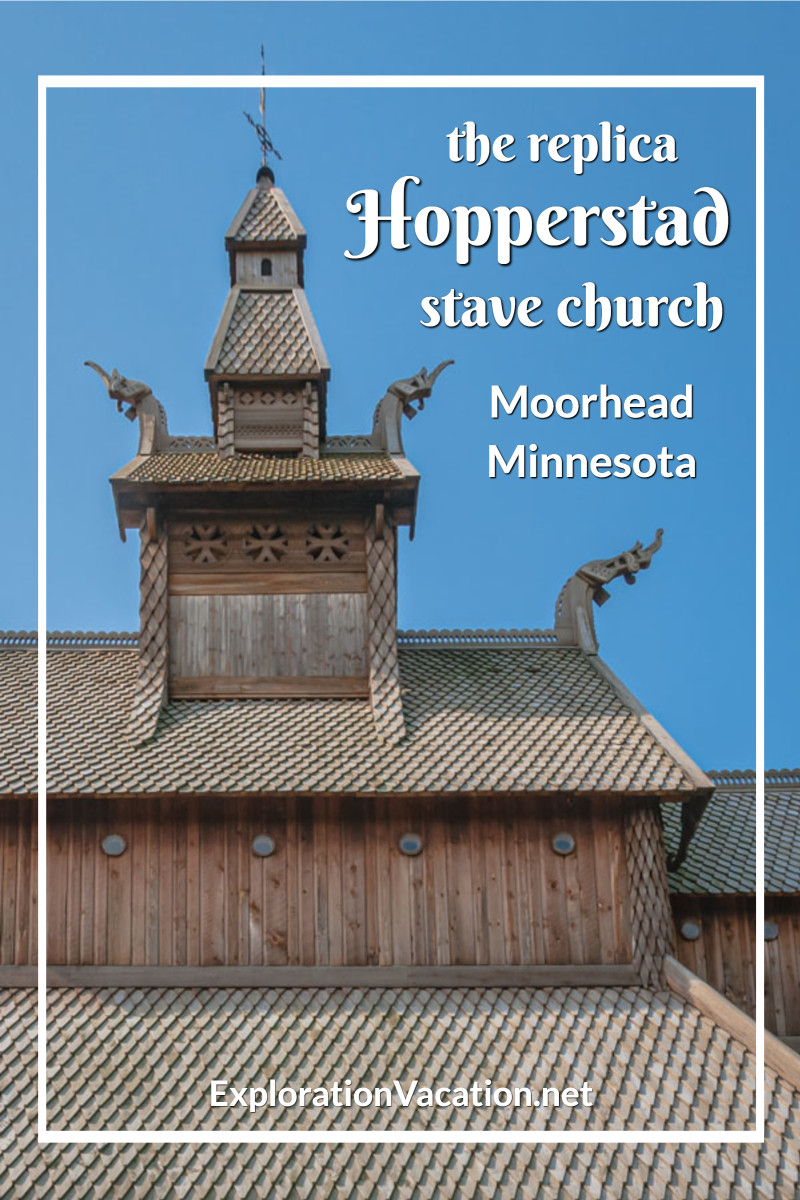
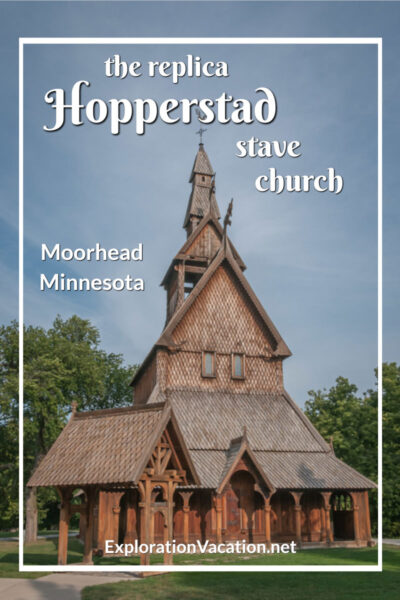
At the edge of the prairie where Minnesota and North Dakota meet, Moorhead’s Hopperstad stave church (a replica of the medieval Hopperstad stavkirke in Vik, Norway) transports visitors to the Viking era when Christianity first came to Scandinavia. Built on the grounds of a museum, the building is regularly open to the public.
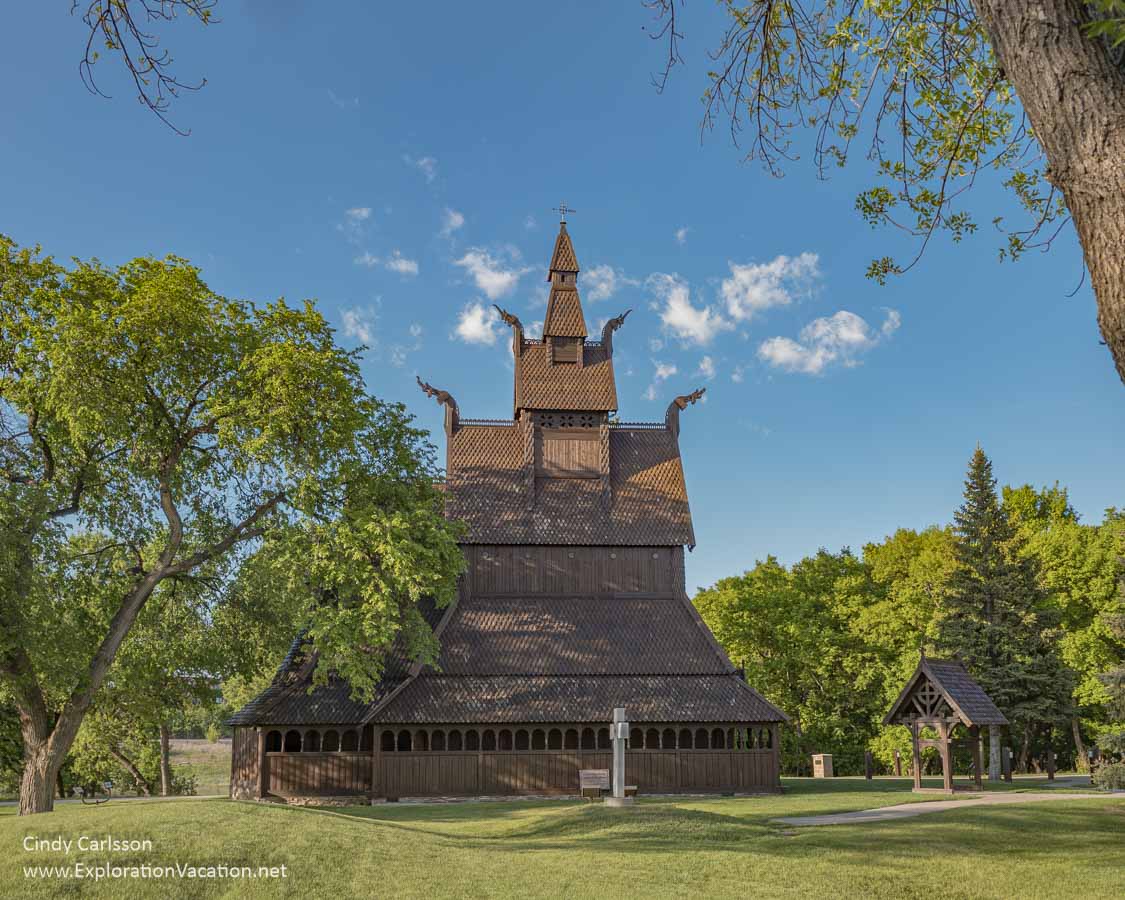
The Hopperstad replica stave church looks like something right out of Norse mythology.
Stave churches were common in medieval Scandinavia. They were built at a time when Christianity was beginning to replace traditional Nordic beliefs, and these elaborate structures mixed Nordic spiritual elements with Christian ones.
Over time, more than a thousand stave churches were built across Norway. Today only 28 remain, including the original Hopperstad church.
Although constructed using modern tools and building techniques, the Moorhead stave church is built to look almost exactly like the Norwegian original.
I use links to improve your experience using this website. Some may be affiliate links that pay me a small commission if you use them to book a room, rent a car, or purchase goods or services. You don’t pay extra, but it helps keep this website running. To learn more, see my policies and disclosures.
A Viking church in Moorhead
Moorhead, Minnesota, is home to many families with Norwegian ancestry, so it seems fitting the city also has a full-scale replica of a Viking-era Norwegian church.
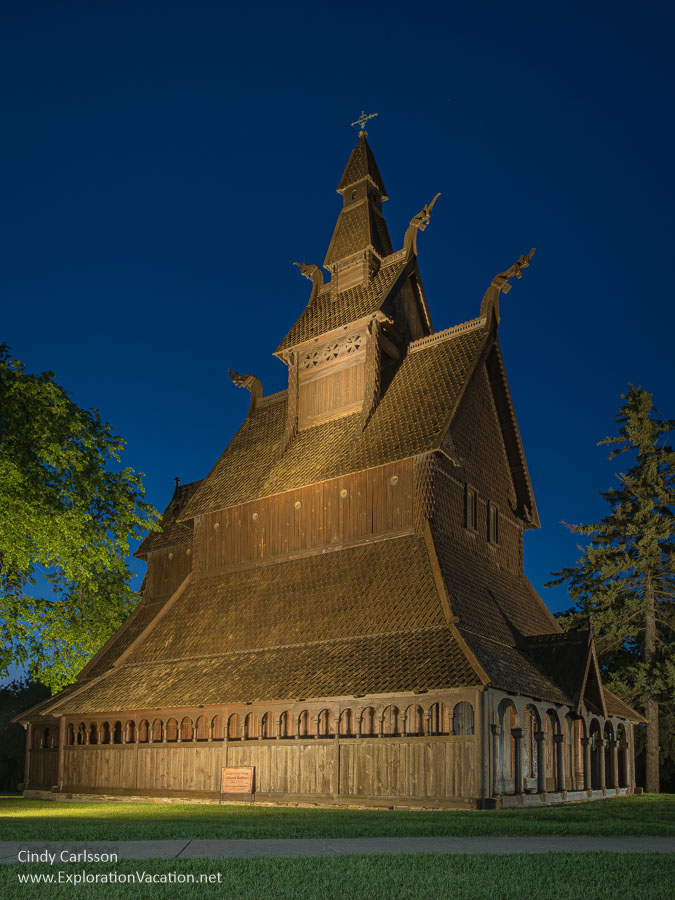
The replica Hopperstad church is a modern construction using an ancient architectural form.
Like the original Hopperstad church, Moorhead’s replica has 18 staves (posts) and stands 72 feet high.
All carvings inside and out were created by hand. However (unlike the original), the replica was constructed using modern tools and building techniques.
Building a homage to Norwegian ancestry
The replica Hopperstad church was built by Guy Paulson, an amateur woodcarver in need of a retirement project. (Men seem to need big projects with ties to their ancestors in this part of the country. Maybe it’s the long winters.)
👉 Learn more about how this church came to be . . .
Paulson grew up in a South Dakota family still closely connected to its Norwegian roots. But the decision to build a stave church seems tied to many things: The need to keep busy once he retired, a desire to honor his Norwegian ancestry, his Lutheran faith (although Hopperstad and other Norwegian stave churches were Catholic churches for several centuries before Luther nailed a copy of his 95 Theses to the church door in Wittenberg), his skill as a woodcarver, and the memory of visiting a replica of the Borgund stave church as a child in South Dakota.
Having selected his project, Paulson and various members of his team traveled to Norway. There they visited the few stave churches that remain, reviewed the original plans for restoring the Hopperstad Church (probably some of the same drawings I’ve included below), and took exact measurements of the restored church.
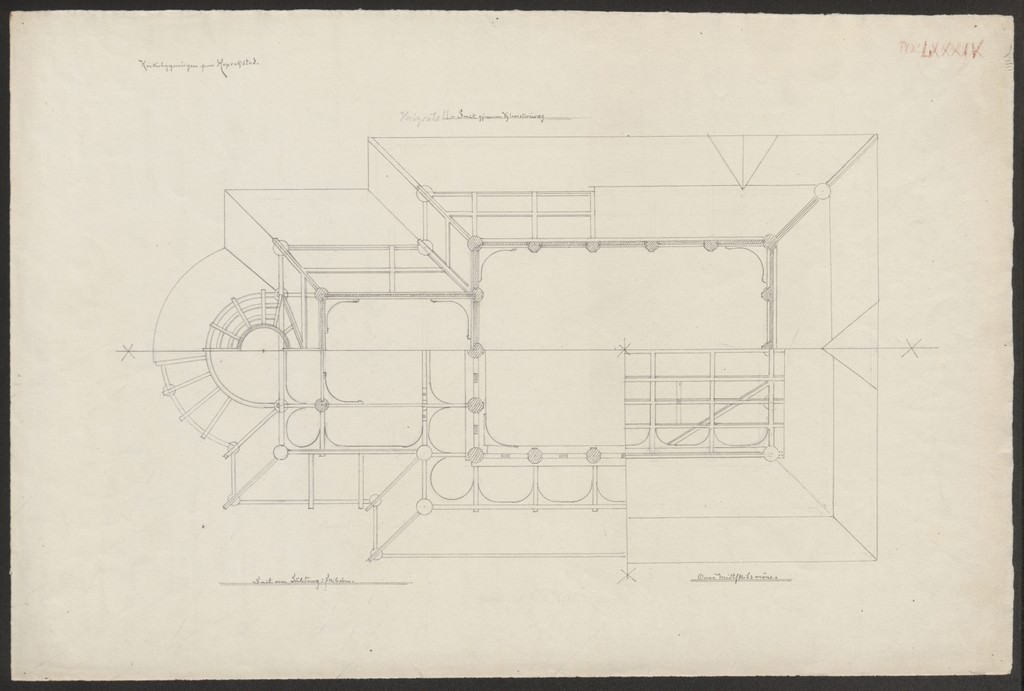
Drawing of Hopperstad Stave Church by Peter Andreas Blix from the collection of the Norwegian Directorate for Cultural Heritage [Public domain] via Wikimedia.
Obviously we wanted accurate replication because why would you do a replica if you didn’t do the best job you could.”
From the time he began until he finished the last carving, Paulson spent over five years building the church. But he didn’t build it alone. Local architect and family friend Dale Ruff donated his firm’s expertise. Don Guida of Straight River Log Homes was brought in to build the main structure. And, of course, various family members helped throughout the process. But, like the man who restored the original Hopperstad church a century before, Paulson donated his own time and paid the project’s expenses.
Construction began on the grounds of the Historical and Cultural Society of Clay County in 1997. The church was dedicated the next year, with visitors from Vik, Norway, in attendance. However, it took Paulson three more years to finish all the ornate, hand-carved elements.
Today the church is owned by the city of Moorhead. The interior can be viewed as part of a tour led by the Historical and Cultural Society. It’s also available for private events.
👉 Read less
The rise of stave churches in Norwary
The original Hopperstad stave church was constructed during a time of great change in Norway as the Vikings’ traditional Nordic religions were replaced by Christianity.
The Vikings adopt Christianity
The traditional religion of the Vikings was filled with gods, giants, and lots of supernatural conflict. But as the Vikings traveled, they came into contact with Christianity.
While well-known as raiders, in many places Vikings sought to establish long-term trade routes and settlements. To do so, they needed working relationships with the people already living in those places. But by the time the Vikings arrived, the people of the British Isles and Normandy were already Christian. And Christians were forbidden from dealing with pagans.
For the Vikings, the simple answer was to convert to Christianity. At first that didn’t mean giving up their traditional beliefs. Instead, the Vikings often just added the Christian God to their existing pantheon. And that was generally enough for Christian communities eager to trade with the Vikings.
However, as Viking kings and chieftains spent more time living amid their Christian neighbors, they began to fully convert to this new religion. And, as they did so, they gave up Norse gods and religious practices. When they returned home, they brought their new religion with them. Not only did they bring their own Christian beliefs back to Norway, but they instilled those beliefs (often under the threat of death) in the people they ruled.
By the 12th century, Christianity was well established in Norway. But even then, the Catholic church struggled for full control over religious practice, as traces of the old Norse religion could be found throughout the newly Christianized land. This shift from the old religion to the new is often visible in medieval church architecture like Norwegian stave churches, where dragons and other pagan symbols intermingle with Christian imagery.
(Although Norway is officially a Lutheran country today, that didn’t happen until late in the 16th century. Long after the end of the Viking age.)
What is a stave church?
Stave churches (called a stavkirke in Norwegian) are wooden buildings constructed using vertical, roof-bearing posts and vertical, load-bearing timbers (called staves) to form the central structure. Both posts and staves were either buried in the ground (which caused them to rot) or set into stone sills to hold them in place. An upper wooden sill tied the posts and staves together at the top.
Upper levels helped support what was below it, with braces and supports to keep everything tight and in place.
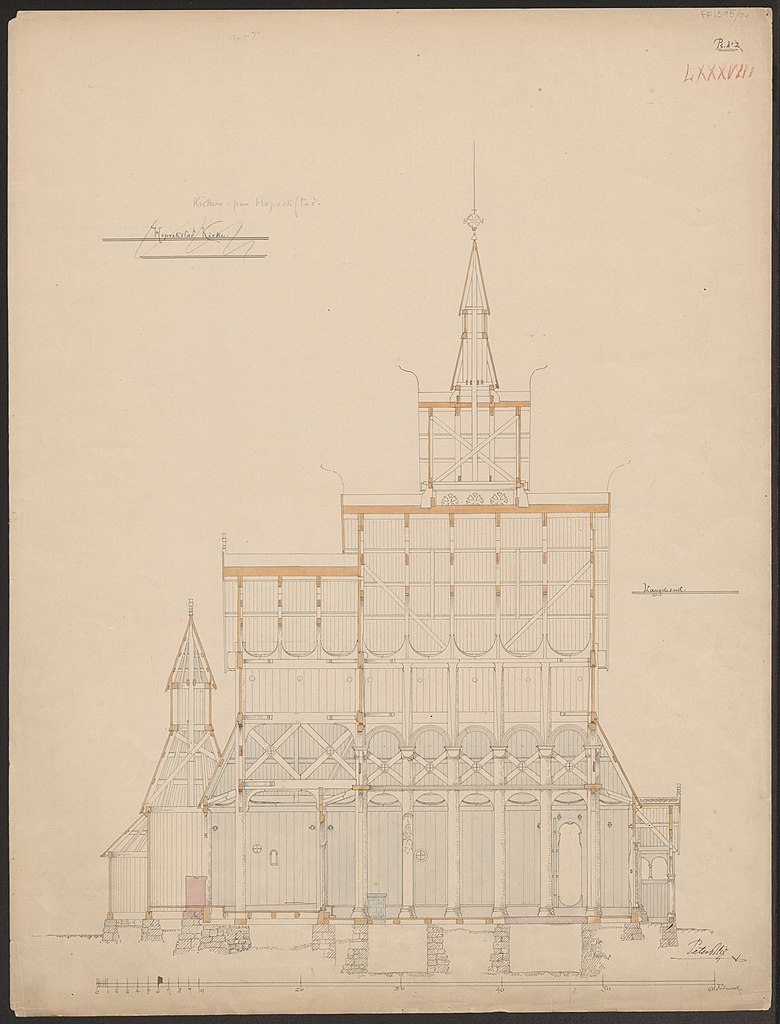
Drawing of the Hopperstad Stave Church in Vik, Norway, by Peter Andreas Blix from the collection of the Norwegian Directorate for Cultural Heritage [Public domain] via Wikimedia.
Few stave churches survived the passage of time
Stave construction was common in northern Europe, particularly in Nordic countries, as Christianity spread into the region late in the Viking era. Although rare and exotic today, it’s believed that up to 2000 stave churches were built in Norway alone.
In the earliest churches, staves were set directly in the soil. Being pine, they rotted rather quickly, requiring regularly rebuilding the entire. Because of this, Sweden and other countries soon turned to stone churches like the ones I saw throughout Gotland.
However, in Norway, the tradition of building with wood continued far longer.
In the 12th century, Norwegians improved their technique for stave church construction by building on stone sills. Setting the posts and walls on top of the sill protected them from moisture, thus greatly increasing their lifespan.
Although archaeological evidence indicates they were built earlier, the only existing stave churches in Norway were constructed after stone sills came into use in the 12th century.
By the 14th century, the age of the Vikings was over, and this construction technique was no longer used.
Today, only 28 stave churches remain in Norway.
This church’s story begins in medieval Norway
The stave church in Moorhead is a full-scale copy of the 12th century Hopperstad Church in Norway. While constructed using modern techniques, it includes all the structural elements and decorations of the original church.That includes elaborate carvings and hardware.
But the original Hopperstad itself was once an abandoned ruin that barely escaped demolition.
Recreating a church from an abandoned ruin
The original Hopperstad stave church was constructed in the hills above a fjord in Vik, Norway, around 1130. This makes it one of the oldest surviving stave churches.
It was constructed on a stone sill. That helped preserve it through 700 years of use until a new church was built in 1877.
But once the new church was complete, the exterior of the old church was stripped and the building abandoned.
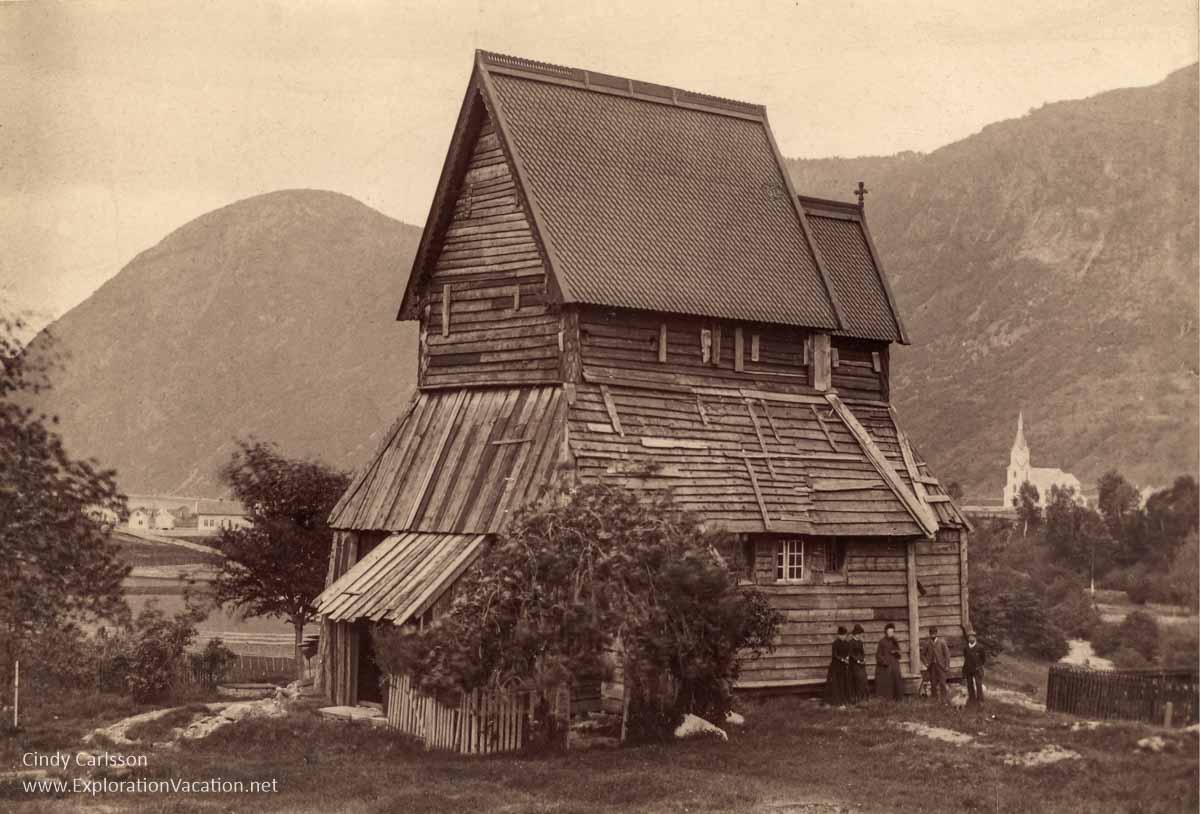
Hopperstad Stave Church in 1885 before restoration. Photo from the Norwegian Directorate for Cultural Heritage [Public domain] via Wikimedia.
Peter Andreas Blix to the rescue
Once abandoned, the congregation planned to demolish the remains of its old Viking church. But people elsewhere were beginning to see Norway’s medieval churches as a valuable (and rapidly disappearing) part of their history.
👉 Learn more about saving the original Hopperstad stave church . . .
At this point, before the old Vik church was demolished, the Society for the Preservation of Norwegian Ancient Monuments stepped in.
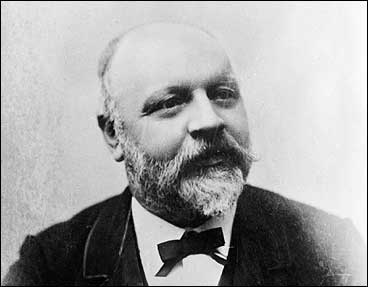
Architect Peter Andreas Blix restored the original Hopperstad church in the 1880s. Unknown photographer [public domain] via Wikimedia.
Best known for designing railway stations and Swiss-style villas, Blix was also interested in historic Norwegian architecture. In Bergen he led a team that restored the city’s historic stone cathedral and fortress. In Vik, Blix restored both the historic stone Hove Church (which he owned) and the Hopperstad stave church (which he restored using funds he raised himself).
👉 Read less
Much was lost, but much remained
Restoring Vik’s Hopperstad Stave Church presented challenges beyond funding.
The removal of exterior features and siding made it unclear what the church originally looked like or how its exterior gallery (porch or ambulatory) was constructed.
Earlier changes also left their mark. For example, a 17th century project lengthened the church nave and topped it with a bell tower. Other log additions expanded the church in various directions.
While some of these additions were removed even before the church was abandoned, all left their mark. And all of them made it more difficult to determine what the original church looked like.
There’s a lot of interpretation, imagination, and research involved in restoring an abandoned medieval building. In the end, it’s a guess based on personal knowledge and biases.
Blix kept what remained of the original stave church structure and carvings. He also kept late-medieval additions like the baldachin and the small window openings in the chancel that were added to allow lepers to receive communion.
Other existing features were deemed inappropriate and removed.
Restoring and recreating the Hopperstad church’s exterior
Because so much of the Hopperstad church’s exterior had been altered, Blix turned to the similar, well-preserved Borgund stave church as a model.

Borgund Stave Church in Laerdal, Norway, by Zairon [CC BY-SA 3.0 Creative Commons license] via Wikimedia.
In particular, the Borgund church provided a model for the roof turret, ridgeline dragons, and external gallery at Hopperstad.
The roof turret
While some stave churches are boxy, at 72 feet in height, the Hopperstad church seems to reach for the sky.
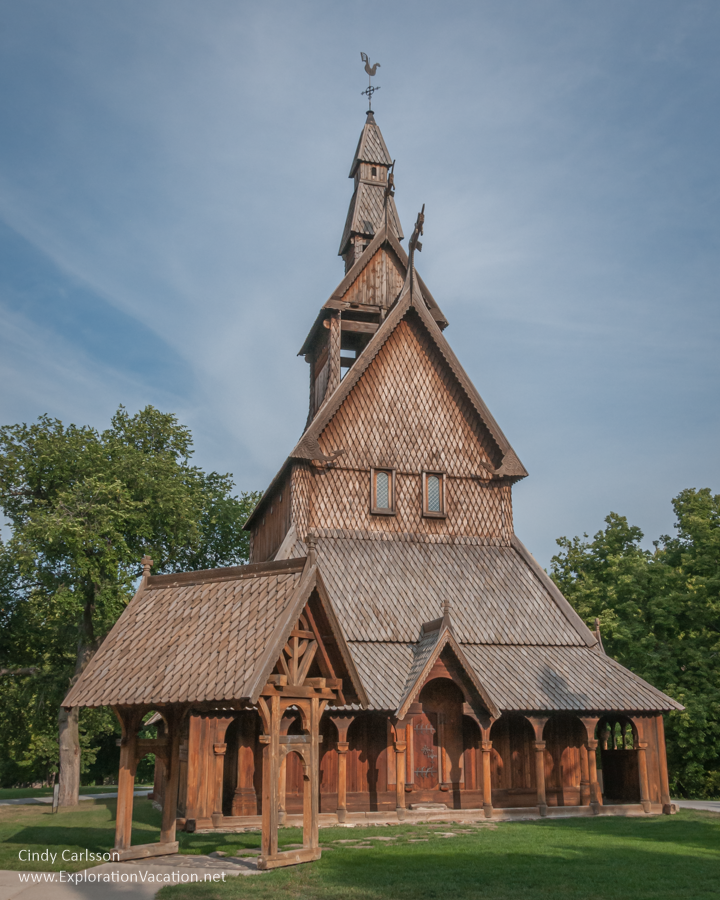
A church that reaches for the sky.
Part of that effect is due to the turret that sits above the main structure.
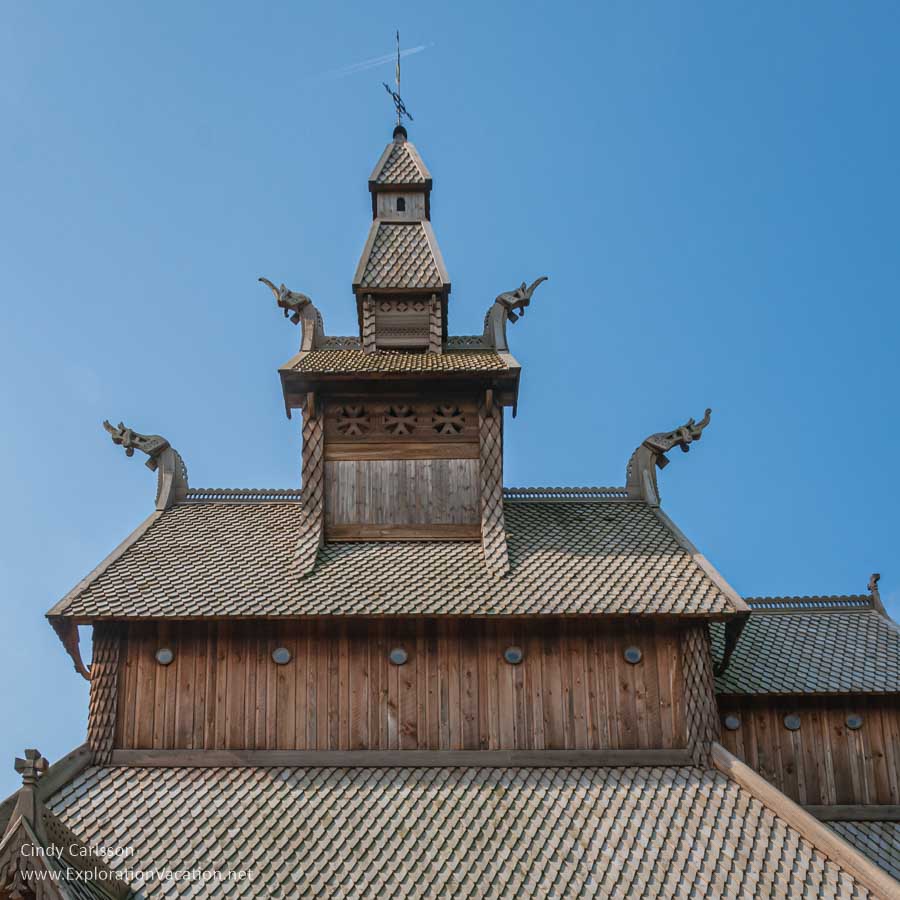
The elaborate turret and ridgeline dragons are copies of those on the Hopperstad church, which were copied from the Borgund church.
While the original Hopperstad church probably had a roof turret, it was long gone by the time the church was restored. That means the turrets atop both the heavily restored Norwegian original and the American replica are based entirely on the Borgund church’s turret.
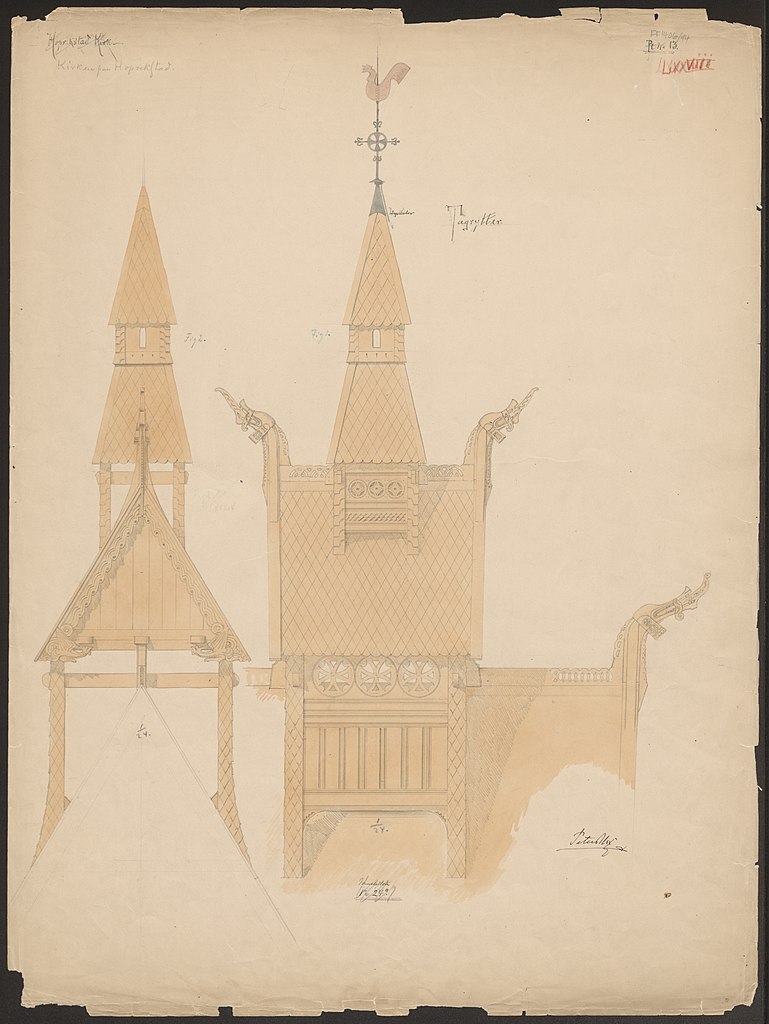
Drawings for the roof and turret on Hopperstad Stave Church by Peter Andreas Blix from the collection of the Norwegian Directorate for Cultural Heritage [Public domain] via Wikimedia.
Dragons abound
Likewise, the dragons that swoop down from the roof and adorn the ridges were also inspired by the Borgund church.
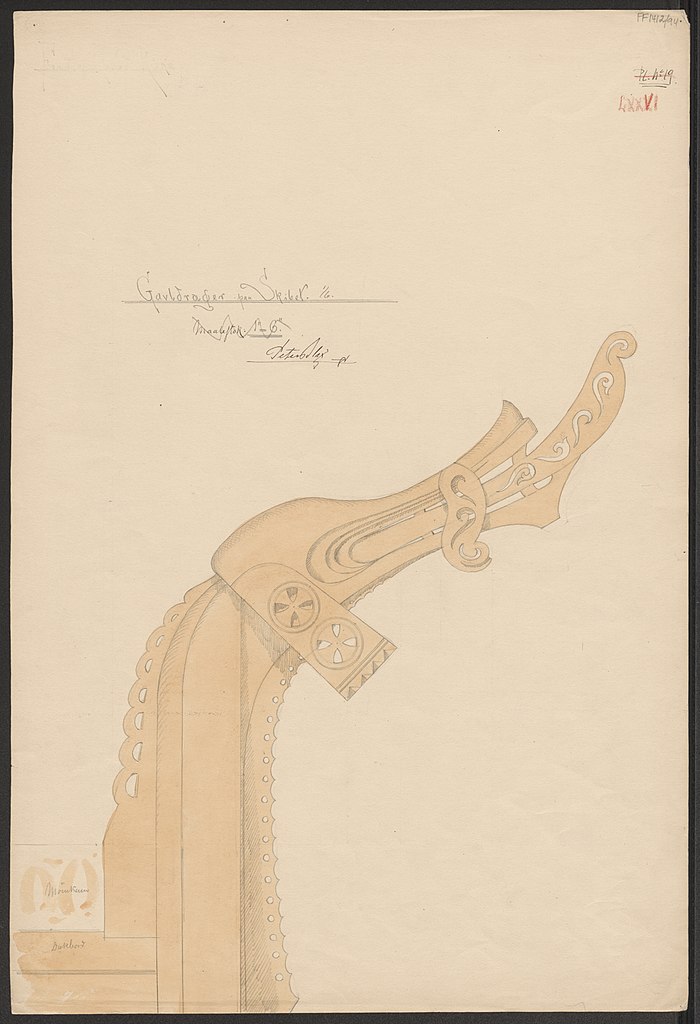
Drawing of the dragons that adorn the roof of the Hopperstad Stave Church by Peter Andreas Blix from the collection of the Norwegian Directorate for Cultural Heritage [Public domain] via Wikimedia.
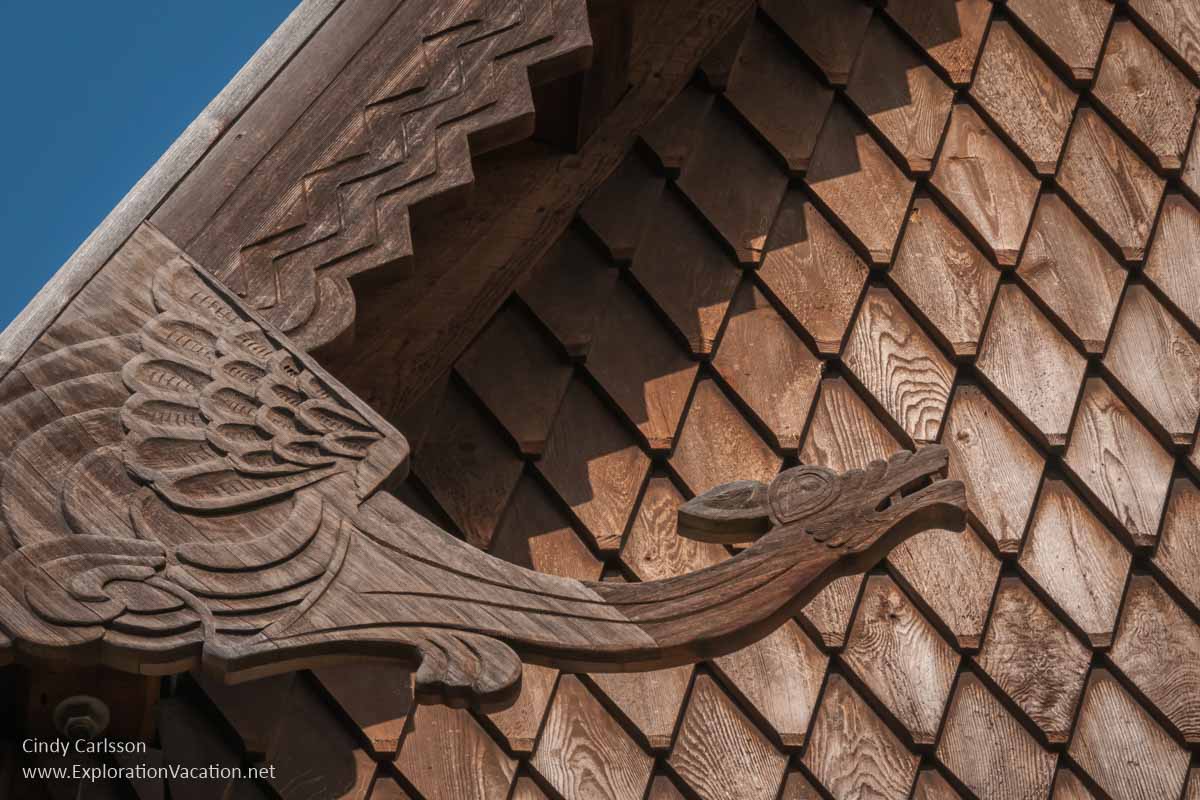
Carved dragons sweep down from the dragon-scale shingled roof of the church.
While dragons are commonly portrayed as evil in Norse mythology, they are also connected to both change and human wickedness. Dragons were one of the few images from old Norse religions regularly depicted on the exterior of stave churches.
The exterior ambulatory
Below the dragon heads and dragon-skin shingles, a covered gallery or ambulatory wraps around the church. Like the turret and dragons, it too is modeled entirely on the Borgund church.
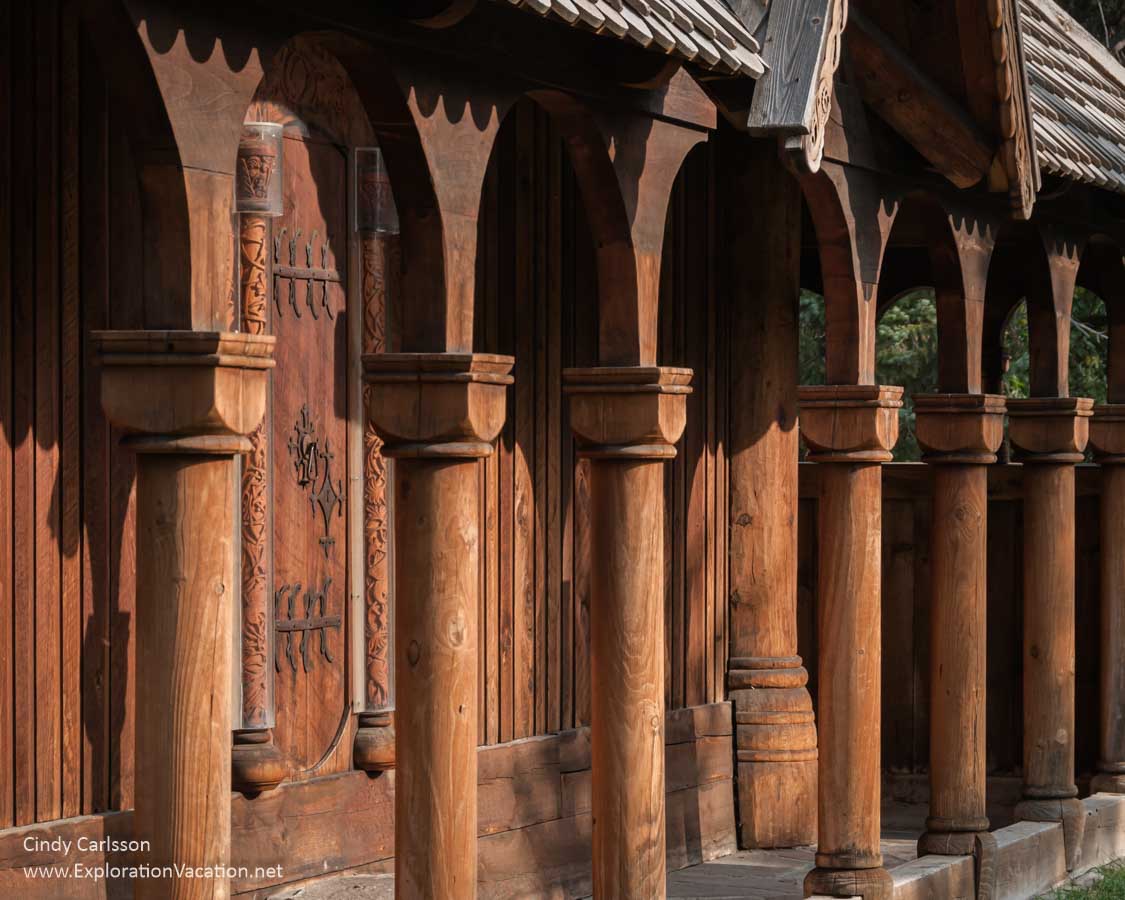
An exterior gallery (an ambulatory) wraps around the Hopperstad Church.
Neither truly inside or outside, galleries like this were important at a time when many people were deemed “unclean” and not fit to enter the church itself.
(Today it’s just a wonderful sheltered space with beautiful light.)
Doorways with elaborate carvings
Viking churches in the early days of Christianity combined Christian and pagan imagery. The Hopperstad church was no exception.
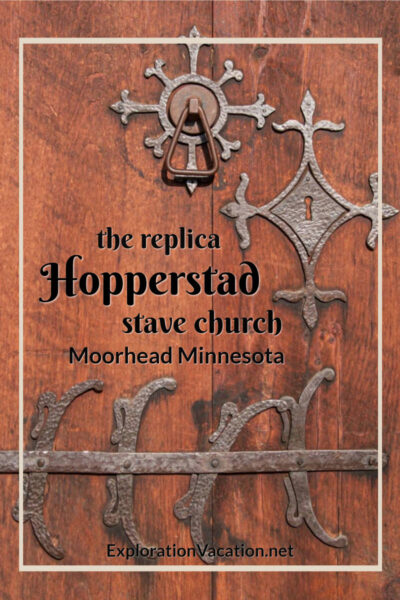
The most dramatic feature of the porch may be the doors into the church itself. Called “portals” because of their oval shape, they include beautifully carved panels and metalwork. These portals on the Moorhead church are exact copies of Viking-era carvings and hardware that survived for centuries at the original Hopperstad church in Norway.
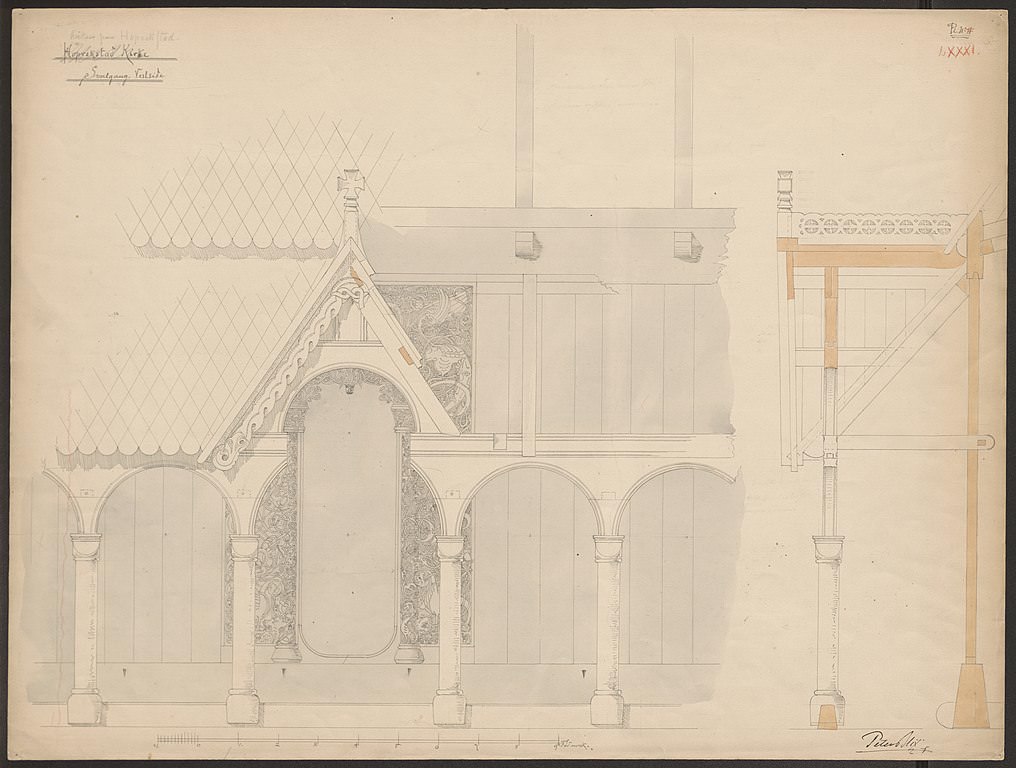
Drawing of west portal by Peter Andreas Blix from the collection of the Norwegian Directorate for Cultural Heritage [Public domain] via Wikimedia.
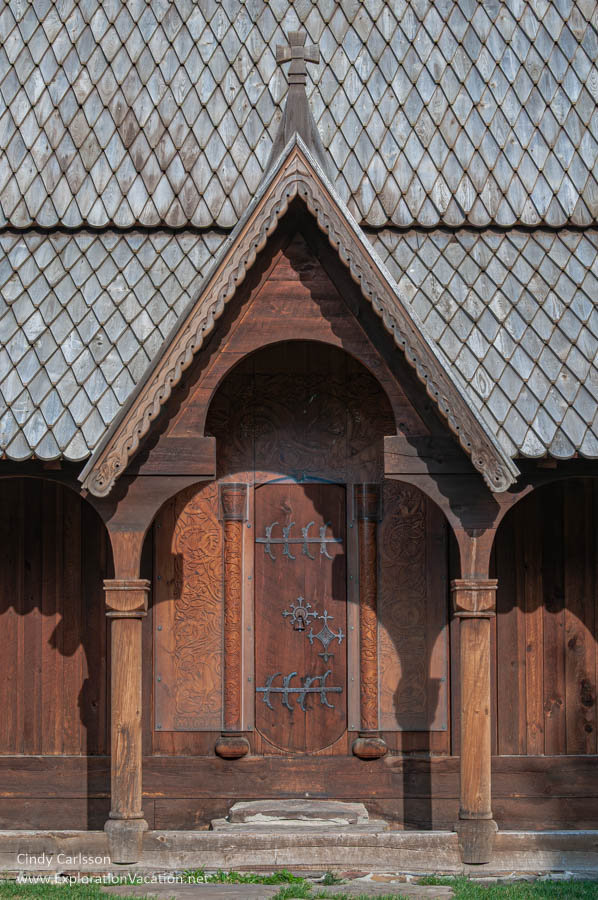
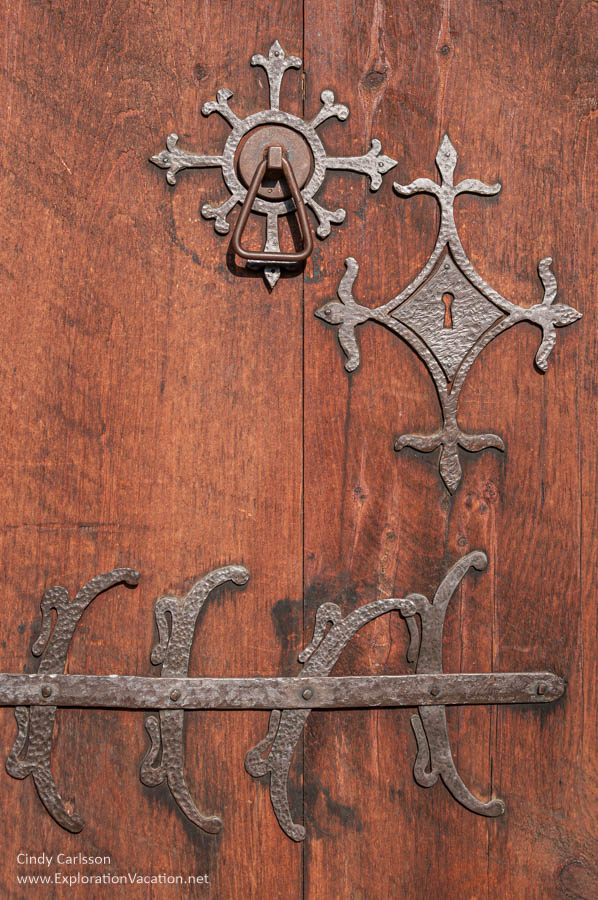
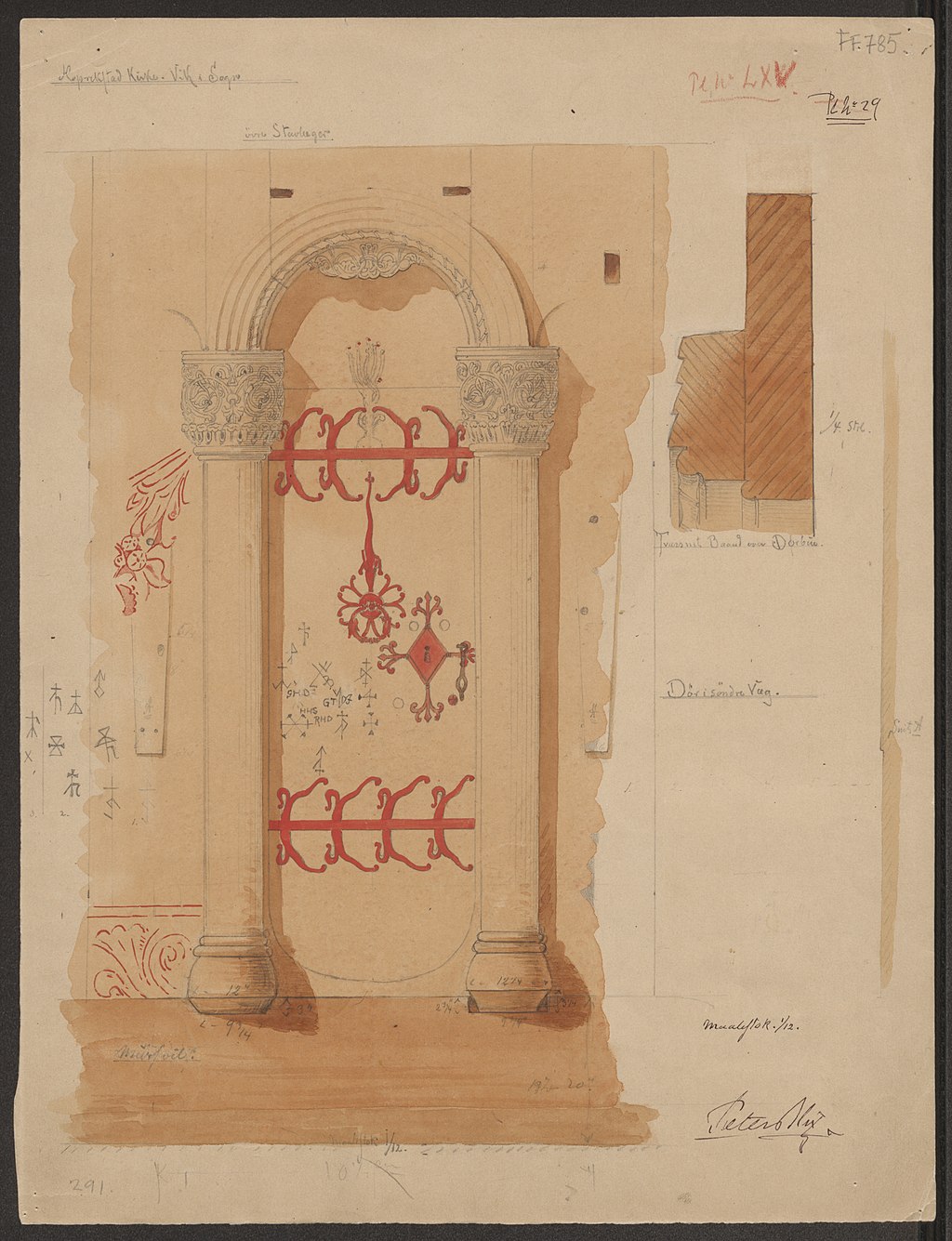
Peter Andreas Blix illustration of the side door of the Hopperstad Stave Church from the collection of the Norwegian Directorate for Cultural Heritage [Public domain] via Wikimedia.
Restoring the church’s interior
Significant cultural changes occurred over the 700 years the Hopperstad church was in use, including the change from Catholic to Lutheran following the Reformation. The interior of the original Hopperstad church also changed over time as physical needs, tastes, and religious practices changed.
The Hopperstad stave church interior as it exists today is based on architect Peter Andreas Blix’s interpretation of its appearance during the late medieval period. That includes leaving some later additions in place while removing others.
Bare walls, but an original baldachin
Probably the most notable “original” item in the Hopperstad church was an early 14th century wooden canopy called a baldachin. Often used to cover a special statue, this one was reported to cover the baptismal font before the church was abandoned.
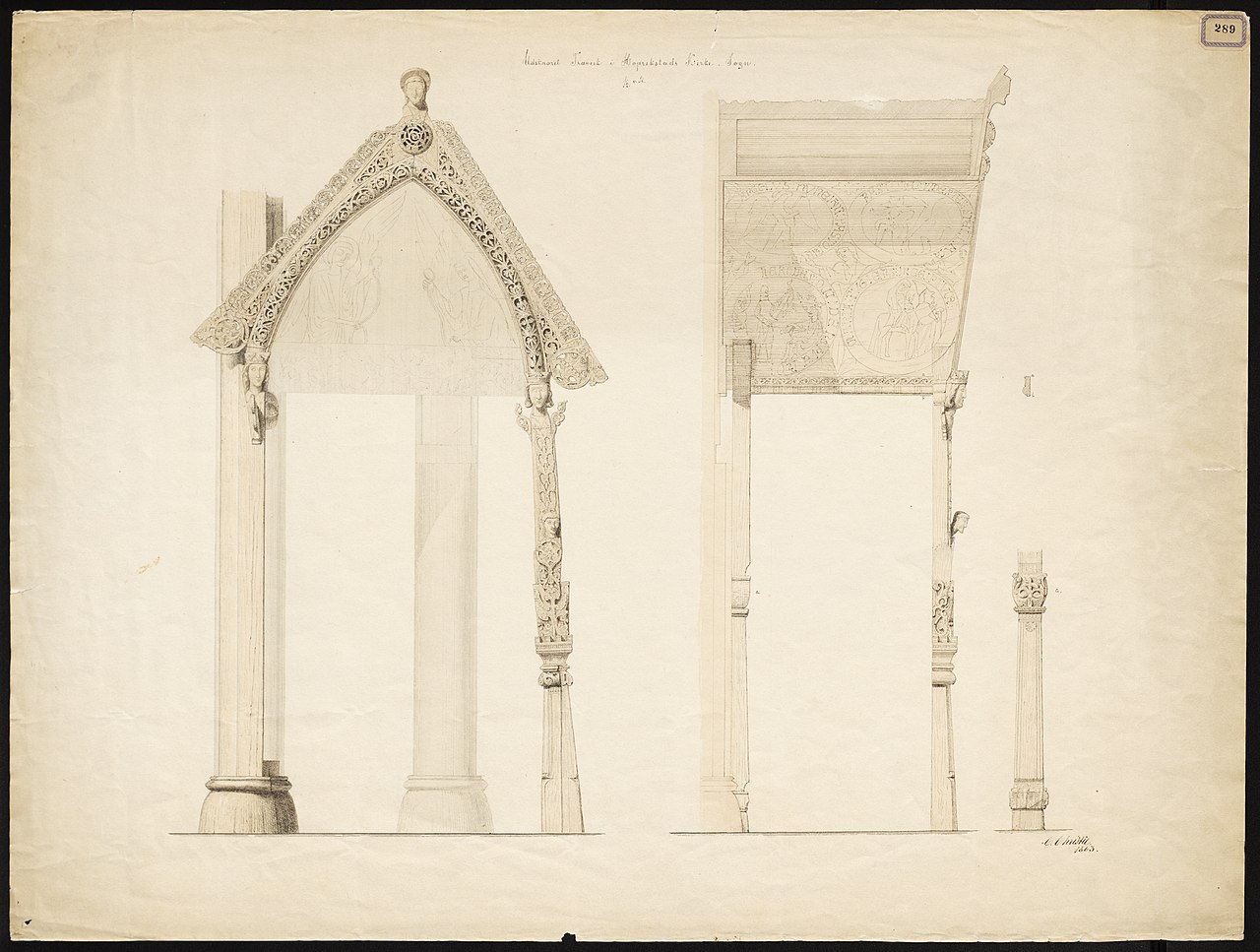
Drawing of baldachin from Hopperstad Stave Church by Peter Andreas Blix. (From the collection of the Norwegian Directorate for Cultural Heritage [Public domain] via Wikimedia.)
Paulson also included a copy in his Moorhead replica.
Like the original, the one in Moorehead includes carvings of four heads: Jesus, a queen, king, and a monk. The interior of the canopy is brightly painted with scenes from the life of Mary.

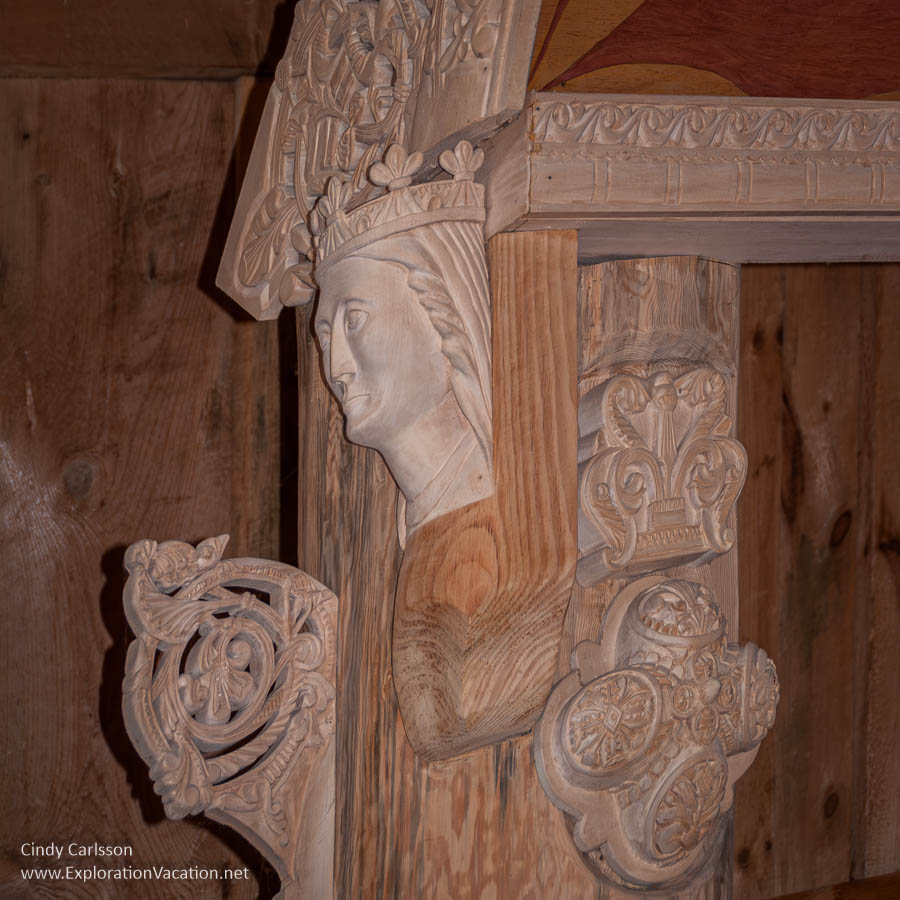
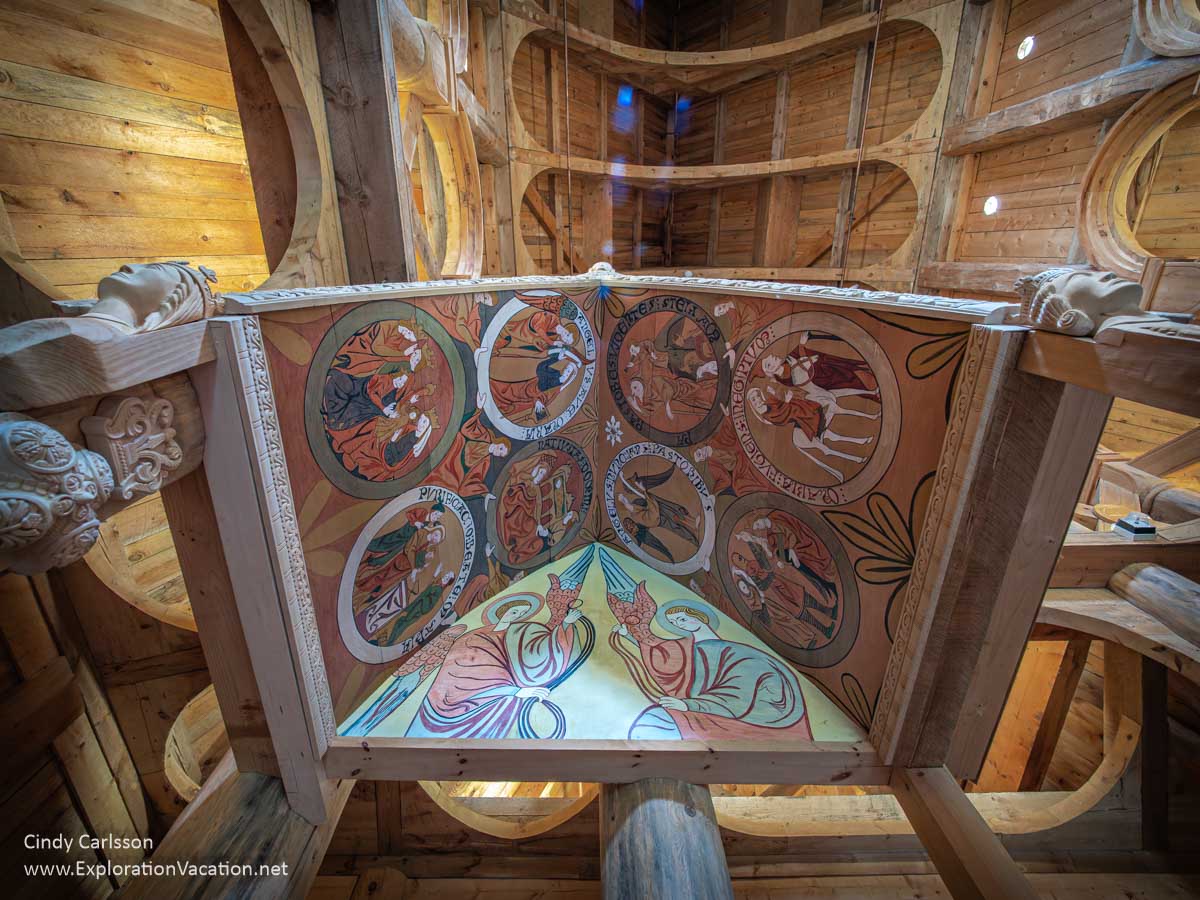
Like the Norwegian original, the interior of the baldachin is painted with scenes from the life of Mary.
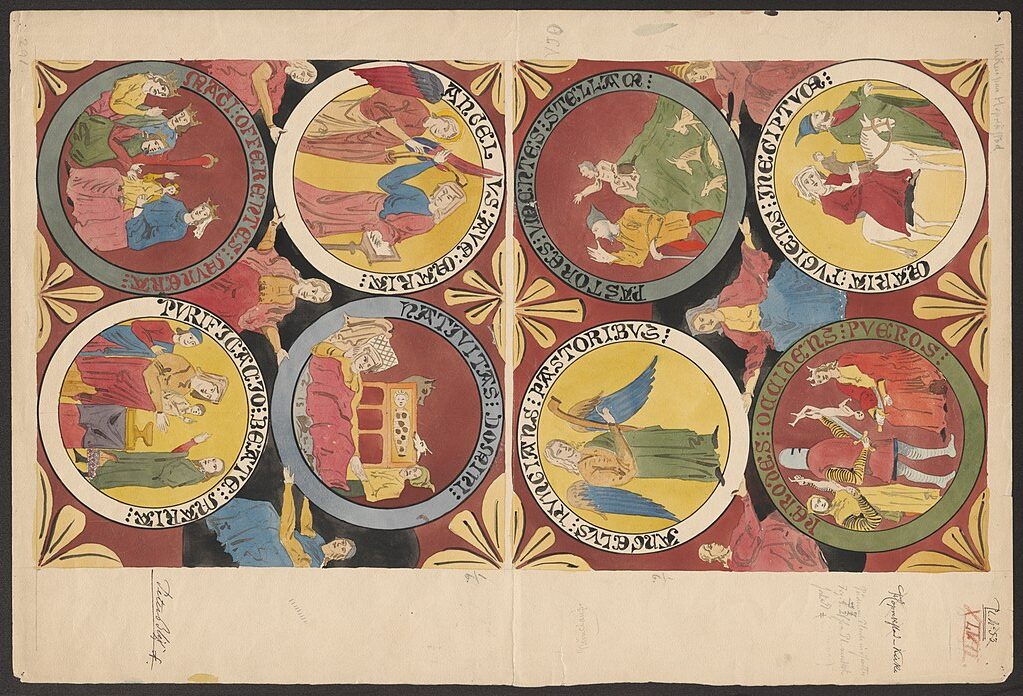
Illustration by Peter Andreas Blix of the paintings on the underside of the baldachin at the Hopperstad Stave Church from the collection of the Norwegian Directorate for Cultural Heritage [Public domain] via Wikimedia.
What happened to the other paintings?
Except for the interior of the canopy on the baldachin, the interior of Moorhead’s replica Hopperstad church is bare wood. The original church in Norway has some painted trim, painted carvings on the baldachin, and a few paintings on (and hanging on) the walls. However, both churches have very little painted decoration. While modern visitors may see this as appropriate for an ancient church, historically it probably isn’t accurate.
For centuries church interiors were awash with Biblical scenes, demons, and other imagery. In an age when most people were illiterate (and worship services were in Latin), wall paintings were religious lessons for parishioners.
It is likely that the Hopperstad church had a painted interior through much of its existence. Indeed, it still retained bold Baroque paintings from the 16th century when Blix began his restoration. However, he didn’t think they were appropriate for a 12th-century church and, once removed, were not replaced.
The Hopperstad church is a cathedral in wood
At first glance, stave churches seem strange and exotic with their vertical lines, towering roofs, and sneering dragons.
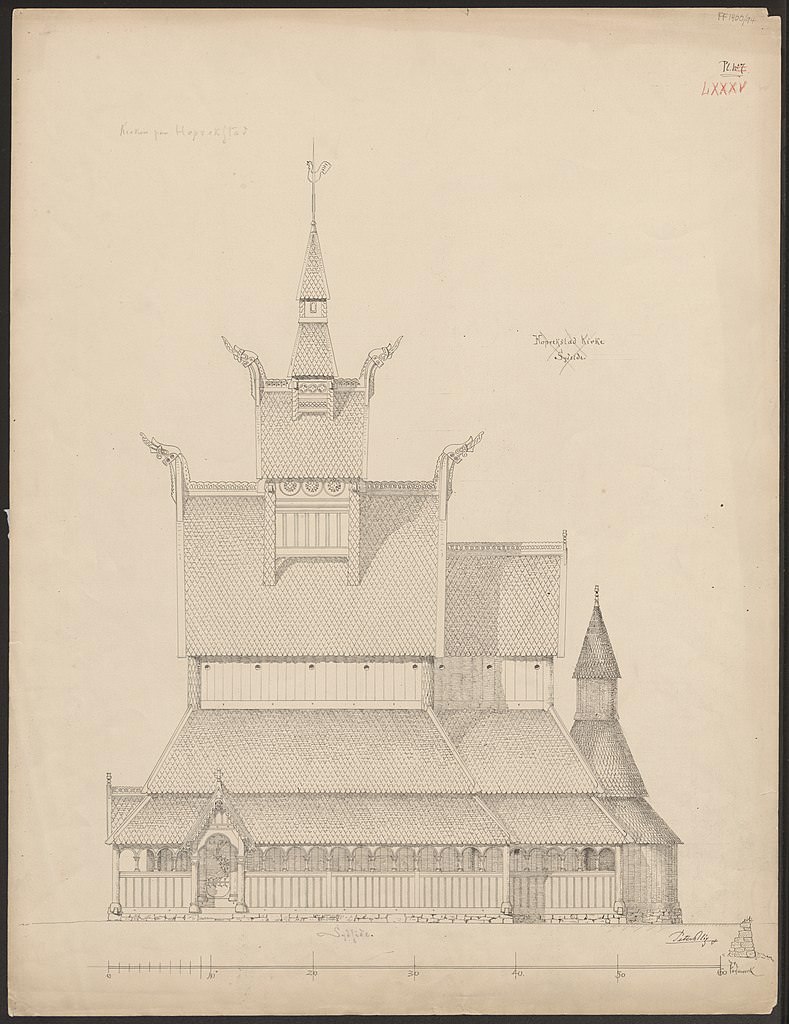
Drawing of the Hopperstad stave church by Peter Andreas Blix from the collection of the Norwegian Directorate for Cultural Heritage [Public domain] via Wikimedia.
Step inside the Hopperstad stave church and take a look around. You’ll see a lot more similarities with other medieval Christian churches.
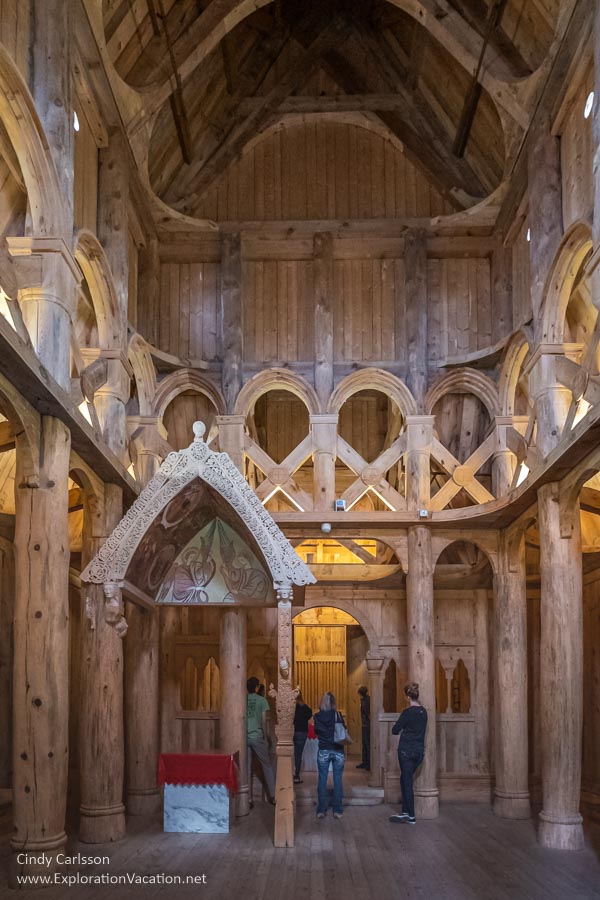
The floor plan of the Hopperstad church is the same as medieval basilica-style stone churches in other parts of Europe.
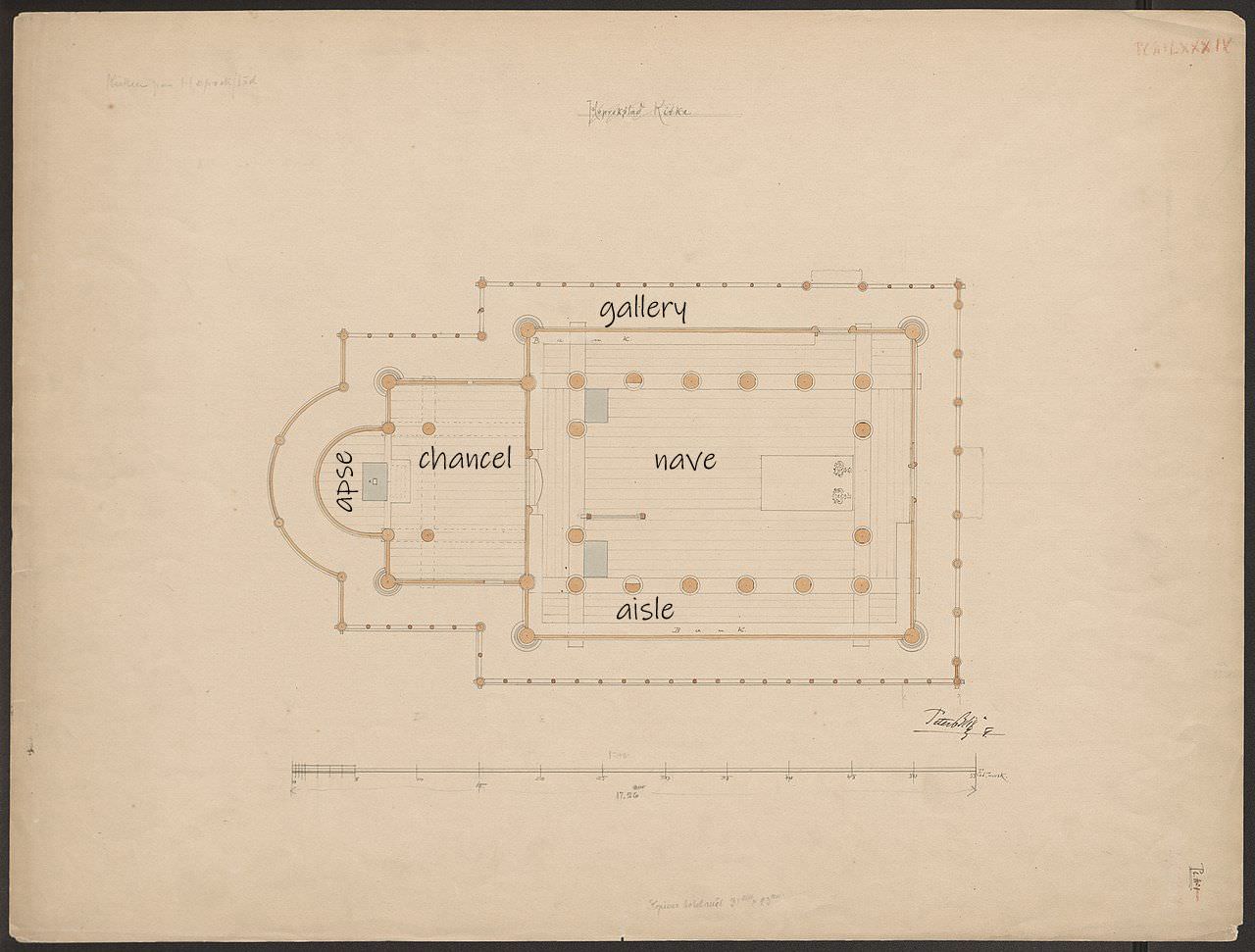
Drawing of the Hopperstad stave church floor plan by Peter Andreas Blix from the collection of the Norwegian Directorate for Cultural Heritage [Public domain] via Wikimedia. Modern labels added to identify features.
👉 Learn more about the church's design - and a couple of unusual windows . . .
As with the medieval Gothic churches found elsewhere in Europe, a soaring roof creates an arched vault rising high above the nave and chancel.
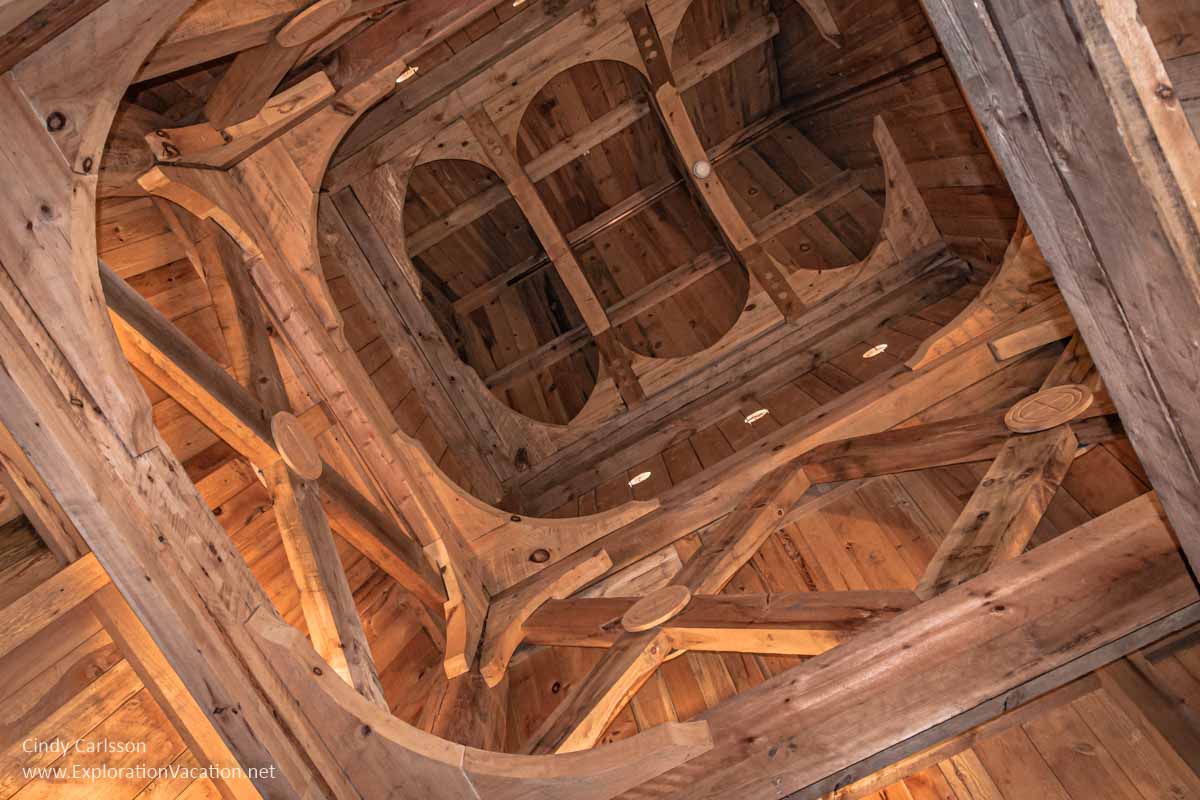
The nave also has a narrow aisle on each side. Like most late medieval churches, the aisle is demarcated by a row of arches. Unlike stone churches elsewhere in Europe, the arches in the Hopperstad church are created by inserting a curved wooden brace between each of the supporting wood staves.
While this building technique creates an arch that mimics those of stone churches, the curved brace has a very practical function. It helps support and stabilize the structure.
Similarly, the arches and crossed timbers above the wood posts are not decorative. They hold the building together! Although functionally necessary, they look a lot like the gallery found in many other types of medieval churches.
Stave churches lack the rows of clerestory windows we’d expect in a medieval Gothic church. However, in their place, the church has a row of portholes with small windows at each end.
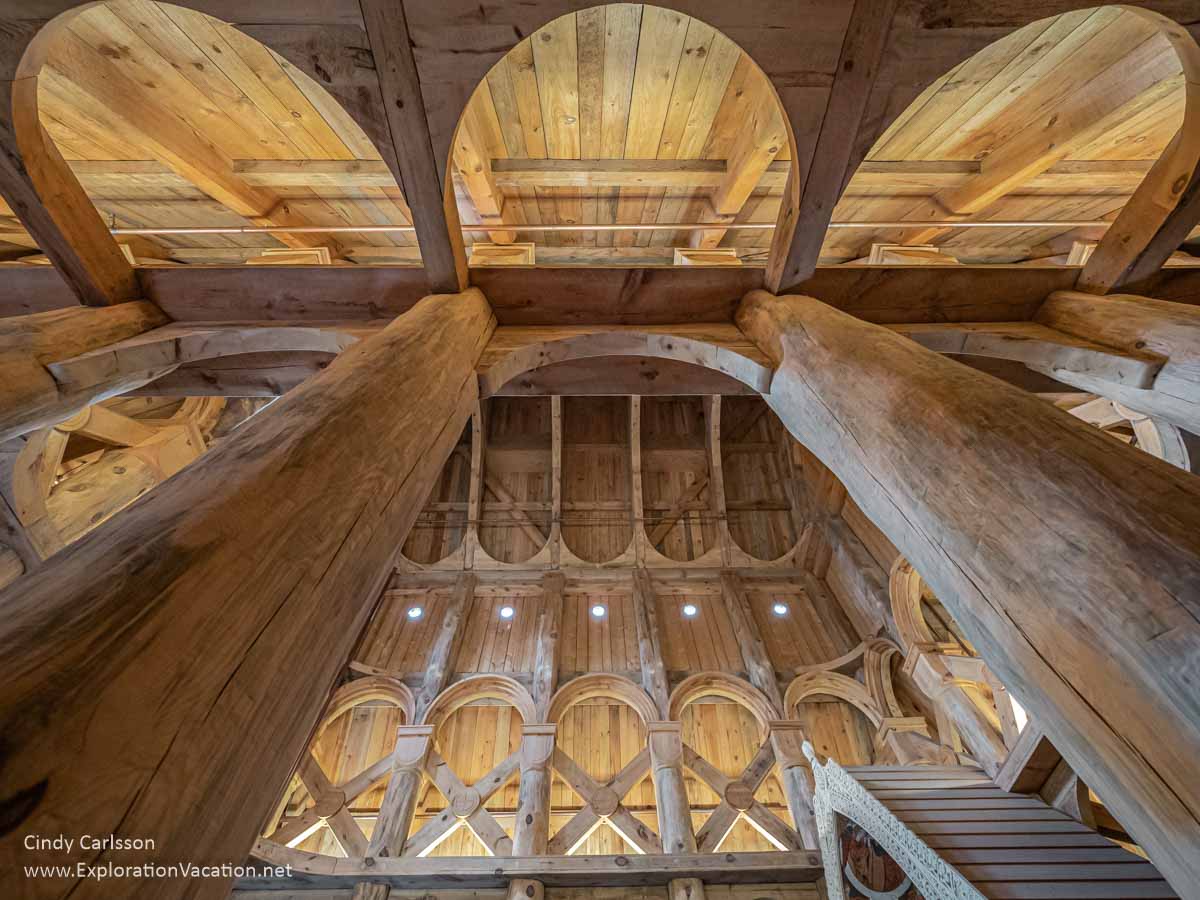
Some of these similarities are a coincidence. But it’s generally believed that early Nordic ceremonies took place outdoors, so there were no religious buildings in Norway before Christianity came along. Clearly, at least some ideas about how a Christian church should look were imported along with the new religion, and then modified to fit traditional construction techniques.
The chancel and apse
Back in Norway, the altar in the original Hopperstad church sits within the rounded apse. In the Moorhead church, it sits in the chancel, some distance in front of the apse.
The Norwegian church also has richly decorated Renaissance-style panels behind the altar. These are from a later period and not original to the church. In creating his replica in Moorhead, Paulson filled the space behind the altar with a simple wood frame with vertical slats. But, like the altar, it stands farther forward than the panels in the Norwegian church.
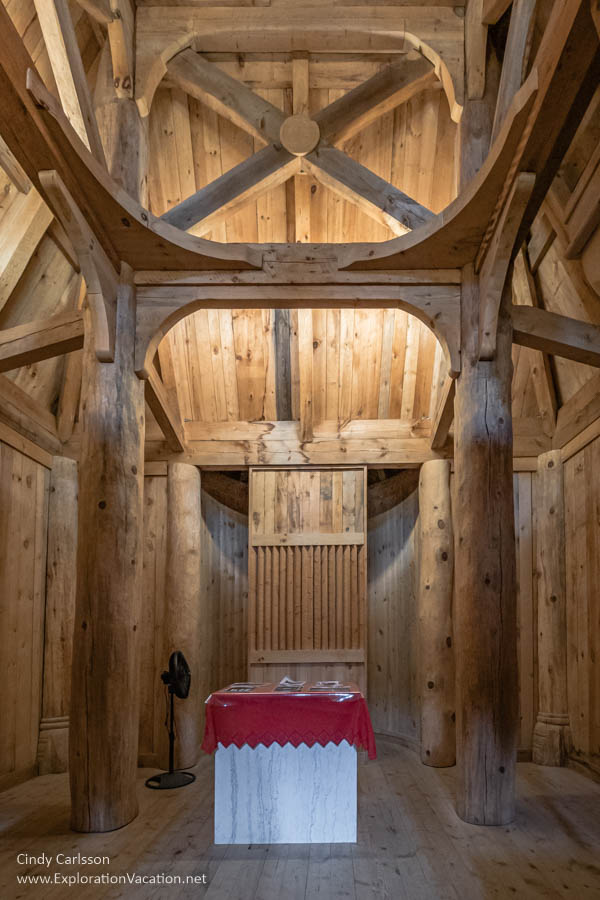
The chancel in the Hopperstad stave church was well-preserved. In the Moorhead version, it seems a little less elaborate than it looks in pictures of the Norwegian original. But it does include several later additions that remain in the Norwegian original.
The most interesting of these are two small windows cut into one side of the chancel wall.
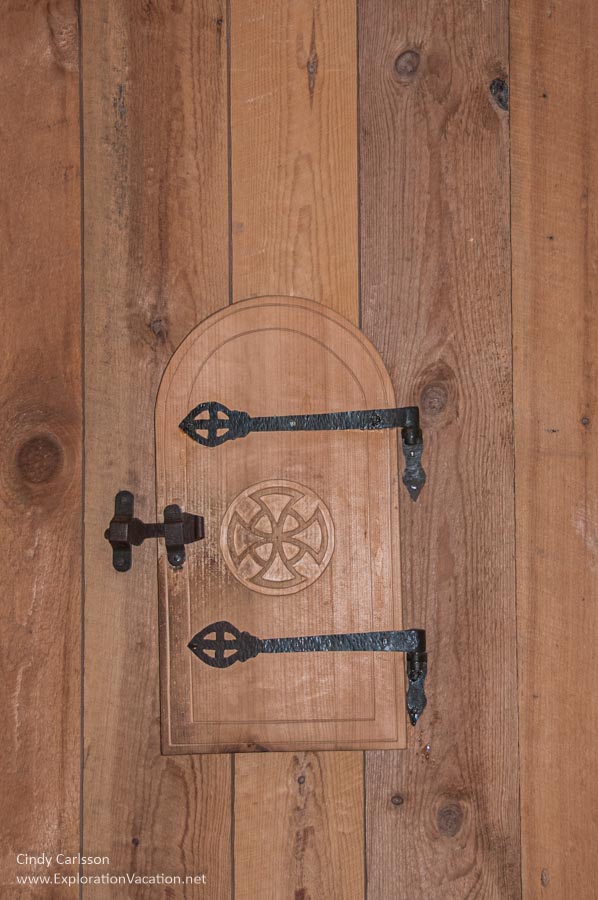
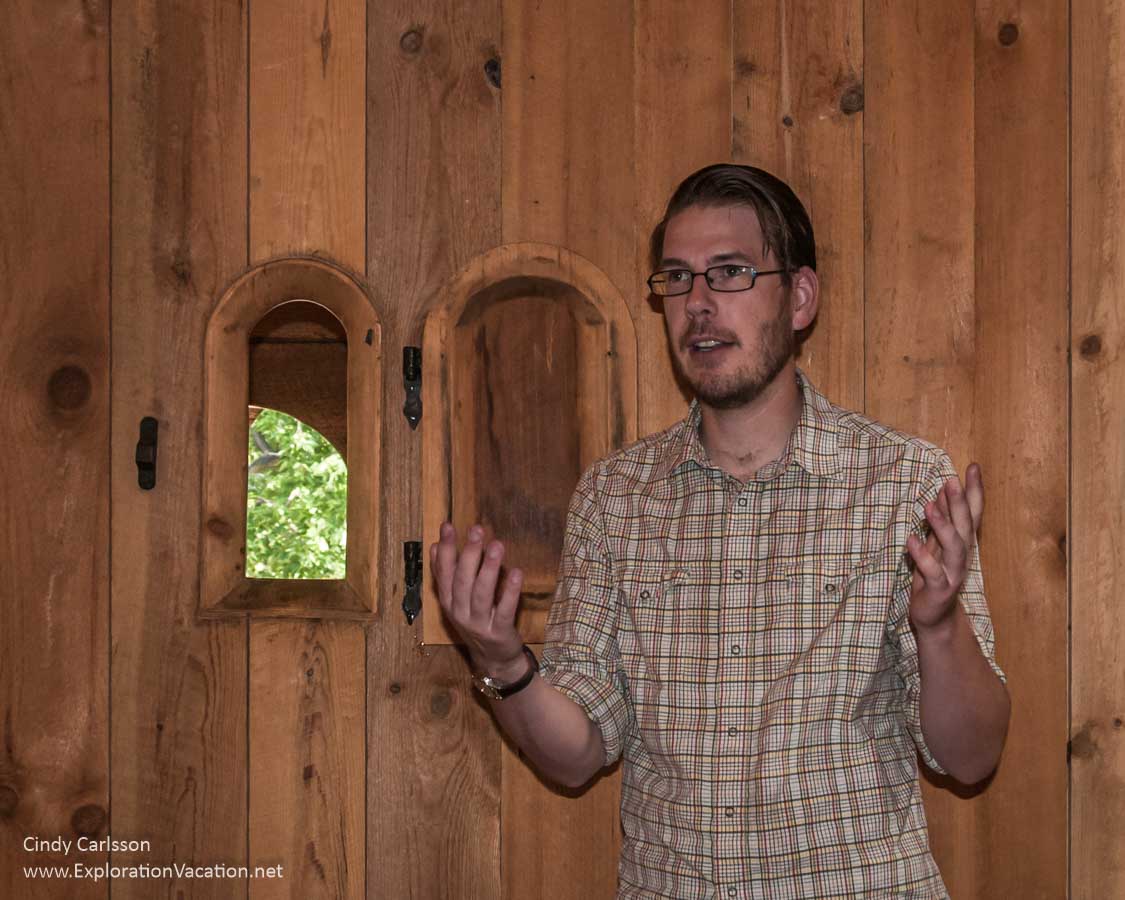
It’s believed these small windows were added at some point to allow lepers to participate in communion from the exterior porch. Of course, it seems likely that they also would have been used as the Black Death swept through Norway and regular church services were suspended.
On a beautiful summer day, they are a small reminder of the harsh reality of life long ago.
👉 Read less
Plan your visit to Moorhead’s stave church
The replica Hopperstad stave church is located in Moorhead, Minnesota, along the boundary with Fargo, North Dakota.
Visiting the Fargo-Moorhead area
My travel guide for exploring the Fargo-Moorhead area has information on traveling to Moorhead, sightseeing and other activities to do while you are there, eating and drinking, and finding a place to sleep.
Fargo-Moorhead is a great weekend destination or short road trip stay. There’s a lot more here than you probably expect!
The following offers some very basic information.
Travel to Moorhead
The Fargo-Moorhead area is located three to four hours drive time from Minneapolis, Minnesota; Sioux Falls, South Dakota; Bismarck, North Dakota; and Winnipeg, Canada.
Fargo has a small international airport with regularly scheduled flights on several airlines.

The Fargo-Moorhead area may be closer than you think!
Get a bite to eat
From the stave church, it’s an easy walk to a number of restaurants in both Moorhead and Fargo.
Downtown Moorhead has a wonderful upscale restaurant very worth visiting: Rustica Eatery and Tavern. Good restaurants seem to come and go in Moorhead, but there are always a few decent dining options closer to the freeway. Budget options and national chains are also mostly near the freeway, but there are a few right downtown.
Across the river, Fargo has a great selection of wonderful restaurants at all price points.
Spend the night
Both a Radisson tower (which has been updated and is under new management since I regularly stayed there many years ago) and the artsy Hotel Donaldson are located just across the river in downtown Fargo. It’s a pretty easy walk to either. There really aren’t any hotels in this part of Moorhead, but downtown Fargo offers a lot more eating and shopping options anyway.
- Read reviews and book the Radisson Blu (part of Choice Hotels) in downtown on Booking.com or Expedia.
- Read reviews and book the Hotel Donaldson on Booking.com or Expedia.
You can read reviews for all the options in the Fargo/Moorhead area and book a room at Booking.com or Expedia. Or head over to my travel guide for more information on what’s where and where to stay in the area.
Visiting the replica Hopperstad stave church
Moorhead’s replica stave church is located on the grounds of the Historical and Cultural Society of Clay County along the Red River in downtown Moorhead. It’s easy to miss the entrance, so keep in mind that it is the very last driveway on the right before you cross the bridge into Fargo or the first one across the bridge on the left when coming into Moorhead from downtown Fargo.
Known as the Hjemkomst Center, the Society’s excellent museum houses a modern Viking ship and several galleries with rotating exhibits on local and regional history and art.
The exterior of the church can be viewed at any time of day or night without charge. A guided tour is needed to see the interior. Weather permitting, tours are offered by the Historical and Cultural Society from April through December. Tours are included in the museum entrance fee. (You can see the interior anytime on a virtual tour, but it’s not the same as being there.)
Admission fees in summer 2025 were $12 or less to visit both the museum and replica church.
The Historical and Cultural Society of Clay County is open most days from 9-5. Check their website for specific days, times, and fees.
Visit other stave churches
While stave churches are a form of medieval Scandinavian architecture most often associated with Norway, stave construction has been used in other places. And, because the style is so distinct, several of Norway’s historic churches have been reproduced (with varying degrees of accuracy) elsewhere.
Stave churches in Norway
Of the thousands of medieval stave churches built in Norway, only 28 remain today. In addition, there is at least one that was reconstructed after an arsonist burned it down.
The Gol Church was moved and reconstructed in Oslo in 1884. Like the Hopperstad church, missing components of the original church were restored using the Borgund stave church as a guide. Today the Gol Church is a featured attraction at the Norwegian Museum of Cultural History. This is the only original Norwegian stave church I’ve seen.
The website StaveChurch.com has links to all the remaining churches in Norway, including a bit of history and information on hours and admission charges for visitors. The page on the Hopperstad Church has all the information you need to plan a visit.
Stave churches in the United States
Moorhead’s replica Hopperstad Stave Church isn’t the only stave church in the USA. Several other examples are located around the country.
The following are open to the public, at least on a limited basis.
There are a couple of other churches that are privately owned in Connecticut and Indiana. As they are not open to the public, I have not included them in this list.
The replica Gol Stave Church Museum in North Dakota
The Scandinavian Heritage Park in Minot, North Dakota, is home to a full-size replica of Norway’s Gol stave church.
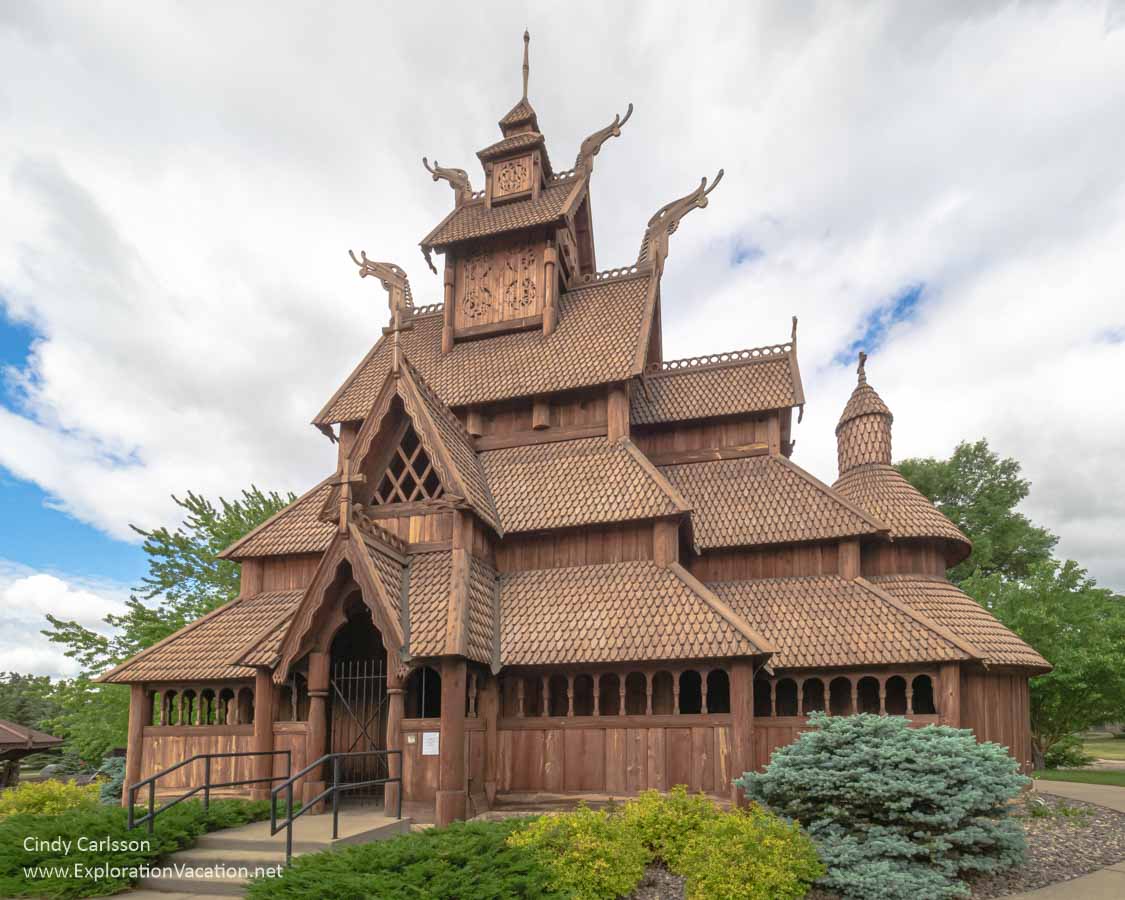
The replica in Minot’s Scandinavian Heritage Park was dedicated in 2000. It’s open for tours as part of the regular admission to the park.
👉 Learn more about other stave churches in the USA . . .
Chapel in the Hills in South Dakota
A copy of Norway’s Borgund Stave Church, the Chapel in the Hills was constructed late in the 1960s to serve as the home for a Lutheran radio show. Today the chapel is used for weddings and other special events. An evening worship service is held daily throughout the summer.
The chapel is part of a park with a couple of other historic buildings, one of which houses a museum. It’s located in Rapid City, South Dakota, and is open to the public daily between May 1st and September 30th. There doesn’t seem to be an admission charge. Check the website for specific hours and more information on the site.
Boynton Chapel at Bjorklunden in Wisconsin
Over in Door County, Wisconsin, the Boynton Chapel at Bjorklunden is modeled after the 12th-century Garmo stave church at Maihaugen in Lillehammer, Norway.
Unlike the Hopperstad church, Boynton chapel is fully furnished and richly decorated with painted walls.
The chapel is open to the public a few times a week during the summer. A small fee is charged to enter. It’s also available for weddings.
Trinity Lutheran Stavkirke in Wisconsin
Door County, Wisconsin, is also home to another stave church. Located on Washington Island, Trinity Lutheran Stavkirke is modeled after Norway’s Borgund stave church.
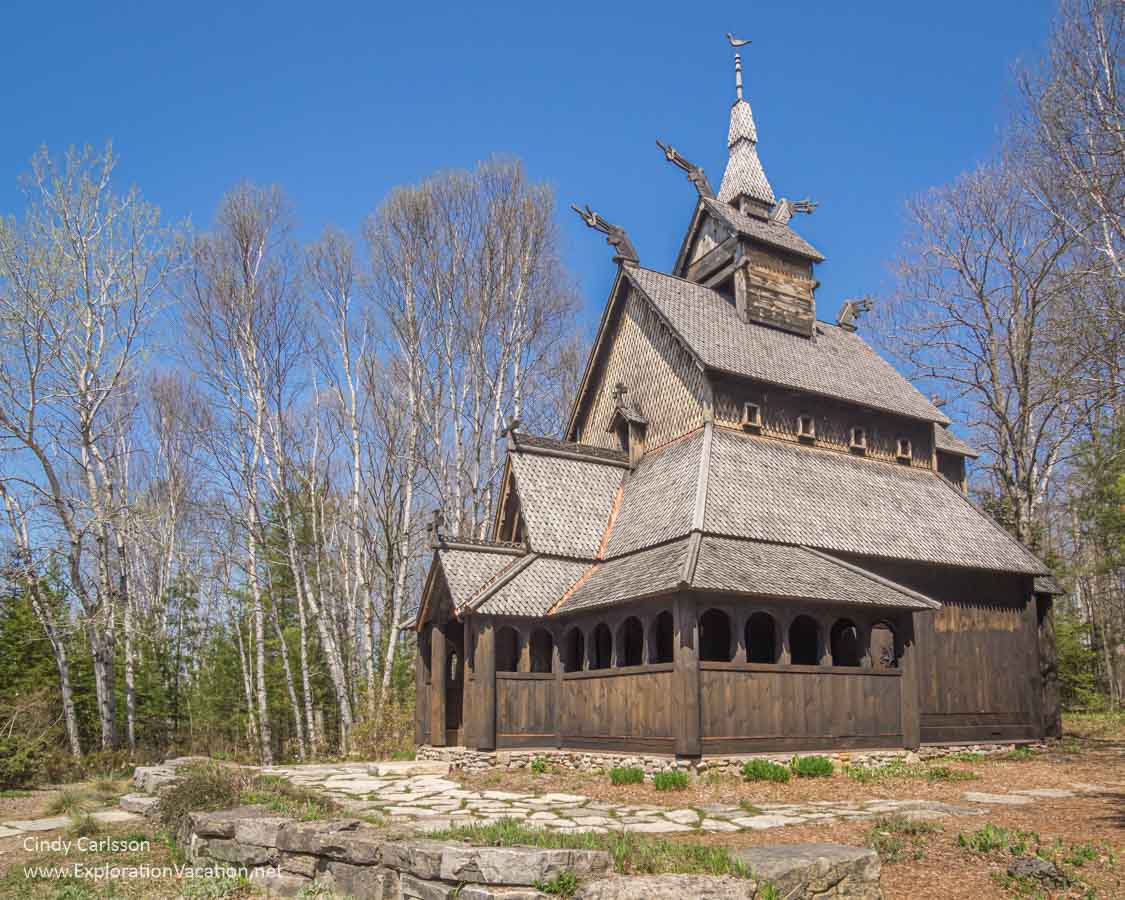
The church sits in a beautiful, isolated woodland setting, but functions as a chapel as part of the larger Trinity Evangelical Lutheran Church. Worship services are held in the church on Wednesday evenings during the summer. Weddings can also be held in the church.
It’s unclear how often the church is open for drop-in visitors, although it was open when we stopped by on a Wednesday afternoon in May.
Stave Church Gallery at Epcot
The Norway Pavilion at Epcot in Florida’s Walt Disney World includes a museum built to look like a scaled-down version Norway’s Gol church.
While the exterior of the Stave Church Gallery looks very much like a smaller version of the original church (complete with dragons but without Christian symbols like crosses), I don’t think it was built like a stave church. The interior is a museum, and while there are few pictures and I haven’t actually seen the building, I know it doesn’t have the high open ceilings of a stave church and seems designed to function as a museum with a few of the features one would expect to see in a stave church tossed in for decoration.
A comparison of Real Norway and Epcot’s Norway includes the stave church along with other buildings in Norway pavilion. You’ll notice that Disney tends to pretty things up.
The building opened in 1988 and still houses the Norway pavilion’s museum.
Saint Mark’s Episcopal Church on Long Island
Not a traditional Norwegian stave church, Saint Mark’s Episcopal Church in Islip, New York, was designed by famed architect Richard Morris Hunt in 1880.
William K. Vanderbilt traveled in Norway at the same time churches like Hopperstad were being recognized as historic architectural masterpieces that should be preserved. Vanderbilt became enamored with these churches and, on his return home, funded the construction of a modern version of a stave church for his daughter’s wedding.
This is no replica. Hunt designed a unique structure that may best be described as an Arts and Crafts stave church. Among other features, the church included a wide array of stained-glass windows, many of which were designed by Louis Comfort Tiffany.
Like a number of its Norwegian brethren, the church was all but destroyed in an arson fire in 1989. The church has since been rebuilt, but with a number of changes.
I’ve not been to this church, and there seems to be little information on it available online. There are some interesting notes on the building in the church history, including a note explaining that “William K. Vanderbilt was appointed as a committee of one to erect a new church building.” The best overview I’ve found is from a 2014 visit to the church.
Saint Mark’s is still home to an active Episcopal congregation.
👉 Read less
Read more about stave churches
There isn’t a lot of great information on stave churches on the web in English, but these are a few of the more useful sources I found.
- StaveChurch.com has links to all 28 of the remaining churches in Norway, including a bit of history and hours and admission charges for visitors. The page on the Hopperstad Church has all the information you need to plan a visit.
- Similar information, but without detailed visitor information, is available on the Visit Norway.
- The book, Norway’s Stave Churches: Architecture, History, and Legends by Eva Valebrokk and Thomas Thiis-Evensen has a nice introduction to stave churches in general and a couple pages (with beautiful photos) of each of the Norwegian churches. It’s available for a few dollars through ABE.
👉 Read more about stave churches
Architectural information
- Basic information on medieval church design can be found on the Khan Academy website.
- Stavkirke.info has an interesting page on stave church construction based on the research of a Norwegian scholar who worked for historic and cultural research agencies in Norway.
- Archeyes.com has a nice article on the Borgund Stave Church that explains how these churches were put together. Just ignore the fact that the first picture is of some other church!
Information specific to Hopperstad
- MNopedia, a website run by the Minnesota Historical Society, has information on the Hopperstad replica in Moorhead along with a bibliography. (But be aware that this site is often produced by interns and is more prone to errors than one would expect from a historical society.)
- Probably the best place to get information the replica Hopperstad Stave Church is a booklet that appears to be published by the Historical and Cultural Society of Clay County. I haven’t seen it because I keep forgetting to look for it when I’m in Moorhead. . .
- Google maps (photo Sphere) has the best images inside the original Hopperstad church. (From Google Maps, click on the person icon to get to Street View and Photo Sphere images, then click on the blue dots on the graphic representing the church.)
👉 Read less
See more photos of the Hopperstad replica stave church on CindyCarlsson.com