Last updated on January 5th, 2025
Known for its sunbaked desert landscapes, Phoenix also has a very green, very traditional Japanese garden. Lovely little Rohoen Japanese Friendship Garden offers a tiny bit of Japan in the heart of this sunbaked desert city.

Rohoen is a beautiful traditional Japanese garden in Phoenix.
Designed as a strolling garden, Rohoen Japanese garden is a place to slow down, relax, and connect with nature in a peaceful green setting. If you need a break from the desert, this lush garden is a great escape!
I use links to improve your browsing experience, but a few also pay me a small commission if you use them to reserve a room, rent a car, or purchase goods or services. You don’t pay extra, but it helps keep this website running without intrusive ads. To learn more, review my policies and disclosures.
A bit of Japan in the heart of Phoenix
Unlike many “Japanese” gardens designed to match Western ideas of what they should look like, Phoenix’s garden was designed and built by a team from Japan who created the garden just like they would in Japan. There are no red bridges (a Chinese garden feature) or cherry trees (more common in Japanese parks than in gardens). What you will find are waterfalls, a zig-zag bridge, lots of colorful koi in the pond, stone lanterns of all sizes, carefully pruned pines, a mix of plants that provide a splash of color throughout the year, a dry garden, and a teahouse. All created using traditional Japanese building and gardening techniques.
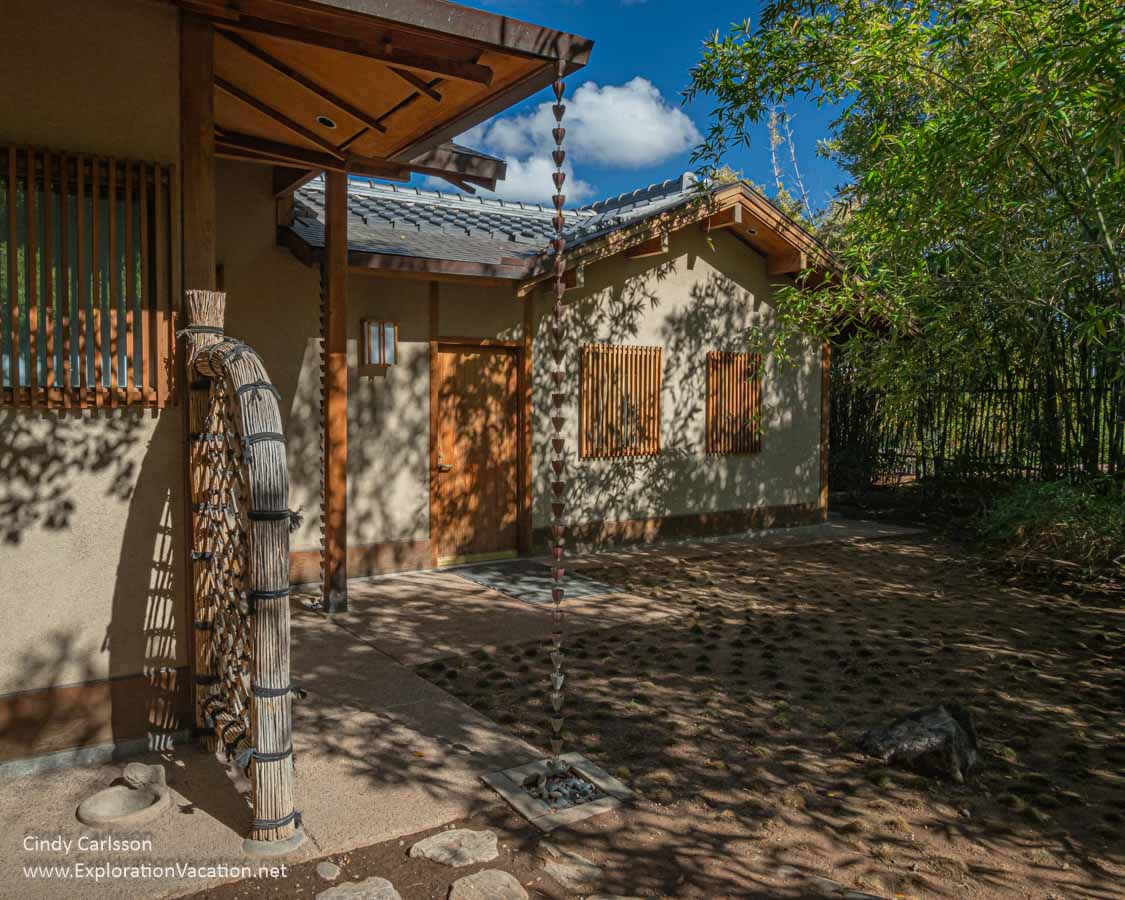
Traditional Japanese craftsmanship is found throughout the garden and its structures.
Walk through Rohoen Japanese garden for a bit
Phoenix has a traditional Japanese stroll garden with a hide-and-reveal design. That means you can’t see the entire garden from any one spot. Instead, it reveals itself as you move through it. You round a bend and a new view opens up, you move around a planting and there’s a lantern, or maybe you step out onto a bridge to view a hidden cove.
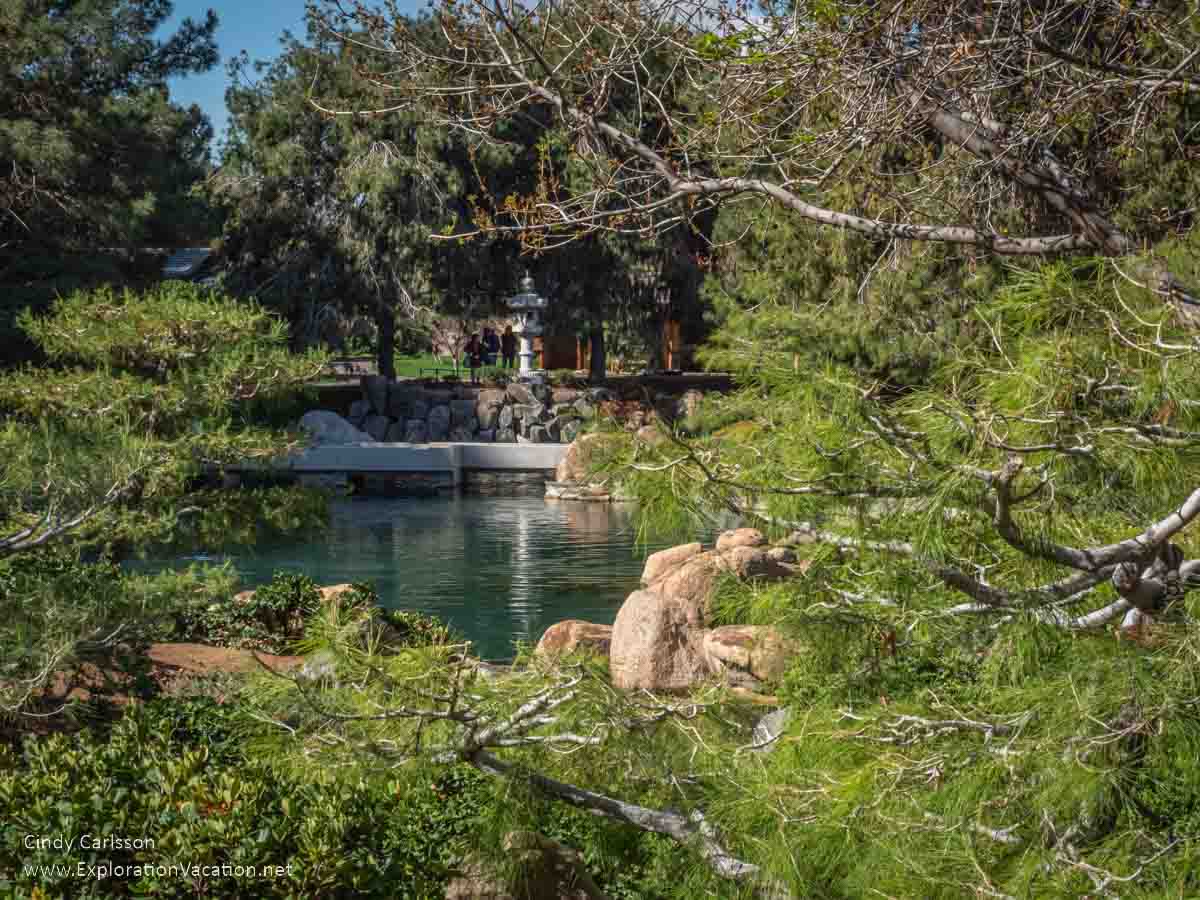
Rohoen Japanese garden reveals itself a little at a time.
In this way, the garden seems to continually change as you walk through.
And, as you stroll through the garden, you’ll also move through four “regions” of Japan. These represent the country’s low-lying grasslands, woodlands, forested mountains, and stone beaches.
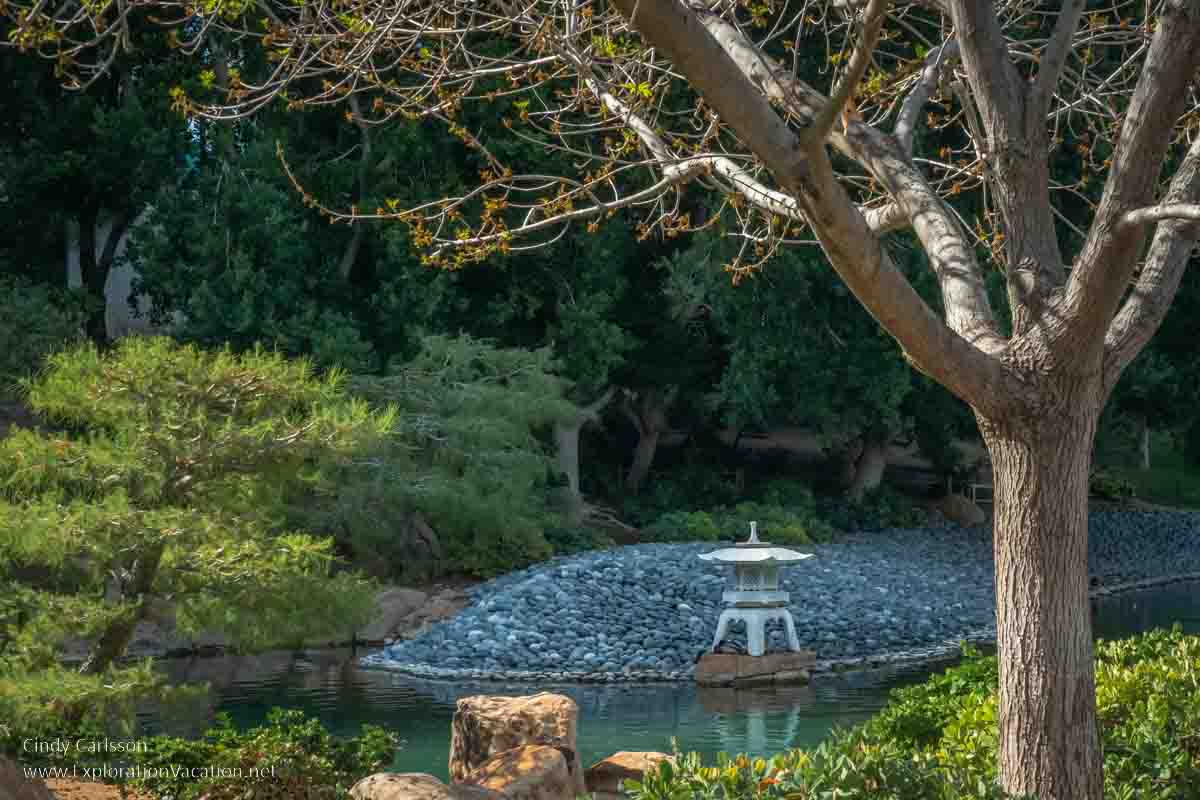
A hand-laid stone beach represents one of Japan’s four landscapes.
So, keep an eye out if you want to explore all of the garden’s features! (Or follow the Virtual Garden Guide, which is filled with information on all of the park’s features.)
Here are a few features to keep an eye out for.
The Kasuga-doro lantern
If you’ve visited other Japanese gardens, you’ve undoubtedly seen other Kasuga-doro lanterns before. But you might not have seen one that is 10 feet tall!
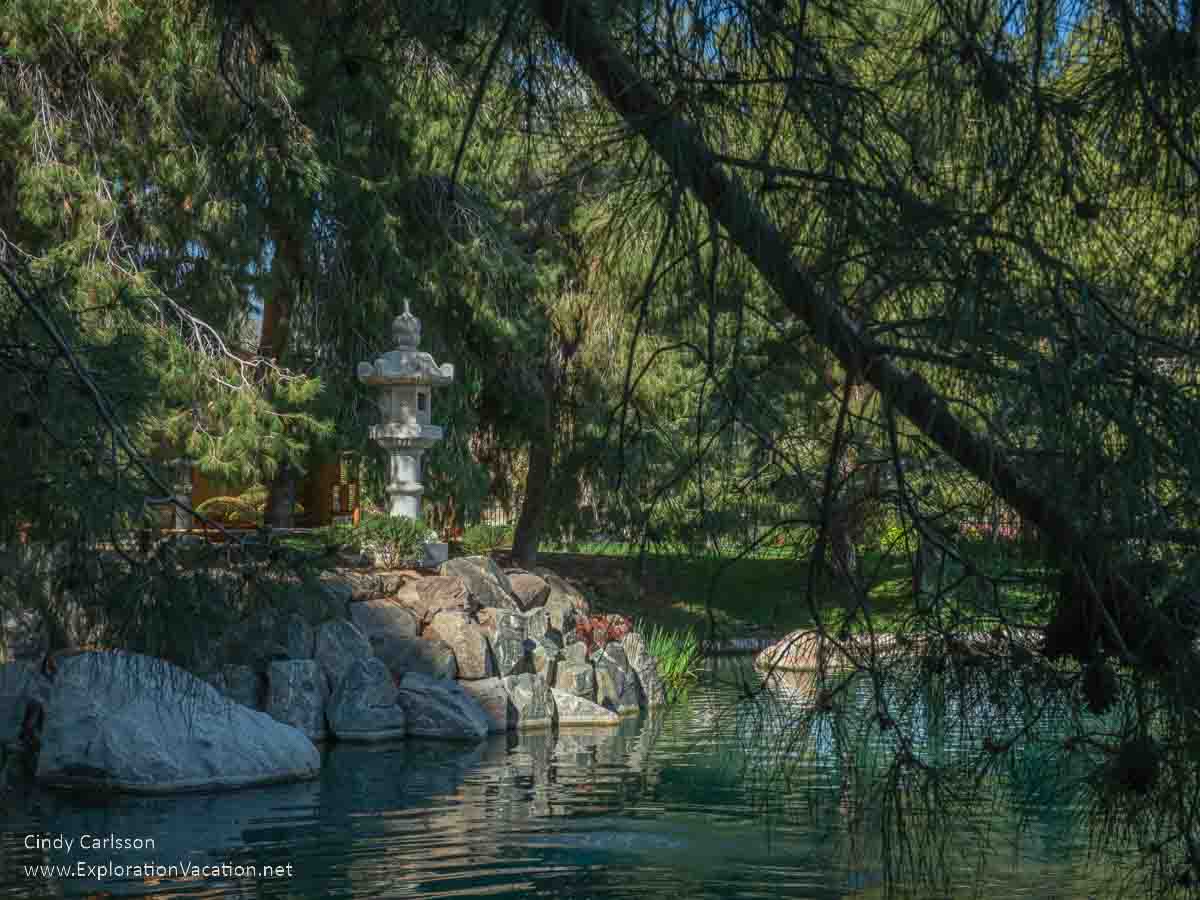
Rohoen’s very large lantern stands over one end of the garden.
The overlook at this striking feature is also one of the few places where you can see all four of the Japanese landscapes represented in the garden.

View back across the garden to the Kasuga-doro lantern.
The Zig-Zag Bridge
Zig-Zag (Yatsu-hashi) bridges are also common in Japanese gardens.
I always thought zig-zag bridges were designed to keep evil spirits away, since evil spirts are said to only travel in straight lines. But was wrong. Apparently zig-zag bridges actually originated as a way to make garden visitors slow down and admire the garden from different viewpoints.
Yatsu-hashi actually means “eight bridges,” which describes the eight planks traditionally used to create these bridges.
(But now I don’t know if it’s true that evil spirits can only travel in a straight line!)
Water
As a symbol of purity and happiness, water is often important element in Japanese gardens. At the Rohoen garden, water is found in the form of a large pond with colorful koi (and a few ducks), a small stream that cascades down from the “mountain,” and a waterfall that drops 14 feet down the “mountainside.”
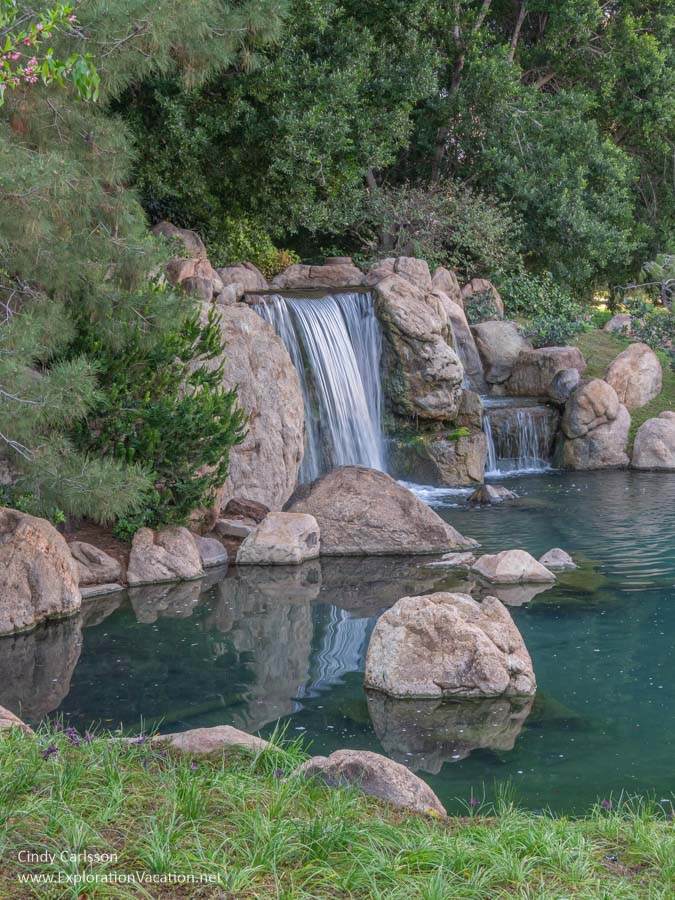
A waterfall tumbles down one of the garden’s “mountains.”
Shachi Statue
Shachi are creatures from Japanese folk stories that have the face of a lion and body of a fish. They are were said to be able to make it rain, so often appeared on the roof of castles and temples to protect them from fire. (Buildings in Japan were usually made of wood, so fire was always a danger.)
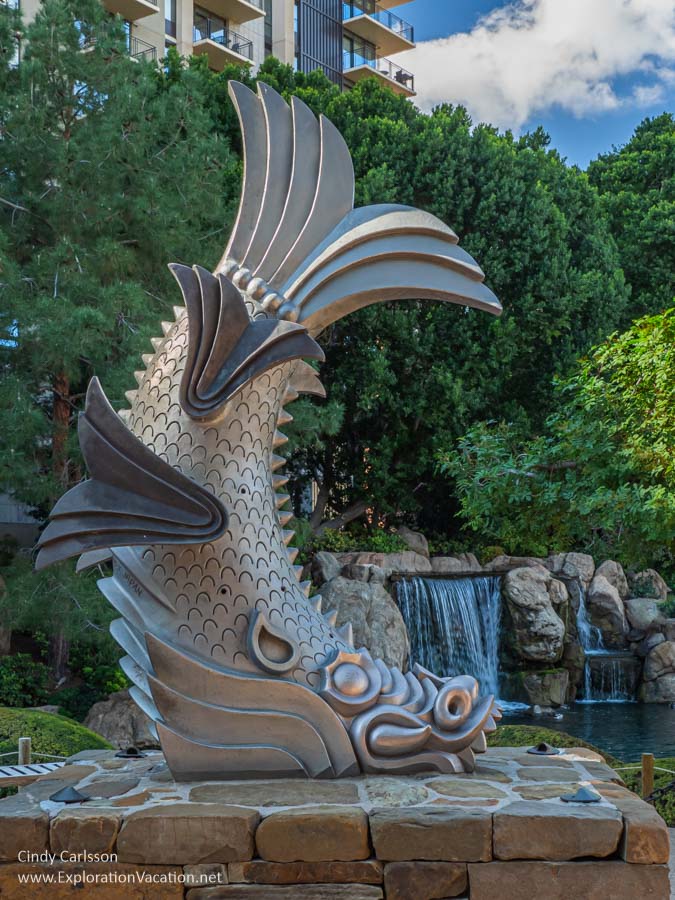
Phoenix’s shachi rests on a stand near the waterfall.
The sculpture in Phoenix’s Japanese garden is made of fired clay. It is identical to those on the roof of Himeji’s historic castle. (The castle in Himeji is a rare wooden castle from the Shogun period and a UNESCO World Heritage Site.)

One of many shachi on the roof of Himeji’s castle. (Photo by Cynthia Matthews von Berg.)
Musoan Tea House
You’ll find a traditional tea garden and tea house at one end of the garden. This is an unusual feature, since tea houses and their gardens are usually isolated and not part of another garden. But the creators of Phoenix’s Japanese garden wanted to bring this aspect of Japanese culture to the city.
To do so, a traditional tea garden and tea house were constructed in an area separated from the rest of the garden by a stream.
The tea house carries the name Musoan (Dream for the future). It’s built exactly the same as it would have been in Japan and used for traditional tea services.
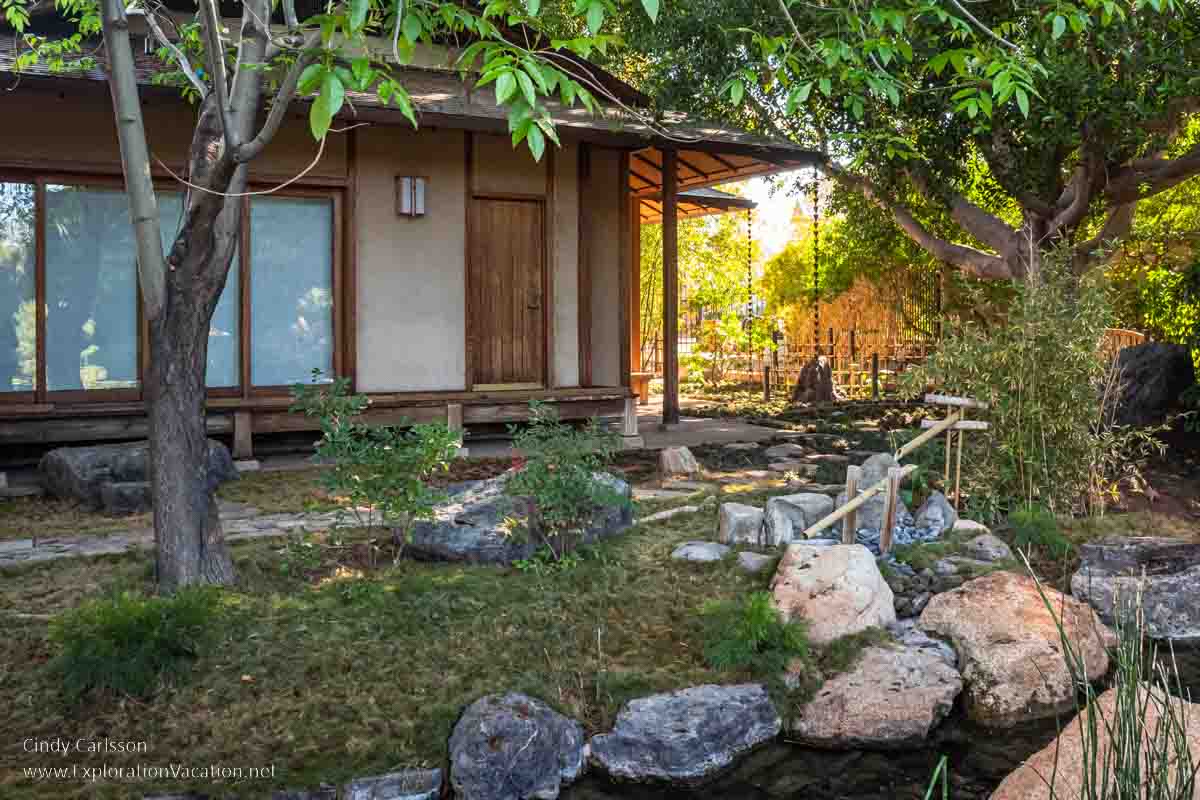
Visitors can enjoy a traditional Japanese tea ceremony in Rohoen’s tea house and garden.
Learn more about the garden’s Tea Tours on the garden’s website.
How Rohoen garden came to be
So, are you wondering how all this came to be in Phoenix?
Japanese Friendship gardens have been a thing in the USA since the end of World War II, but Phoenix’s garden didn’t come about until many years later.
Himeji and Phoenix became Sister Cities in 1976. As Sister Cities, they engaged in a variety of business, government, cultural, and educational exchanges. One of them resulted in the creation of the Rohoen Japanese Garden.
Himeji is also the home to a very famous traditional wood castle. It’s a city with deep ties to Japan’s history and culture.
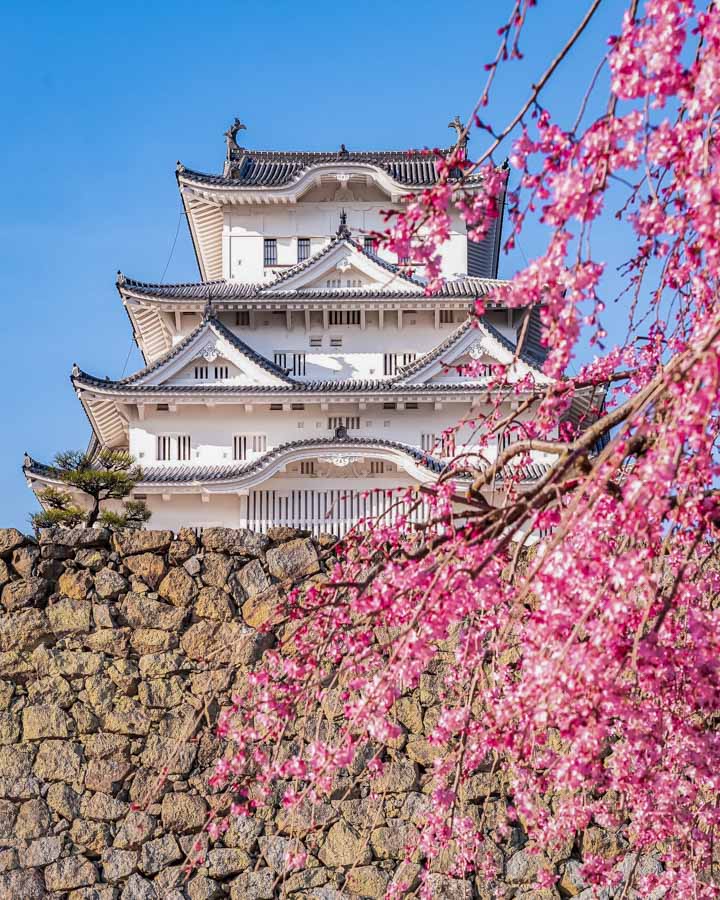
Cherry blossom season at Himeji Castle looks amazing! (Photo by Lasma Plone.)
Rohoen Japenese Garden gave the city of Himeji a way to build a little of their history into the fabric of Phoenix.
Design and construction
The garden project began in 1987 under the direction of the city of Himeji, with work by a noted garden designer, architects, and craftsmen from Himeji, as well as volunteers from Arizona.
The design was developed by Nozomu Okita, who envisioned a traditional stroll garden with a tea garden and tea house.
While Okita oversaw the garden’s construction, actually bringing it into existence was the work of the Himeji Gardening and Construction Contractors Association. This group formed specifically to create and help maintain Phoenix’s Japanese garden. Thousands of hours of their labor, along with the garden’s lanterns, decorative features, and koi fish, are gifts to the people of Phoenix from the city of Himeji.
The first phase opened late in 1996 with the completion of the tea garden and tea house.
The strolling garden came in phase two. It opened early in 2002.
2008 brought restrooms to the garden. Like the rest of the garden, these were constructed using traditional Japanese building techniques.
The last two phases of the garden plan have yet to be completed. These would add a viewing pavilion and a visitor center.
You can watch a video that provides more information on the garden.
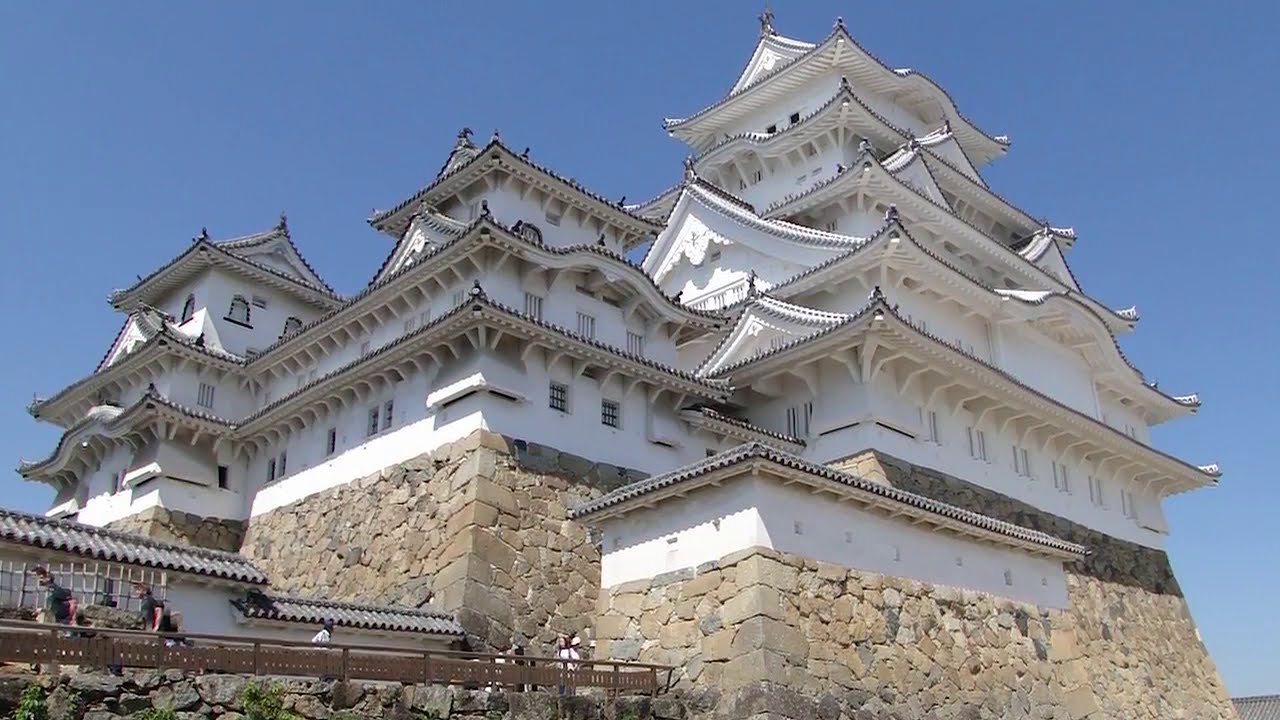
What does Rohoen mean?
RoHoEn isn’t a Japanese word. Instead, it is a name made up of three Japanese words:
- Ro is the Japanese word for “heron.” The heron is a symbol of Himeji. The city’s famous castle is known as the “White Heron.”
- Ho is the word for the mythical phoenix bird.
- En is the word for “garden.”
Before the Japanese garden: Flower farms in Phoenix
While Phoenix may sound like an odd place for a Japanese garden, the area has long had a Japanese-American community.
First- and second-generation Japanese-Americans began growing vegetables in the Phoenix area in the 1920s. That business was interrupted in the 1940s when all Japanese-Americans were forced into internment camps. Two of which were in Arizona, one on the Gila River Indian Reservation near Phoenix and one on the Colorado River Indian Reservation in Poston.
After their release, some families returned to the Phoenix area, while others decided to make Phoenix their new home. And that included some of the original Japanese vegetable farmers. But now their farms were held by others and the only land available was the dry, rocky earth south of Phoenix along Baseline Road. But soon they brought the area to life with new vegetable farms. In the 1950s a few started planting a new crop in those fields: Flowers. More and more acres were devoted to flowers and the colorful fields became a popular tourist attraction. Through the 60s and 70s visitors would slowly cruise along the Baseline flower farms, enjoying the sight and smell of the flowers in bloom and stopping at farm stands to buy flowers to take home.
Over time the Japanese-American farmers sent their kids to college. And most of those kids didn’t return to work at the family flower farm. At the same time, it became cheaper to import flowers from other countries than to grow them in Arizona. As a result, the last Japanese-American flower farm closed in 2016.
Read a first-hand account of growing up on one of Phoenix’s Japanese-American flower farms.
Rohoen also has a sister in Japan
The cities of Himeji and Phoenix aren’t the only sisters here.
In 1992 a new garden was created at Himeji Castle to commemorate the 100th anniversary of the establishment of Himeji as a municipality. Called Kokoen, the garden is located where a feudal lord’s residence once stood. Like Rohoen, it is a strolling garden where different scenes are revealed as you walk through the garden. But Kokoen is much larger, with nine gardens of various sizes, along with a tea house and other traditional Japanese buildings.
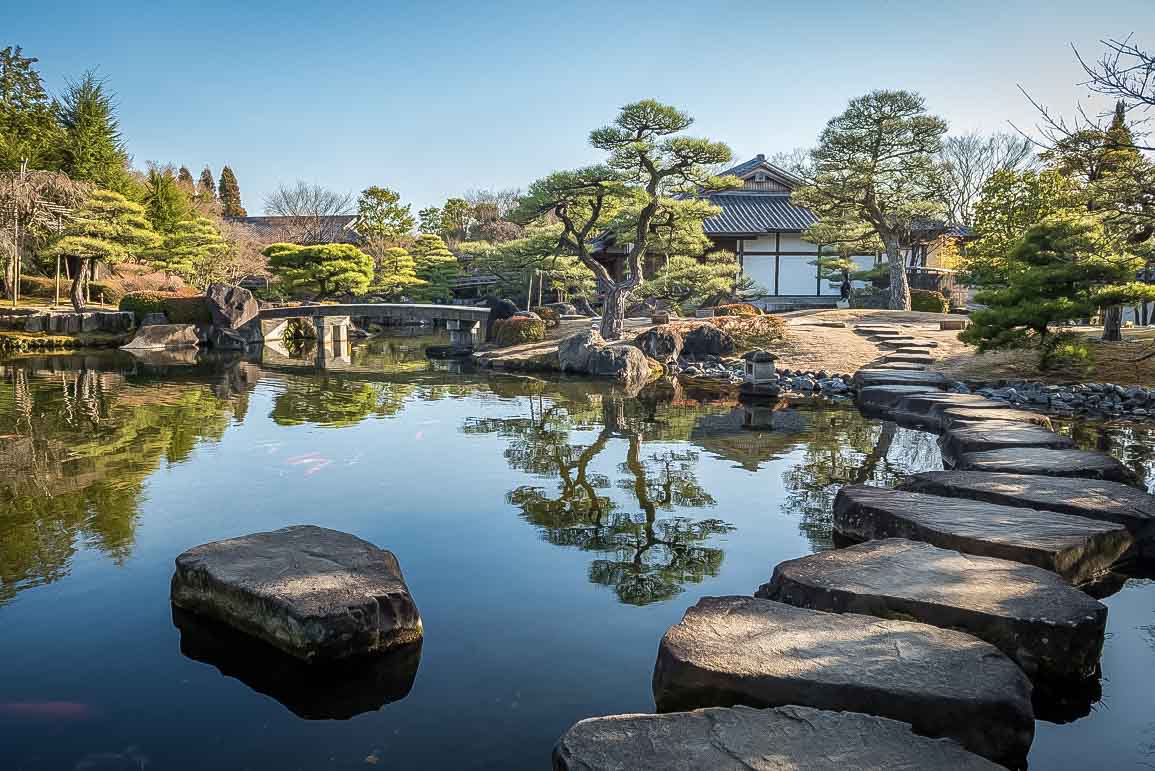
Just a small part of Kokoen garden in Himeji. (Photo by Giulia Verdinelli)
In 2017 Phoenix’s Rohoen garden and Kokoen garden became “sister gardens.”
Plan your trip to Rohoen Japanese Friendship Garden
Built over a section of Interstate 10 just north of downtown Phoenix, the 3½ acre Rohoen Japanese Friendship Garden is in the Roosevelt Historic District. It’s within easy walking distance of the Roosevelt Row art galleries (to the south) and the Phoenix Art Museum (to the north).
This lovely little garden is centrally located and easy to get to. But most visitors don’t know about it. On a weekday you may well be sharing it with only a few neighborhood residents!
Get to Rohoen garden
This garden is just northwest of downtown Phoenix and the convention center. Your best option for getting there will depend on where you are starting from.
Drive to Rohoen Japanese garden
Rohoen is located a few blocks south of McDowell Road and just west of Central Avenue. It is literally on top of Interstate 10.
Parking is available at the garden. You can also park on the north side of Hance Park, which is an easy walk – if they aren’t still digging up that section of the park! (Hance Park has been undergoing a major renovation over the past few years, which means parts of the park aren’t always open.)
If you are driving to the garden from the south, getting there is simple: Drive north on 3rd Avenue until you see the parking lot on your right.
Coming from any other direction, the one-way street pattern makes it easiest to approach from a little west and then south of the garden.
If you are coming into town (in either direction) on I-10:
- Take the 7th Avenue exit going south into the city.
- As soon as you can, turn to the east (left). This will probably be on Roosevelt Street (it’s the first easy place to make a left), but wherever you turn, continue east a couple of blocks until you get to 3rd (Depending on where you turn, there may not be a 4th Avenue.)
- Turn north (left) on 3rd until you reach the garden’s parking lot.
Similarly, if you’re already in the city, it’s easiest to take a major city street past the garden.
- If you are coming from the south: Turn north on 3rd This will take you right to the garden’s parking lot.
- If you are coming from the north: Go south on North 5th and continue on 5th until you cross I-10. Then take the first left to go east on Latham Street. Latham will take you right to the parking lot, but you’ll need to turn north (left) on 3rd to actually enter the lot.
Take Valley Metro to the garden
Phoenix is a city where pretty much everyone has a car. But, depending on where you start from, you can easily get to the Japanese garden via transit.
Valley Metro trains runs along Central Avenue past the garden. The closest stop is Roosevelt/Central Avenue. For the shortest, most pleasant route from the train:
- Walk north to Portland Parkway
- Follow Portland west (left) to 3rd Avenue
- Follow 3rd Avenue north (right) to the garden parking area and entrance.
For bus and train options from any starting point, check the Valley Metro website.
Take a bike or scooter
Phoenix has a Micromobility Program that makes Lime and Spin scooters, traditional pedal bikes and e-bikes, and mobility scooters available in the downtown area.
At the garden
You’ll either check in (if you purchased your ticket online) or purchase your ticket at the entrance gate. You can get a map of the garden when you enter and then you are free to wander the garden paths or just sit and enjoy the beauty and peace.
- Restrooms are in a beautifully crafted, Japanese-style building constructed without power tools.
- The small gift shop is filled with a variety of interesting Japanese items. It also has a few beverages and Japanese snacks.
- The Tea House is only open for traditional tea ceremonies, tea tours, and other special events. A separate reservation is required for these events.
Rules for visitors include:
- Stay on the paths.
- Do not bring food or drinks other than water.
- No pets.
- No smoking.
Hours and admission
As of spring 2024, Rohoen Japanese Friendship Garden is open Tuesday – Sunday throughout the year.
- During winter the garden is open from 9-4. However, hours are reduced during summer when the garden closes during the hottest part of the day.
Admission is $10 (or less) if reserved in advance. It’s an extra $2 at the gate. But it’s free if you are a member of the American Horticultural Society reciprocal garden admissions program!
Your membership at your local botanic garden may let you visit Rohoen at no charge!
Check the Rohoen Japanese Friendship Garden’s website for the most current information and to purchase tickets.
What’s in bloom?
While flowers aren’t the primary focus of traditional Japanese gardens, they are used to add seasonal color throughout the year.
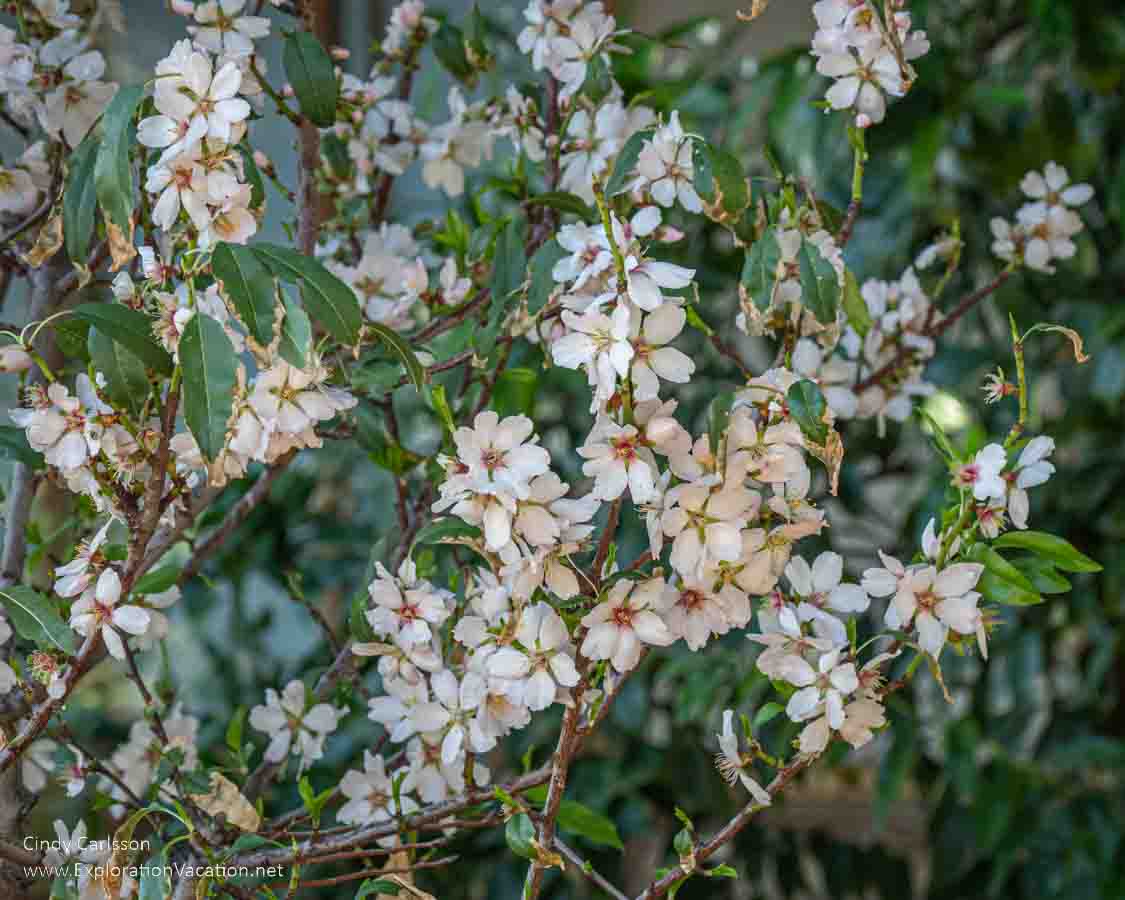
Fruit trees in bloom in the garden.
You may be surprised to discover the garden isn’t filled with azaleas and many other plants often associated with Japanese gardens. Most of those plants wouldn’t survive in Arizona’s dry heat. And Japanese gardens are supposed to harmonize with the natural landscape by using local materials and plants. So, Rohoen uses plants that look similar to those in a traditional Japanese garden, but that tolerate Arizona’s climate. This means Indian hawthorn instead of azaleas and pear, plum, almond, and peach trees instead of cherries. These offer the look and the feel of a Japanese garden, but fit the garden’s location in Arizona.
Not surprisingly, the blooming season begins early in Phoenix. Ornamental pears are one of the earliest to bloom, beginning in January. The variety of blossoms expands and changes through the spring. Most finish as summer’s heat intensifies, but summer is a good time to enjoy the garden’s water lilies. The monsoon and cooler fall weather bring a few more flowers into bloom, but this is the season to enjoy brightly colored leaves.
Find more details on what blooms when on the garden’s website.
Garden events
Rohoen Japanese Garden offers tea tours and traditional tea services, performances, ikebana (Japanese flower arranging) demonstrations and workshops, cultural and language classes, art and cultural exhibits, bonsai shows, full moon viewing events, guided meditation and aikido exercise sessions, Japanese holiday celebrations, and more. Check the schedule for what will be happening while you’re in the area.
And, if you are reading this in March, take note of the annual Haru weekend is March 23-24, 2024. That’s when the garden’s spring flowers provide a beautiful backdrop for various Japanese spring holiday and cultural activities.
Most events have an additional fee.
Other things to do while you’re in the area
The Rohoen Japanese Friendship Garden is located in the Roosevelt Historic District, one of several adjoining historic districts in this part of the city. The area’s historic homes and businesses and the redevelopment of the nearby Roosevelt Row Arts District make this once-quiet neighborhood a popular spot during art events like the First Friday Art Walk or the annual Art Detour or various studio tour options.
It’s easy to spend a day exploring this area. In cooler weather, wander the neighborhood along Central Avenue between Roosevelt Row and the Heard Museum (it’s less than 1½ miles long) or take a Valley Metro train along Central Avenue. The train stops near the Japanese Garden, the Phoenix Art Museum, and the Heard.
If you aren’t comfortable wandering on your own or just want a guided experience, you can book a tour through local arts organizations and local guides or book a tour of the area’s street art with Viator.
The following lists other activities in the area, beginning south of the garden and moving north.
Roosevelt Row Arts District
For contemporary art by local artists, funky shops, fun food and dining, and loads of street art, it’s hard to beat the Roosevelt Row Arts District (RoRo).
Irish Cultural Center and Library
The McClelland Library at the Irish Cultural Center has a rare full-color copy of a beautifully illustrated ancient book called the Book of Kells.
I haven’t been to the Irish Cultural Center or McClelland Library, but I have been to Trinity College in Dublin to see the Book of Kells. It’s an amazing work of art, and I’d happily go see it again.
However, at Trinity College you wait a very long time to see the few pages on display. I can guarantee you the line will be a lot shorter at the McClelland Library! And the facsimile pages will look pretty much the same as the real thing in Dublin. It’s right outside the garden and it’s free. So why not check it out?
Hance Park
Rohoen Japanese Garden seems to be part of Hance Park. This sprawling park provides a large swath of green space on both sides of Central Avenue. There’s a children’s playground here and a lot of space for big events and festivals of all types.
When I was here in spring 2022, chain link fences stood between the Japanese garden and the rest of the park – with big piles of dirt proving a major revitalization project was underway. It’s unclear how much of this work remains to be done (the project website hasn’t been updated in a few years) or if it is complete. But, if it’s complete, it appears there are some very cool features to the north of the Japanese garden.
Unfortunately, there’s not a lot of info on the park’s features. The best I can find (including some interesting history) is on the Hance Park Conservancy website.
Phoenix Art Museum
I have mixed feelings about the Phoenix Art Museum. I’ve seen a few shows here that made me think about the world (or at least art) in a completely new way. And then there have been. . . other visits. Skip the European art and check out the special exhibits and unique collections, as this is where the museum really shines.

Portraits of migrant farmers by Don Coen from a 2014 exhibit at the Phoenix Art Museum.
Current exhibits range from shows about Barbie (which a friend raves about) and the color pink, to Punjabi art and cultural items, Asian art with a focus on nature, the usual European art, meticulously detailed miniatures depicting historic domestic rooms, and western art both traditional and not so traditional.
The museum also has a Yayoi Kusama Fireflies Infinity Mirror Room that looks pretty cool.
Except for the Barbie and pink shows, expect to see most of these exhibits on display for some time to come.
Heard Museum
The Heard is home to a wonderful collection of Native American art and artifacts. Permanent exhibits focus on the native people of the Southwest. However, special exhibits feature artists from as close as the Southwest to as far away as the Arctic or even Europe. Shows here are always well-done, with beautiful items that tell fascinating stories.
Current exhibits include a stunning collection of Plains Indian dolls and baskets from the (now closed) Basha Museum. That was also a stunning collection and, apparently, the Bashas donated all of it to the Heard. (Yay!) And, of course, there’s much, much more.
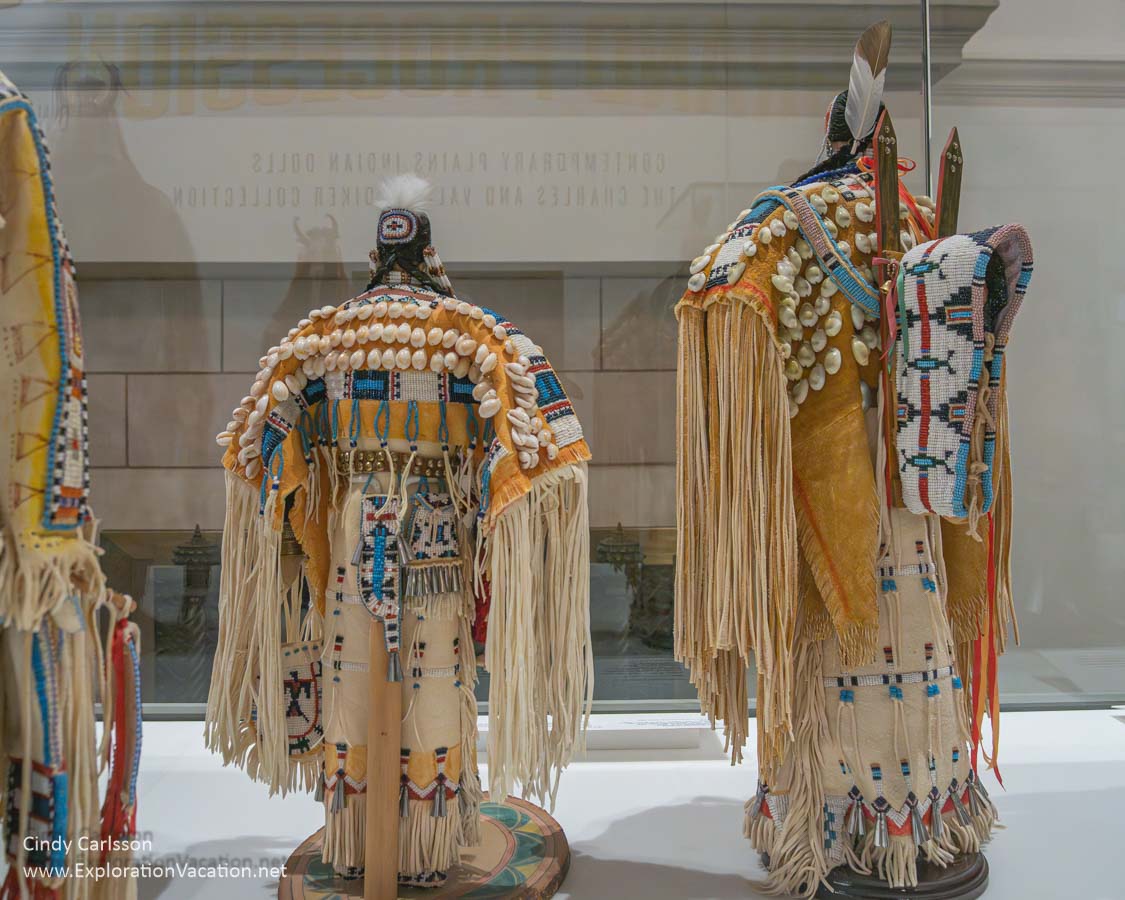
Intricate Plains Indian dolls on exhibit at the Heard Museum.
The Heard also hosts a regular series of events, including Native American art markets and a hoop dance competition.
Food in the area
If you need a bit to eat while visiting the garden, you’ll find a few grab and go Japanese snacks in the gift shop. But there are several other options within walking distance.
To the south, the area around and south of Roosevelt has a lot of restaurants. This is an especially good place to start your day, as both Snooze and Matts Big Breakfast are very good. On weekends, expect lines at both.
To the north, you’ll find several lunch and dinner options along Central.
- For a great lunch, head all the way up to the café at the Heard Museum. Their eclectic menu includes Native American inspired dishes. The food is always fantastic and, on a beautiful day, there’s nowhere better to sit and eat than in their courtyard listening to the fountains and birds.
- If you’re looking for a snack or light lunch in a garden setting, see if the new restaurant at the Phoenix Art Museum has opened. In the past, the food here has always been ok, but the setting is the real reason to take a break here.
Stay in the area
There are thousands of lodging options in Phoenix and surrounding Valley of the Sun. But there are very few hotel options right around the garden. You’ll find more choices downtown. And, because this is still a largely residential area, you may also be able to find an Airbnb in the area. (The building that overlooks the garden is part of an expensive condo/apartment complex that has occasionally had a unit or two available as a vacation rental.)
I’ve only stayed in this part of Phoenix once, and that was a small inn I found on Airbnb. (Alas, it doesn’t seem to be open anymore.)
But here are some other options to check out:
- The very artsy FOUNDE:RE Phoenix Hotel is built almost above the garden. It looks a little over-the top, but might be the perfect place to end an art-filled day. Check it out at Booking.com or Expedia.
- Booking.com shows a number of both hotels and apartments in map view, making it easy to search. Oddly, Expedia is harder to search and currently shows fewer options, but they sometimes include what looks to be an adorable studio apartment right across Hance Park.