Last updated on June 11th, 2026
Want to visit the ice hotel in Jukkasjärvi, Sweden, but not really a fan of winter weather? Or maybe you’re more interested in seeing the midnight sun than taking a chance on the northern lights. Perhaps you aren’t interested in sleeping in a room made from ice, but think a gallery filled with fabulous sculptures created from ice would be pretty cool.
You’re in luck, because Sweden’s famous ice hotel is as much a very funky art gallery as a hotel – and you can experience a large part of it at ANY time of year!

You can experience some of the magic of Sweden’s famous Icehotel year-round in Icehotel 365.
I use links to improve your browsing experience. A few of these may also pay me a small commission if you use them to make a reservation or purchase goods or services. You don’t pay extra, but it helps keep this website running without intrusive advertisements. To learn more, review my policies and disclosures.
What is Icehotel?
You’ve likely heard of Sweden’s Icehotel – an artsy hotel created anew each winter from ice and snow.
But this seasonal “Icehotel Winter” isn’t the whole story.
The Icehotel also includes the year-round Icehotel 365 (complete with an ice bar), comfortable warm rooms and chalets, and a few excellent restaurants. All located in the picture postcard perfect village of Jukkasjärvi and surrounded by the Sápmi (Lapland) wilderness.
This makes Sweden’s Icehotel is a great destination any time of year.
Yes, it’s worth visiting even when the annual winter Icehotel is still under construction or slowly melting back into the Arctic landscape!
I visited in early December 2023 – before the 2023/2024 winter-only Icehotel 34 was open for the season. But I discovered there’s a lot more to Sweden’s ice hotel than I expected.
There was so much more that it took me awhile to realize I was missing the “real” (winter only) ice hotel!
Icehotel Winter
The ice hotel everyone knows about (the seasonal ice hotel constructed each winter from river ice) is pretty much what you would expect: A building constructed, decorated, and furnished anew each year from ice and snow from the nearby River Torne.
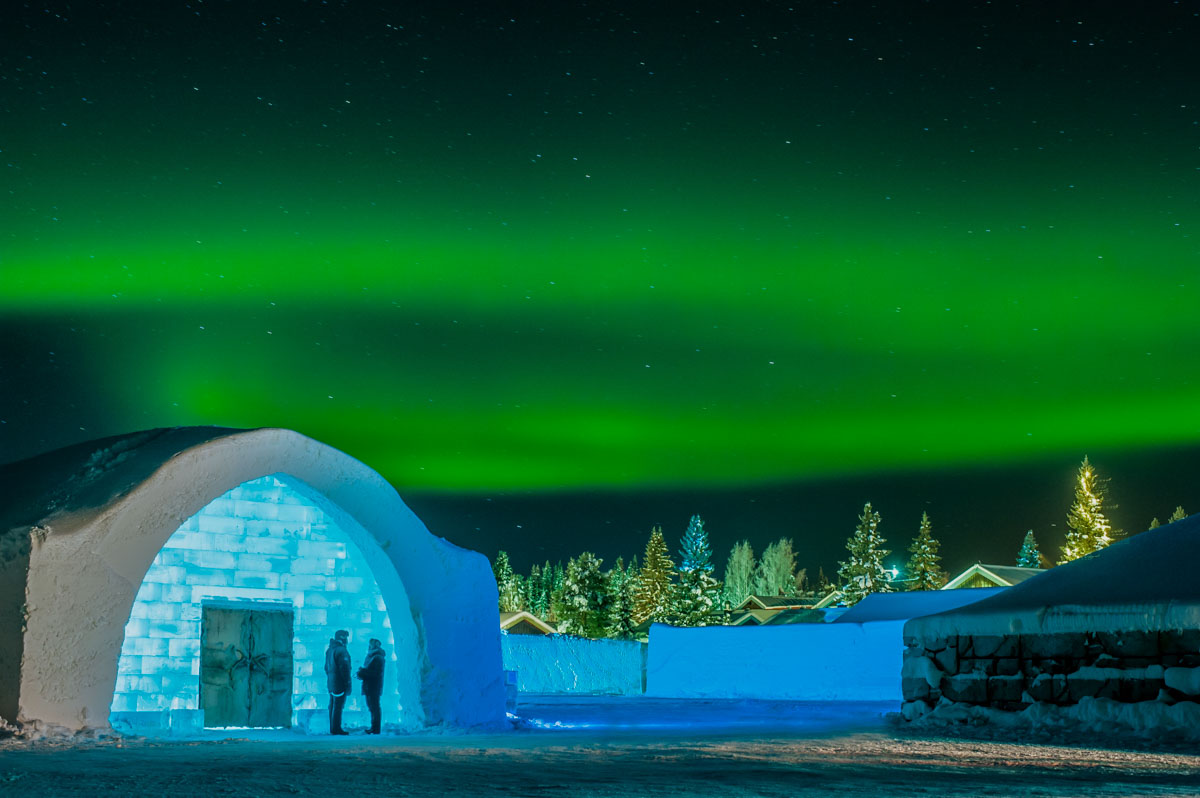
The 2016 Icehotel 27 looks pretty much like Icehotel 34 – except for the northern lights! Unfortunately, I didn’t see either Icehotel 34 or the aurora on my visit. (Photo by Asaf Kliger © ICEHOTEL)
But the first Icehotel wasn’t intended to serve as a hotel.
How did Icehotel get started?
In the 1970s Jukkasjärvi attracted warm-weather tourists who came to experience one of Europe’s early river rafting destinations.
That industry was developed in part by Yngve Bergqvist. He came to the area in the mid-1970’s to enjoy spring skiing and stayed.
But tourists only came to Jukkasjärvi in the summer. They left as soon as the temperature dropped and the Arctic night began to overtake the day. No one expected tourists to visit in winter. After all, this part of Sweden becomes very dark and cold in the winter.
Well, almost no one.
👉 Read more Icehotel history
Bergqvist saw the beauty in the snowy nights and northern lights. And he started thinking about how he could attract tourists. But it wasn’t until he visited Japan and met artists who worked in ice that he realized the Torne River’s crystal-clear ice might draw artists north – even in the depths of the Arctic winter.
Late in 1989 he arranged for two Japanese ice sculptors to come to Jukkasjärvi to lead an ice carving workshop for Swedish artists. The Japanese artists, Bergqvist, and the students cut and hauled blocks of ice from the Torne River and began creating.
When they were finished, an ice-art filled igloo of almost 2700 square feet (250 square meters) attracted visitors. More visitors than Jukkasjärvi had lodging for.
Bergqvist explains:
On a cold winters day, all of our warm cabins were booked for the night, but we had a group that wanted to stay the night. I suggested that they could sleep in the cold Artic Hall [the art igloo]. To my surprise, the guests said yes, so we equipped them with warm sleeping bags and instructed them how to sleep in the cold. The morning after they were blown away by the experience.
Icehotel was born.”
There’s been a new Icehotel every winter since.
In November artists from around the world gather to create the season’s ice hotel. The first guests to sleep in the year’s new creation arrive in December. And each spring the ice hotel is allowed to melt and flow back into the Torne River.
But that seasonal schedule left summer visitors disappointed. They wanted to visit the Icehotel too!
To meet that demand, a new, year-round, solar-powered Icehotel 365 opened in 2016 to serve guests no matter what time of year they arrived. But more on Icehotel 365 later.
👉 Read less
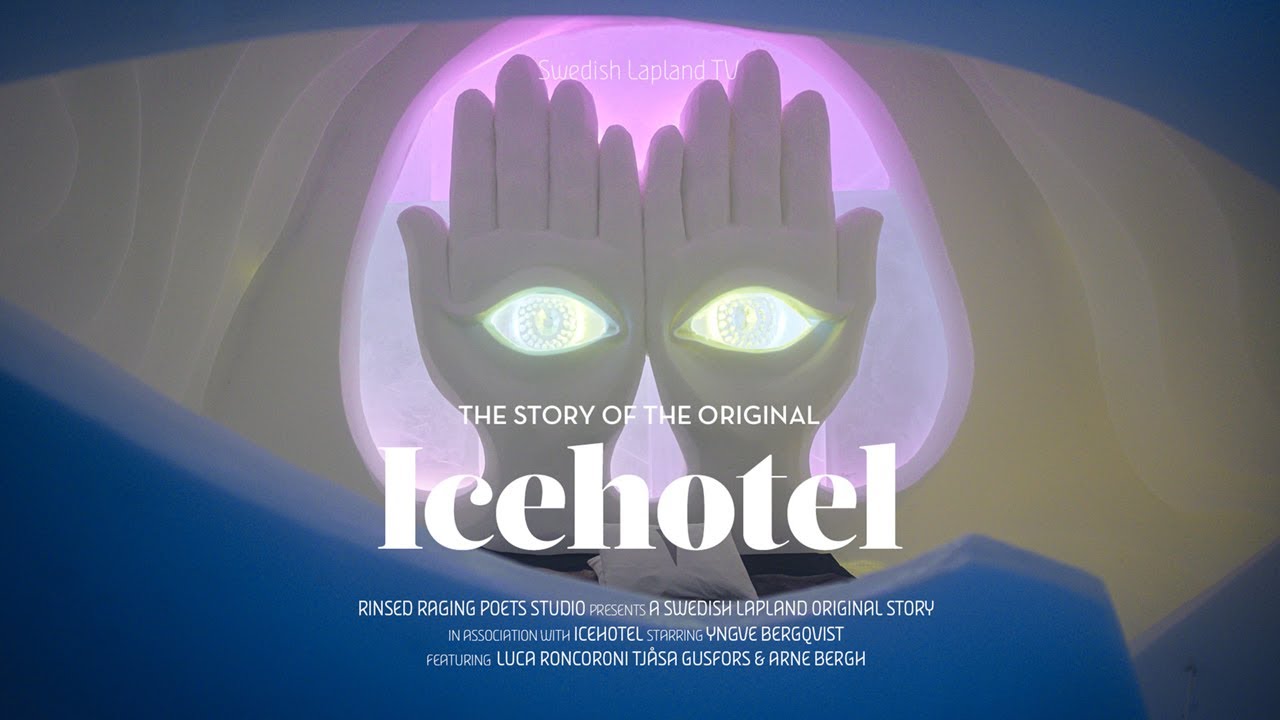
This 2020 video for Swedish Lapland TV gives a good overview of the Icehotel’s history.
What to expect inside the seasonal Icehotel Winter
Because a new winter Icehotel is built every year, each one is unique, and each one is numbered. The 2023/2024 version is Icehotel 34. Unfortunately, it was still under construction when I visited.
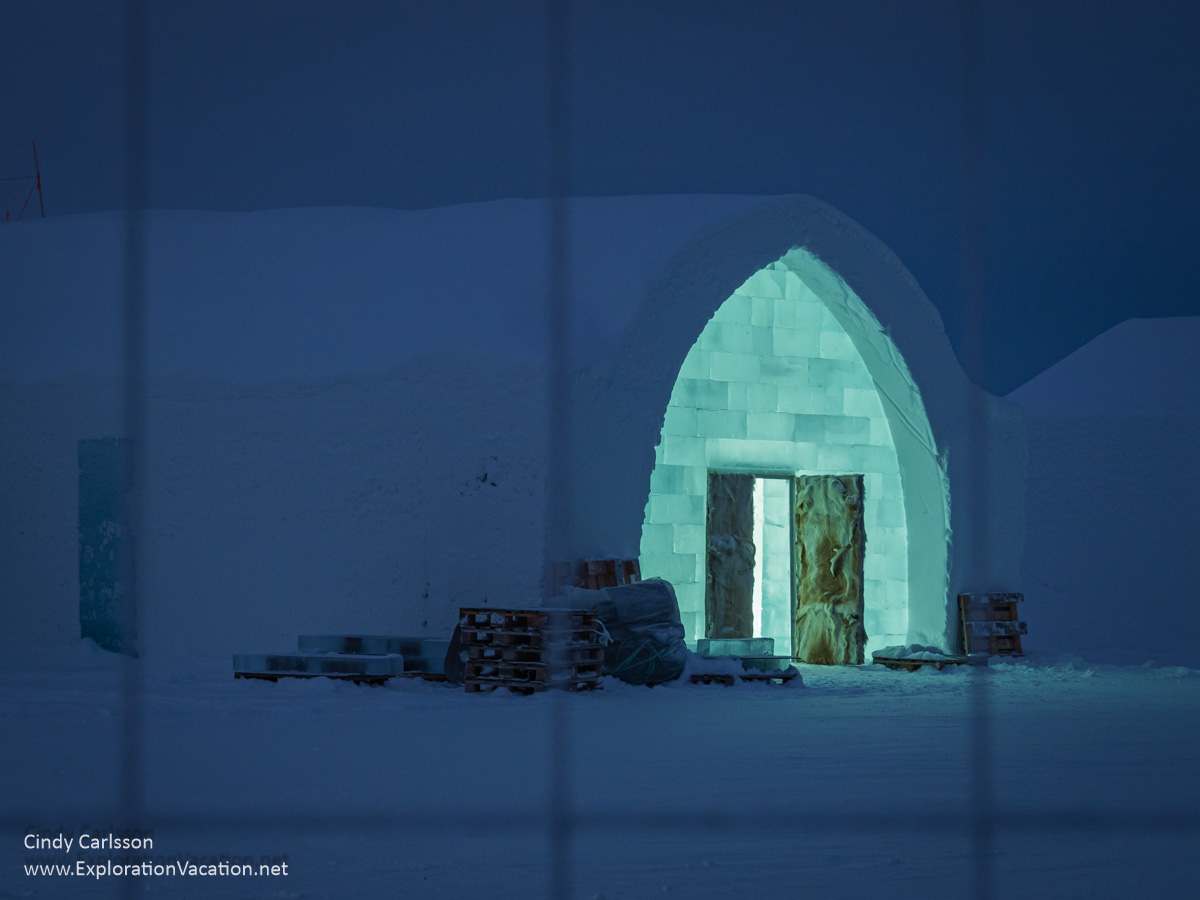
The 2023/2024 winter Icehotel 34 was still under construction when I visited in early December.
So, I didn’t get to see the inside (or the northern lights).
However, if the interior is anything like that of previous years, it’s spectacular.
The number and configuration of rooms inside the Icehotel has varied some over time. Icehotel 34 includes two types of sleeping rooms (elaborately carved Art Suites and basic Ice Rooms), the Main Hall, and a Ceremony Hall.
You have until April if you want to see it for yourself.
Here’s a bit of what you’d see if you get to Sweden before this winter’s Icehotel 34 begins melting back into the river,
Slava Ceremony Hall
For years Icehotel had a chapel. In Icehotel 34 the chapel is the beautiful Slava Ceremony Hall, which is embellished with traditional Ukrainian designs.

The Ceremony Hall in Icehotel 34. (Photo © Asaf Kliger for ICEHOTEL)
The Slava Ceremony Hall was designed by Polish artists and designers Thomasz Czajkowski and Grzegorz Olczak. They hope visitors who visit the hall are reminded to “see and appreciate the beauty that surrounds us.” The hall holds up to 40 guests.
The Main Hall
The Main Hall is always designed to wow visitors entering Icehotel 34 for the first time.
When I visited, the Main Hall features an elaborate lattice called LattICE. It was created by Japanese artists Kendo Hamaguchi and Taku Ohuch using a traditional Japanese building technique that relies on convex and concave cuts to fit pieces together without nails. Essentially, it is a “large-scale three-dimensional puzzle” that you can walk through.
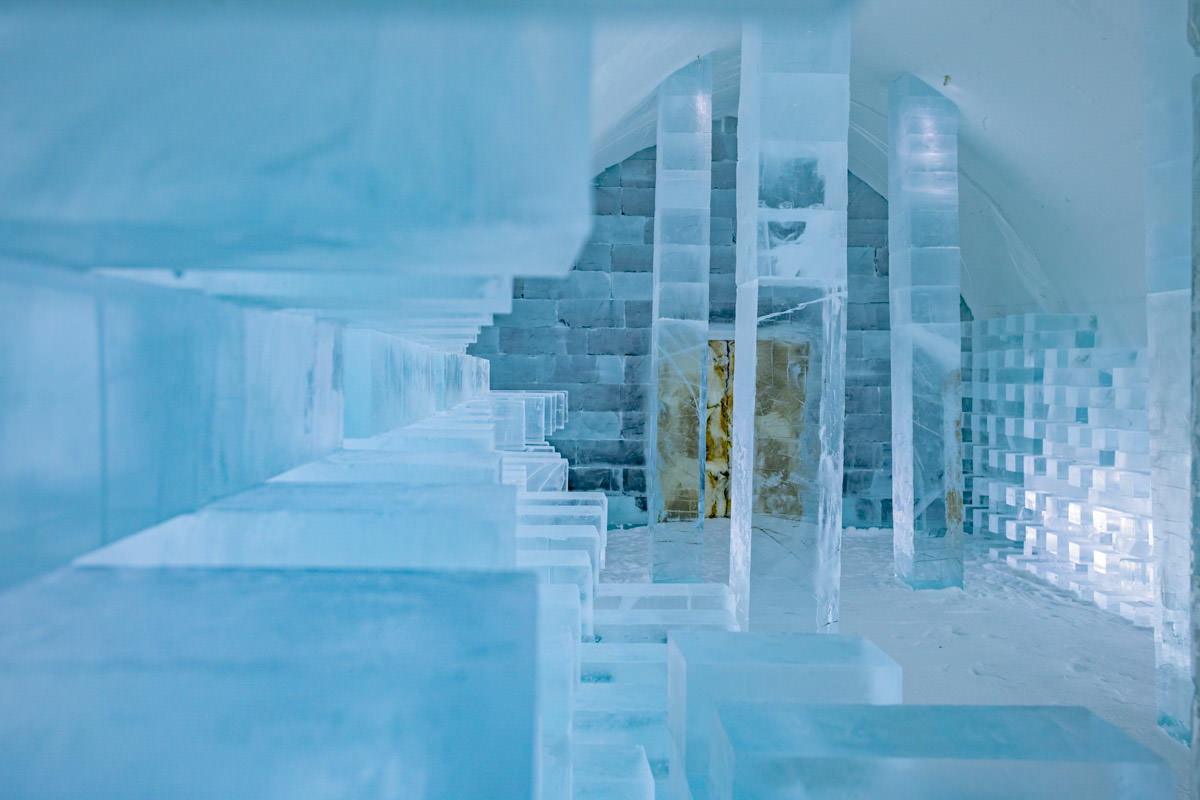
LattICE in the Main Hall features traditional Japanese building techniques (Photo by Asaf Kliger © ICEHOTEL)
Icehotel 34 Art Suites
Icehotel 34 has 15 elaborately decorated Art Suites. These are more art gallery than hotel room. Each is unique and designs are never repeated.
Beaver Lodge
The Beaver Lodge suite places guests inside an enormous snow and ice beaver lodge — complete with giant beavers. It was created by Canadian ceramics artists Brian McArthur and Dawn Detarando.
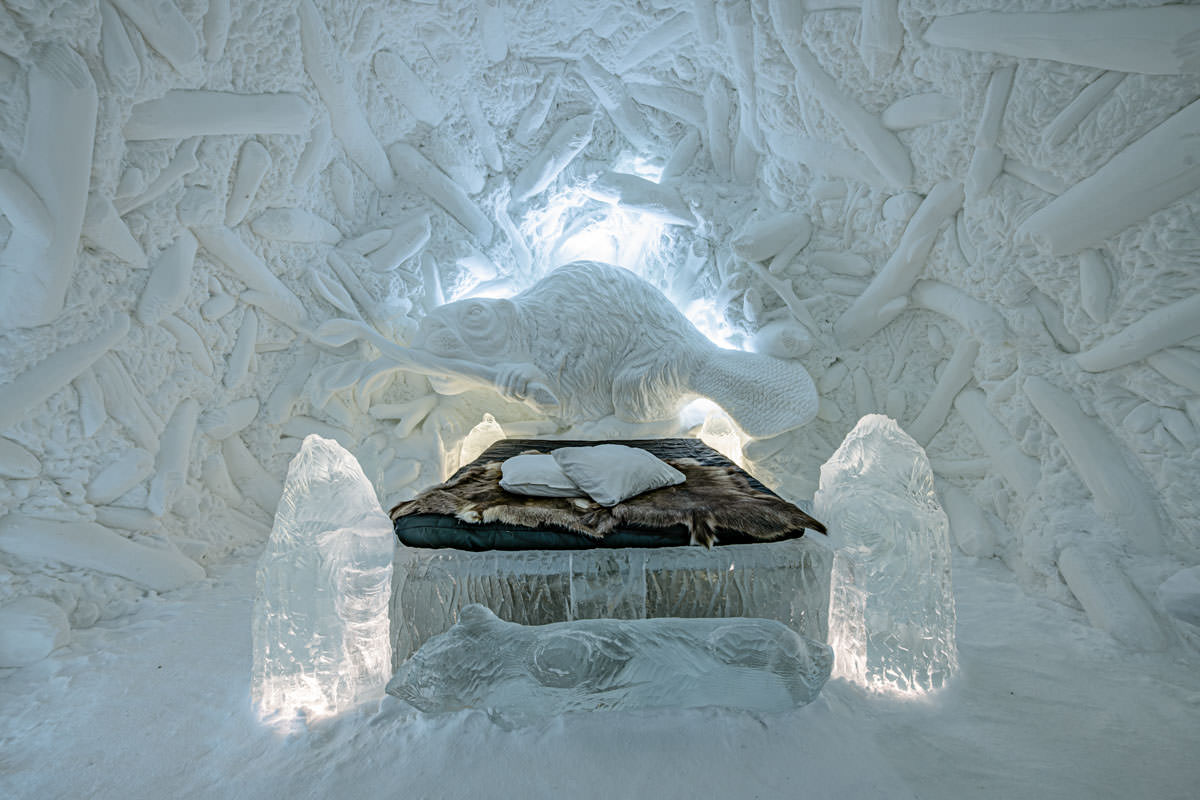
Beaver Lodge makes guests part of a super-sized beaver family for the night. (Photo by Asaf Kliger © ICEHOTEL)
(The artists hope the sound of the beavers chewing doesn’t keep you awake.)
👉 Read more Art Suites in Icehotel 34
Oh My Goddess
Art Suite Oh My Goddess is a beautiful homage to the goddess of cacao, but it also recognizes the dark side of chocolate production. It was created by Swedish artist Ulrika Tallving from the Netherlands and Italian traveler and student Giovanna Martinez (who has worked on the Icehotel construction team in the past).
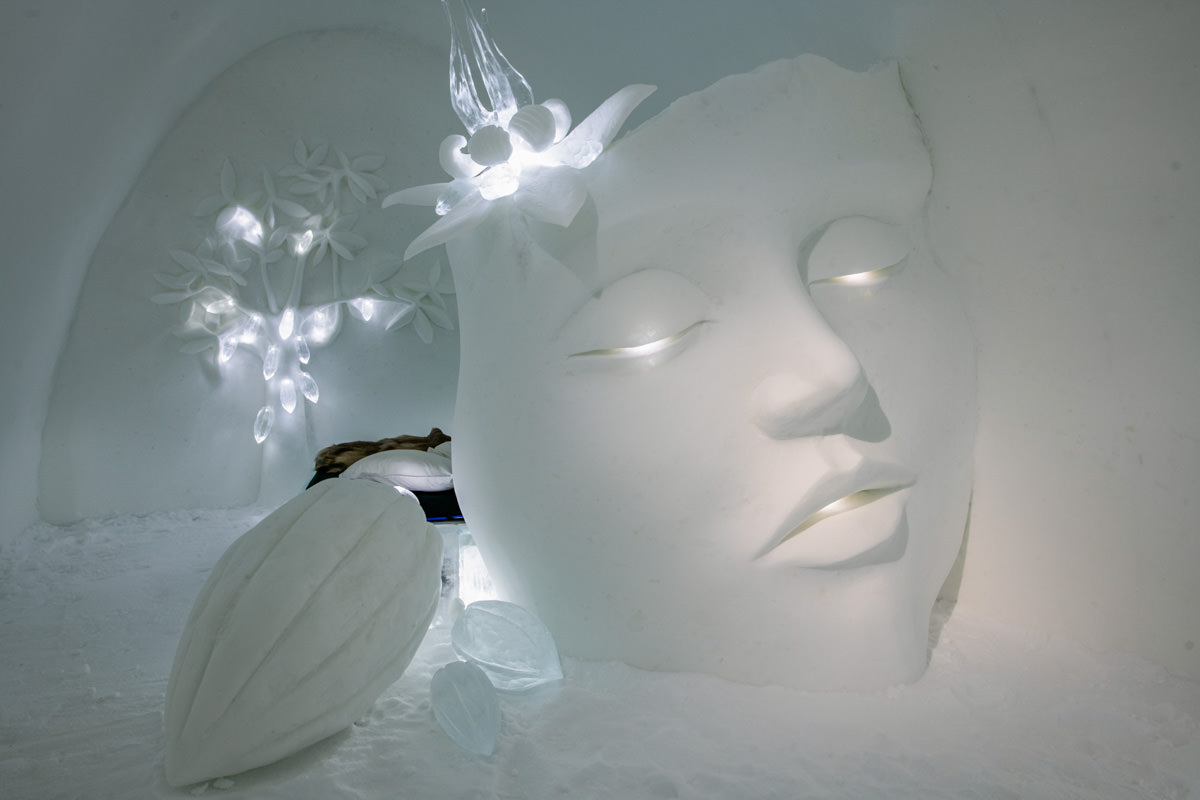
Oh My Goddess “is based on the love of chocolate, the cacao ceremony ritual, and our connection to the earth and the universe.” (Photo by Asaf Kliger © ICEHOTEL)
Dream with a Thorn
I love the way Art Suite Dream with a Thorn recreates the Southwestern USA desert in what appears to be giant cut paper figures made from ice. It was created by architects Monica Popescu from Romania and Emmylou Varon from Sweden.
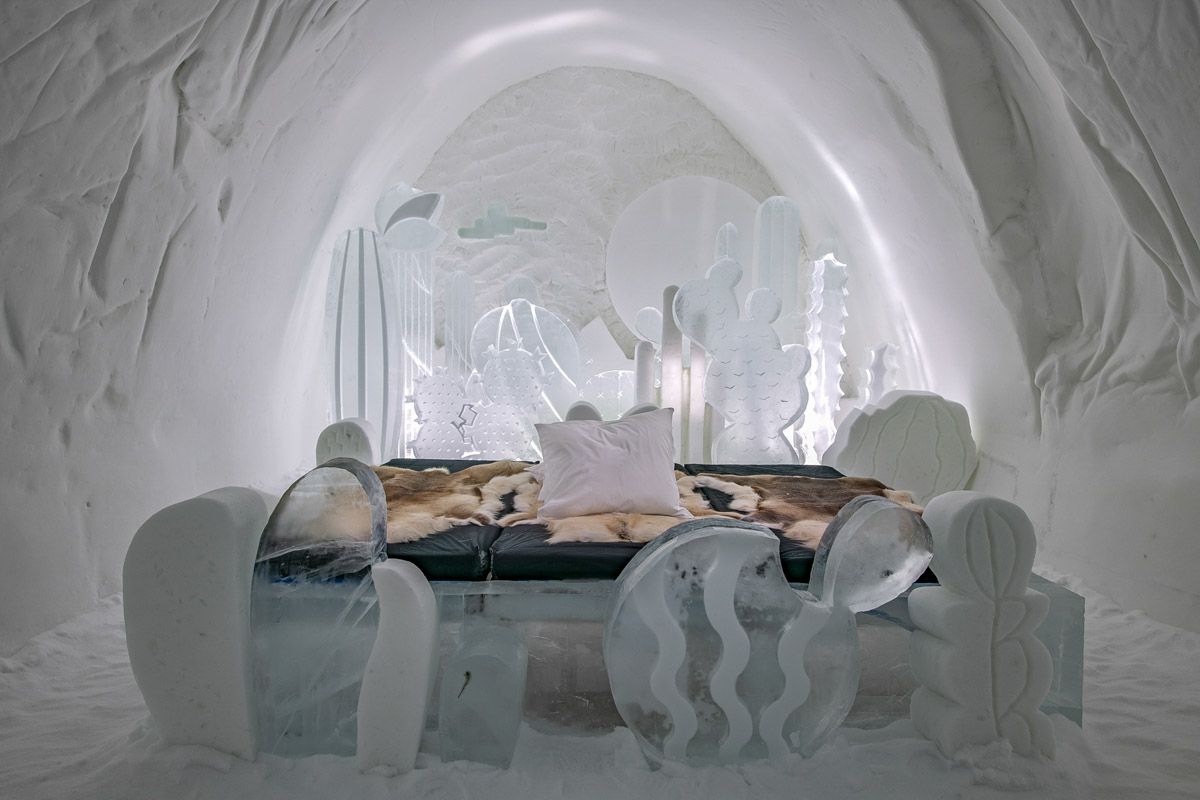
Dream with a Thorn “invites the guests to sleep among the saguaro, barrel and prickly pear cacti, immersing themselves in the beauty of a desert oasis. . .” (Photo by Asaf Kliger © ICEHOTEL)
Other Icehotel 34 art suites
The other art suites in ICEHOTEL 34 are:
- Don’t Get Up features a bed placed between the legs of an enormous woman seated on the floor while a huge teddy bear looks on. It “explores the impact of a giant being trapped in a small room.” But mostly it looks very sexual.
- Eternal Flow, where a giant raven is building a nest.
- Frozen Moment features a giant cat with glowing golden eyes watching two rats stealing cheese.
- Light Collectors “is a mythical space where imaginary creatures roam. Part human, part animal. They appear to have stepped out of an old saga or fairytale.”
- Minus 10 tilts every visual element ten degrees. (I can’t image the disorientation if you woke up in the middle of the night and had to get up to use the restroom!)
- Morning Song, which is a “homage to the beautiful stories, forests and lakes of the North.”
- Nebula’s Child invites guests to “ponder the delicate equilibrium between the forces of creation and destruction” while gazing at the representation of the birth of a star.
- Obscura features a giant ear and tricks to alter one’s perspective of space.
- Sea Inside encourages guests to take a deeper look into the room’s icy sea shells.
- Šiella references the protective talisman hung over the cradle and worn as jewelry to protect Sámi children.The room features a number of motifs to protect you as you sleep.
- Torne River Anomaly references a strange formation in the Baltic Sea that is not well understood by science and has spawned many creation stories and myths. The room “echoes the notion of a mysterious world that has been preserved in the ice for centuries.”
- Inception is an allegory for the creation of the world, complete with thunder and lightning.
👉 Read less
Ice Rooms
In contrast to the Art Suites, the 20 Ice Rooms or Cold Rooms are much simpler, with far less decoration.

Bed in a Cold Room in Icehotel 33. (Photo by Asaf Kliger © ICEHOTEL)
(This is a picture from last year. Based on the website’s current photos, this year’s rooms look even less elaborate.)
Icehotel 365 is worth visiting any time of year
Despite not getting inside Icehotel 34, I really enjoyed my visit. And I descovered that Icehotel is a great destination even without the “real” Icehotel!
That’s because Icehotel is really TWO ice hotels:
- The famous seasonal Icehotel Winter that is built anew each winter AND
- Icehotel 365, a permanent building with a year-round ice hotel inside of it.
And, like Icehotel Winter, Icehotel 365 is true to its beginnings. It is as much (or more) art gallery than hotel.
Tour the year-round Icehotel 365 with me
Let’s start with the fact that Icehotel 365 has a very dramatic entrance, but otherwise doesn’t look very interesting from the outside. (It’s just a very, very large stone block building.)
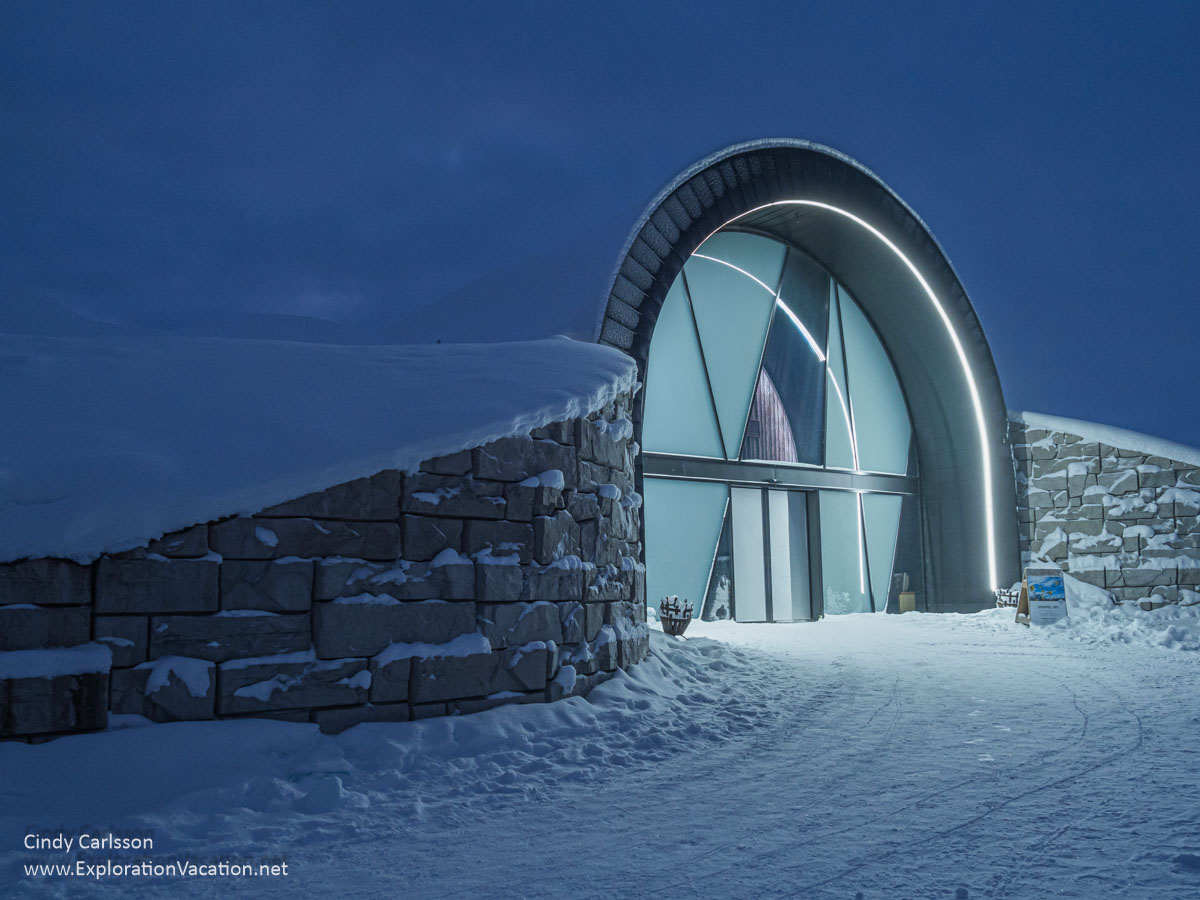
Icehotel 365 is built inside an enormous stone block building with a dramatic entrance.
But don’t let appearances fool you. This is a highly sophisticated building filled with some amazing snow and ice art galleries that double as sleeping rooms.
And, unlike the seasonal Icehotel, you can visit – and even sleep in – Icehotel 365 all year long!
Here’s what you’ll find inside Icehotel 365.
The Icebar
The Icebar is located just inside the entrance to Icehotel 365. It’s open all year.
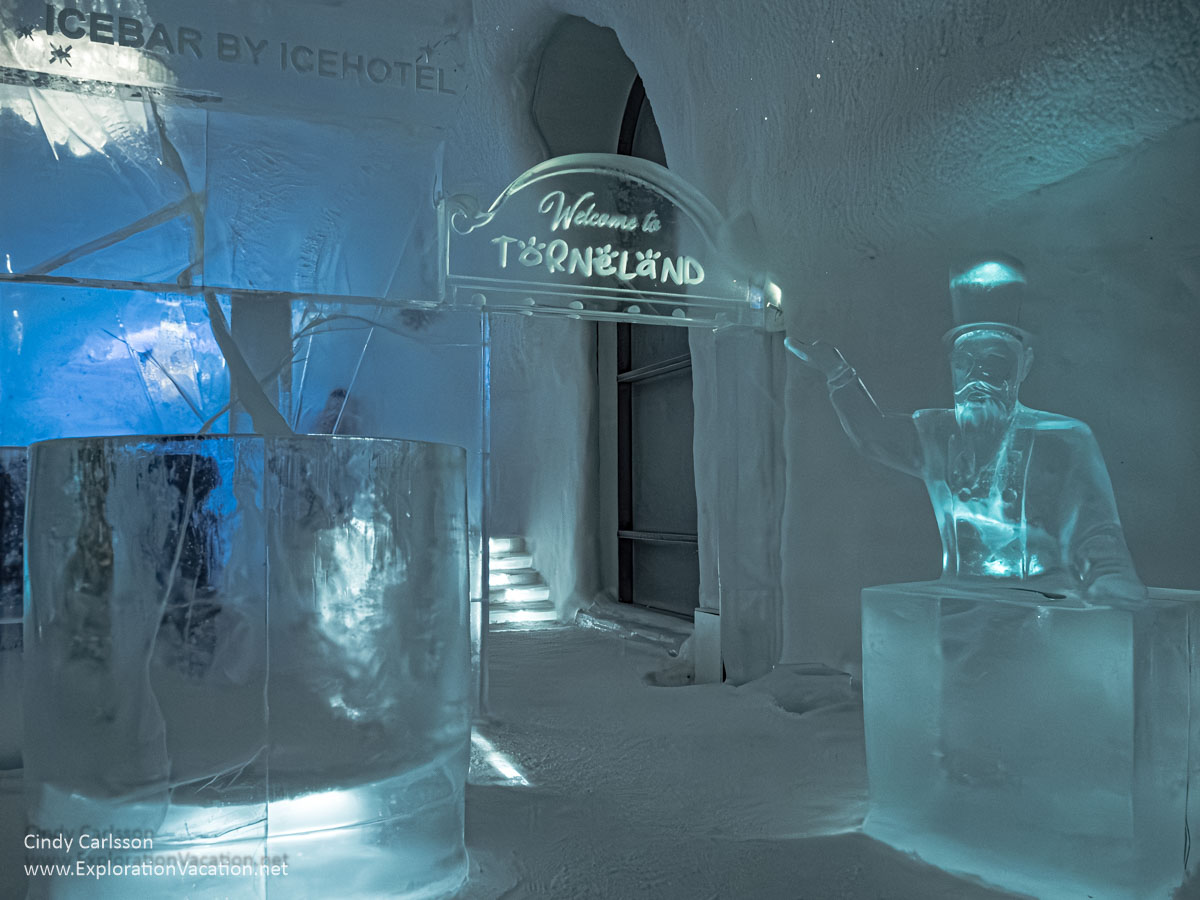
Step up to the bar and order a drink just like you would anywhere – except both the bar and your glass are made of ice.
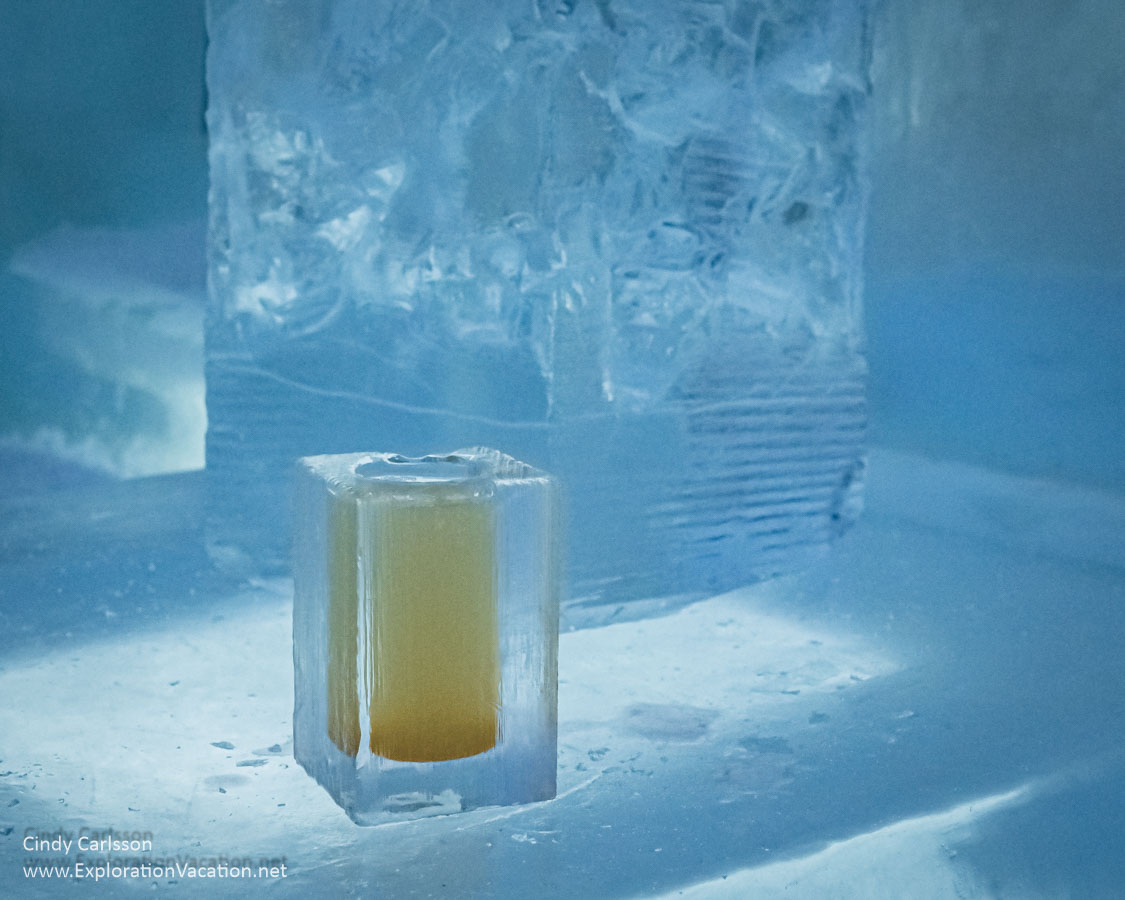
The bar features a variety of interesting cocktails like this tasty gin concoction, but you need good gloves to pick up your drink!
The Icebar has a few ice benches covered with caribou (reindeer) hides for those who want to sit down to enjoy their drink. But there aren’t a lot of places to sit – it really isn’t a place to sit and relax with a drink. Perhaps that’s one reason why the featured shot seemed to be so popular.
(But think how much fun it would be in summer to take your icy drink outside and sip it under the midnight sun!)
The Icebar area also has space at the back where ice carving classes are held, but it would make a great social space as well.
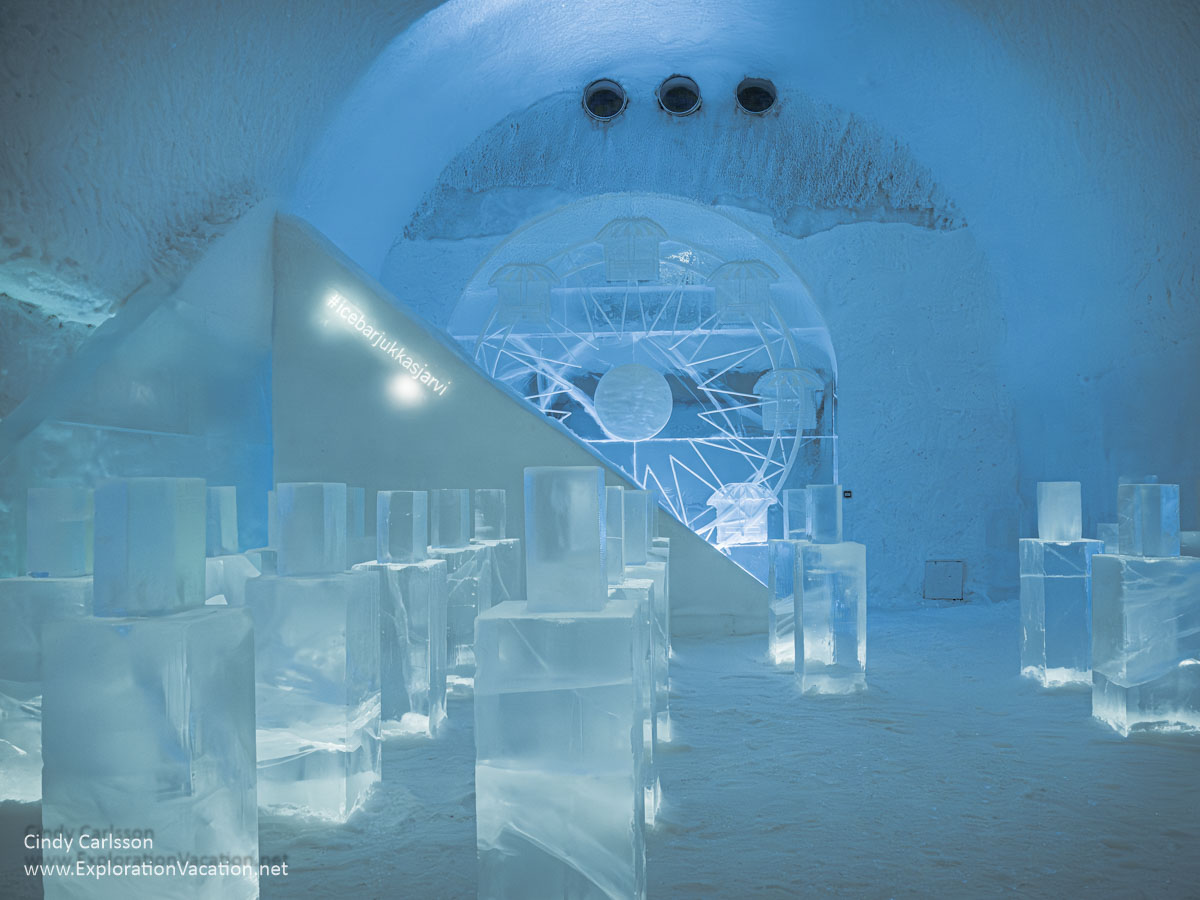
Ice blocks awaite student carvers.
Turn the other way when you enter Icehotel 365 (instead of turning into the Icebar) and you’ll see a doorway that opens onto a long icy hallway.

Follow the hallway to discover Icehotel 365’s art gallery-worthy rooms and more.
This is where Icehotel 365’s museum, theater, and art gallery guest rooms are located.
The Experience Room and Icehotel 365 Theater
The Icehotel’s museum is called the Experience Room. Because it’s located in Icehotel 365, it’s available throughout the year.
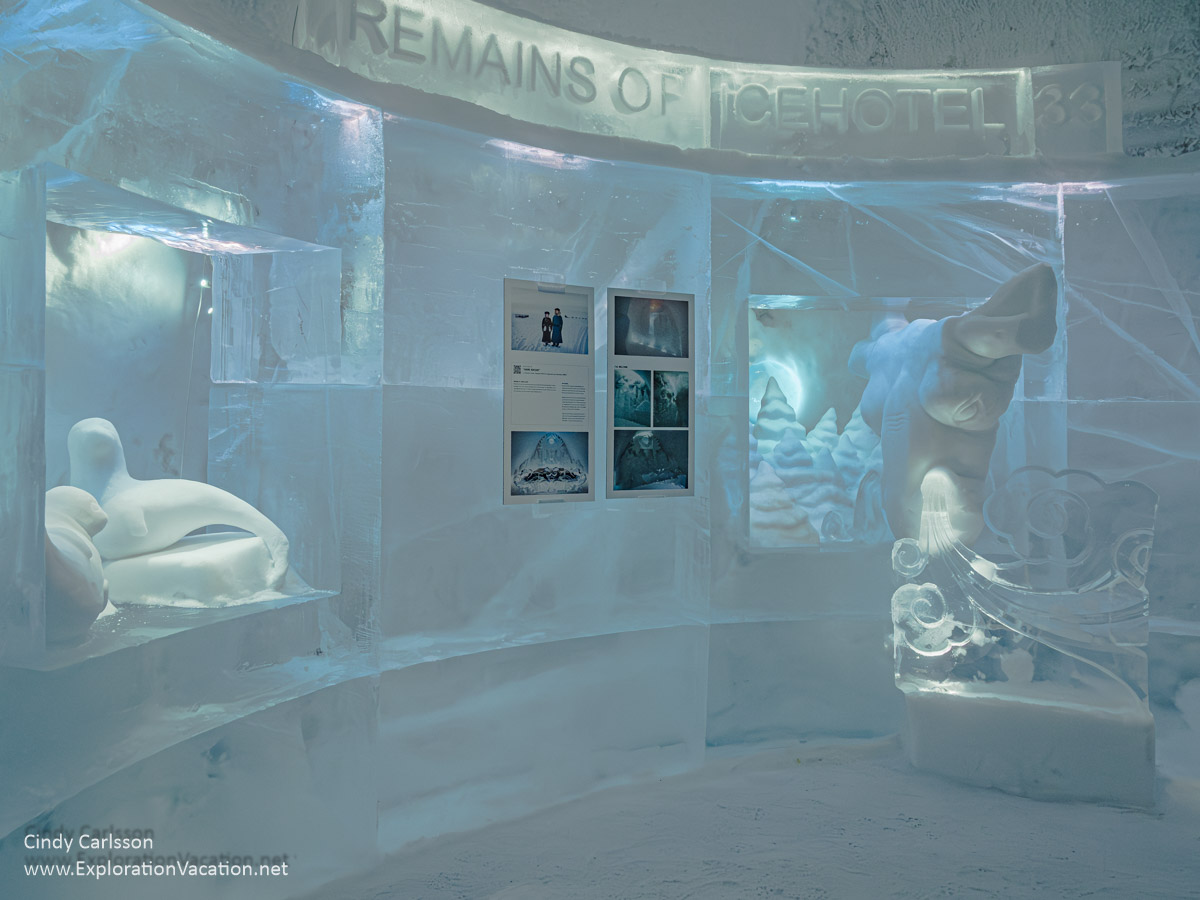
The Experience Room has exhibits about Icehotel’s history and displays of ice art from the previous winter’s Icehotel.
There’s also a small theater. When I visited it was playing a movie about the birth of Icehotel.
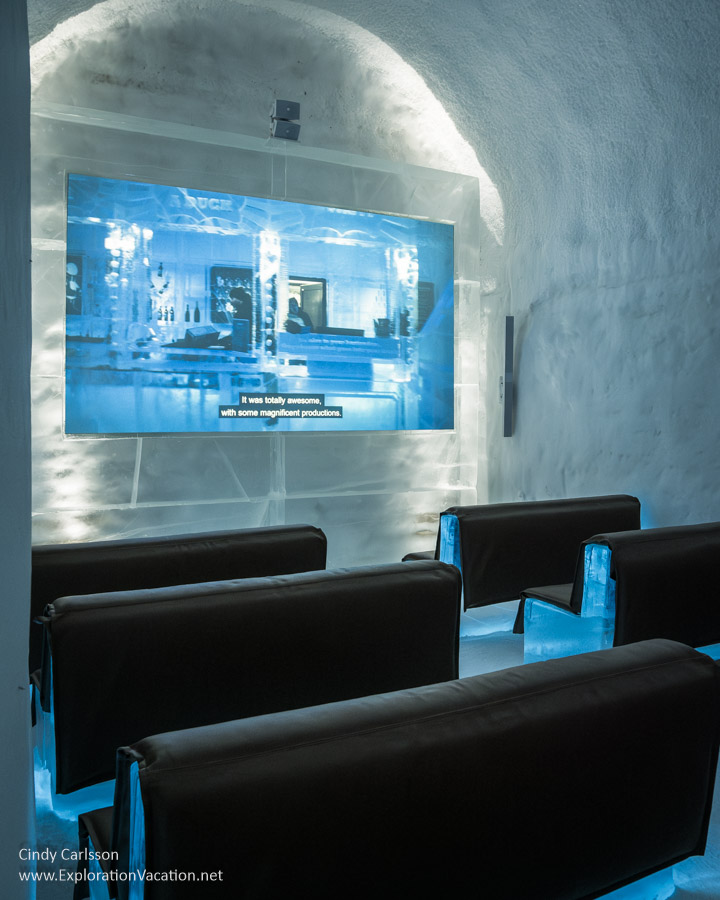
Inside the theater in Icehotel 365.
Icehotel 365 suites
Of course, Icehotel 365 also has rooms where guests can spend a night surrounded by icy art.
These are as much (or more) art galleries than sleeping rooms. And, like the rooms in the Icehotel Winter, they are open to gawking visitors before guests check in for the day.
Sleeping rooms in both the seasonal Icehotel Winter and year-round Icehotel 365 are kept at 23 to 18 Fahrenheit (-5 to -8 Celsius) with reindeer hide covered mattresses.
Rooms in Icehotel 365 come in two forms:
- Art Suites: Unlike Icehotel Winter where tArt Suites are the nicest rooms, these are the most basic rooms in Icehotel 365. However, the are much more artistic than the Ice Rooms in Icehotel Winter. Guests staying in Art Suites get the same thermal sleeping bags and have access to the same warm communal toilets, changing rooms, and storage lockers as Icehotel Winter guests. Likewise, guests can check in after 6 pm and will be awakened from 8-9 the next morning.
- Deluxe Suites: These are much more elaborately decorated and each has a warm bathroom with a toliet and shower hidden behind an icy wall. Most even have a sauna! (Four Hilla suites have a sauna and four Jaúvre suites have both a sauna and a bathtub.) Guests in these rooms still use the same thermal clothing and sleeping bags as others, but they can change and store belongings in their bathroom. Check in starts at 3 pm and these rooms are NOT open for public viewing after guests check in.
While both Art Suites and Deluxe Suites are sleeping rooms, they are more a work of art where you can spend the night than a hotel room.
Although Icehotel 365 is permanent, even carefully preserved snow and ice aren’t permanent. They will degrade over time, and several Art Suites showed signs of degregation when I visited. In some cases that looks easy to repair or replace, but others look like they will soon require a major renovation. My guess is that (over time) all current rooms will eventually become something completely different. But impermanence is part of the draw of an ice hotel — even for an ice hotel that’s open throughout the year!
Art Suites in Icehotel 365
Icehotel 365 Art Suites appear to be more elaborate than the Ice Rooms in this winter’s Icehotel 34. However, they are far less elaborate than Deluxe Suites. That doesn’t mean they weren’t interesting; they just weren’t quite as over-the-top.
The website says Icehotel 365 has nine art suites. However, I only saw eight and those match the website descriptions. Since there is also one more deluxe suite than the website indicates, I think they upgraded one of the art suites and haven’t completely updated the website.
Here’s a look at the current art suites.
Art Suite Crescents
The Crescents suite presents “nature in its abstraction.”
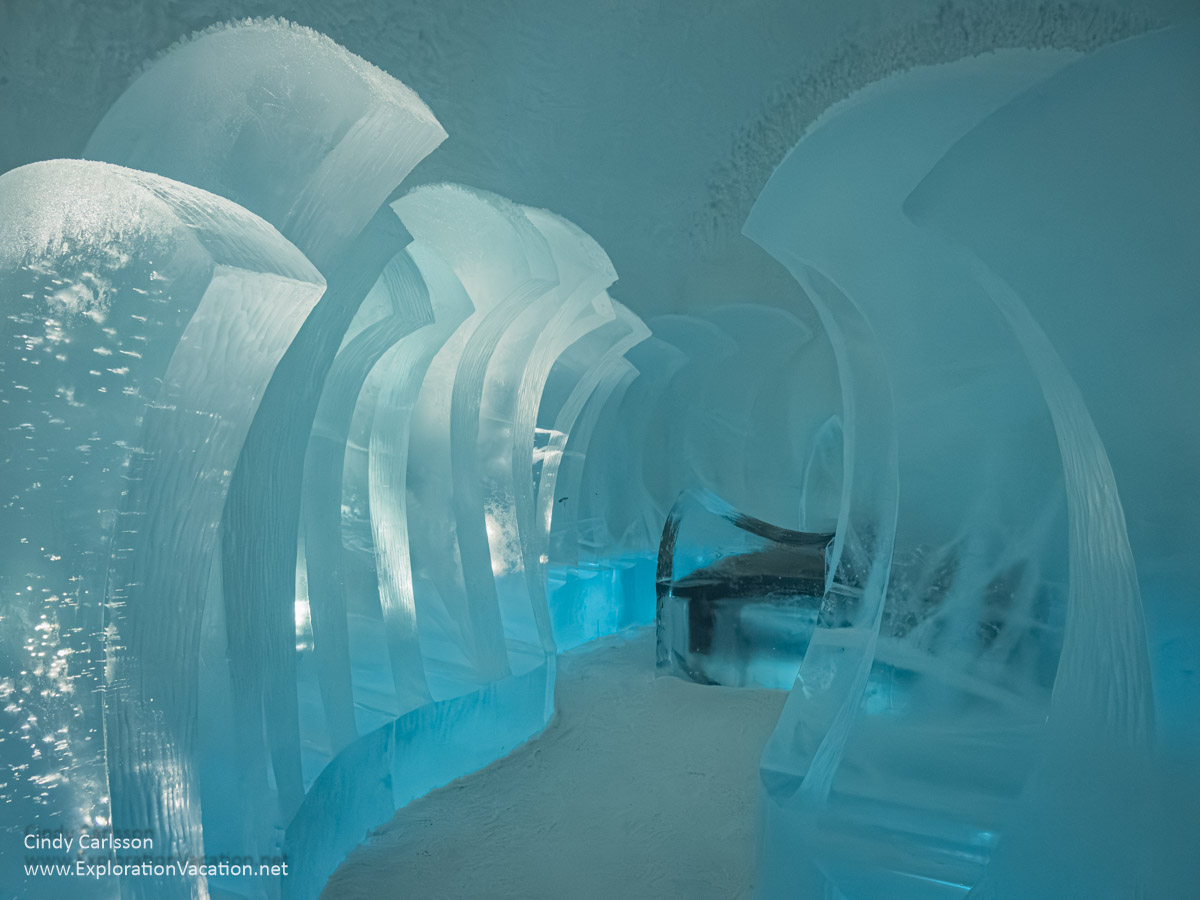
The Crescent suite in Icehotel 365.
The experience in this room is described thus:
With an urge to explore nature and its profound elements, you embark upon unknown, ephemeral ground. In front of you, a winding pathway edged with massive ice crescents, diverse in heights and proportions. As if pulled by gravity, you are drawn in, and the wavy passage changes your perception with every step until the journey ends in front of a bed, surrounded by suggestive lights.
Filled with impressions, you lay down, taking in the starlit sky.”
Crescents is the third suite Swedish landscape architects Ida Mangsbo and Elin Julin have collaborated on for the Icehotel. You can learn more about them Icehotel’s Crescents page.
Art Suite Téckara
The Téckara suite is one of my favorites. It feels like a magical fairyland or undersea world awaits just beyond the doorway. I would happily spend the night here. . . if only it weren’t so cold!
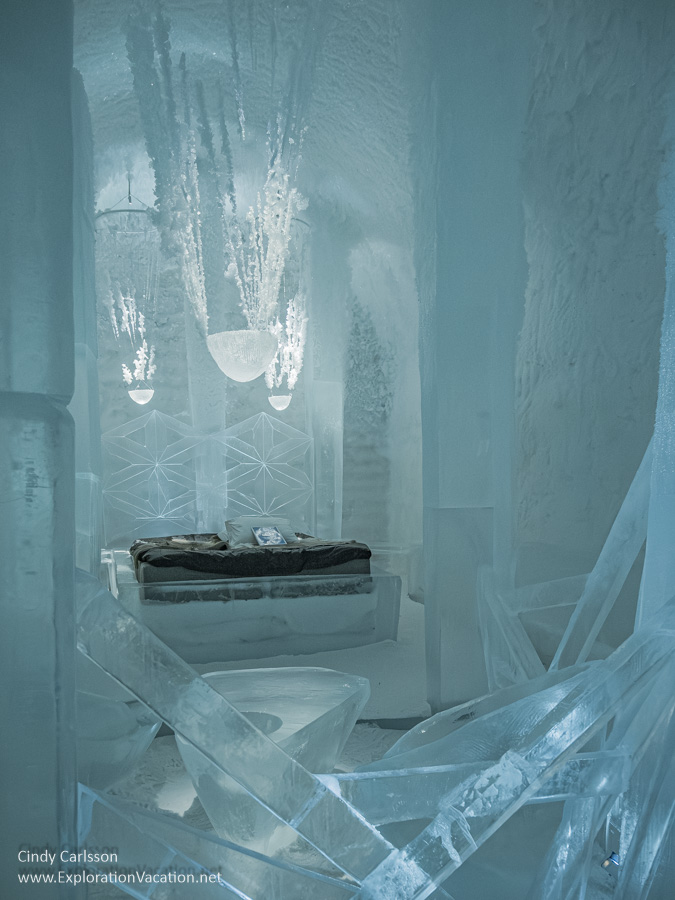
The Téckara suite: Is this a magical palace below the surface of an icy sea?
The Icehotel website explains that Téckara means “9” in Kunza, an extinct language from the northern part of Chile and the Altiplanic region of the Atacama Desert:
Think of Téckara (number 9) and allow an aperture of other thinking spaces, recalling priorities and becoming enlightened again.”
Icehotel 365 has impressively high ceilings. The Téckara suite makes the most of the 5 foot plus ceiling, with towering pillars and lamps that drift down from above like upside down jellyfish.
Art Suite Téckara was designed by Chilean sculptor and designer Javier Opazo. It’s the most elaborate of the current art suites.
👉 Read more about Icehotel 365 Art Suites
Art Suite Cabinet in the Woods
Cabinet in the Woods by Hugh and Howard Miller plays on the idea of a cabin in the woods, but with an intricately decorated ice wardrobe (the cabinet) that depicts the process of making furniture by hand.
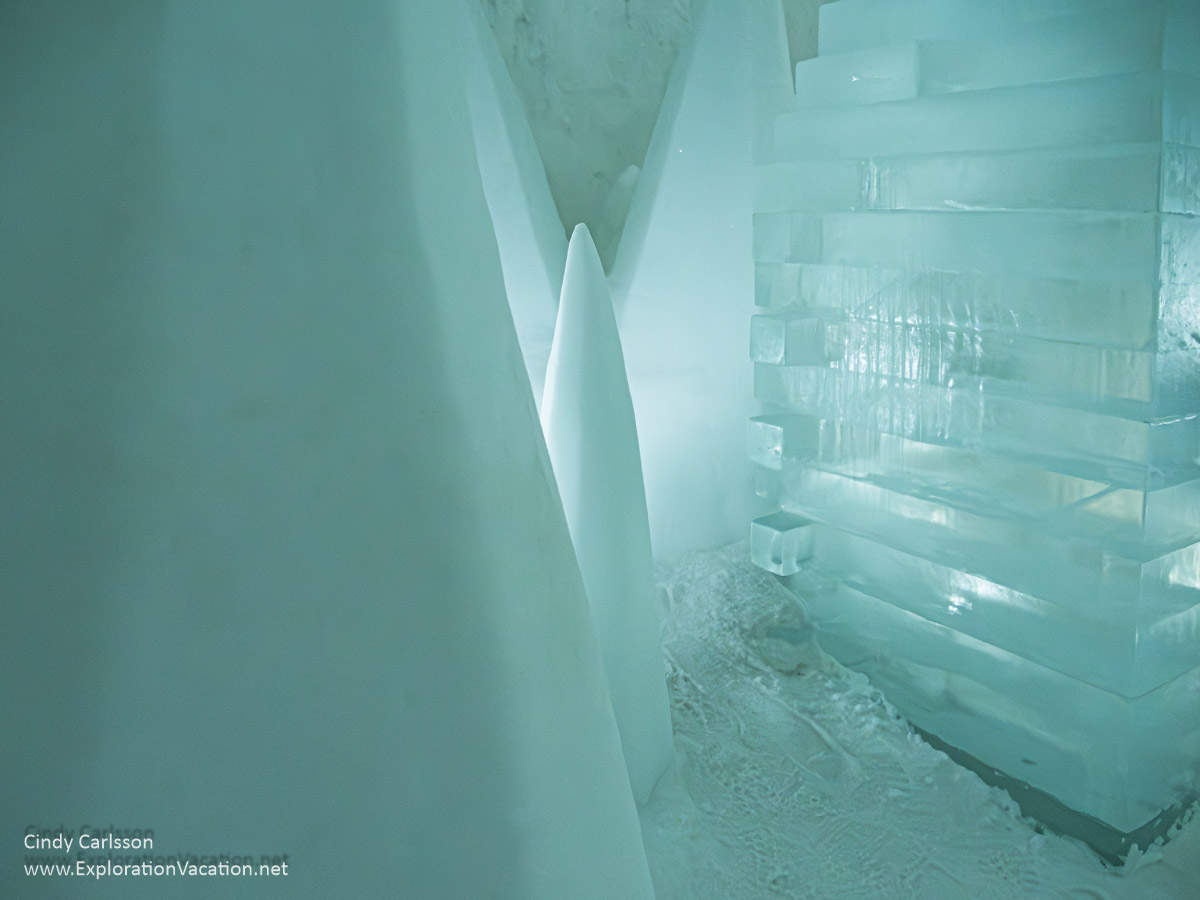
I like the contrasting shapes in the Cabinet in the Woods.
Art Suite Strobilus Land
Strobilus Land is filled with spruce cones (scientifically classified as a type of strobili) of enormous proportions. The design by Linda Vagnelind is intended to remind one of playing with pine cones as a child.
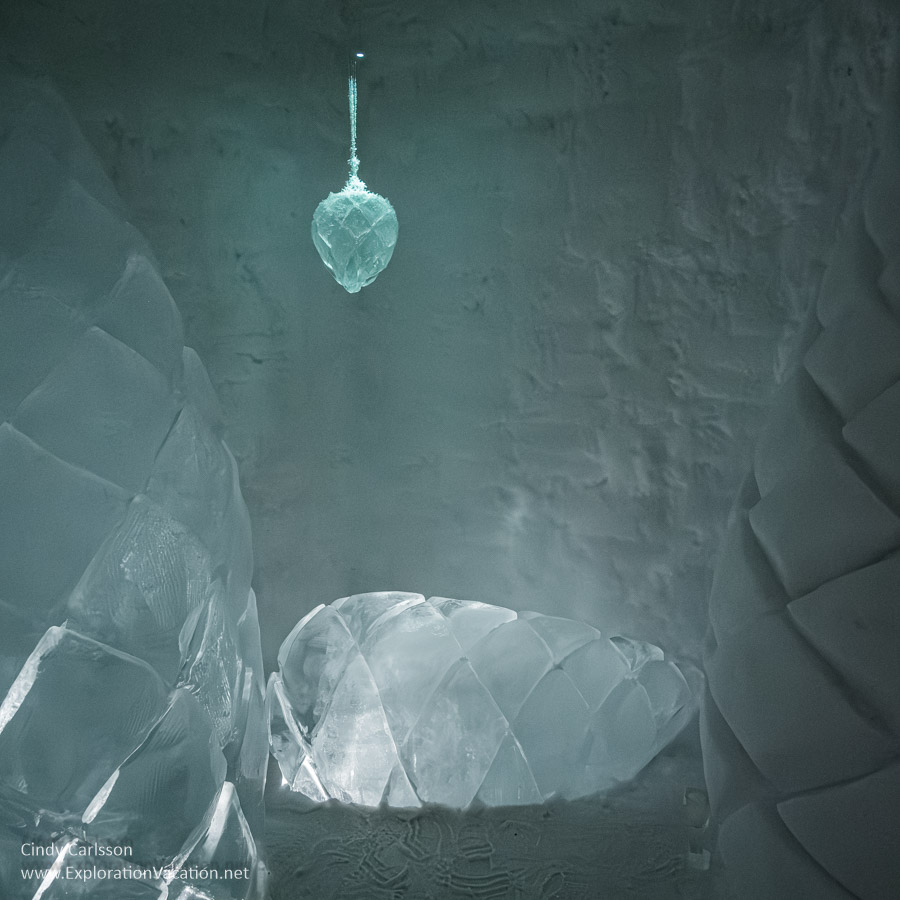
Spend the night amid pine cones of enormous proportions in the Strobilus suite.
Art Suite Sauna
Sauna is exactly what the name implies. Designer Luca Roncoroni created an elegant sauna, complete with fluffy towels and robes. All rendered in snow and ice.

The world’s coldest “sauna” is at Icehotel 365. (There’s no getting warm in here!)
(This room needs a refresh or replacement. When compared to earlier pictures, it’s easy to see where things like the ice towels are missing.)
Art Suite Dancers in the Dark
Dancers in the Dark by Tjåsa Gusfors and Patrick Dallard “is all about choosing survival – the light and positive path.”
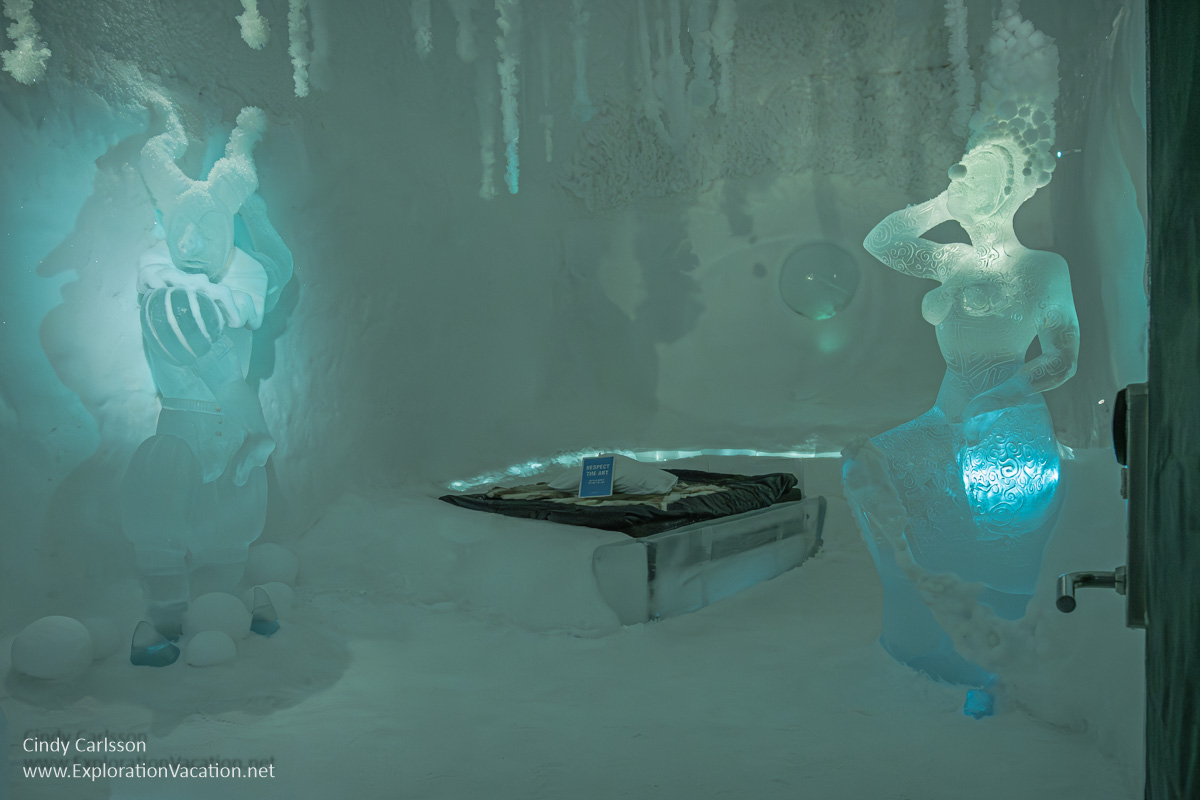
Strange dancers show off their moves in Dancers in the Dark.
(This is one of Icehotel 365’s original art suites and it’s also starting to show its age, as the dancers appear to have become a bit freakish over time.)
Art Suite Drift
The Drift is filled with abstract geometric shapes that Friederik Schroth and Fabien Champeval designed to appear as if in perpetual motion.
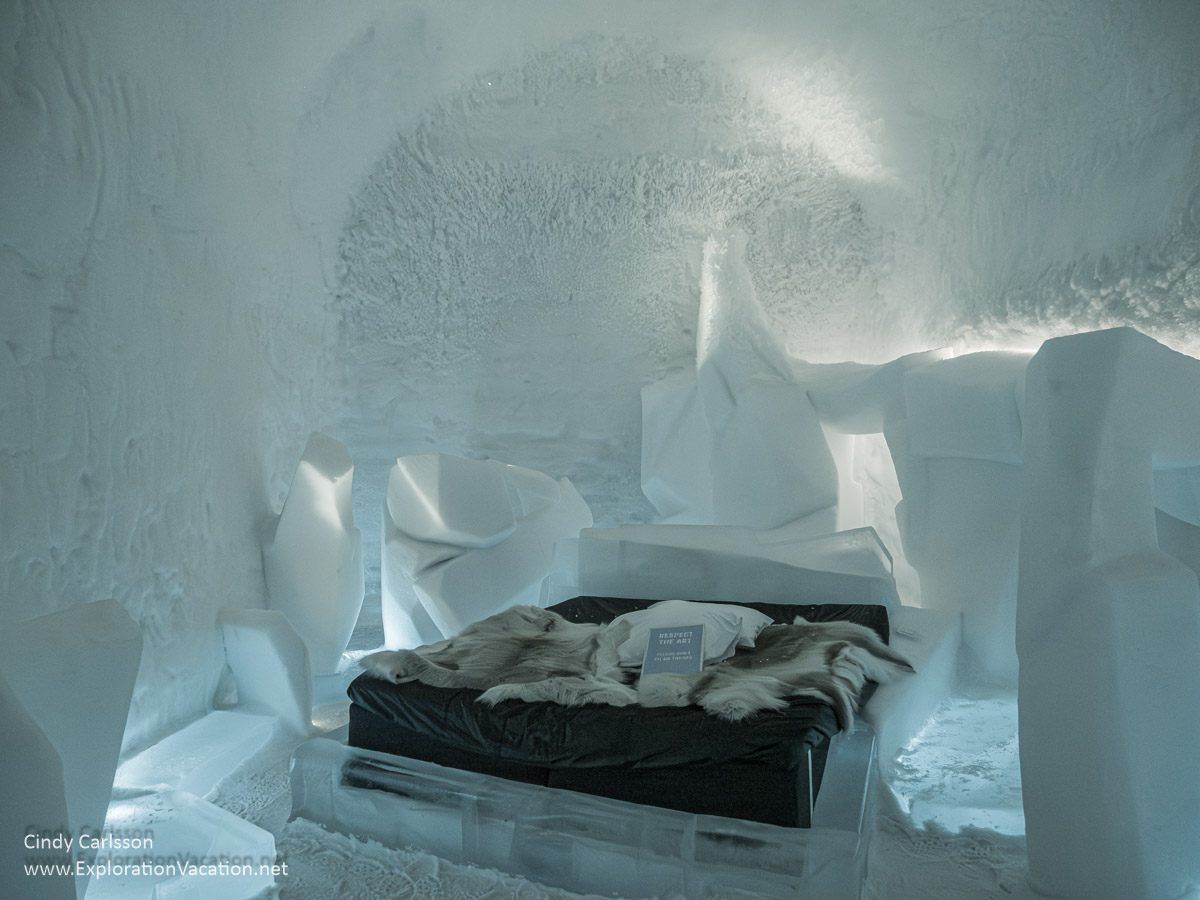
The Drift seems to be fading away.
This was the first suite I saw in Icehotel 365 and it did not get me very excited about what was to come. (Fortunately, everything else was better.) Besides being rather uninteresting to begin with, it looks like a lot of it has been reduced and reshaped over time. Snow and ice don’t last forever and this suite looks well over-due for a major update or complete replacement.
Art Suite Wanderlust
Wanderlust was designed by Kristina Möckel and Sebastian Scheller as a celebration of nature and the opportunity to experience it again after being cooped up inside during COVID.
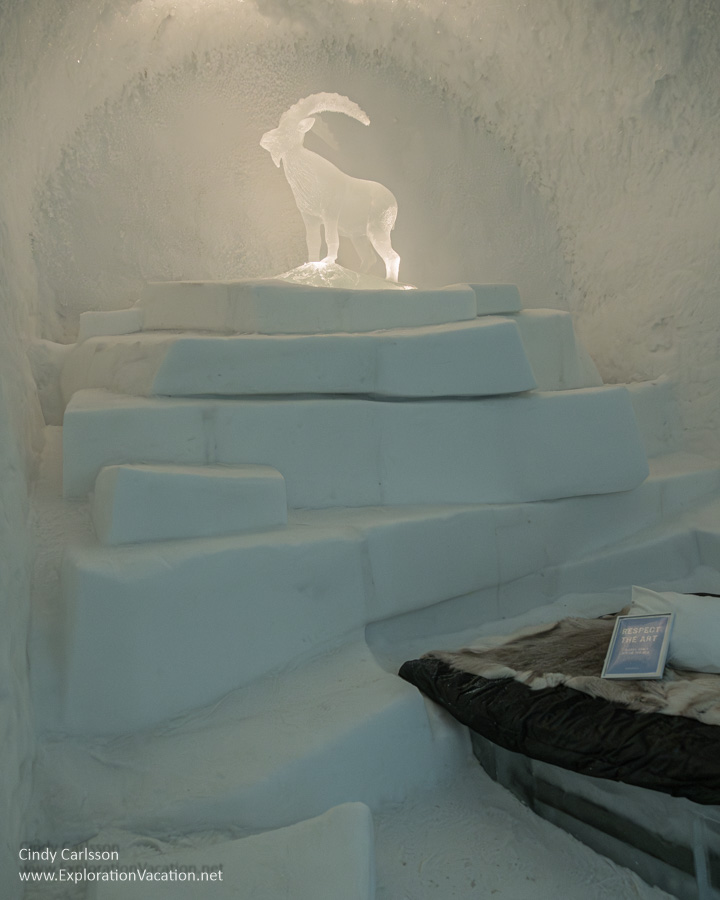
A mountain goat and other wildlife in the Wanderlust suite.
👉 Read less
Icehotel 365 Deluxe Suites
It’s not a surprise that the Deluxe Suites are larger and far more elaborately decorated than Icehotel 365’s Art Suites.
Sometimes that’s a good thing, as in the Toybox suite, where it would be fun to fall asleep surrounded by giant cartoon versions of children’s toys. On the other hand, suites like Ice is the Window to the Soul and The Breach seemed nightmare-inducing!
The website says there are nine deluxe suites. However, it seems there are actually ten now.
Guests are allowed to check into these rooms in mid-afternoon. That means they usually aren’t open to the public once overnight guests arrive. I was lucky that all were open when I visited.
(For the best chance of seeing all or most rooms, visit Icehotel 365 as soon as it opens to the public or as soon as possible after your arrival.)
Deluxe Suite Toybox
As intended, the Toybox suite made everyone smile as they stepped into it.
Welcome to a frozen world, full of toys that might bring your inner child to life again. Lie down in bed and let yourself be rocked to sleep by the melody of Twinkle Twinkle Star playing in the background. Above the bed, a huge bunny created by snow is guarding through the night. . . .
In the room you can also make friends with another creature, a four-meter-tall giraffe, or play with a rocket created by ice. The artists are both working with toy design, and they created this room as a tribute to their own children.”
While the very large rabbit keeping watch over the bed could be a bit alarming in the middle of the night, it’s such a happy-looking bunny that I doubt that alarm would last very long!
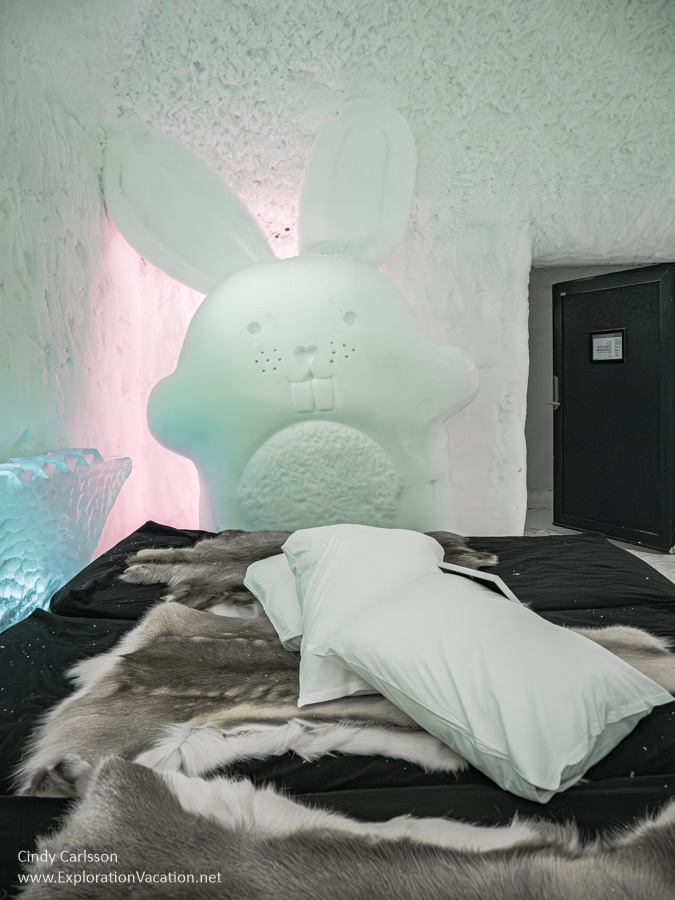
It would be fun to sleep in a toybox filled with toys bigger than I am.
The Toybox suite was designed by Bulgarian architect and toy designer Victor Tsarski and Dutch product designer Wouter Biegelaar.
You can learn more about the designers and take a 360 tour of this toy box on the Icehotel website.
Deluxe Suite Dreaming in a Dream
While some might find the creatures in the Dreaming in a Dream suite alarming, these strange story-tellers from another world are there to protect you on a “journey into a fantasy world of ice and snow.”
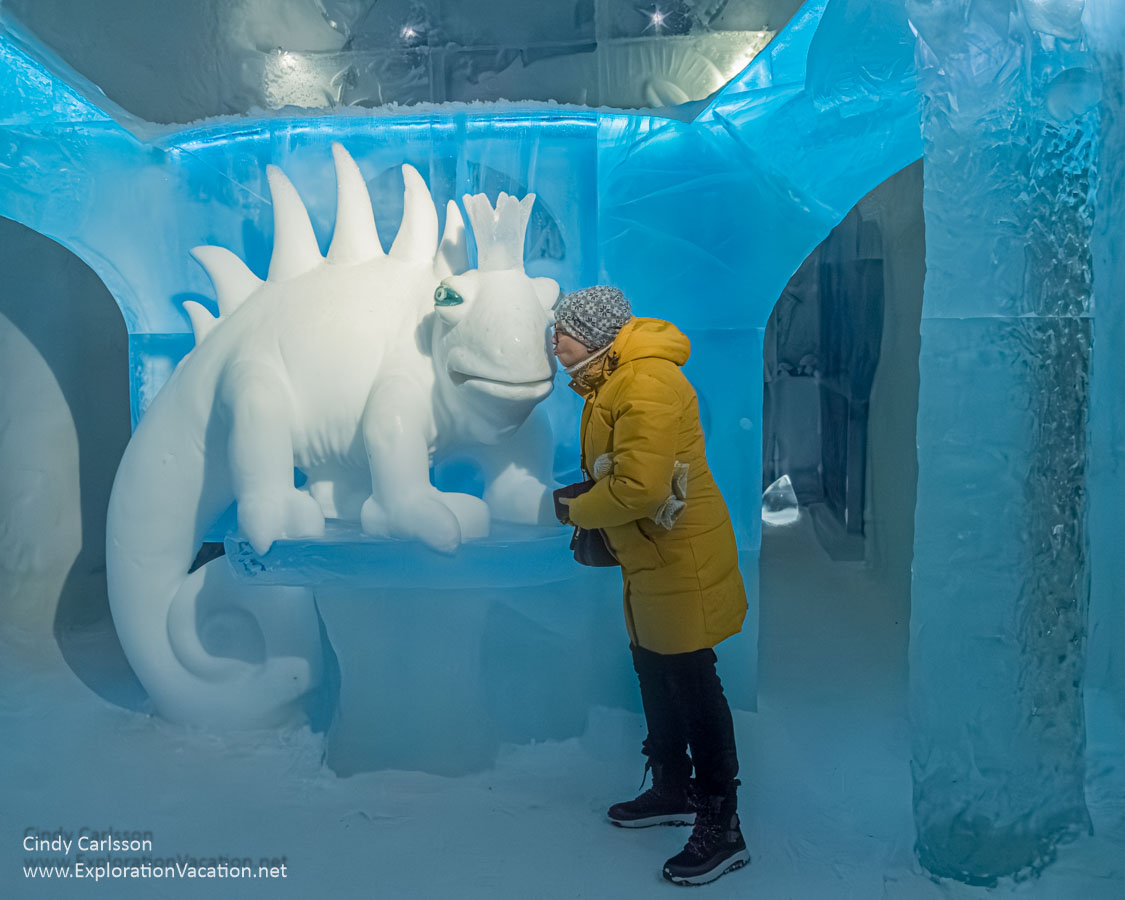
A fantasy beast sweet enough to kiss. (Well, almost. Don’t touch the art and never kiss a chunk of ice!)
As you walk through the suite, you hear the of a storm suddenly approaching, and various creatures appear, ready to share their stories with you. One of them is a fantasy creature, weighing 350 kilos, as kind as she is heavy.
When you reach the bed, the storm has finally passed, and you can go to sleep knowing that the figures in the room are watching over you, making sure that you are safe throughout the night.”
👉 Read more about Icehotel 365 Deluxe Suites
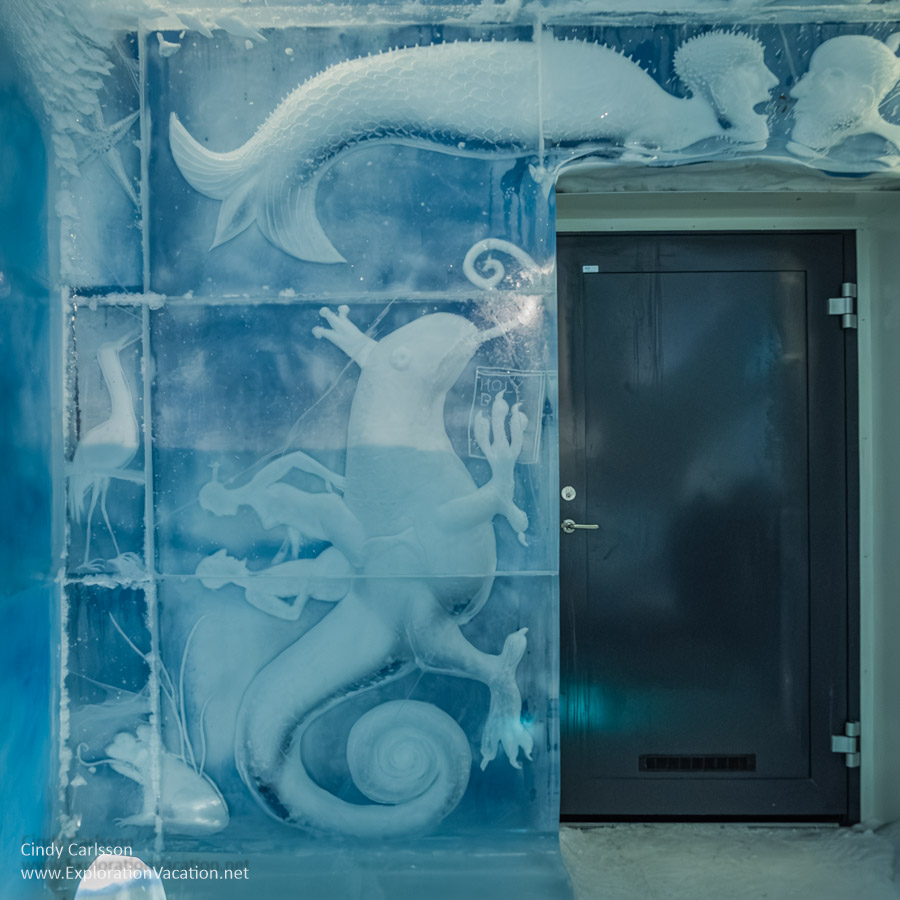
Imaginary sea creatures swim around a doorway in Dreaming in a Dream.
A few creatures in here are pretty frightening-looking, but I think the others protect you from the scary ones.
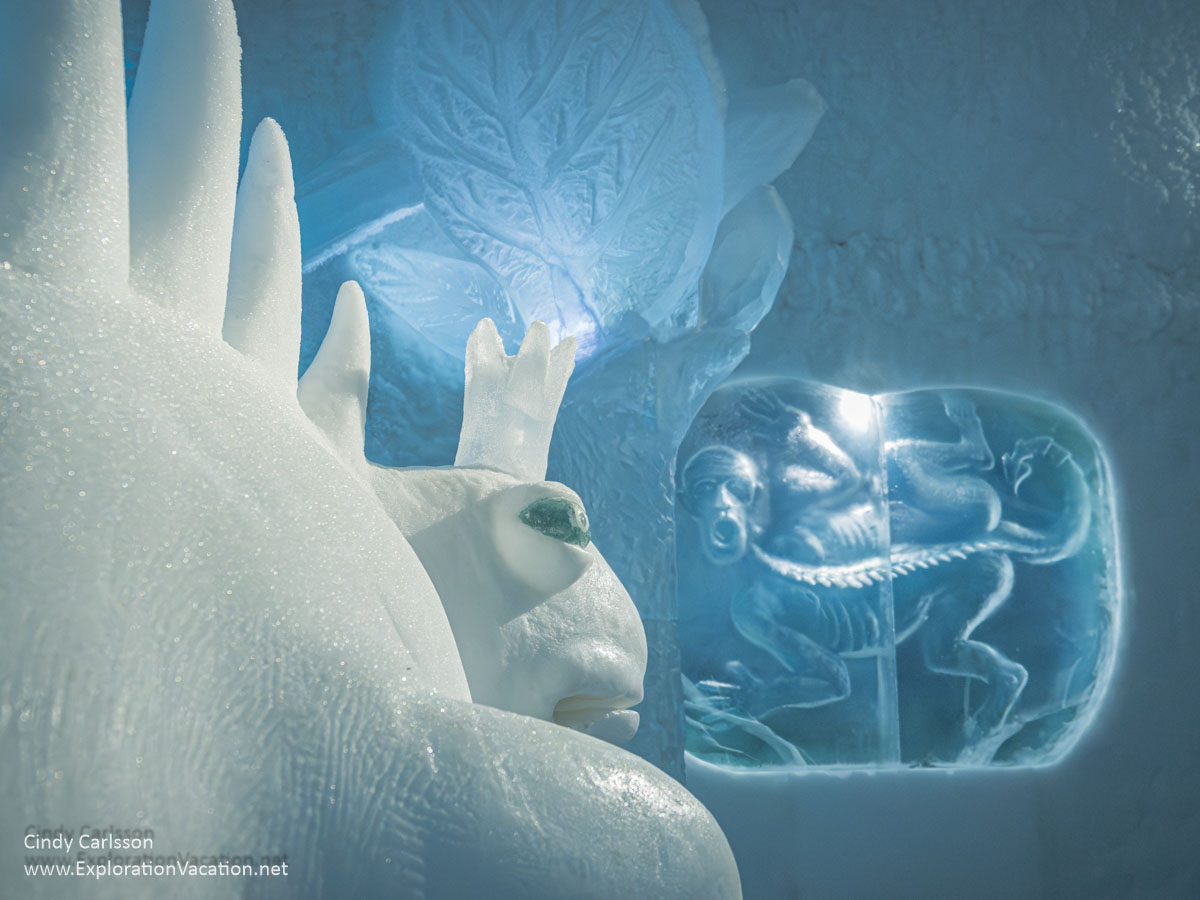
Even the ice creatures keep an eye on that creepy thing in the wall!
Dreaming in a Dream was designed by Lithuanian artist Kestutis Musteikis and visual anthropologist Vytautas Musteikis.
You can learn a more about the designers and get a 360 view of Dreaming in a Dream (and get a good look at some scarier-looking creatures) on the Icehotel website.
Deluxe Suite Mystery on the Icehotel Express
Mystery on the Icehotel Express drops guests into a scene where something’s just not right.
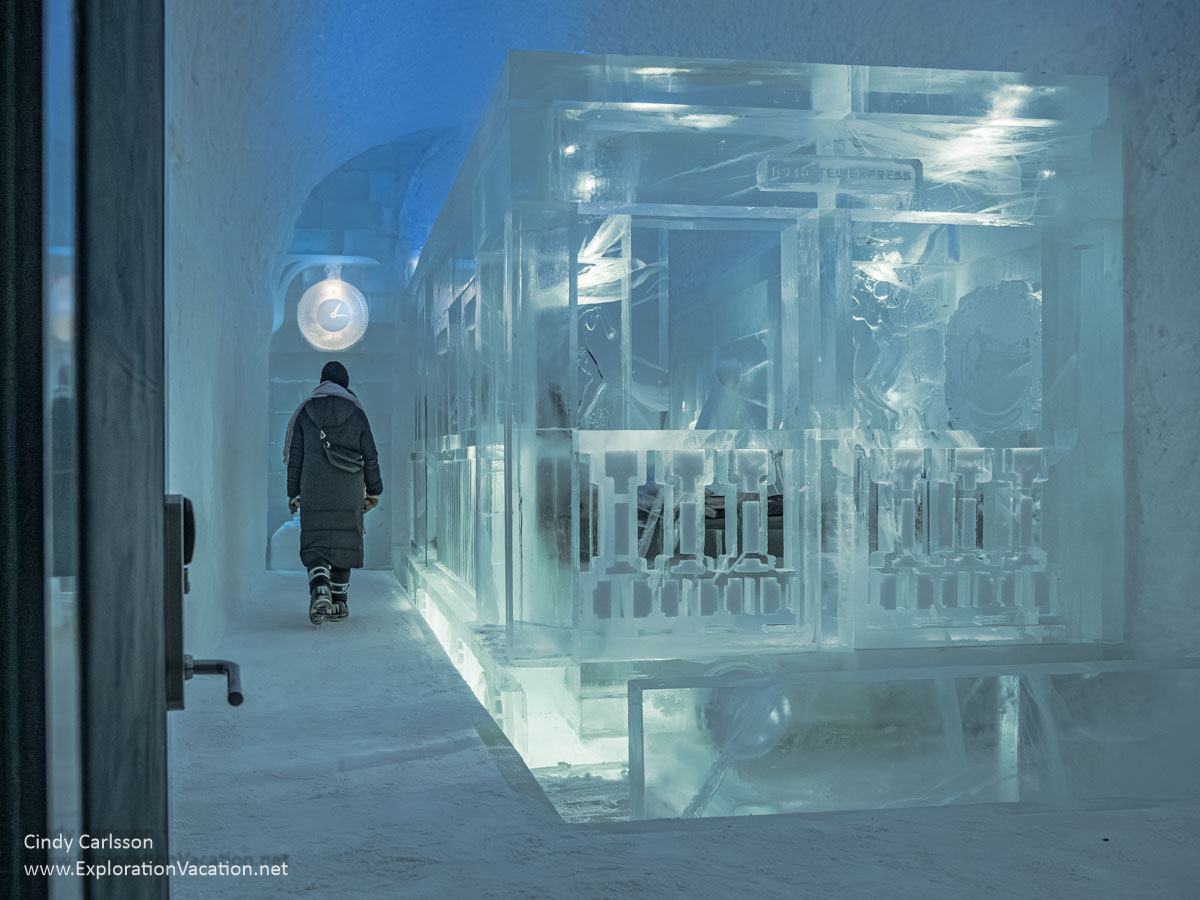
On the platform where the Icehotel Express and its mysteries await.
Inspired by the works of Agatha Christie, the suite invites guests “into a story where something has gone terribly wrong.”
The room presents the back of a 1930’s Orient Express train with minutes to departure. The bags are packed, the clock is ticking. Grab your ticket, jump on the caboose.
Inside you find the bed chamber and dining area, complete with traditional art deco elements: Curtains and ornaments. Get comfortable, settle in. But don’t get lazy, clues are scattered all around.
Stay the night, solve the mystery and wake up in a new world – Welcome to the Icehotel Express!”
The Mystery on the Icehotel Express suite was designed by lighting artist Jonas Johansson, Catalan artist and bronze smelter Jordi Claramunt, and Barcelonan-born sculptor Abel Pruñonosa. Learn more about the artists and see additional pictures of this suite on the Icehotel website.
Deluxe Suite The Breach
All of the suites I’ve featured thus far seem pretty fun and lighthearted even if supernatural creatures and unsolved mysteries abound.
But some suites in Icehotel 365 seem more likely to induce existential dread then a good night’s sleep!
One of these is The Breach, which puts you in the engine room of the Titanic at a critical moment.
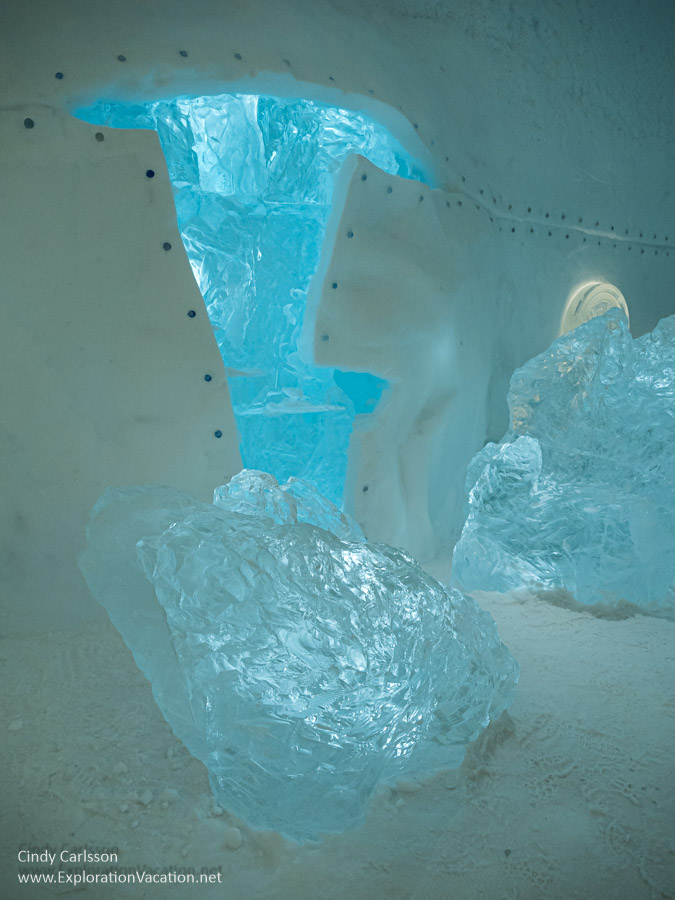
Yes, that beautiful blue represents ice breaking through the hull of a ship. And not just any ship.
This room feels enormous, with the icy interior structure of the “ship” rising high above.
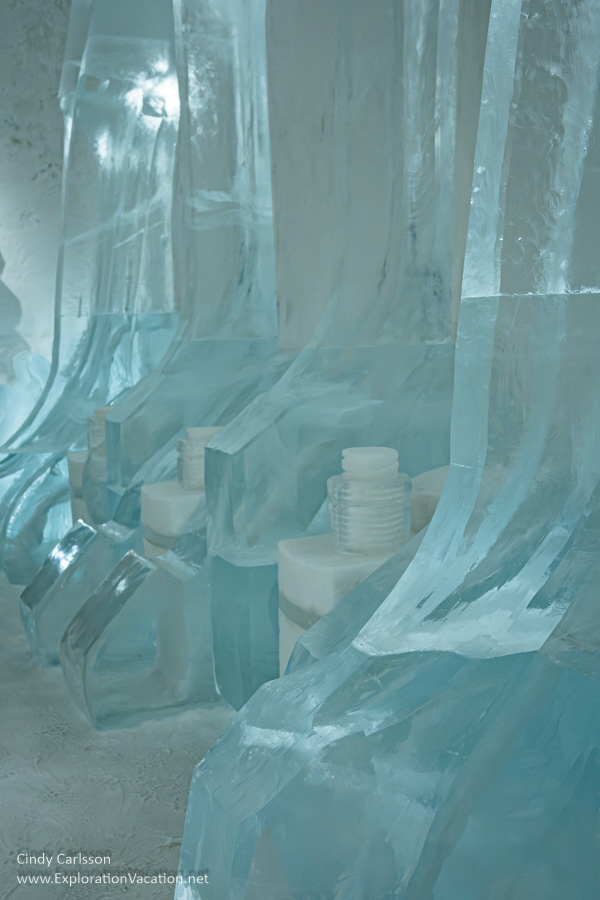
The crew of the Titanic could only dream of having so much open space in which to work!
And, of course, since this is the engine room, there are giant bolts, gauges, and control panels. . . and chunks of ice spilling into the room.
It’s also loud. Really loud, with scraping and banging and all sorts of unidentifiable and disturbing noises.
The burning and churning of the engine room surrounds you with the acrid smells of straining and groaning machinery, red-lined to the limit. Full speed ahead.
BOOM!
A dull roar, a screech of distress. A staccato of rivets shoot across the room, the steel hull tearing like a sheet of paper. The firmament below your feet is shaking. The camshaft shudders under the impact.
Will you take command or go down with the ship? It is a call for all hands on deck!”
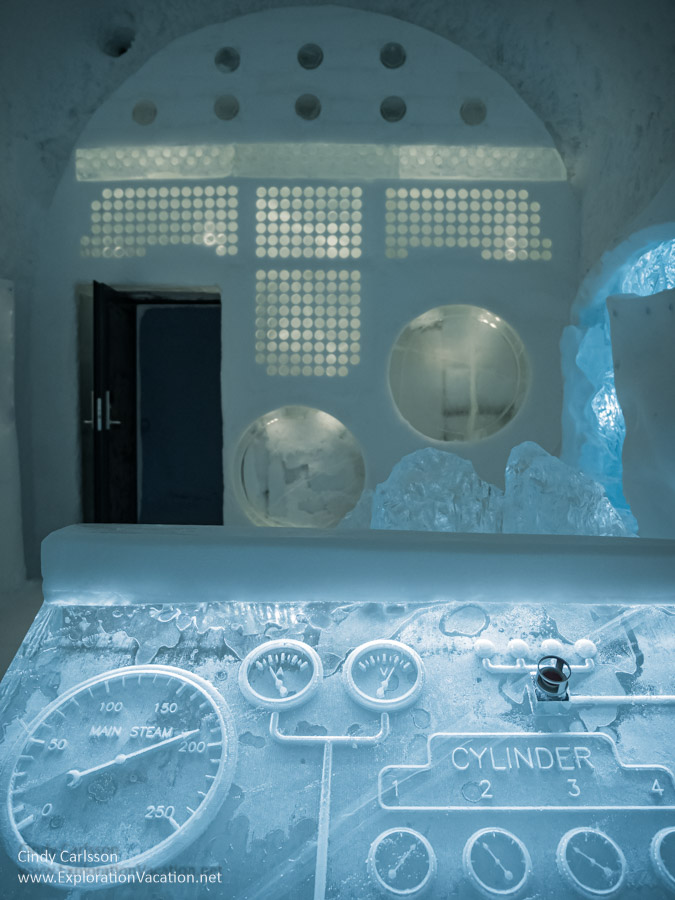
Are those gauges trying to tell me something?
The Breach was designed by Annie Locke Scherer, an American architect living in Stockholm, and Tobias Kiefe, a German metal fabricator and artist.
(By the way, I’m pretty sure you can turn the soundtrack in this and all other rooms off when you settle in for the night. I sure hope so anyway!)
Deluxe Suite The Ice isthe Window to the Soul
The sculpture in this room is deeply felt, technically superb . . . and really creepy. The figures look like live humans encased in ice. I find it very unsettling and not something I want to wake up to in the middle of the night.
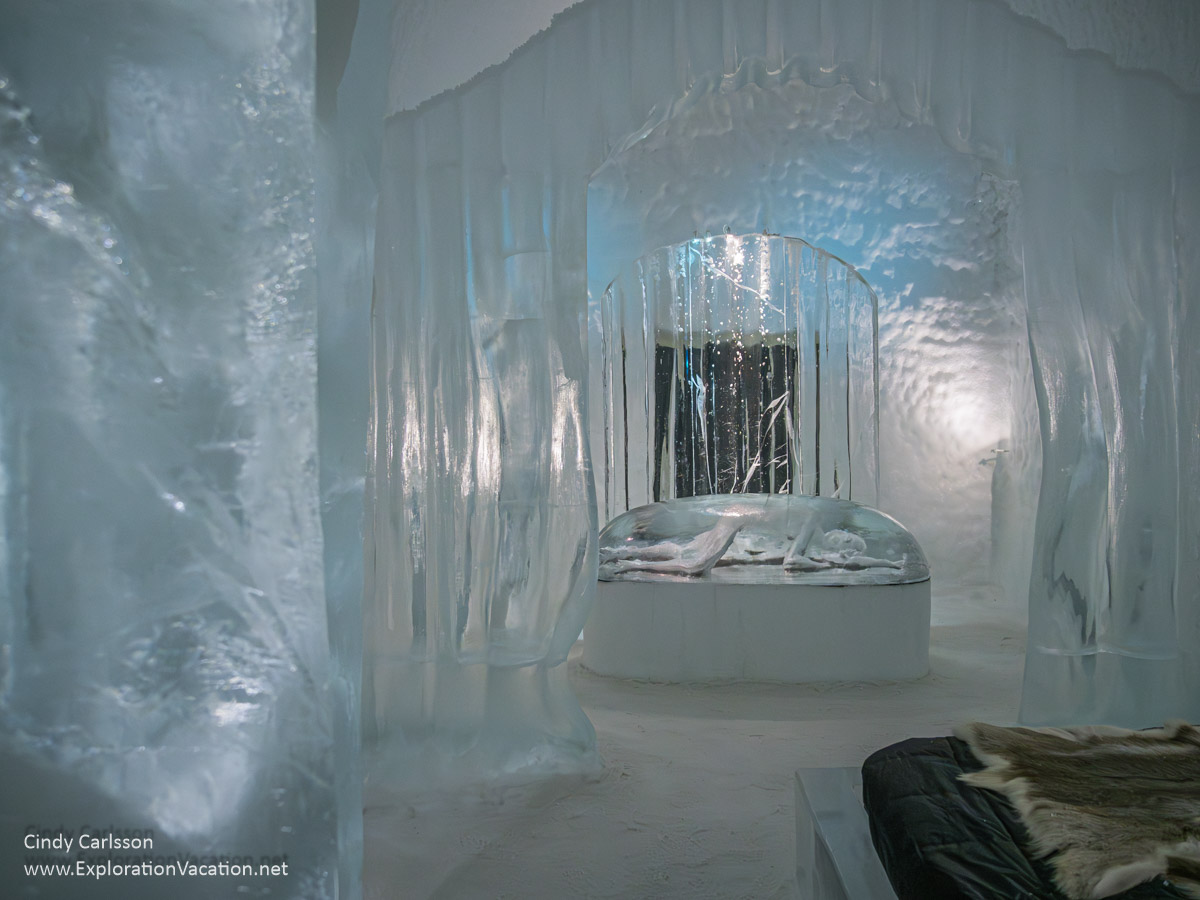
This looks pretty serene. . . but why is that woman entombed in ice?
The ice carvings here are among the most sophisticated in Icehotel 365. They were made by carving the sculptures inside the blocks of ice and then filling some of them with snow to provide contrast. This was not easy, as the artists explain:
Realizing the sculptures turned out to be difficult because you have to think and act inside out and backwards to your intended final result.”
The Ice is the Window to the Soul is also deeply personal and reflective:
The sculpture at the entry Reflecting Within is a contemplation on Tims’ 90-year-old father confronting his own mortality in the mirror as he approaches his impending death. As humans, we spend our lives denying and avoiding recognition of our mortality. But for some few the moment of acknowledgement does come. We, just as the ice, are all made of water and will one day melt away.”
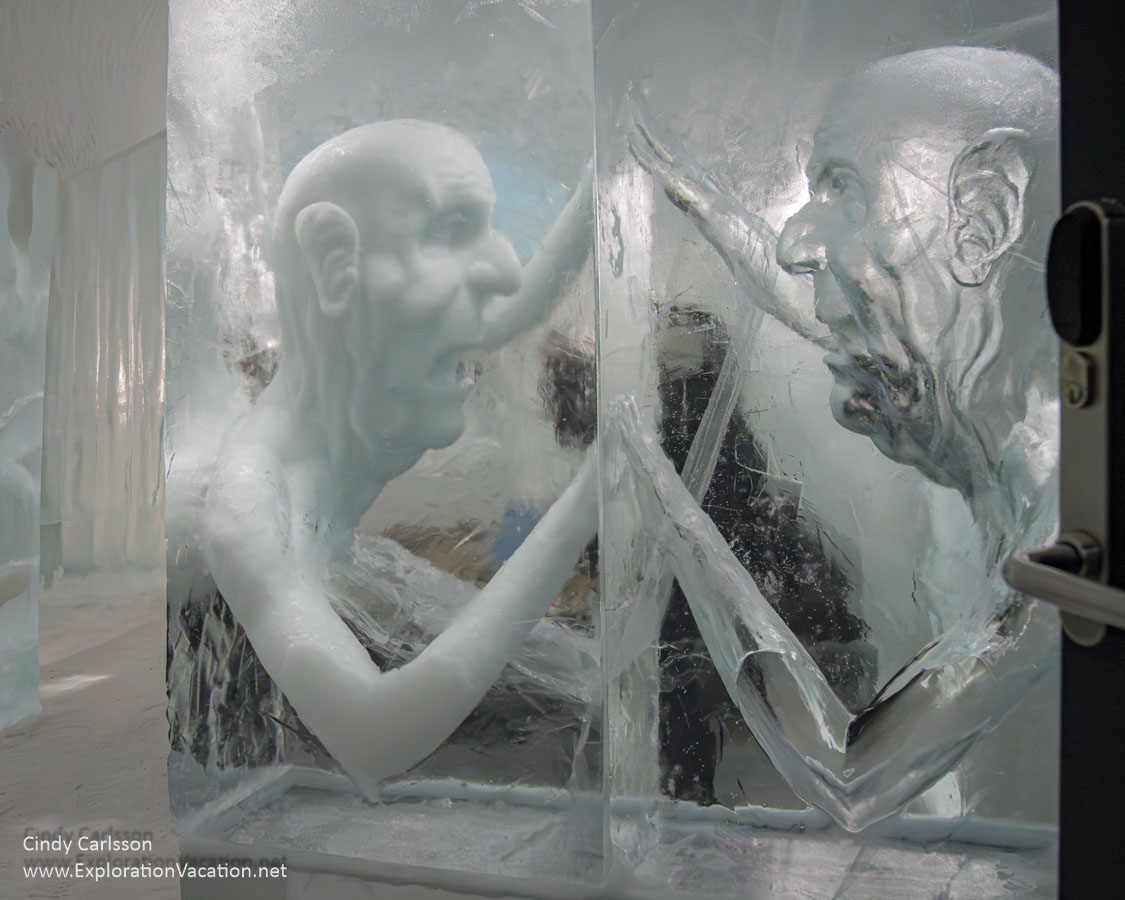
A deeply felt mediation on the end of life that’s also rather creepy.
The artists who created this suite have a vast amount of experience working in ice. Tim Linhart, an American who now lives in Luleå, Sweden, has spent 36 years creating art (and musical instruments) from ice. Giovanna Martinez developed her skills over the years while working on the hotel’s building team.
You can get a better look at some of these sculptures and learn more about the designers on the Icehotel website.
Deluxe Suite Early Spring
Early Spring was designed by Nando Alvarez and Liliya Pobornikova to evoke the melting ice and beginning of new life as spring arrives.
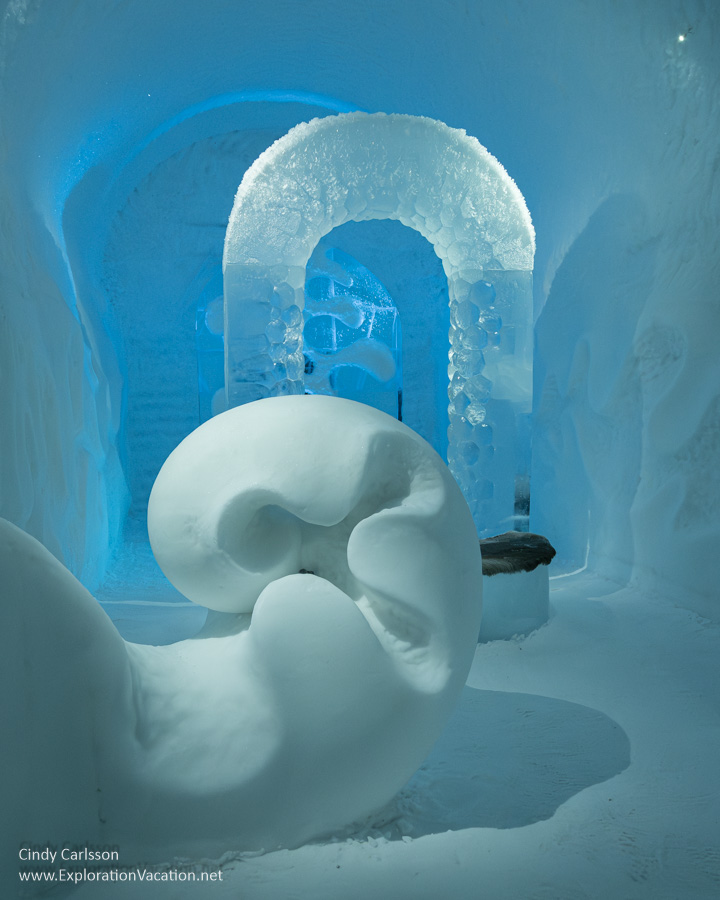
Spring thaw as portrayed in Icehotel 365
Deluxe Suite Hang Loose
Hang Loose was designed by design Edith Van De Wetering and Wilfred Stijger as an “art gallery” that includes sculpture and “paintings” – some of which are quite elaborate.
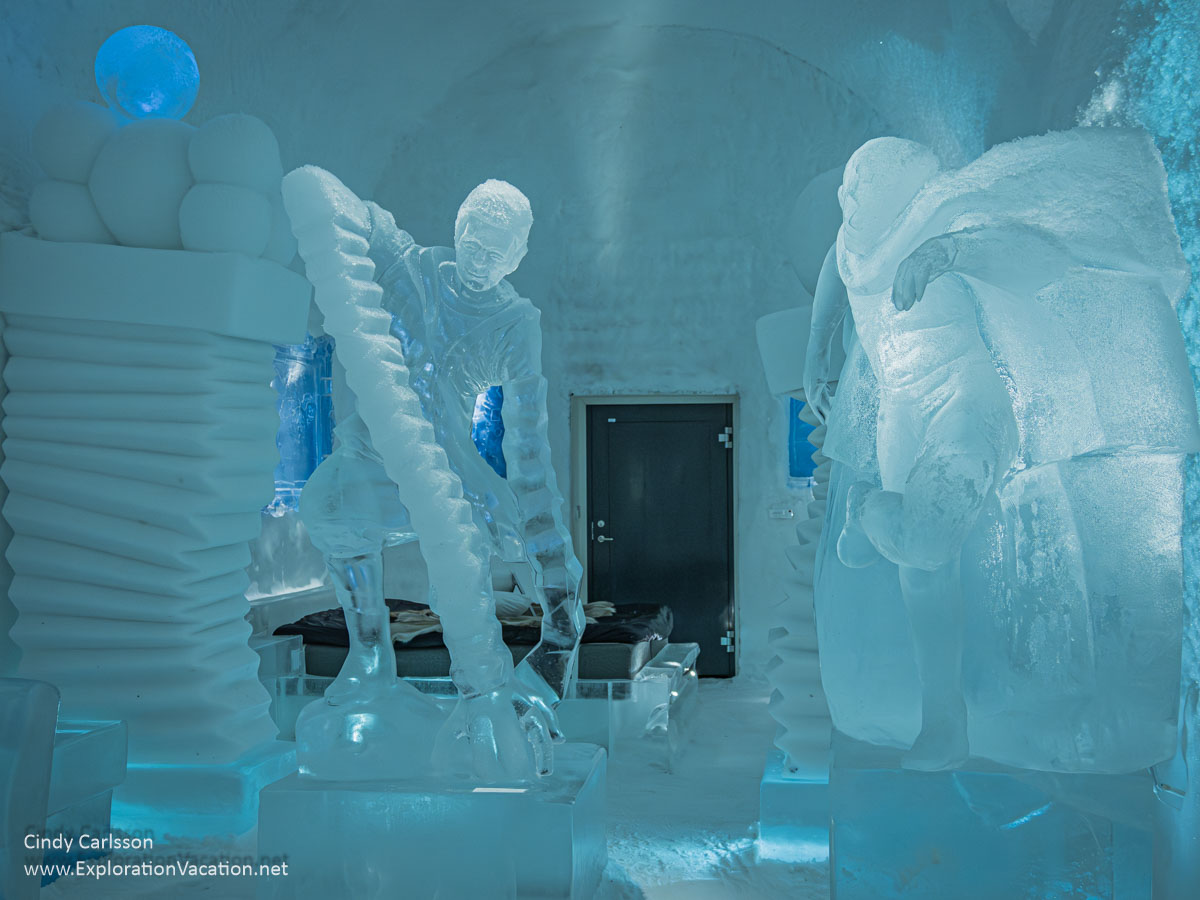
I’m not exactly sure what is going on here, but it’s intriguing.
Deluxe Suite Kodex Maximus
Kodex Maximus was designed by Julia Gamborg Nielsen and Lotta Lampa. The suite is filled with organic sculptures, but everything is a little off-balance.

Kodex Maximum suite in Icehotel 365
Deluxe Suite Raindrop Prelude
Raindrop Prelude was designed by Thomasz Czajkowski and Eryk Marks. It reflects the mix of Polish folk themes and classical music found in Chopin’s “Raindrop” prelude (Prelude, Op. 28, No. 15).
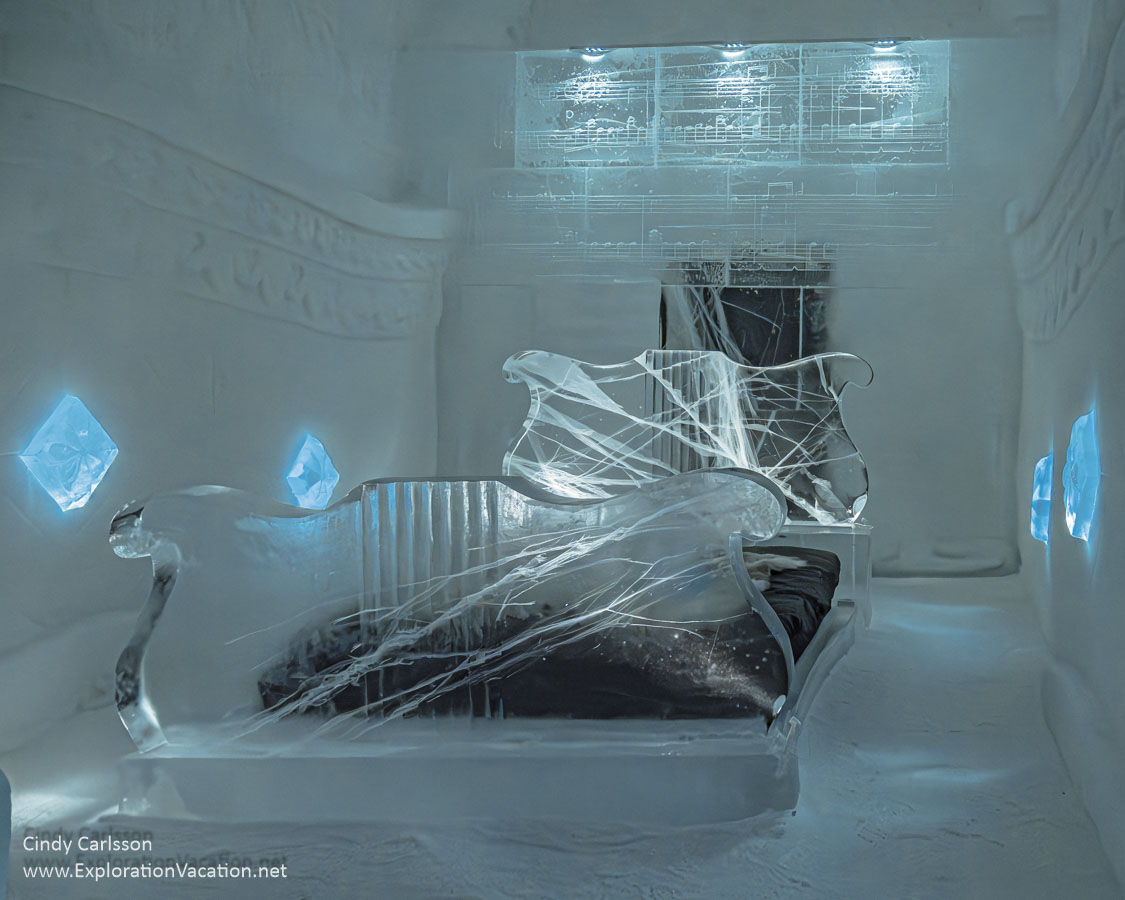
The Raindrop Prelude suite seems like a very pleasant place to spend a night.
I would ove to spend the night in this suite, as it is restful, elegant, and lovely.
Deluxe Suite You are Here
You are Here reflects the lives of the designers Elisabeth Kristensen and Dave Ruane who created it as “a tribute to those who dare to dream and choose a different way of life.”
The suite itself is filled with oversized body parts: A brain and heart and linkages. . . which I found rather disconcerting.
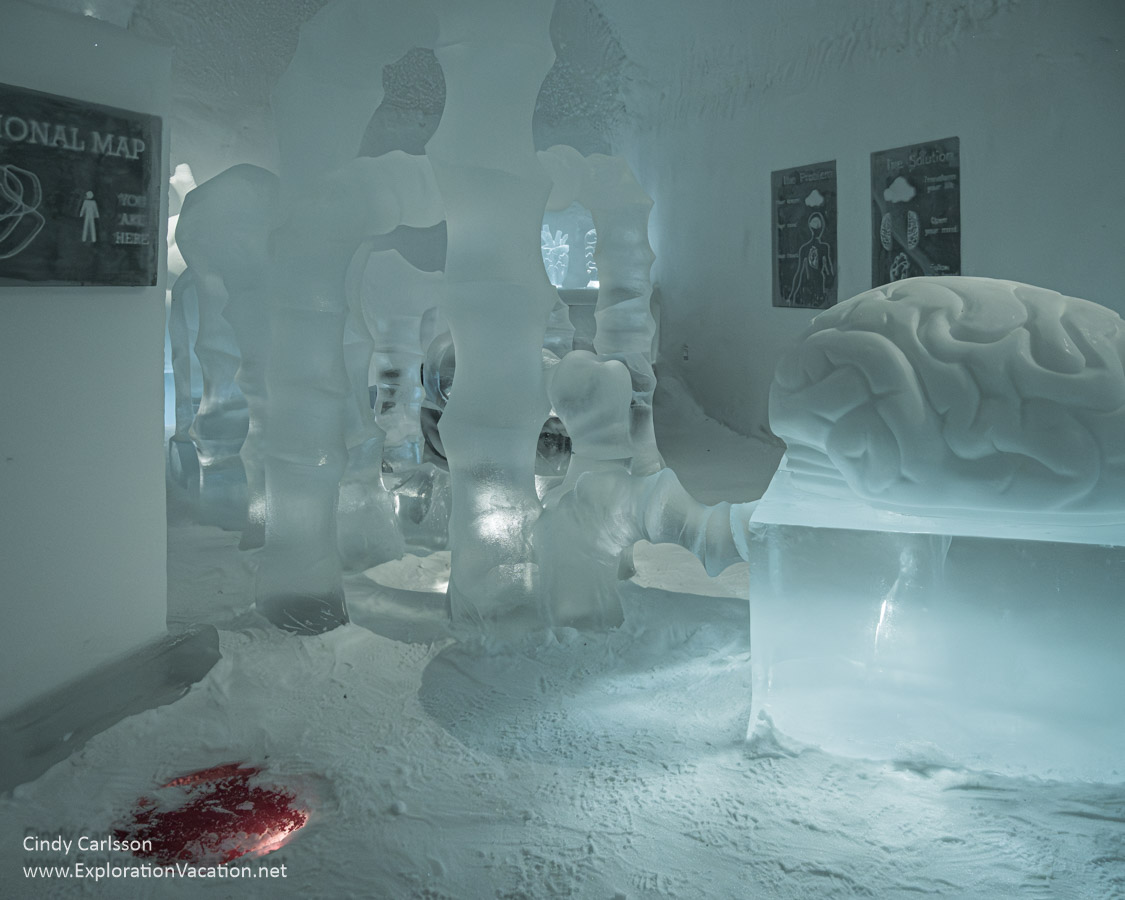
A brain and more in the suite You are Here.
👉 Read less
Check the Icehotel Art and Design Gallery to see all current ice art rooms in both Icehotel Winter and Icehotel 365. Some pages also include 360 tours.
Other things to do while in Jukkasjärvi
While the ice hotels are really interesting even if you don’t sleep in them, you may think Swedish Lapland is a long way to travel just to see some (amazing) ice art or sleep in very cold art gallery.
But there’s so much more you can do at Icehotel or on your own in and around Jukkasjärvi!
Jukkasjärvi itself is a charming village in a beautiful wilderness area. It’s also one of the oldest villages in this part of Sweden.
Visitors can spend time visiting historic sites in the village or head out to explore the surrounding natural area. There’s plenty to do right within walking distance of Icehotel, but if you have a car you can easily explore farther afield. Or book an excursion or other experience directly through a local company or guide or Icehotel to support the local community, or check sites like Viator and Get Your Guide to get a better feel for what is available.
Year-round activities in Jukkasjärvi
It’s worth taking a walk from the Icehotel property down to the old church and Márkanbáiki Sámi museum at the other end of town just to enjoy the classic northern architecture. Although few of the homes and businesses in this village are very old, there are almost no obnoxious new buildings to mar the scene!
Jukkasjärvi Church
Begun in 1608, the Jukkasjärvi Church is not only the oldest church in Swedish Lapland, but the technique used to construct the church makes it thr only one of its kind remaining in Sweden. (The free-standing belfry was added in 1785.)
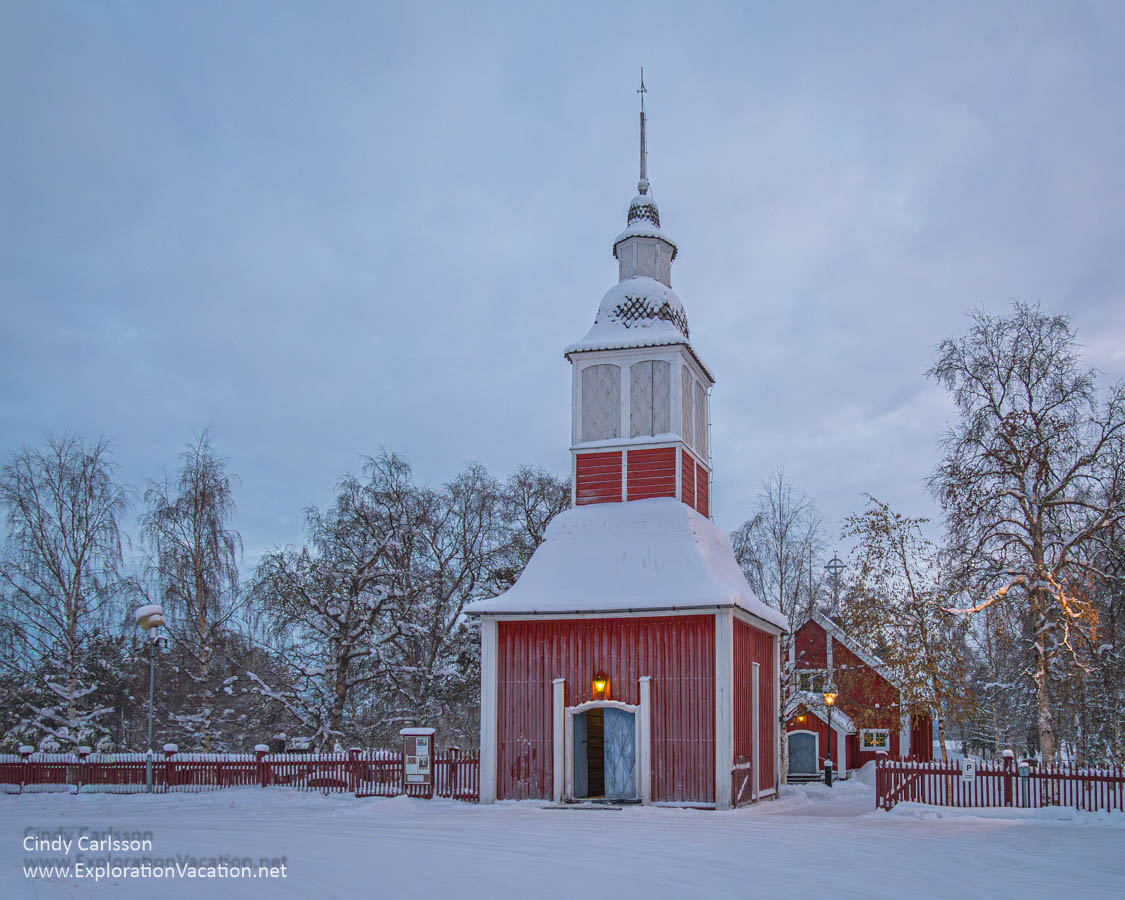
Jukkasjärvi’s unusual 17th century church sits behind an 18th century belfry.
The church is also interesting for its history as an early Laestadian church, its unusual organ by Sámi craftsman Lars Levi Sunna, and for its interior artwork. Some of that history is commemorated in a 1958 altarpiece by Swedish artist Bror Hjorth.
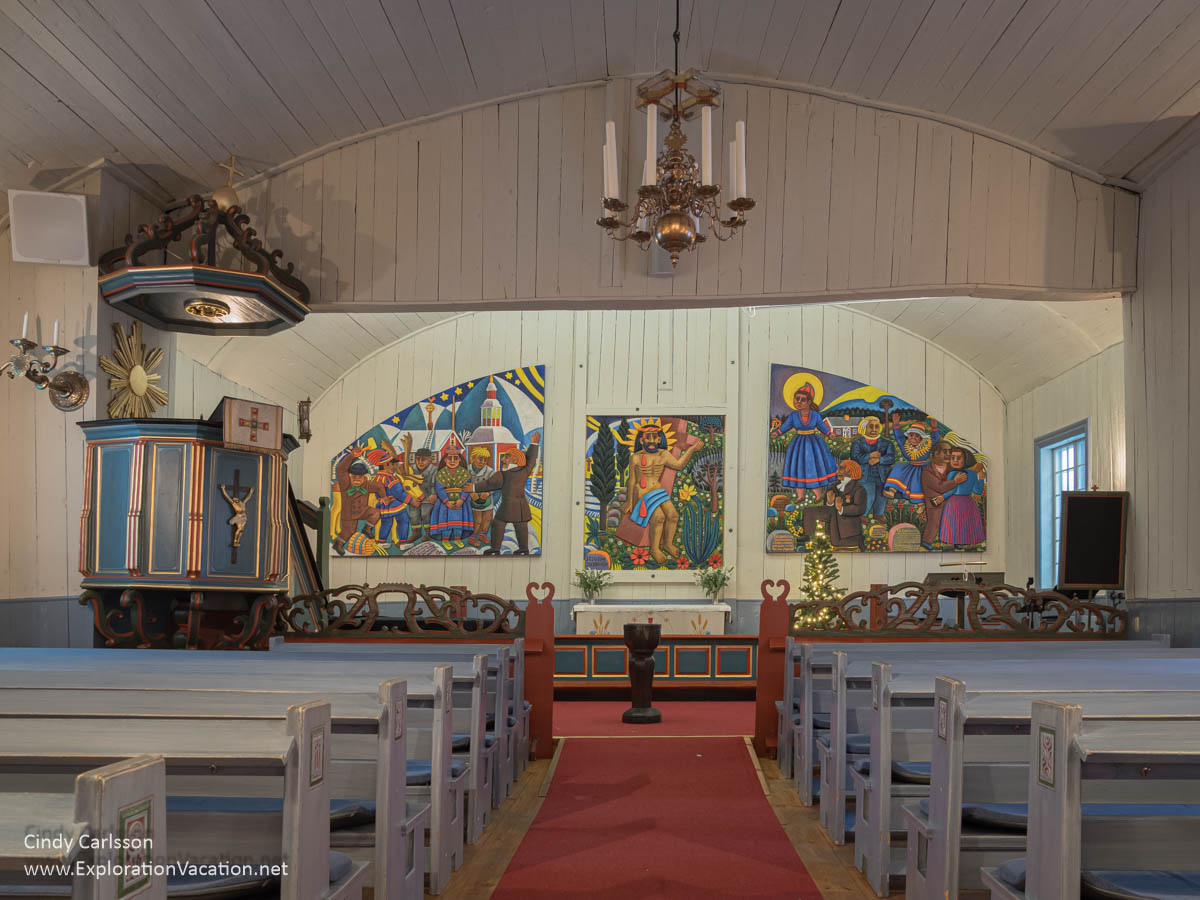
Inside the Jukkasjärvi church.
Old Homestead Museum (Jukkasjärvi Hembygsgården)
Buildings from the original Finnish homestead here are preserved as a mostly open-air museum. The oldest of these date back to the middle of the 18th century, although a Sámi trading village existed here long before. The Old Homestead restaurant is located in one building. Another houses a museum, but only the restaurant was open when I visited. (It’s unclear when the museum is open.) But it’s a lovely, evocative spot even if none of the buildings are open when you visit.
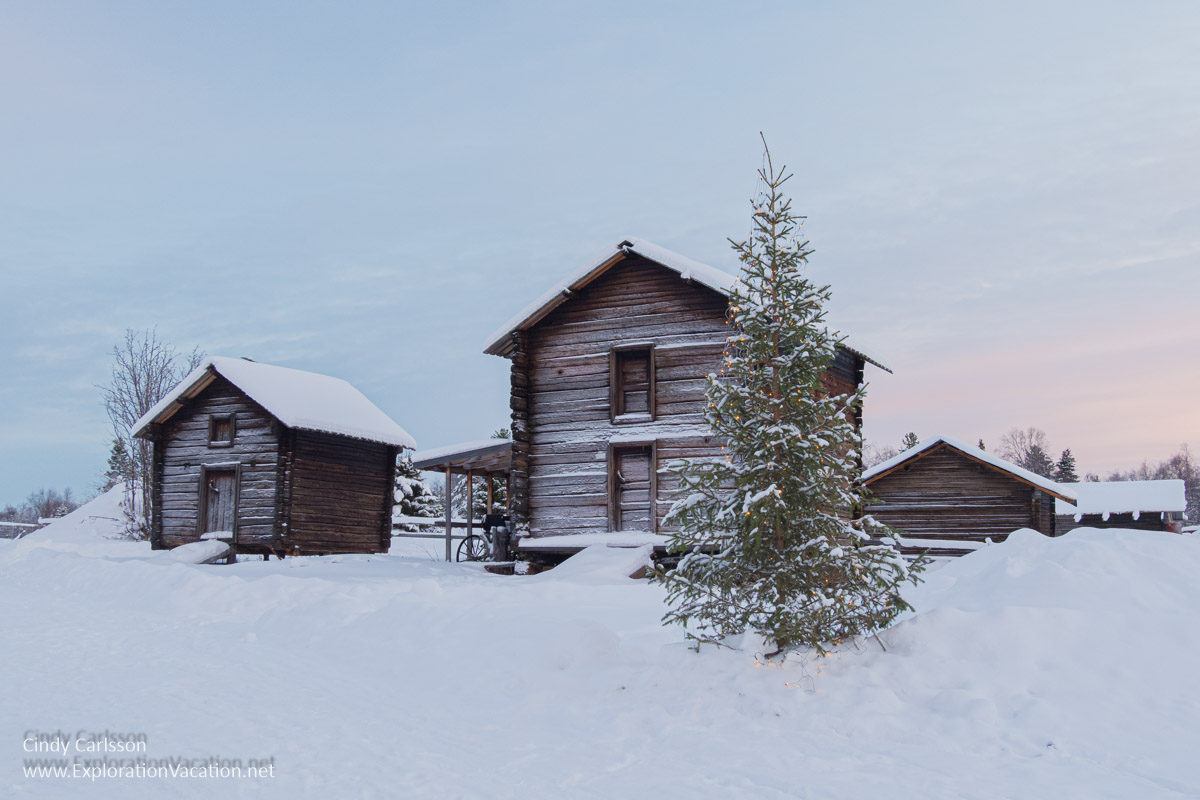
Historic buildings at the Old Homestead Museum are interesting even if they aren’t open.
Reindeer, wildlife, and nature tours
Depending on the season, a variety of business offer tours by automobile, horseback, snowmobile, or dogsled to spot wildlife, see the northern lights, or just enjoy the scenery.
Seasonal activities
Activities for winter and early spring (November – April)
Cold weather activities include:
- Snowmobile tours
- Dogsledding
- Ice fishing
- Downhill and cross-country skiing
- Reindeer sleigh rides
Learn about Sámi culture and meet a few reindeer at the Márkanbáiki museum.
Located right next to Jukkasjärvi’s historic church, the Márkanbáiki open-air museum introduces visitors to Sámi history and culture. And you can feed the reindeer.
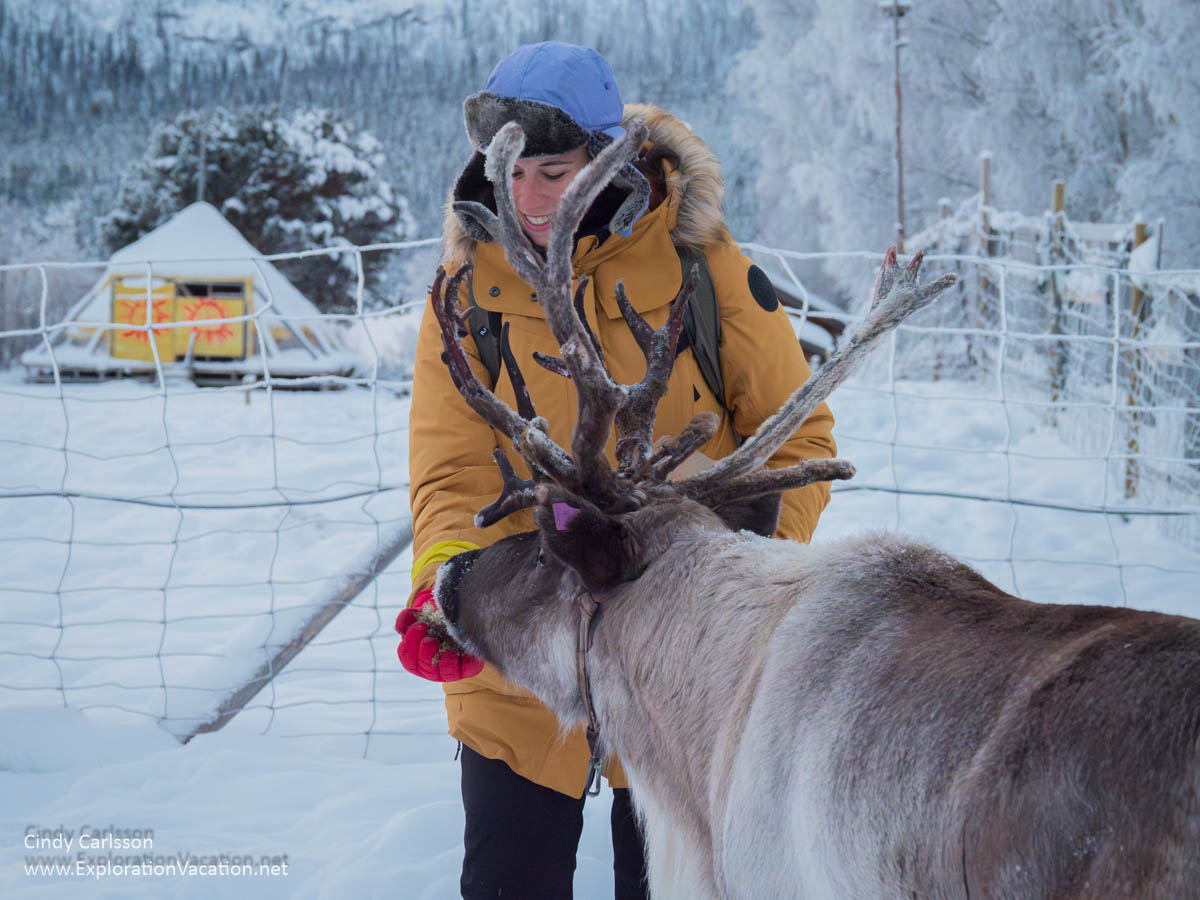
The Márkanbáiki Sámi cultural museum lets visitors meet the reindeer one-on-one.
The museum is only open between September and mid-April. The rest of the year you can book a variety of other experiences related to Sámi culture and their reindeer.
Activities for summer and early fall (May – October)
Summer is the season for outdoor activities in Lapland . You’ll find plenty of options for hiking, camping, berry picking, fishing, boating, and river rafting. You may even be able to ride along on a training run in a summer version of a dog sled ride.
In May you can book a tour that takes you out to a reindeer herd when calves are being born.
Make your own arrangements directly with local businesses and guides when possible, or book through Icehotel, Get Your Guide, or Viator.
Activities you can only do in September
You can do all the same summer activities, but without bugs. But you also get beautiful fall colors and a chance of seeing the northern lights!
The Kiruna website has good month-by-month info on weather and activities.
Northern lights viewing
If your dream is to see the northern lights (aurora borealis) playing in the sky, you have a few options.
While most people say winter is the best time to see the northern lights, that’s mostly because it’s when the sky is darkest. And you do need a very dark sky to see the aurora.
However, for reasons no one seems to fully understand, the aurora is generally most active in fall (September/October) and late winter/spring (around the month of March). That’s when you are most likely to see a truly spectacular show.
👉 Read more about viewing the northern lights
But the aurora can put on a spectacular show at any time, and less-spectacular shows occur pretty regularly. They just aren’t visible unless you have clear skies in a very dark place that is pretty far north. Jukkasjärvi is one of those places: It has long hours of darkness in winter and is pretty far north, so – if skies are clear – you have a good chance of seeing the northern lights there anytime between September and March. (But even here, a full moon will make it harder to see the aurora, so plan your trip around the new moon for the darkest skies.)
The only time you absolutely WILL NOT see the aurora in Jukkasjärvi is summer. The sky is simply never dark enough then.
When the aurora is out and the sky is very dark, you should be able to view it just by walking down to the frozen River Torne or anywhere away from artificial lights. No tour necessary!
Of course, Icehotel also has a number of tours that will take you out to a more remote location via snowmobile or dogsled, with aurora watching as one of several activities. (Giving you plenty to do even if it’s cloudy or the aurora is a no-show that night.) Similar tours can be booked directly through local companies or Get Your Guide and Viator.
The same is true for dedicated photography tours. If you are serious about photographing the northern lights, book a tour focused on seeing and photographing them – you’ll have the guidance of a skilled photographer and far longer to watch and photograph the lights. Do your own research to find a tour or book through sites like Viator and Get Your Guide.
👉 Read less
Plan your trip to ICEHOTEL
Let me begin by explaining that I did NOT plan this trip myself. My cousins made all the arrangements. . . Which helps explain why I was surprised to discover there are two “ice hotels” here!
But I learned a lot.
Getting to Sweden’s Icehotel
Sweden’s ice hotel is often described as being in Kiruna. However, it’s actually in Jukkasjärvi, a small village about a 20-minute drive east of Kiruna.
This is well north of the Arctic Circle in Swedish Sápmi (Lapland).
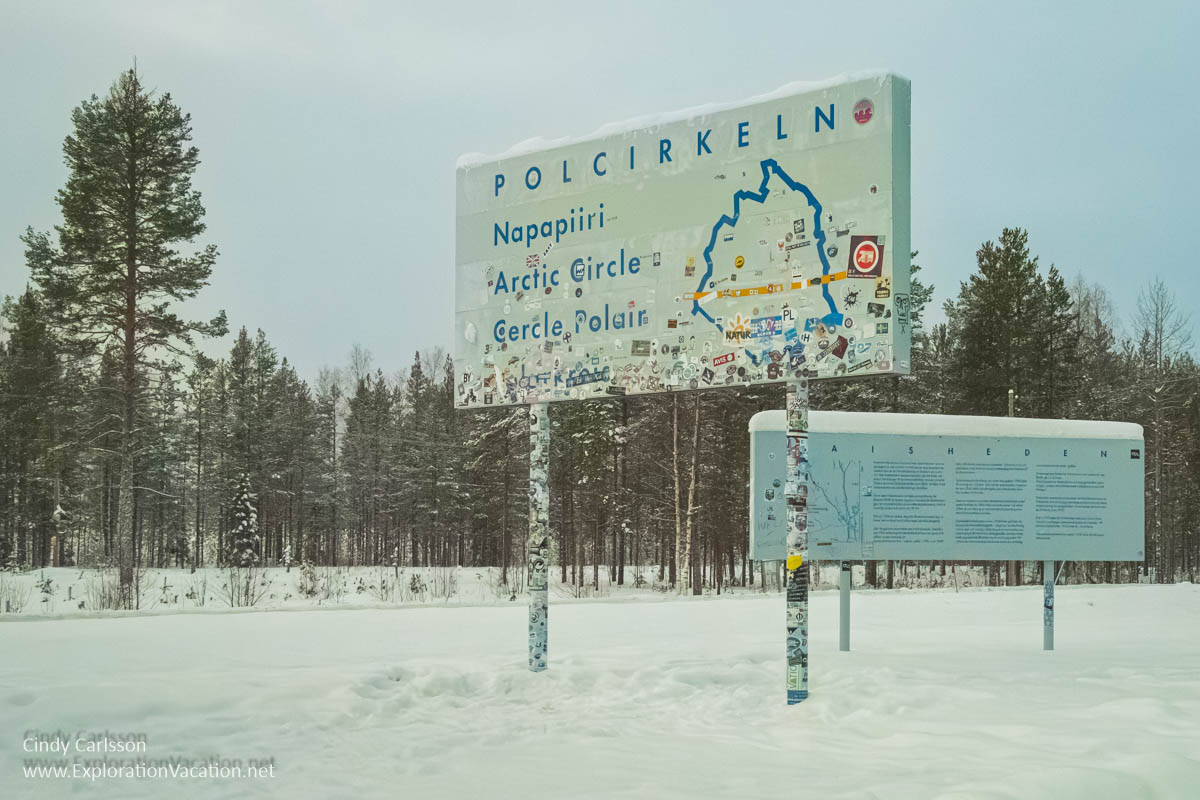
Crossing the Arctic Circle in Sweden.
It’s also a fairly remote area, so you are unlikely to just happen to end up in this part of Sweden. You have to want to get here. But that doesn’t mean it’s particularly difficult to get here.
And you don’t need to worry much about language. Kiruna has four official languages: Swedish, Finnish, Sámi, and Meänkieli (a Swedish-influenced Finnish dialect unique to the Torne River Valley). But most people also speak English, so there are a lot of options for travelers.
Traveling to the Icehotel from Sweden
I traveled to the Icehotel from Finland. But it is MUCH easier to get there from within Sweden!
👉 Read more about how to get to the Icehotel from Sweden
Fly to Kiruna
Stockholm’s Arlanda International Airport has regular flights to Kiruna on both SAS and Norwegian airlines. Flight time is 1½ hours. But Arlanda seems to be the only airport with nonstop flights – every other regularly scheduled flight I could find went through Arlanda.
Take the train to Kiruna
Taking a train from Stockholm requires 15 hours or more. At least one line has a direct route.
Travel to Kiruna by road
The drive to Kiruna from Stockholm (or from points farther north) could be the basis for an epic road trip.
Main routes in Sweden are generally in good condition and easy to drive. Smaller roads may be narrower and snowier than many drivers from the USA are used to. Driving time from Stockholm is about 14 hours.
Buses also serve Kiruna from throughout the country. Routes and travel times will vary considerably depending on your starting point.
Getting to the Icehotel from Kiruna
Jukkasjärvi is about a 20-minute drive from Kiruna.
If you want to spend more time exploring the area on your own, rent a car in Kiruna.
Otherwise, book a taxi at the airport or in town or arrange a transfer in advance (usually by bus, sometimes by taxi) through Icehotel.
You can take the bus, but it takes almost an hour for the bus to work its way through town and out to the ice hotel.
👉 Read less
Traveling to Icehotel from Finland
I have an advantage over almost anyone reading this: I have cousins in Finland who live about a 10-hour drive from Jukkasjärvi. So, this was an easy family road trip for me.
Although driving is the easiest way to get to the Icehotel even if you aren’t fortunate enough to have family within driving distance of the ice hotel, there are a few other options. But, if you are already in Finland, driving a least part of is probably your best option.
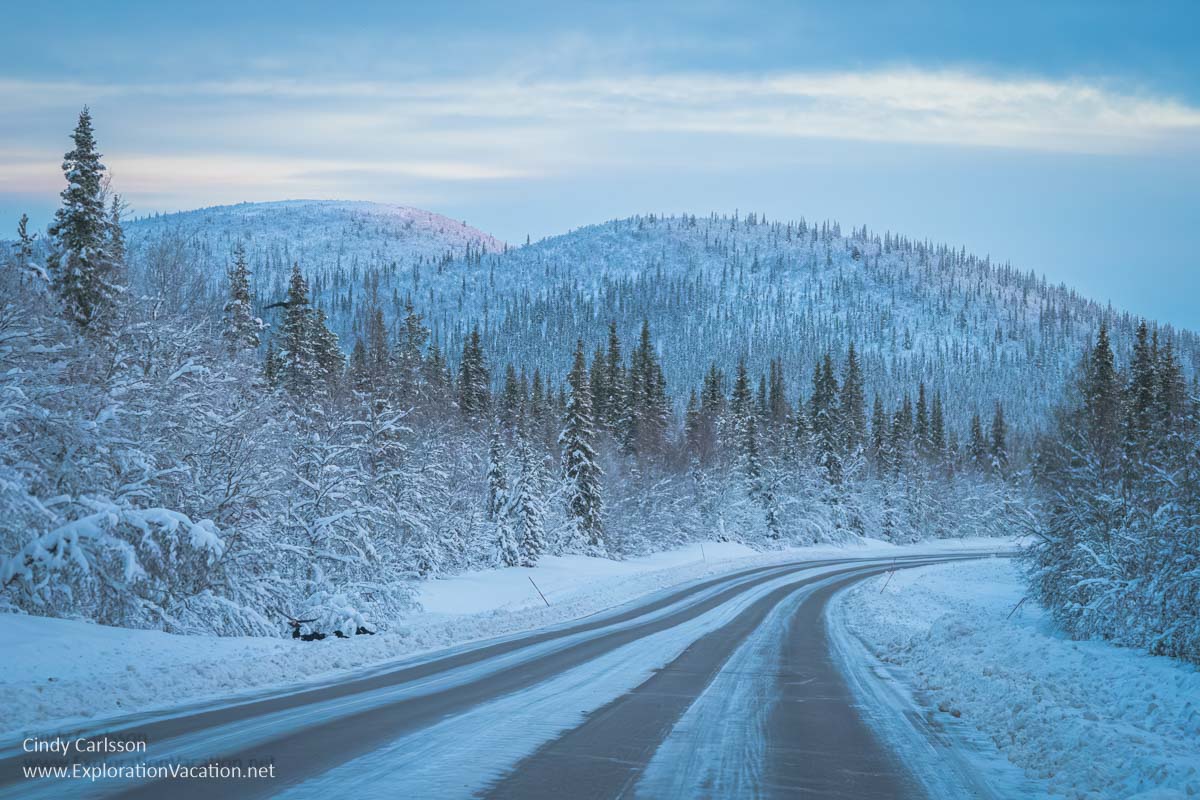
Scenery along the road in Sweden.
👉 Read more about how to get to the Icehotel from Finland
Travel to Icehotel by road
If you are traveling to the ice hotel from anywhere in Finland, your best option is a road trip for some or all of the journey.
We drove from my cousin’s home near Kokkola (north of Vaasa), following the coast north through Oulu to Tornio/Haparanda, and then on to Jukkasjärvi. These are all good, well-maintained main roads, although much of the way has just two-lanes. And in winter you might find much more snow on the road than you would in the USA.
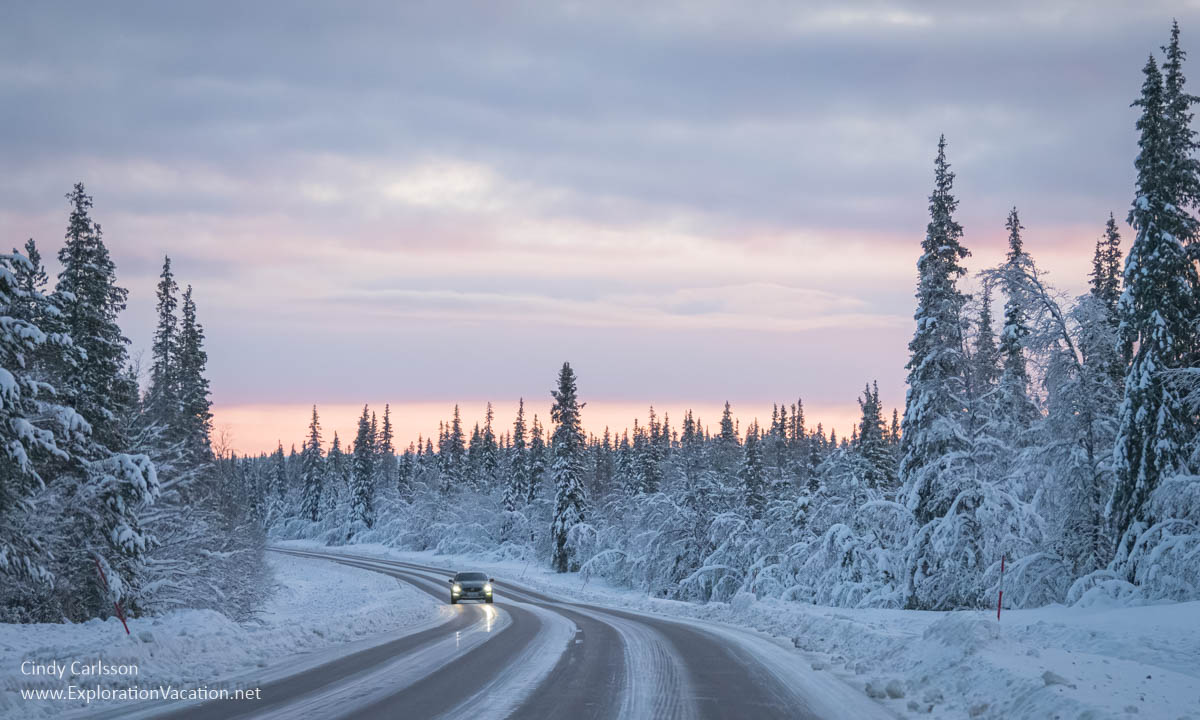
A beautiful winter drive through Lapland.
I would expect similar conditions if you are traveling to Jukkasjärvi from Rovaniemi (Finland’s Santa village). But I have not (yet) been on that route. Expect a drive time of more than 4 hours and as much as 5 hours.
Once you get to the Finnish border in Tornio, expect a drive time of at least 4 hours to get to Jukkasjärvi. If you’d like to break up the drive, both Tornio and Haparanda have a variety of options for lodging, dining, and shopping. (The restaurant in the Hotel Olof is fabulous.)
Tips for driving:
- Watch for animals, including moose and reindeer, along the road. (Yes, we saw both. And smaller critters too.)
- Finland and Sweden require winter tires between November (Finland) or December (Sweden) through March.
- Be prepared to drive in twilight or total darkness during winter.
- Charging stations for electric vehicles are available along the route from Vaasa north and in Jukkasjärvi and Kiruna. However, they are pretty limited and a few (including the one at Icehotel) are really slow or nonfunctional. Do your research ahead of time and have a back-up plan in case the station you plan to use is not working. (Yes, we did this trip in an all-electric vehicle.)
Take the bus
Bus service to Kiruna is also available along these same routes and all the way to/from Helsinki. You will have at least one transfer.
Travel to Kiruna by rail
From Finland, there are no rail connections to Kiruna without switching to a bus or other vehicle for part of your journey.
Kemi (located about 20 miles south of the border) is far as you can go by rail in Finland. From there it’s a half-hour bus ride to the border town of Haparanda, Sweden (across the river from Tornio, Finland). Pick up a train in Haparanda that will take you to Kiruna via a connection in Boden. Or drop the train and just switch to a bus.
Take the ferry
Looking for something more adventurous? From Vaasa, Finland, you can take the car ferry across the Gulf of Bothnia to Umeå, Sweden. Then you can transfer by bus to the train station and take the train 7 hours directly to Kiruna. Or pick up a rental car and explore this part of Sweden on your own.
This route takes you through or near a couple of UNESCO World Heritage sites, including Finland’s Kvarken Archipelago and Sweden’s Gammelstad church town in Luleå.
There are no direct flights to Kiruna from Finland
While there are airports in both Kiruna and Kemi/Tornio in Sweden, there are currently no direct flights between them. Actually, there are no flights to Kiruna from anywhere in Finland that don’t require at least one (usually long) connection in Stockholm. That means flying to Kiruna isn’t a great option if your are already in Finland – unless you want to spend some time in Sweden along the way.
👉 Read less
The best time to visit the Icehotel might be winter. . . or summer
Obviously, if you want to see and even stay at the original seasonal Icehotel Winter, you need to visit during the winter.
But if a winter trip to the Arctic isn’t your thing, you can still see some pretty amazing rooms made of ice the rest of the year. And Jukkasjärvi is a lovely village that would be fun to visit at any time of year. Just plan your trip around what is most important to you.
👉 Read more about when to visit Icehotel
Winter: Mid-December through mid-April
Everything at Icehotel is open in winter and this is a great time to try to see the northern lights. And, of course, the original winter-only seasonal Icehotel is ONLY open in winter.
By winter I mean mid-December through mid-April when the seasonal Icehotel Winter is open. So, if seeing or staying at the seasonal Icehotel is a priority, then plan your trip for January – March and book as far in advance as possible.
While there are very few hours of daylight in December and January, the sun sort of hangs around on the horizon filling the sky with beautiful, richly colored light. And with snow or a coating of frost on the trees, this is can be a stunningly beautiful time of year.
Just be prepared for very, very cold temperatures. Comfortable, super-warm winter clothing and footwear will make the difference between enjoying outdoor activities and never wanting to step outside.
Spring: Late April through May
While ICEHOTEL 365 and the Icebar are open all year, I would avoid a spring visit unless you really want to see newborn reindeer or want to tour the winter’s Icehotel as it begins to melt. Otherwise, it’s likely too late in the season for most winter activities and too cold and wet for most summer ones.
Summer: (June through August)
Summer brings comfortable weather, unending daylight, and lots of bugs. But this seems like an ideal time to visit if you want to hike, get out on the water, or just enjoy the midnight sun with a drink from the Icebar. And keep in mind that there’s no chance of seeing the northern lights until the very end of August.
Fall: September through Mid-December
Fall brings a brief burst of brilliant color to the landscape and the opportunity to see the northern lights once again. As cold weather arrives, you can also watch the Icehotel crew harvest ice for the new Icehotel. Temperatures during this time can range from comfortably cool to miserably cold.
👉 Read less
Visitor access to the ice hotels as art galleries
Icehotel began as an art gallery and, for most visitors, that’s primarily what it remains.
Between 10 am and 6 pm, the ice hotel(s) function as art galleries. All rooms are open with the exception of the Deluxe Suites in Icehotel 365, which may close as early as 3 pm. (Deluxe Suites remain open as art galleries until each room’s overnight guests check in.)
A ticket to enter Icehotel 365 and Icehotel Winter (when it is open), is included in the price of any Icehotel lodging reservation. That includes warm room reservations.
If you aren’t staying on the property, an adult ticket to visit in winter (when both ice hotels are open) currently costs about $36 (375 Swedish Krona). Tickets drop to about $28 during summer. Discounts are available for students, seniors, and children.
Day visitors cannot book tickets online or in advance – they must be booked on site using a credit card or online payment.
Lodging
The Icehotel property has a wide variety of lodging options, some of which vary with the changing seasons.
It’s worth spending at least a night somewhere on the property. The site is magical during the long Arctic night – I loved just wandering around in the evening and early morning before it was light.
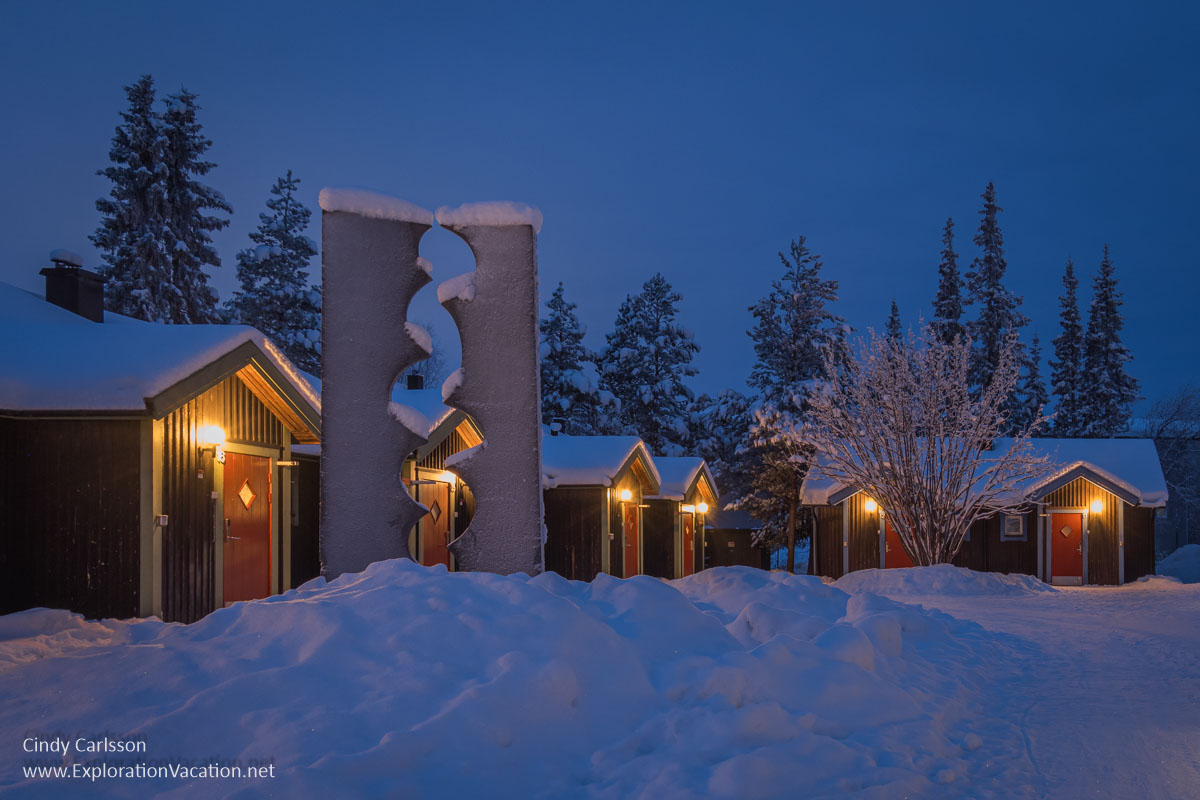
Chalets on the Icehotel property are a welcoming site during the darkness of a winter night.
Better yet, if the northern lights make an appearance, you can just follow the footpath down to toward the river and enjoy them in all their glory without booking a tour.
Jukkasjärvi doesn’t have a lot of other lodging options, although there are a few. However, you’ll find plenty of hotels 20 minutes away in Kiruna as well as in the surrounding countryside. But don’t assume you’ll save a lot of money by staying in Kiruna: When we booked our early December trip, lodging in Kiruna was about the same cost as staying in one of the smaller chalets at the Icehotel property.
Stay on the Icehotel property
Besides the ice hotel sleeping rooms, the property also has traditional hotel rooms, chalets, and wilderness camps. And visitors are advised NOT to spend two consecutive nights in an ice hotel room.
All room reservations of any kind include a ticket to view Icehotel 365 and, if it’s open, Icehotel Winter. Breakfast is also included.
Obviously, you can book directly with Icehotel. However, if you’re collecting points or OneKey Cash or have some to use, it’s also possible to book rooms (including rooms in both ice hotels and the Lavvu tents) on Booking.com and Expedia.
Spend a night in Icehotel 365 or Icehotel Winter
The biggest difference between spending a night in Icehotel 365 vs the seasonal Icehotel Winter is that about half of Icehotel 365’s rooms include a warm bathroom. ALL rooms in Icehotel Winter are entirely cold rooms where guests use communal restrooms, showers, and saunas in a very nearby building.
The experience of staying in one of the Icehotel
I didn’t spend the night in the seasonal Icehotel 34 or the year-round Icehotel 365. Not only was Icehotel 34 not yet open, but the cost of a night in either ice hotel is far beyond my budget. And I’ve never been particularly interested in winter camping . . .
But if you are interested and can afford it, the basics are thus:
- All rooms hold a temperature of 23 to 17 Fahrenheit (-5 to -8 Celsius). So below freezing.
- There is NO warm area in any Icehotel Winter room or any Icehotel 365 Art Suite. (Deluxe Suites in Icehotel 365 have warm bathroom. Many even have a sauna.)
- Beds are a slab of ice with wood slats or a wood base and a mattress topped with reindeer hides.
- Check-in for all rooms in the seasonal Icehotel Winter and all Art Suites in Icehotel 365 is only available after 6 pm. Guests staying in Icehotel 365’s Deluxe Suites can check in at 3 pm.
- You’ll be awakened between 8 and 9 am for breakfast and check-out. (During the day rooms are open for public viewing.)
- Unless you are staying in a Deluxe Suite in Icehotel 365, you’ll store your jacket, clothing, and other belongings in a nearby building that also houses the restrooms and showers.
- Icehotel provides guests at both ice hotels with thermal underwear pajamas, an expedition quality sleeping bag, a sleeping bag liner, and boots.
If you want a visual introduction to life at the Icehotel, YouTuber Safiya Nygaard covers the experience in this video.
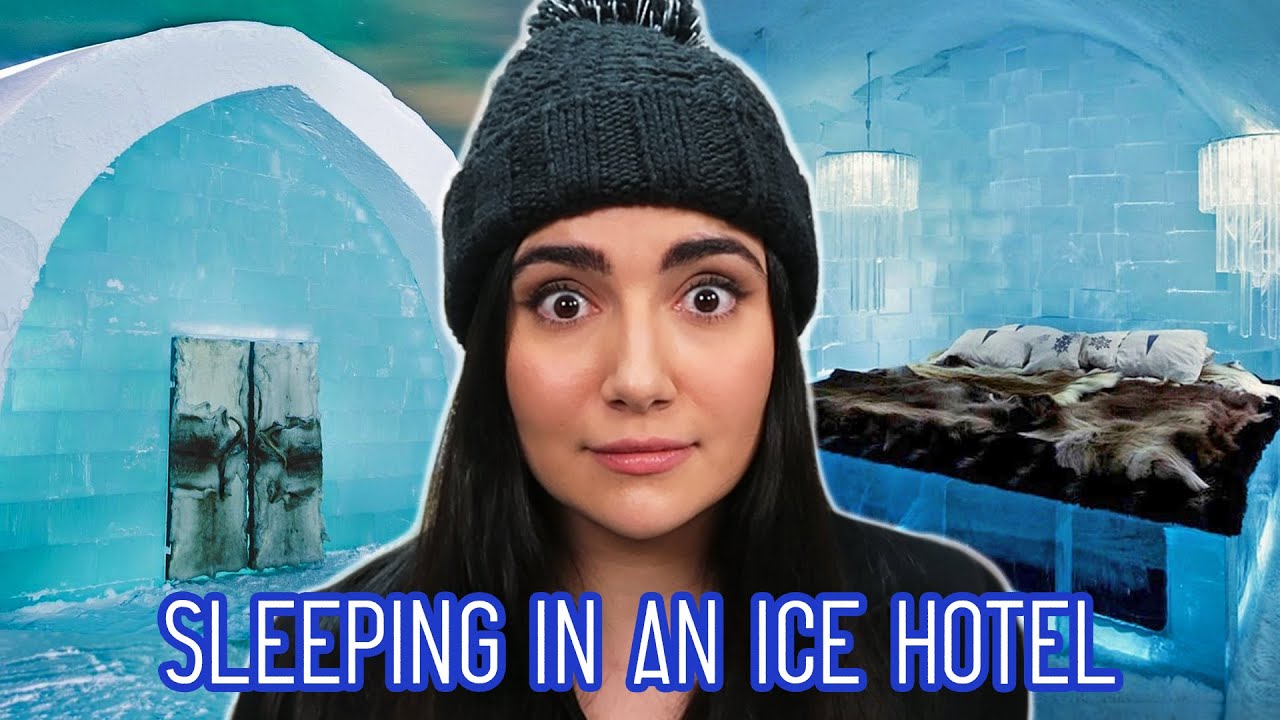
It takes her awhile to actually get to the Icehotel, so if you want to get to the Icehotel a little quicker, skip ahead at least to minute 6:55.
Spend a night in a chalet or hotel room
Don’t fancy spending a night in the cold or breaking your budget to sleep in an actual ice hotel? That’s ok. You have other options right on the Icehotel property.
Icehotel has 44 traditional hotel rooms and 28 apartment-style chalets.
None of these are cheap, but the two-bedroom Arctic Chalet we had wasn’t outrageously expensive for what we got. (Not cheap, mind you, but not outrageous.) It wasn’t fancy, but it had a table, small kitchen, a big closet by the door (which is very important in winter when you have bulky coats, hats, and boots), a bathroom with a shower, and comfortable beds in two separate rooms.
Spend a night in a Lavvu tent
Once summer arrives, Icehotel sets up two luxury tents near Icehotel 365. These Lavvu tents look amazing, with a view of the river, a private patio and firepit, duvet-covered double beds, and electric heat. The only thing they don’t have is bathrooms – you have to use the communal facilities and sauna.
There are only two of these, so plan well ahead if you want to book one!
Join your friends at a Wilderness Camp
Icehotel also has two wilderness camps.
The smaller of the two has space for four guests and seems to be available only as part of a multi-day fishing package in summer or an overnight snowmobile tour in winter.
The other is available for groups of up to 14 people.
Both have wood cabins and sauna.
Stay in Jukkasjärvi or nearby
While the Icehotel property is amazing, it’s not cheap. But, if you have a car, you have a few options in the area that look pretty good.
A few I haven’t stayed at any of these, but a few look enticing:
- Reindeer Lodge is part of the Sámi museum (but located outside Jukkasjärvi). It has adorable-looking cabins with reindeer right outside the door. (Book on Booking.com)
- The Aurora River Camp has glass “igloos” that look pretty great. (Book on Expedia)
- I don’t ski, but Camp Ripan at the edge of Kiruna appears very spa-like. (Book on Expedia)
Of course, depending on when you travel, you will find many more options in the area (especially in Kiruna) on both Booking.com and Expedia.
Time to start planning your trip!