Last updated on June 12th, 2026
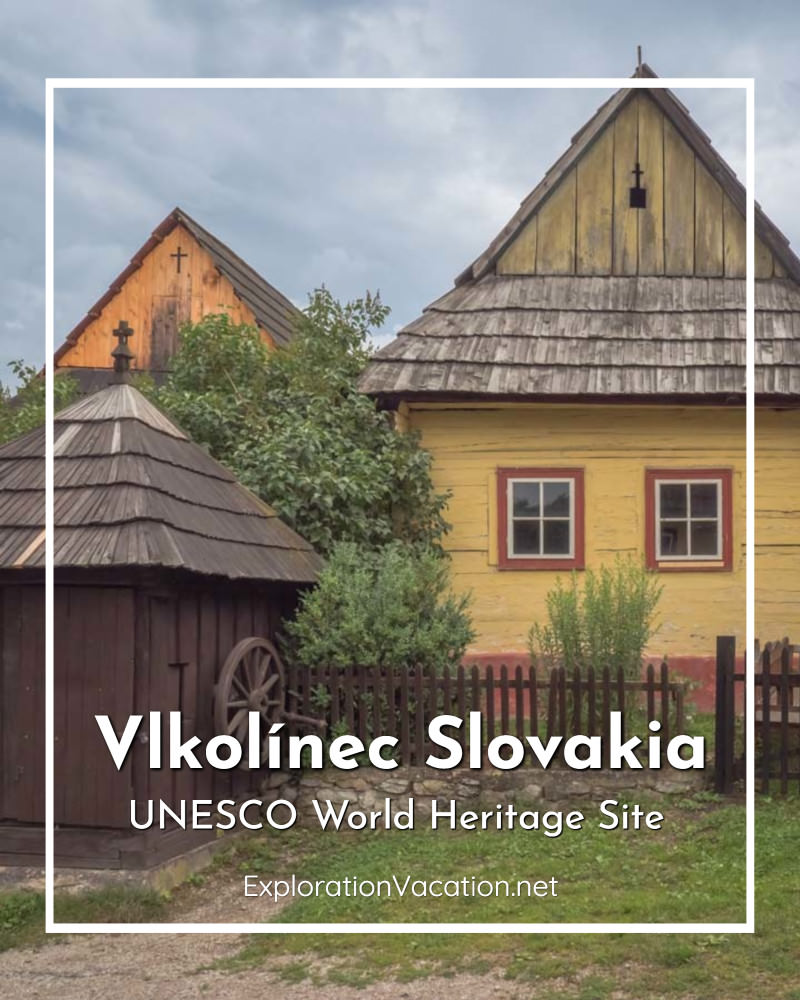
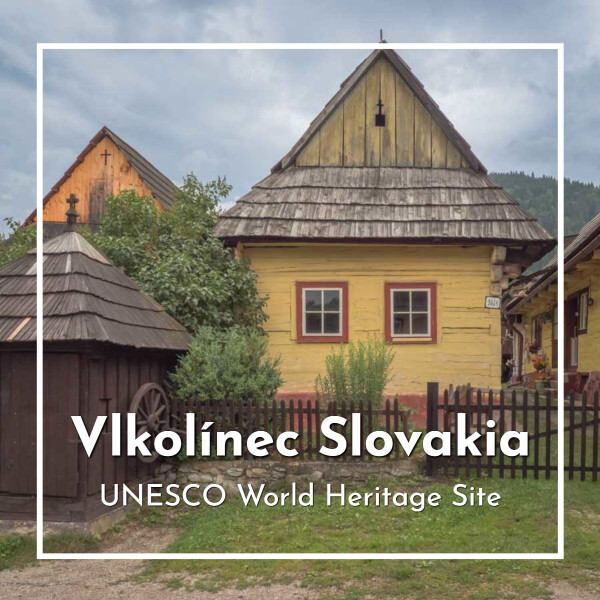
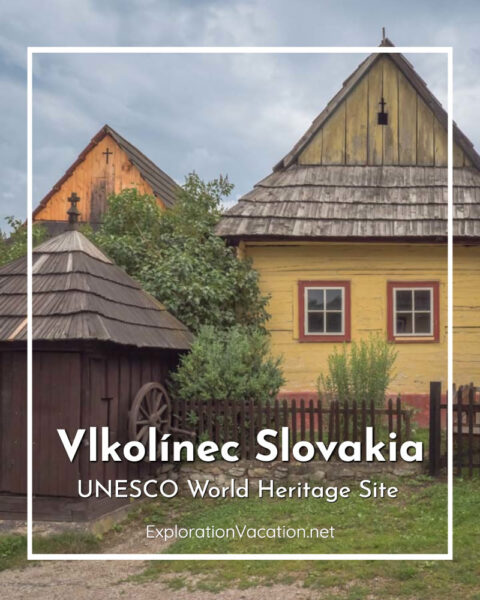
Vlkolínec, Slovakia, is a UNESCO World Heritage site that preserves a traditional European farming village in the mountains of Central Europe. But this isn’t a museum. It’s a real village where families live in a setting that would be very familiar to their ancestors of long ago.

This story has affiliate links. I use links to provide additional information, but a few also pay me a small amount if you use them to make a reservation or purchase. You don’t pay extra, but it helps keep this website running without intrusive ads. To learn more, see my policies and disclosures.
A village lost in time
The mountains of central Europe were once filled with small villages where peasant and tenant farmers, woodcutters, coal miners, other poor rural families lived. These weren’t fancy places. They were built by and for the people who lived there. They were built of wood because it was readily available. And almost every building sheltered people or their animals or protected the food they needed to survive.
Over time, these villages were either abandoned or modernized as building practices – and expectations – changed.
But in the mountains of north-central Slovakia, people in the village of Vlkolínec pretty much continued living as they always had in the same type of buildings that had housed their families for generations.
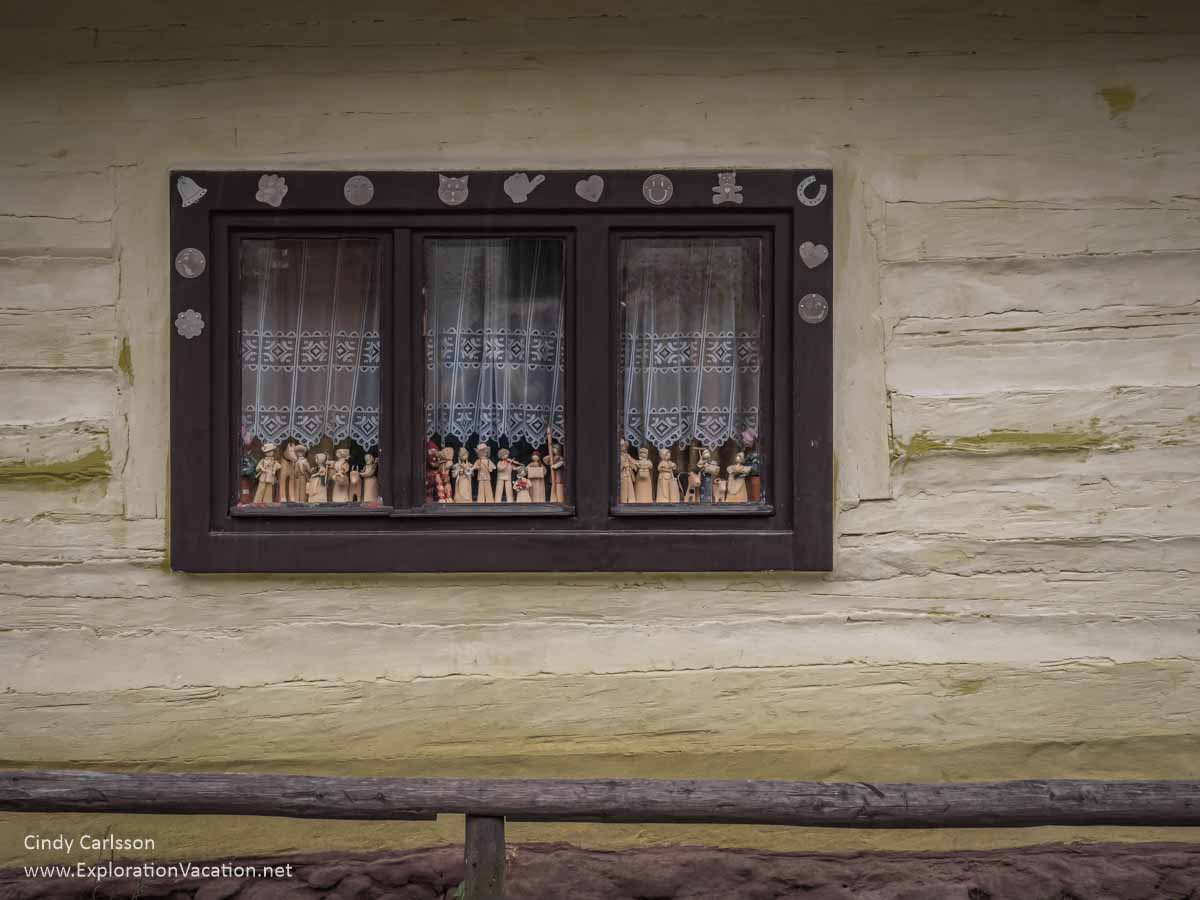
Today their homes are the best remaining example of this type of traditional mountain village. It’s also a UNESCO World Heritage site that attracts visitors from near and far.
Past and present merge in Vlkolínec
While evidence suggests Vlkolínec already existed in the 14th century, it isn’t specifically mentioned until the 1460s. Evidently it wasn’t a large place as, by 1625, it was described as having four peasant farmsteads and five homes for tenant farmers. (Peasant farmers being the elite in this mix of poverty, as they owned their land.)
The most easily identifiable structure in the village today is the wooden belfry. It’s also believed to be the oldest, as it was constructed in 1770.

A century later, the current Church of the Visitation of the Blessed Virgin Mary replaced the town’s small chapel. And, by the close of the 19th century, a one-room brick school was constructed by the church to replace a wooden school building in the village center.
So, with 82 houses, a small but substantial church, and a solid brick school, Vlkolínec was a getting to be a pretty substantial place by 1944. It was probably on the way to looking like a lot of other villages found throughout this part of Slovakia today. That changed in October of that year when a mortar hit the village, burning down a row of houses in the village. It was among the last battles the Slovak resistance fought against Nazi Germany (and their own pro-German government), but the damage was done.
Those lost houses were never replaced.
But it’s also part of the reason Vlkolínec looks the way it does today. The loss of those houses made people realize how unusual the village was. And that led to thinking that maybe, instead of building new houses, the village should be preserved as it was.
It just took a while for that to happen. The Slovakian government didn’t designate Vlkolínec a Folk Architecture Reserve until 1977. It became a UNESCO World Heritage site in 1993 after it became apparent that not only was Vlkolínec the best-preserved example of a village of this type in Slovakia, but in the whole region.
Vlkolínec today
Today Vlkolínec has 45 buildings and retains the look and feel of a village from long ago.
Technically, Vlkolínec is part of the town of Ružomberok. However, the village is few miles and several centuries removed from the larger city. It’s a shift you start to feel on the short, scenic drive between the two.
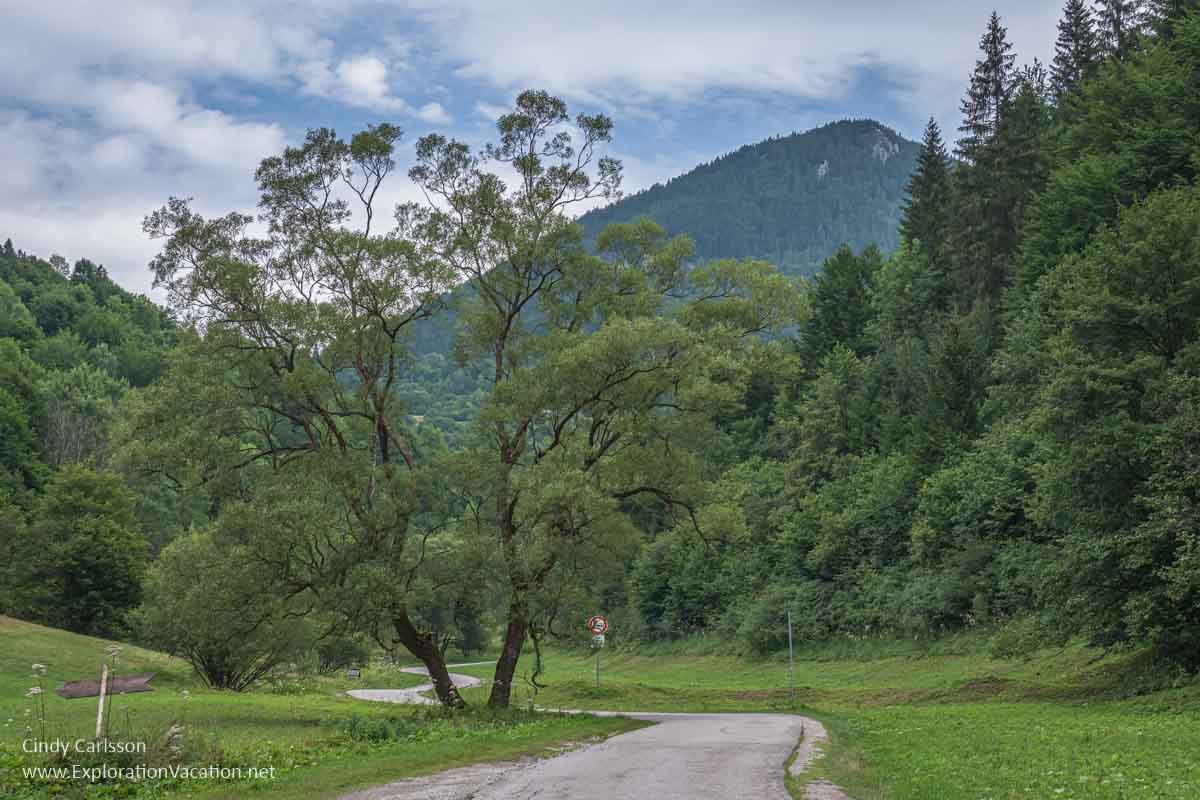
The village sort of flows down a hillside, and hikers arriving from the mountains have a great view of it. But I don’t see it until we pulled into a grassy parking area just below.
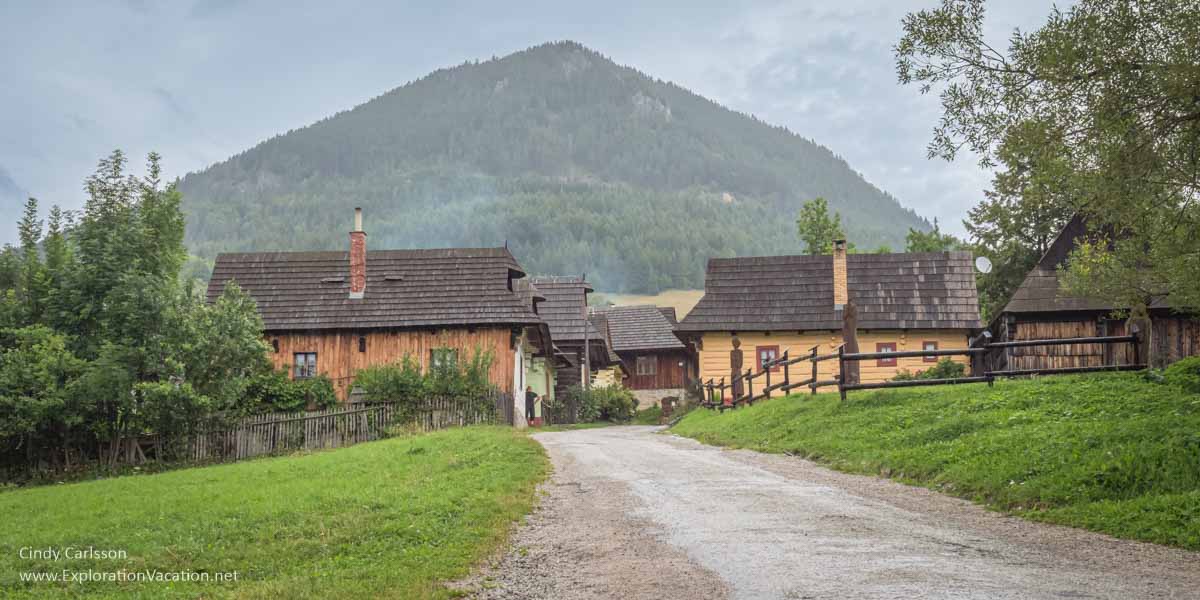
Remove the streetlights and the backyard satellite dishes (and the other tourists) and you might wonder what century you’ve landed in.
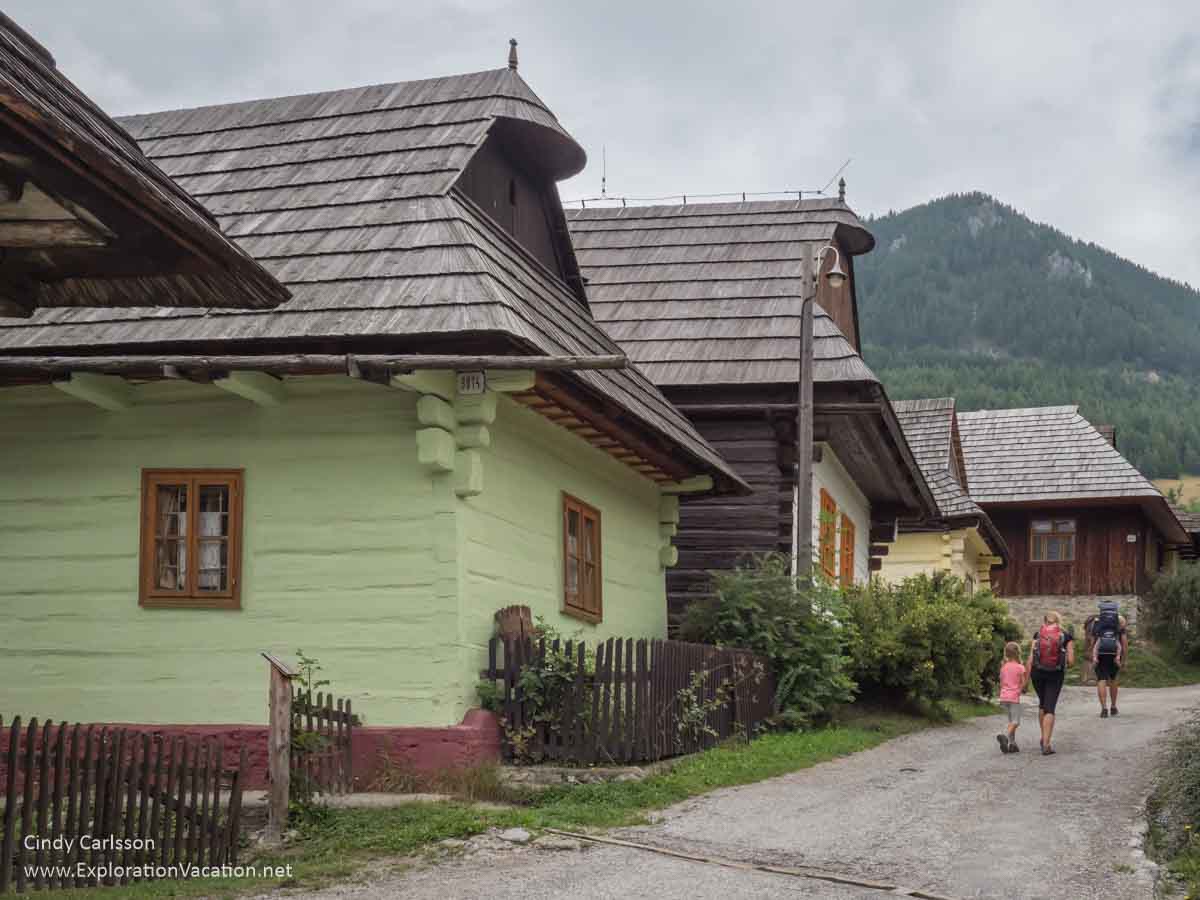
Vlkolínec has a couple of art galleries and a few spots that sell a variety of local products, a small museum, and a few houses and outbuildings used for craft demonstrations. But the village’s collection of folk architecture, most of which takes the form of houses and agricultural outbuildings, is the real reason to visit.
Visit Vlkolínec for the architecture
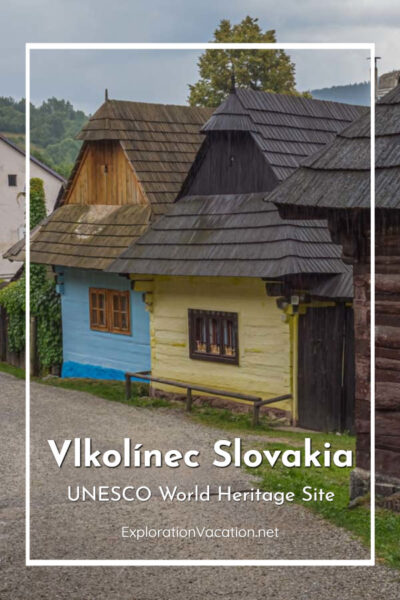
Log buildings like those in Vlkolínec are not particularly unusual in this part of Europe. While relatively few survive, they can be found individually or groups of two or three in many places. (You’ll see them from the road as you travel.) What makes Vlkolínec unique is that almost every house is built in this old style, includes a set of traditional outbuildings, and is still in use.
That creates a very unusual somewhere-from-the-past streetscape.
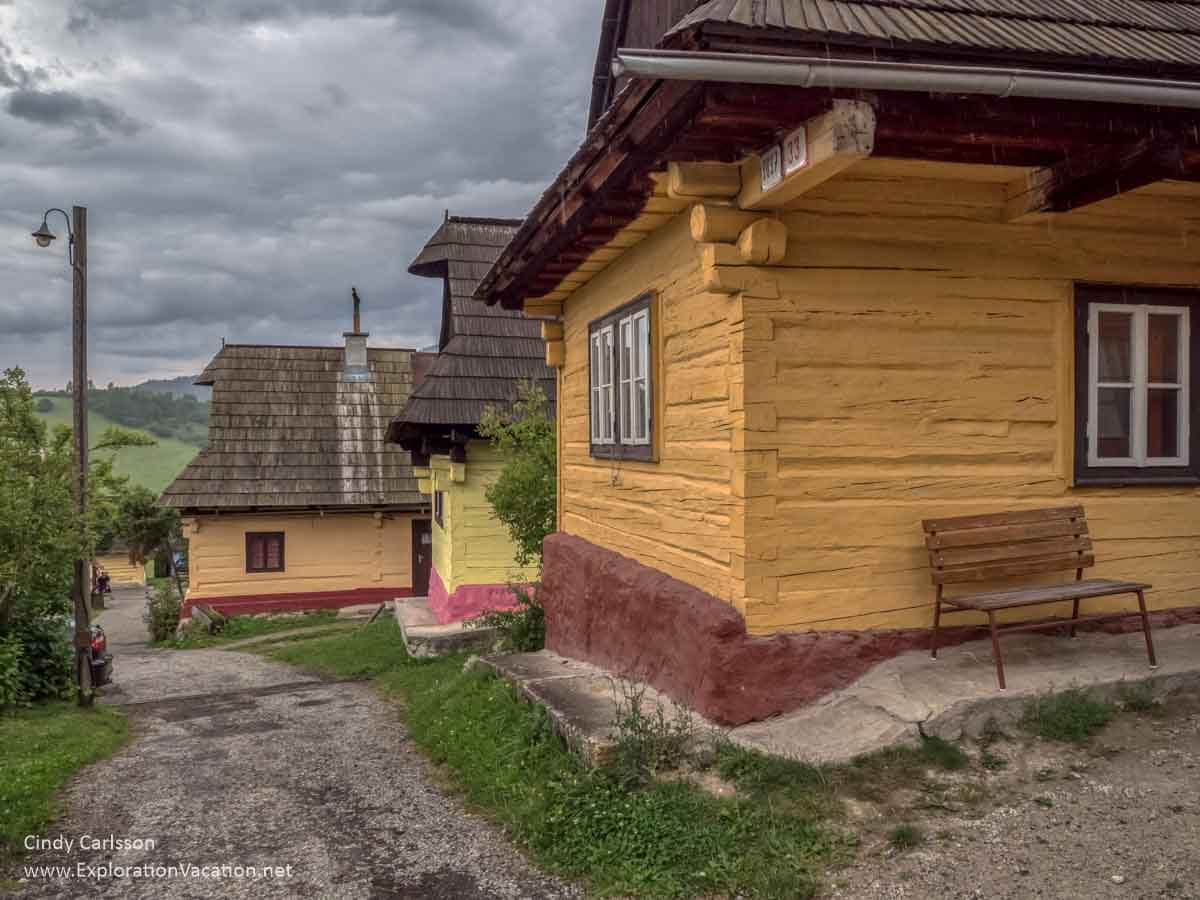
So, lets take a closer look at those buildings.
Vlkolínec’s traditional family homes
Most of what is visible along Vlkolínec’s streets are family homes.
Vlkolínec was never a wealthy place. People here lived close to the land. In the past, most probably grew grains and vegetables to feed their family, tended fruit trees, maintained hayfields, kept at least a few animals for themselves or for sale (a few very large flocks of sheep were kept in the surrounding meadows, their wool sold in the city), and cut wood in the forests.
And everyone lived in pretty much the same way. All houses were set on long narrow lots. And all had the same basic floorplan: A rectangular building with an entrance on the side, three rooms on the main level, an attic, and (usually) a below-ground storage space of some sort. A barn and stable filled the back of the lot.
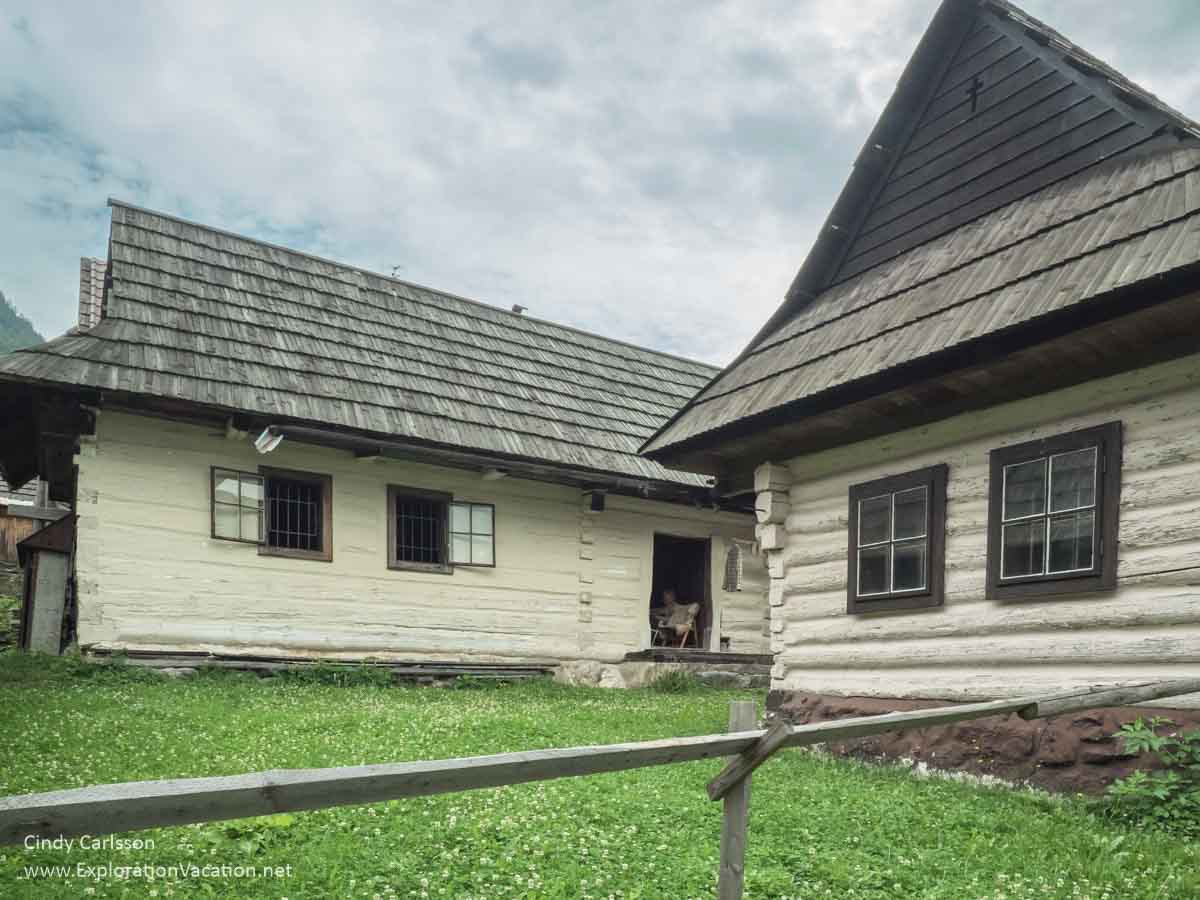
The entrance hall had a fireplace for cooking, a warming oven for bread, and a furnace. Prior to the 20th century, smoke was directed into the attic where it smoked meats, cured shingles, and provided a warm buffer between the roof and the living space below.
At one end of the house, a storage room held food, tools, and household items. This was a dark, unheated space with one small window. But sometimes it also served as an extra sleeping area.
The rest of the house was just one large room. Part of the furnace protruded into this room to provide heat, making it the most comfortable room in the house. This is where the family lived. It’s where they prepared and ate meals, did household chores, played, and slept. During winter new-born or other young livestock might join the family here to ensure the animals didn’t freeze. And, although this room was usually finished with wood floor, families sometimes had a storage area below to store potatoes and other vegetables.
Winters are cold here, so people did what they could to survive as comfortably as possible. But with multiple generations and sometimes multiple families sharing a single house, everyone lived in very close quarters.
Outbuildings and barns
Each house sat on a long narrow lot. The street was at one end, then the house, and, behind it, a barn, stable, and other outbuildings. All were built from wood.
It’s hard to get a good look at most of the outbuildings in Vlkolínec because they are hidden behind the house – and most of the houses and yards are private. However, a few are open as museum or demonstration space, which allows you to get a good look at them.
Barns
The barn was nearest the house and sometimes attached to it. This was the family’s workshop, as well as a storage area for tools and equipment. Functionally they were similar to modern garages with their workbenches and tool storage. But in Vlkolínec they would have stored harnesses, carts, saws, and farm equipment instead of the cars, bikes, grills, and lawn mowers found in suburban garages today!
Barns were constructed much like homes, although a few are currently sided with shingles, which are long-lasting and easy to maintain.

Stables
Livestock spent the winter in a stable in the back of the yard. This was also a log building. Cows and sheep spent summers in the hillside pastures around the village.
Granaries
Like other villages, Vlkolínec had at least one communal granary.
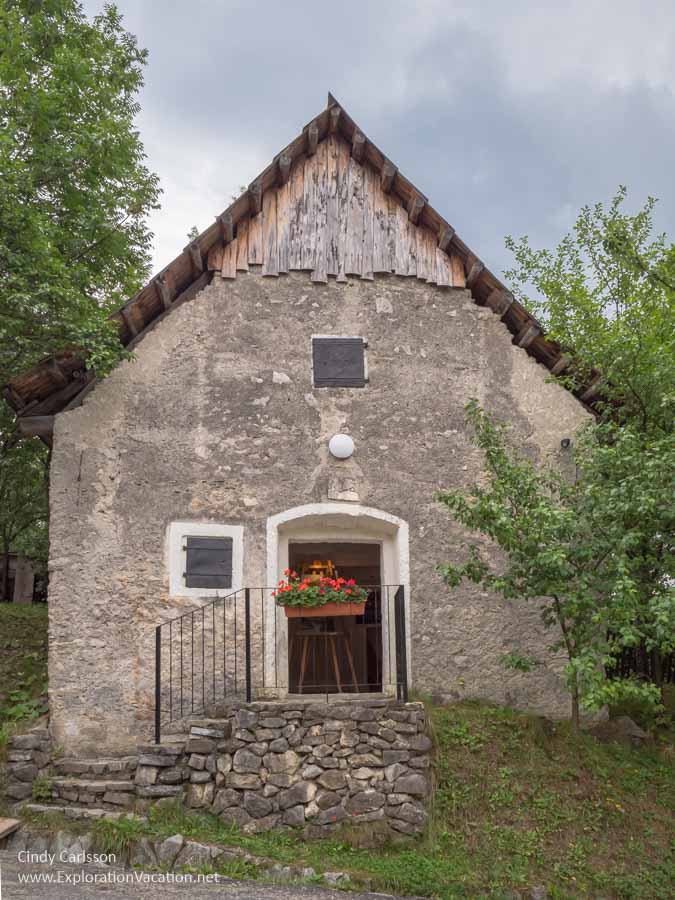
Originally, the granary was the only building in the village NOT built with wood.
Although villagers were careful to reduce the risk of fire, it was a significant danger in a village where all the buildings are wood. A stone granary was a safe place for everyone to store their precious grain.
The granary in Vlkolínec was built in 1837. Today it’s an art gallery.
Stalls – hay barns in the fields
The meadows and fields around Vlkolínec are sprinkled with small wooden buildings called “stalls.” These functioned as hay barns. While each yard had a place to store a small amount of hay, most stalls were located right in the fields where hay was grown and cut. And for good reason.
- It was easier. Hay went straight into the stalls without moving it anywhere. It wasn’t needed in the village until winter, and it was much easier to hall a load of hay over frozen ground.
- It was practical. The stalls built in the fields were relatively simple to construct and all the supplies needed were close by in the forest just beyond the field.
- It was safer. Storing large amounts of dry hay in wood buildings in a village filled with wood buildings was a serious fire hazard. If one of the stalls out in the field caught fire, it wouldn’t set anything else on fire. And that farmer would still have hay available in other stalls.
Community buildings
Vlkolínec doesn’t seem to have had a lot of community buildings. Once the church was built, it became a community gathering place. But before that the small school in the center of the village likely served as a community gathering spot. But usually villagers probably gathered in their homes or outdoors around the well or chapel.
The bell tower
The bell tower is the oldest building in Vlkolínec today. While bell towers today are usually associated with churches, Vlkolínec’s served a number of purposes. This was the village clock, marking the passing of time by ringing in the morning, at noon, and in the evening. It would have summoned villagers to worship as well, but it also notified the village of deaths, warned of fire, and alerted villagers of threats of all sorts.
The public well
Today Vlkolínec has a modern water system. But in the past, the well in the center of the village was the only source of drinking water.
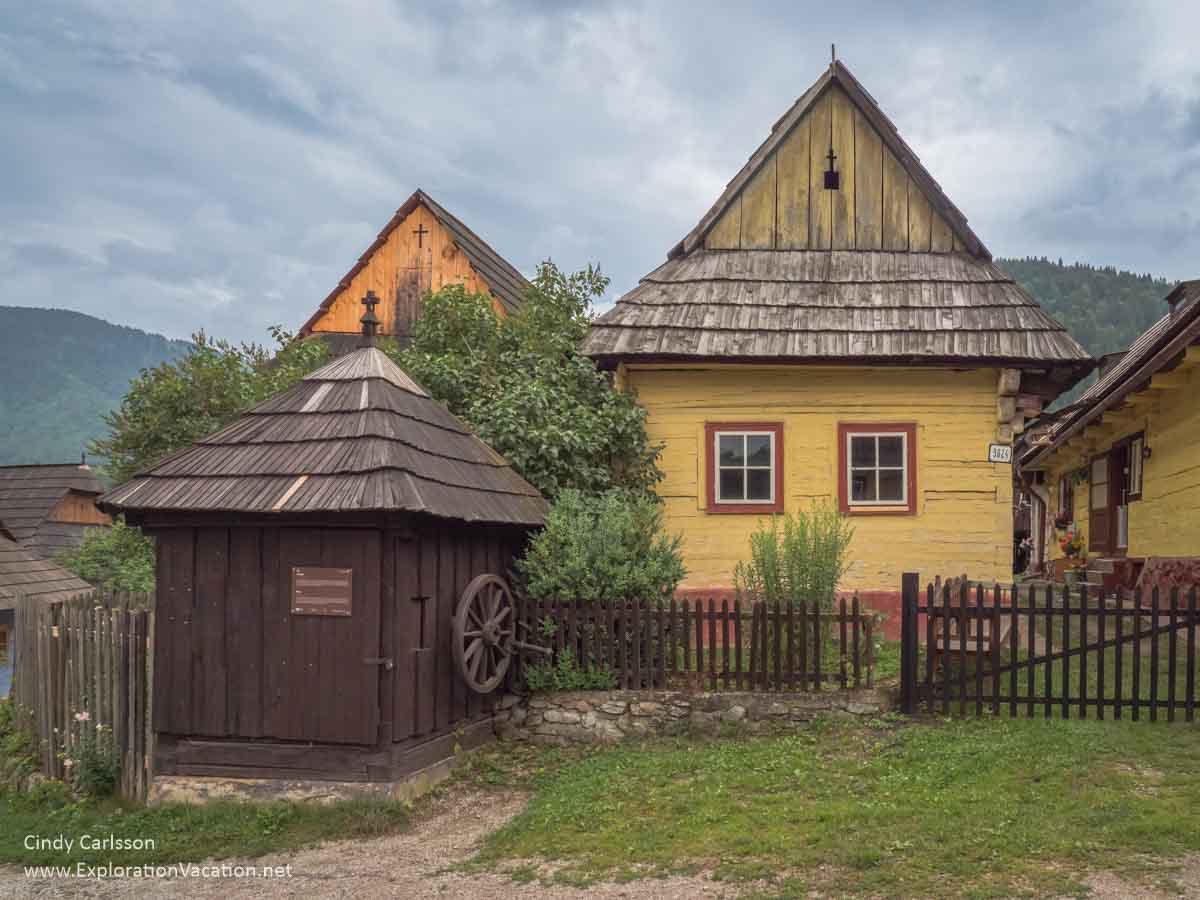
Described as a wooden well with a winch, the well itself is lined with stones. It’s almost 40 feet deep, which explains the importance of a winch. The wooden well house and winch were built in 1860. The wellhouse is built using the same construction techniques as the rest of the village.
Church of the Visitation of Virgin Mary in Vlkolínec
The Roman Catholic Church of the Visitation of Virgin Mary was constructed in 1875 to replace an earlier chapel. It’s a simple Neoclassical stucco building typical of small churches from that period.
It’s located at the edge of the village.
School
A brick school was built near the church late in the 19th century. Today it is a private gallery.
Traditional construction techniques
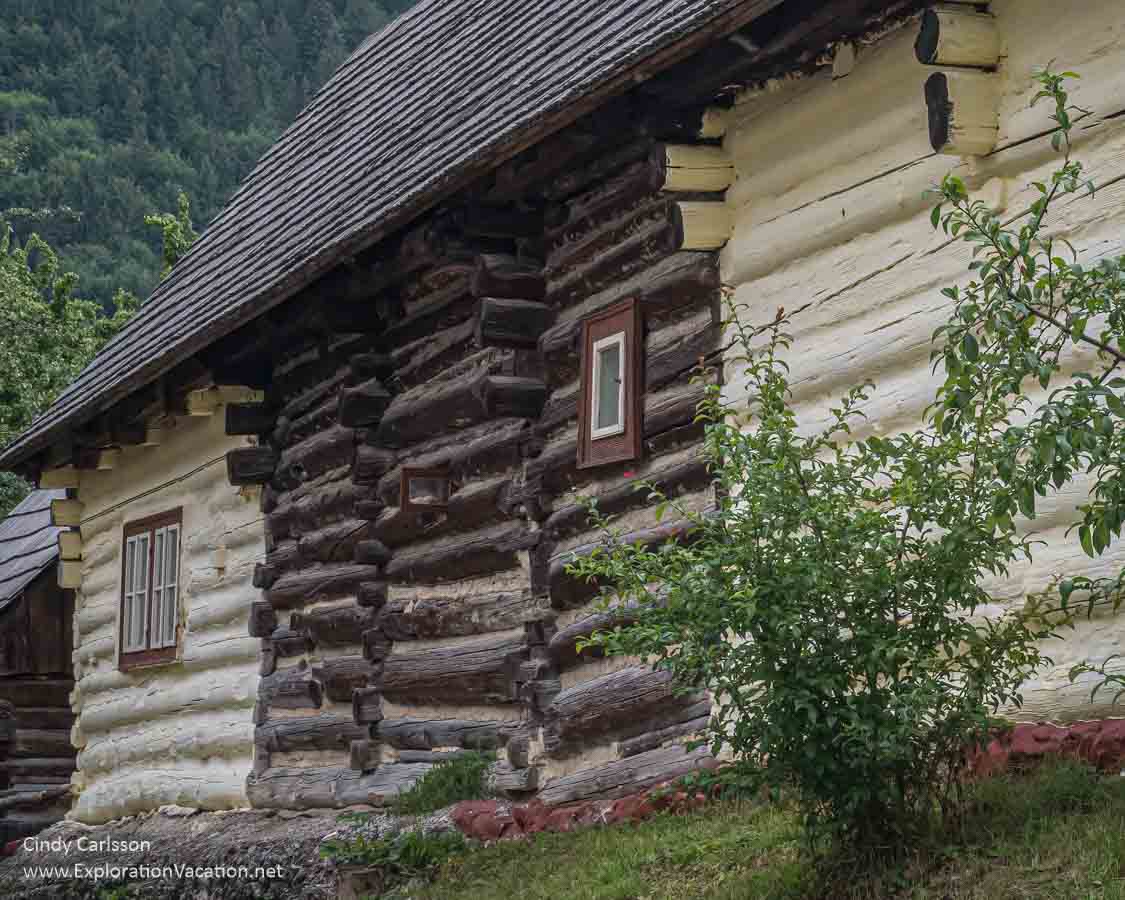
The traditional way to build houses and most other buildings in Vlkolínec is with logs stacked on a stone foundation. That foundation served a dual purpose: It kept the logs out of the soil so they wouldn’t rot as quickly and it let the builder level out the uneven and sometimes steeply sloping hillside. The logs, stripped of bark and sometimes squared off, were laid on top of each other on the foundation. They were fit together at intersecting walls to create a sturdy structure without any vertical supports.
👉 Read more about Vlkolinec's traditional construction techniques
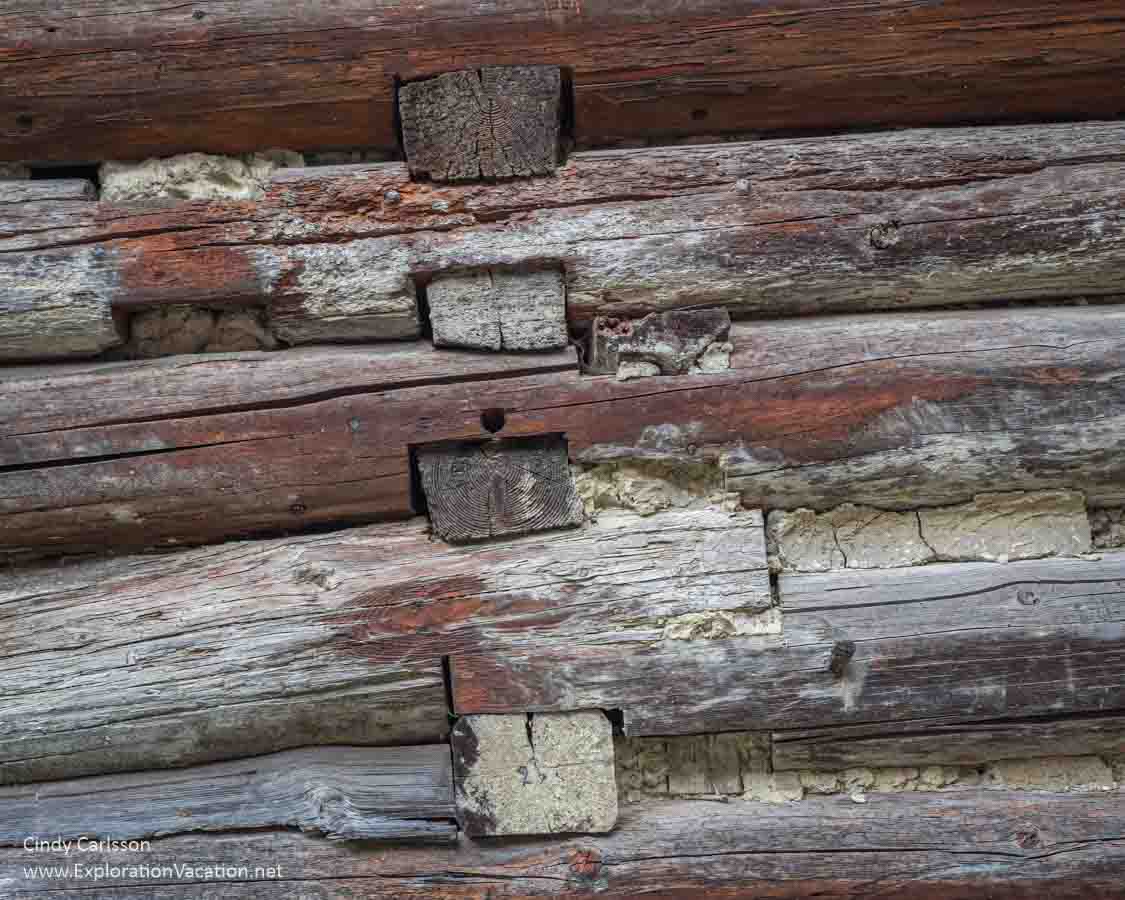
Traditionally, houses were “insulated” by layering moss between the logs as they were stacked. Then, after it was constructed, clay was packed into the gaps between the logs to even out the surface and further seal the house.
The smoothed clay was painted with a colored lime coating. This was re-applied twice a year to protect the logs. It was used inside the houses as well, but its use on the exterior is what makes the village so colorful!
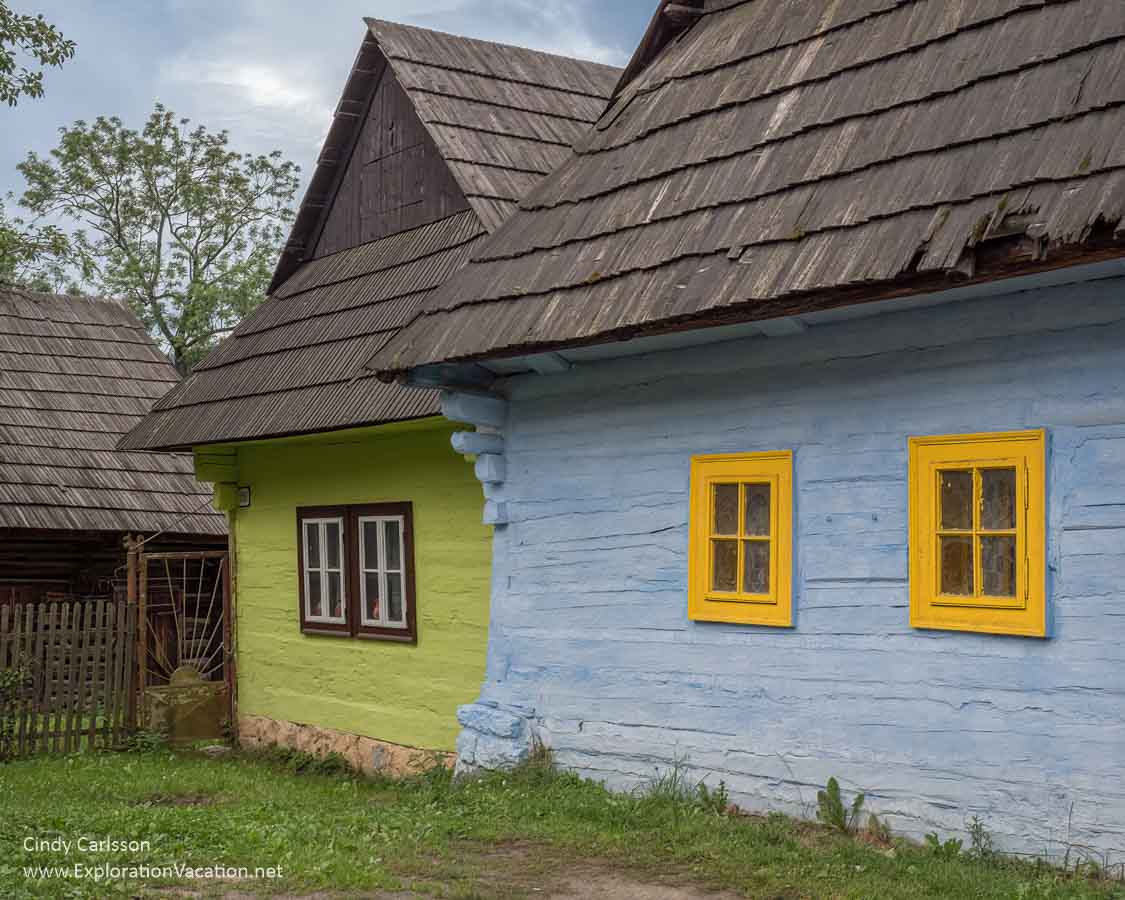
All the houses are topped with a similar style of split-wood shingled roof. An angled section (called a shield) runs across the lower part of the roof on each end. The fanciest ones are also finished with a half-circle and topped with a spindle or cross.
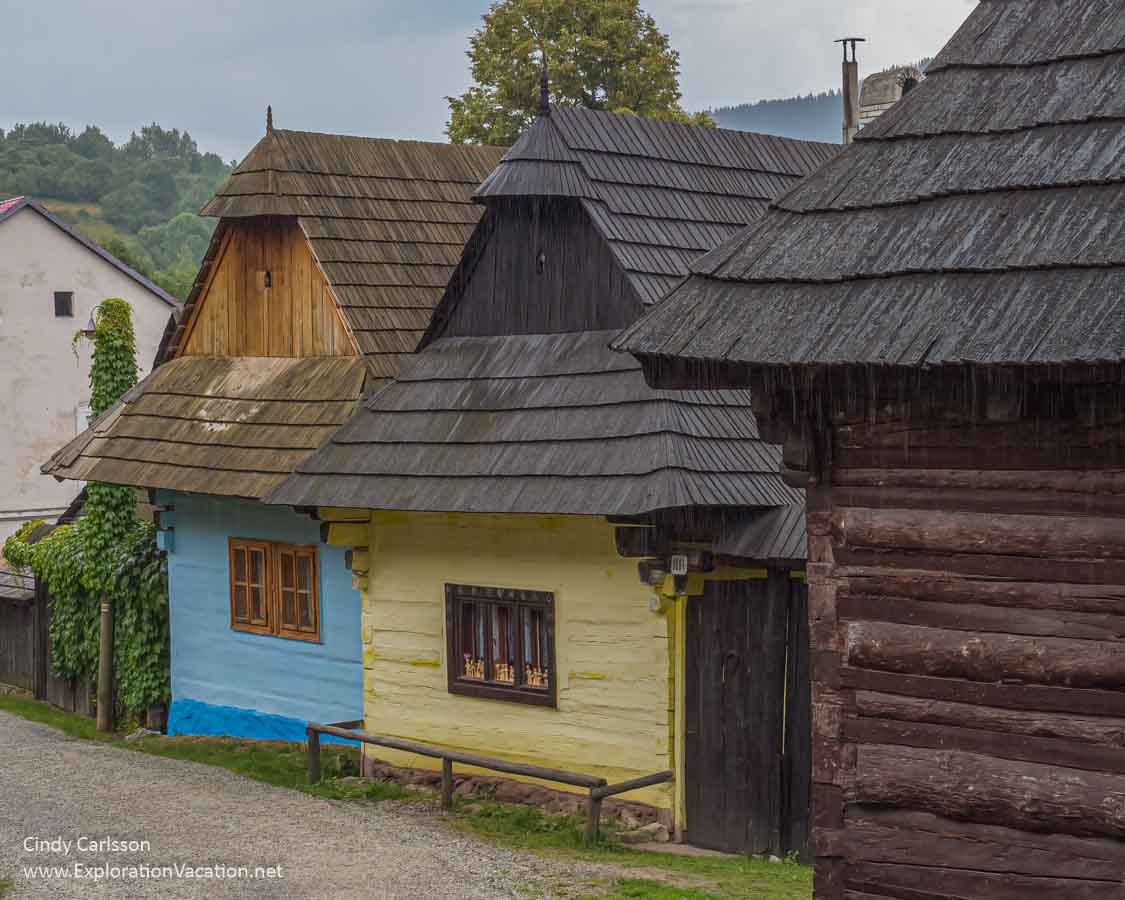
I suspect this roof design ensured that rain and snow quickly slid off the roof and away from the house. (Its usefulness for this was obvious when a rainstorm came through during our visit!)
Walking through the village, it’s easy to see that construction quality varied and some structures weren’t maintained as well as others. But it is encouraging to see that a new (or completely rebuilt) home is being constructed using traditional forms and materials.
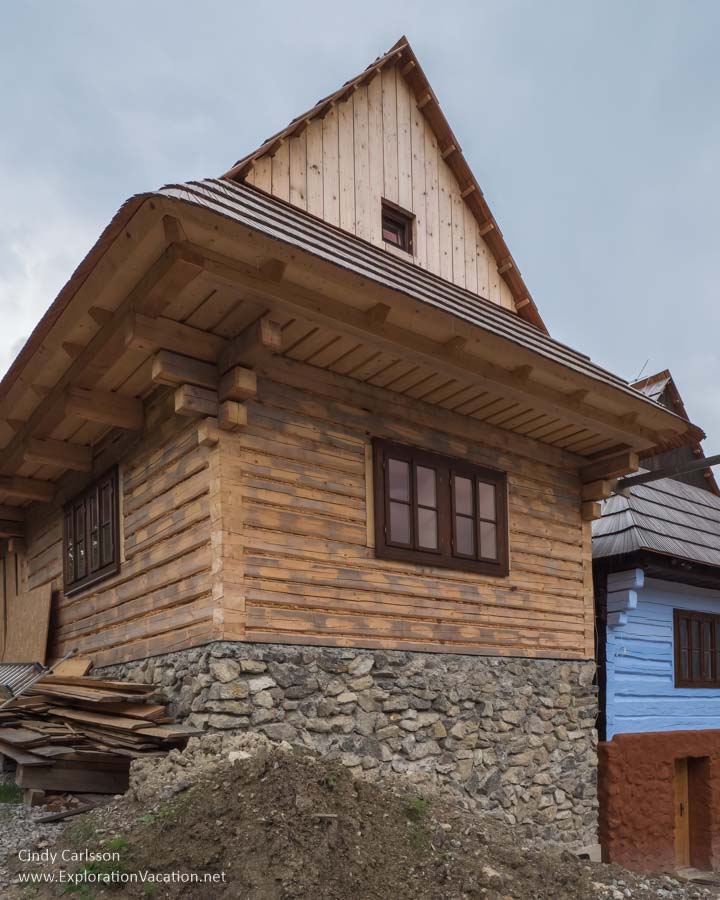
(New construction and changes to the exterior of buildings are tightly regulated, but this looks like new construction. Perhaps it replaces a home that was too damaged to salvage. Whatever the situation, it is built to look exactly like a traditional house and, once given its colorful lime coating, it should be indistinguishable from its older neighbors.)
👉 Read less
Plan your trip to Vlkolínec
Vlkolínec is in a beautiful area, but it isn’t near any major towns or popular international tourist sites.
That means visitors from outside the area might be surprised by how busy this site – and most other tourist sites in Slovakia – can be. The mountains of Slovakia are very popular with Slovakian visitors! On our visit on a summer weekend in 2018, every site we wanted to visit was mobbed. We couldn’t even find parking at most, so ended up skipping many of them.
Vlkolínec was the exception, in that the parking lot wasn’t very full. But most visitors arrive by bus or on foot as they hike through the national park. Once we got into the village, everyone walking around had plenty of room to spread out, but the craft demonstration areas, shops, and refreshment options were busy – and that was before a rainstorm sent everyone looking for shelter!
👉 Read more about planning your trip to the Vlkolinec World Heritage Site
When to visit Vlkolínec
As a real village, Vlkolínec is “open” year-round. That includes official exhibit and museum areas. However, the largest number of demonstrations, shopping and food options, and activities are available during summer. The village also holds several festivals during the summer.
But that doesn’t mean that it isn’t worth visiting the rest of the year. The village is picturesque in any season. There are also plenty of recreational opportunities in the area throughout the year. And the village looks like it is very pretty in the snow! But winters do get cold here, so bring plenty of warm clothes and winter boots.
Where is Vlkolínec
Vlkolínec is located within Veľká Fatra National Park in north-central Slovakia. It’s just south of where the borders of Slovakia, Czechia, and Poland meet.
The largest nearby city is Ružomberok. Technically, Vlkolínec is part of Ružomberok, although the two are over 4 miles apart.
Getting to Vlkolínec
With a drive time well under 3 hours, Vlkolínec is an easy drive from either Ostrava, Czechia, or Krakow, Poland. Plan a full 3 hours if you are coming from Bratislava. Because this mountainous area is beautiful and many of its tourist sites are in rural areas, this is a great place for a road trip. Take your time and explore this beautiful area.
If you don’t want to drive, buses connect Ostrava, Krakow, and Bratislava to Ružomberok. However, travel times can be significantly longer than driving yourself.
Train travel is only practical coming from Ostrava or Bratislava, as the train from Krakow requires a 3-hour detour through Ostrava.
If traveling by bus or train, you’ll need to get to Vlkolínec from the station in Ružomberok. In summer a regular public bus usually connects the two. If the bus isn’t running, you’ll need a bike or taxi to get out to the UNESCO site. Taxis are available at the station. Bike rentals are also available in town, but you should make those arrangements in advance.
(The road into the park is narrow and twisting, but it’s not very busy. It looks like a lovely place to bike.)
The Vlkolínec website has extremely detailed directions for getting to the site via auto, bus, bike, or foot.
Things to know once you reach Vlkolínec
Since Vlkolínec is a real village with permanent residents, it’s never closed. However, there is more for tourists to see and do during the summer.
But even then, tourist services in the village are limited. There are a few exhibits, a souvenir shop and a few places to buy local products, a spot to get a bite to eat, and restrooms. Bring snacks and water, and anything else you think you will need.
And keep in mind that most houses are privately owned. Don’t open gates or wander into yards uninvited. Respect the privacy of those living or vacationing here – this is their home.
Exhibit hours
The Farmer’s House and Yard exhibit, Information Office, and official souvenir shop, as well as the UNESCO House, are usually closed on Mondays.
Winter hours are 10-3 weekdays and 10-4 on weekends.
Currently only vaccinated visitors are allowed in exhibit areas, shops, etc.
Check the Vlkolínec website for current hours.
Parking
Visitors are not allowed to bring vehicles into the village.
Private cars and the public bus stop just outside the village. Tour buses and hikers park in a different area and follow a half-mile trail with informational signage to get to the village. It’s also possible to arrange separate transportation from that parking area to the other parking area if walking is a concern.
Fees
As of 2024, it cost 5€ to park.
There’s a small entrance fee (8€ in 2024) that allows you to enter the exhibition areas. Back when I visited it was cash only and you needed small bills.
Hiring a guide will cost up to 20 € if you don’t speak Slovak.
You can find the latest fees on the Vlkolínec website.
👉 Read less
For more information
For more information on the history of Vlkolínec and what you will find there, check both the Vlkolínec village website and the UNESCO website.
Lodging in or near Vlkolínec
One of UNESCO’s ongoing concerns is the degree to which Vlkolínec is changing from a village with permanent residents to a holiday destination where homes are owned by people from other places and used only as vacation cottages.
Having said that, this would be a fun place to spend a few days. And a few houses are available as vacation rentals. (None seem to be listed on third-party lodging sites and most are quickly snapped up by vacationing Slovakians, but there are a few out there if you look long enough.)
Otherwise, Ružomberok town or the Donovaly ski area are the best-bets for something close to Vlkolínec. On the other hand, the widest variety of lodging options are to the east of Ružomberok where there are a lot of resorts and the city of Liptovský Mikuláš. This area is about a half-hour drive that includes a segment of toll road.
When searching booking sites, check the exact location on a map, as “Ružomberok” can include a very large area.
Trip Advisor lists a fair number of properties in the general area if you zoom in on the map view. Expedia will open a map that shows you hotels in relation to the UNESCO site (give it a moment to load the map). Booking.com seems to have the longest list of options in and around Ružomberok as of 2024..
VRBO has a few listings in the area, but their search sometimes defaults to Krakow, so keep an eye on the map. Airbnb also has listings in the area.
We stayed a little further away in Banská Bystrica, which is a very attractive town. We stayed at the Urpin City Residence, which was pretty basic, but nice enough, inexpensive, comfortable, and an easy walk to some lovely areas and an easy drive to the Vlkolínec World Heritage Site. I wish we had been able to spend another day here.