Last updated on June 12th, 2026
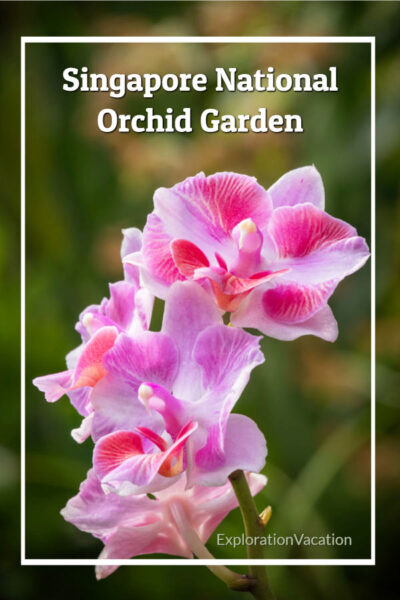
The stunningly gorgeous National Orchid Garden is part of the Singapore Botanic Gardens UNESCO World Heritage site. It is home to over 60,000 orchid plants and has one of the world’s largest tropical orchid displays.
I love orchids. That means I was thrilled that my packaged tour to Bali and Singapore included a visit to the National Orchid Garden. Of course, I would have been even happier if I’d had a lot more time in the gardens!
I use links to improve your experience using this website. Some may be affiliate links that pay me a small commission if you use them to book a room, rent a car, or purchase goods or services. You don’t pay extra, but it helps keep this website running. To learn more, see my policies and disclosures.
What is Singapore’s National Orchid Garden?
Founded in 1859, the Singapore Botanic Gardens is a sprawling UNESCO World Heritage site. Orchids are an important part of the Botanic Gardens, as they have been since the since the beginning.
The first building designed specifically to house the garden’s orchid collection was constructed in 1899. Over time that orchid house became the National Orchid Garden, with 3½ landscaped acres, state-of-the-art greenhouses, and 60,000 orchid plants.
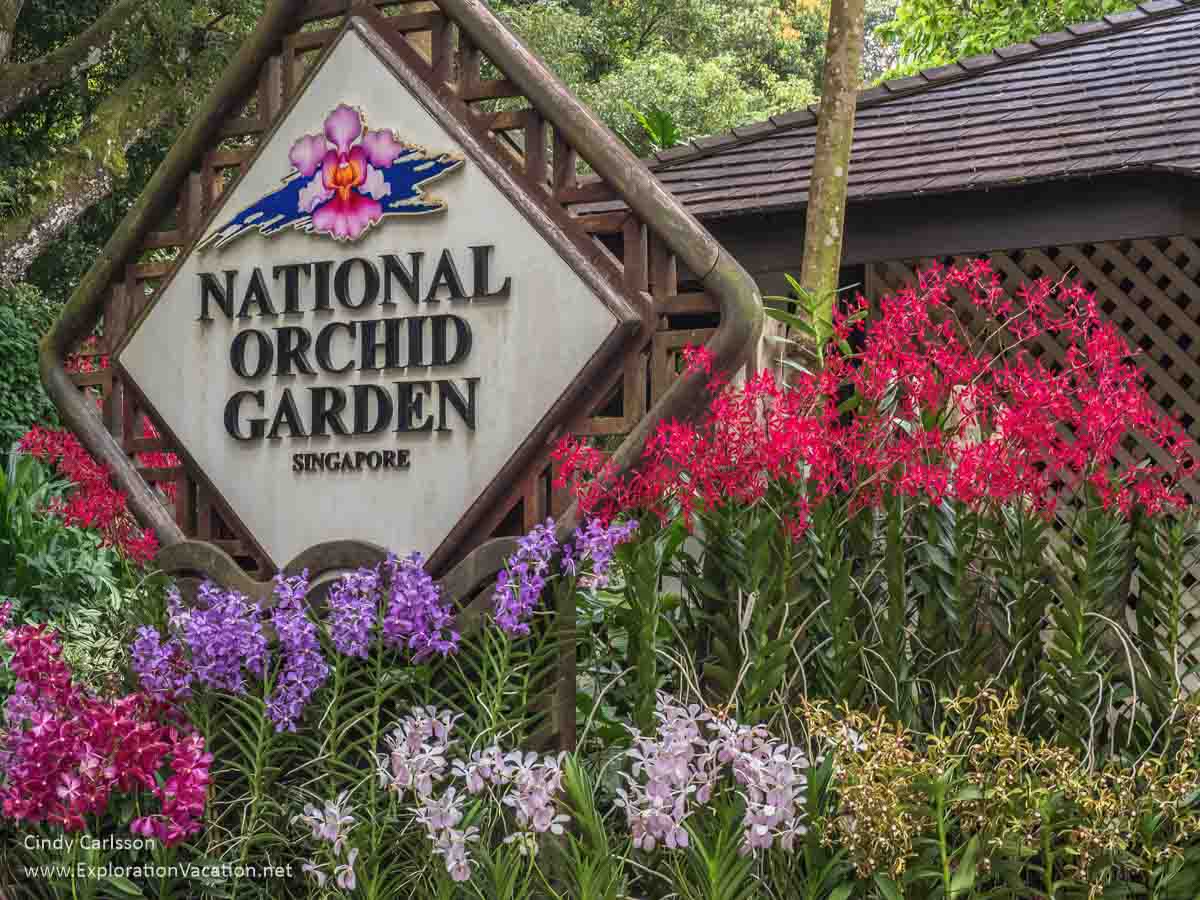
The National Orchid Garden wasn’t established as a separate entity within the Singapore Botanic Gardens until 1995. But this was already a large and important operation by that time, so there was a lot to see on my 2018 visit. And now there is even more to see, as new gardens and dramatically expanded greenhouses opened to the public in 2021.
Orchid breeding and research
The Botanic Gardens began their orchid breeding program in the 1920s. They registered Spathoglottis Primrose as their first hybrid in 1932. Since that time, the program has registered more than 600 hybrids. These new orchids are named for political figures and other celebrity visitors from around the world, ranging from Sealara Nelson Mandela and Vanda William Catherine (for the current Duke and Duchess of Cambridge) to Dendrobium Jackie Chan and Renachilus Ricky Martin.
Today the orchid breeding program is part of a large, high-tech scientific research and plant propagation operation. Visitors can even take a look inside the Micropropagation Lab (located at a nearby location within the Singapore Botanical Gardens) to see how orchids get started in this high-tech facility.
The National Orchid Garden is also working to save Singapore’s remaining native orchids (most of which are critically endangered) and reintroduce some of the country’s 152 extinct species. While research and cultivation occur at the Botanic Gardens, these plants may end up growing in places all around Singapore.
Wandering Singapore’s most beautiful orchid gardens
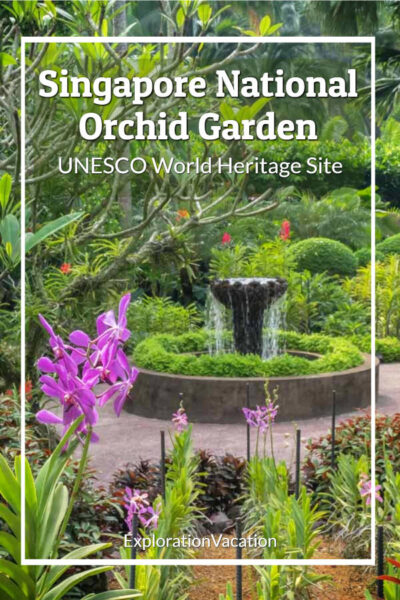
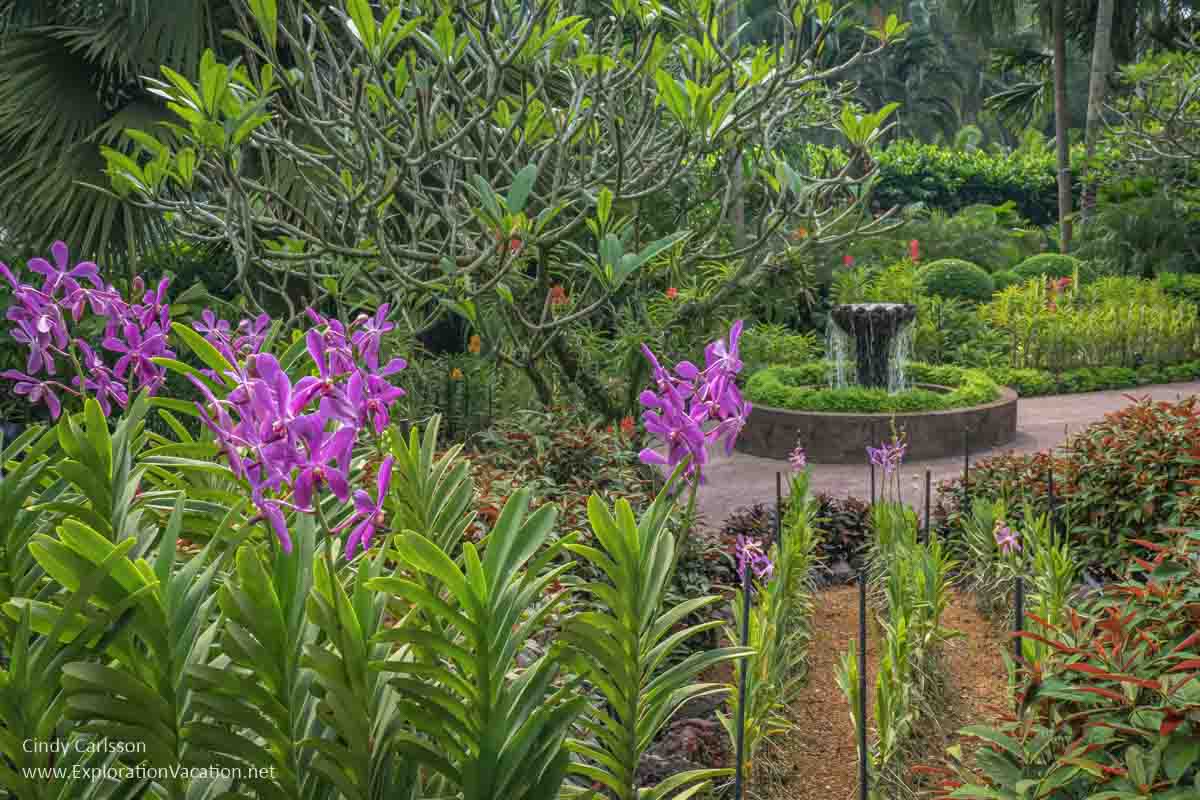
I spent my time at the National Orchid Garden wandering through the outdoor orchid gardens, beginning at the Crane Fountain.
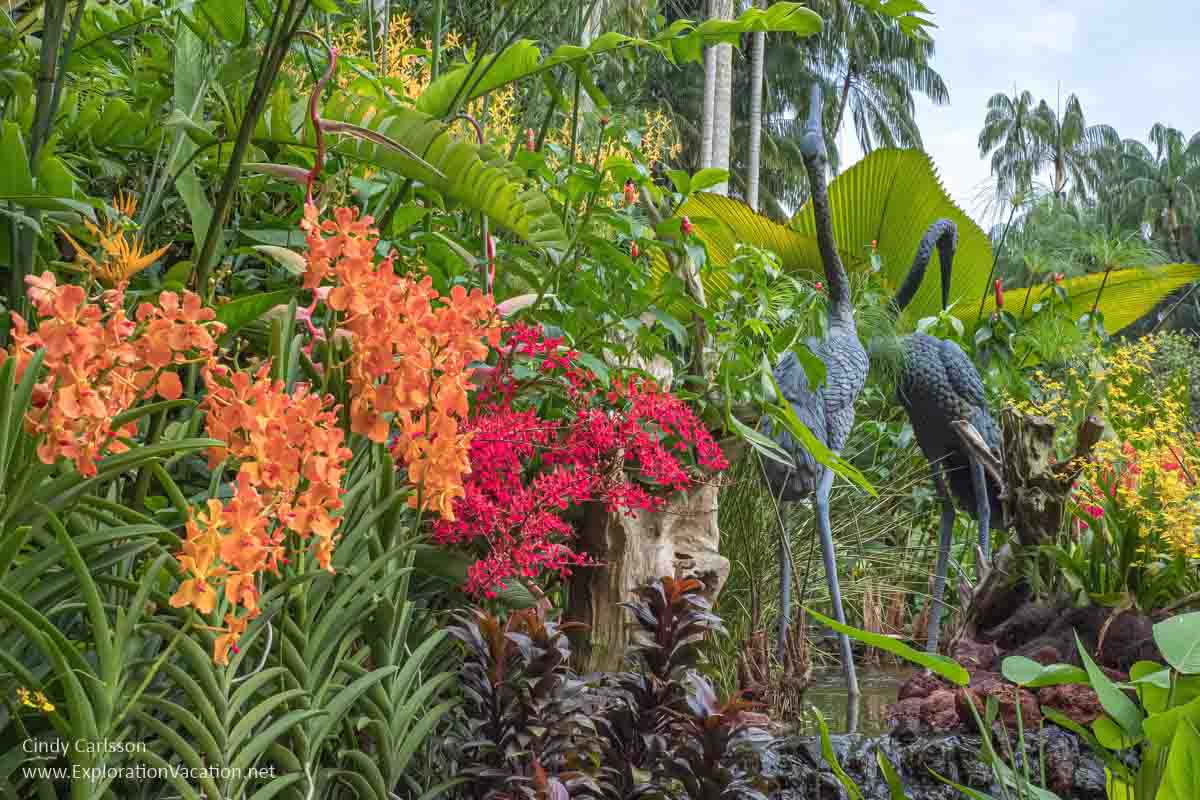
The Orchid Garden has winding paths lined with orchids and other tropical plants on both sides and, sometimes, overhead!
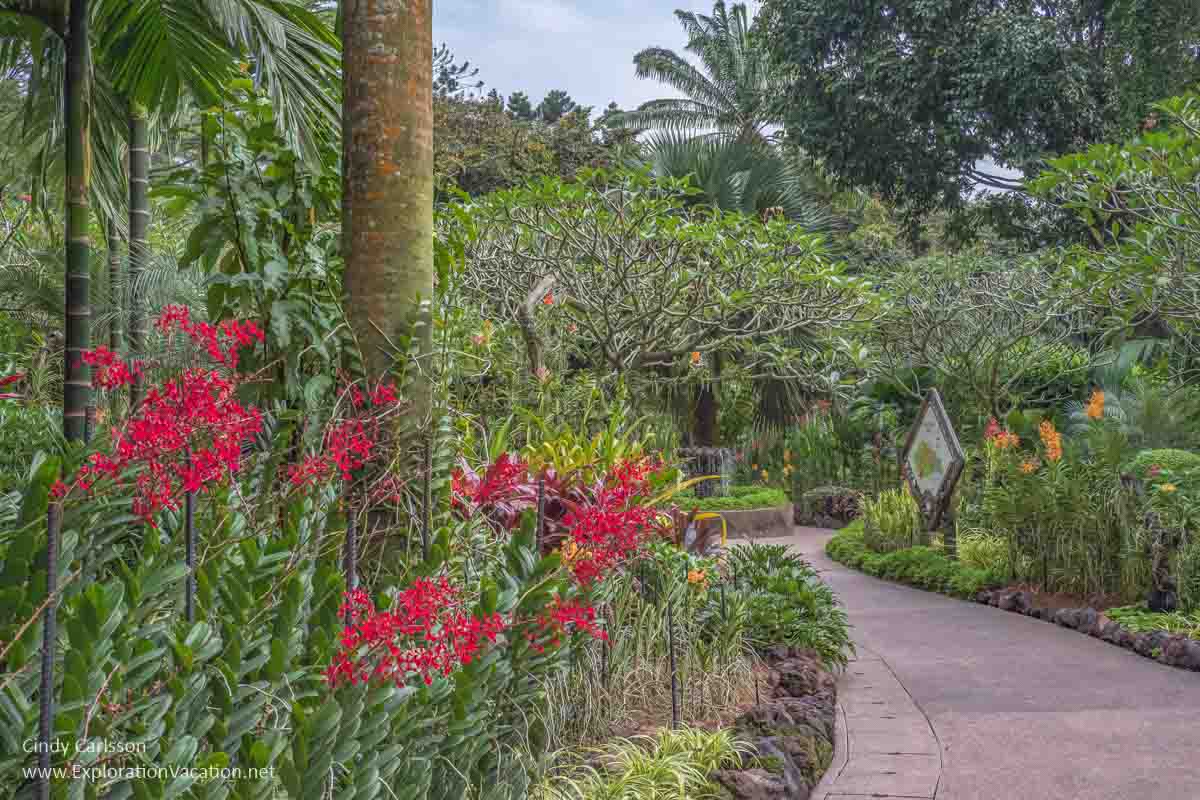

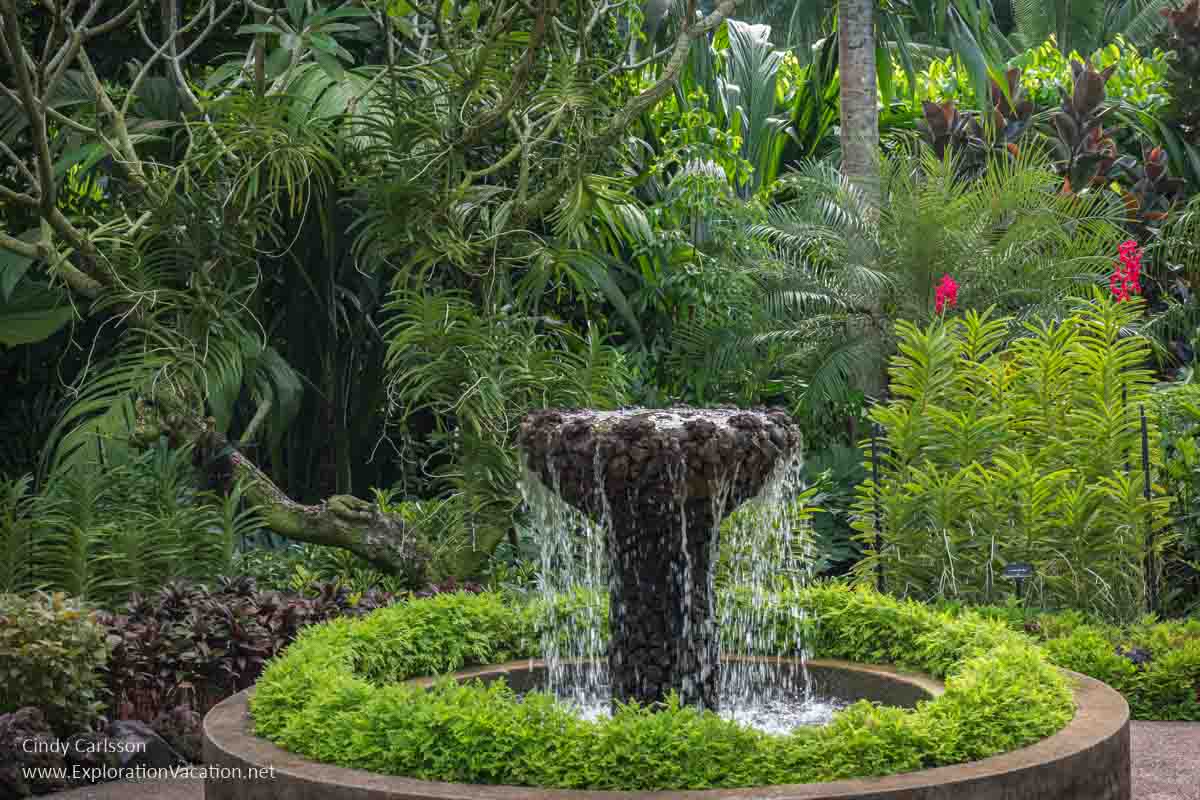
These paths connect outdoor “rooms” centered around a waterfall, fountain, sculpture, or other structure.

The orchid garden is arranged by colors that correspond to the four seasons. The spring section features yellows, golds, and creams; summer has lots of bright reds and pinks; fall has “matured shades” (I think they mean muted colors); and winter has whites and violets.
I did notice the color change, but didn’t really get that it was supposed to represent the changing seasons until I got all the way to winter. There drifts of almost blindingly white orchids clearly said “snow!” But even before that, I did appreciate the pleasing – and sometimes very dramatic — color palettes.
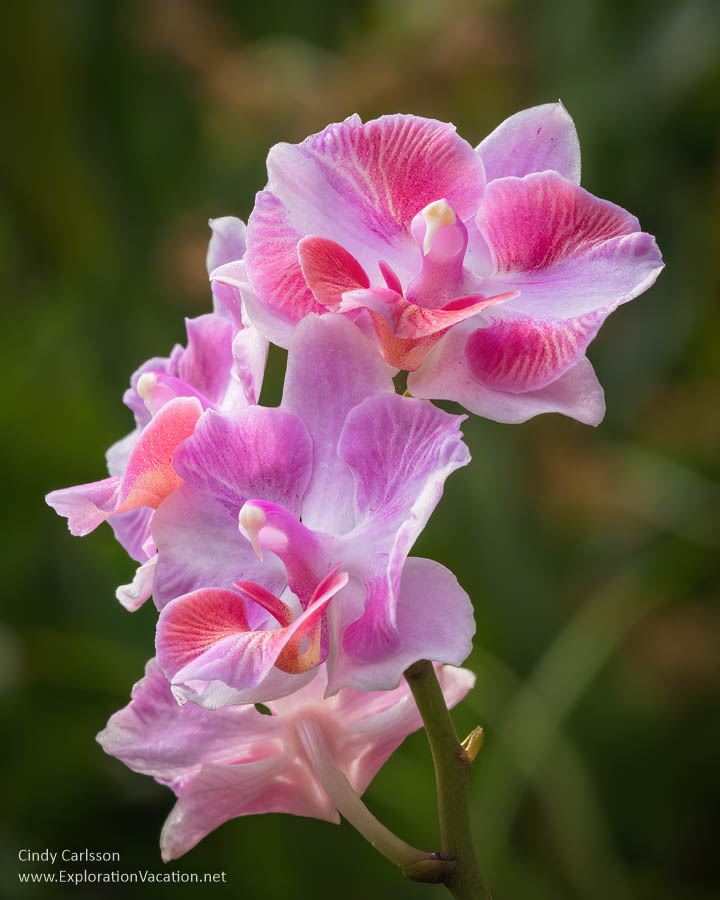
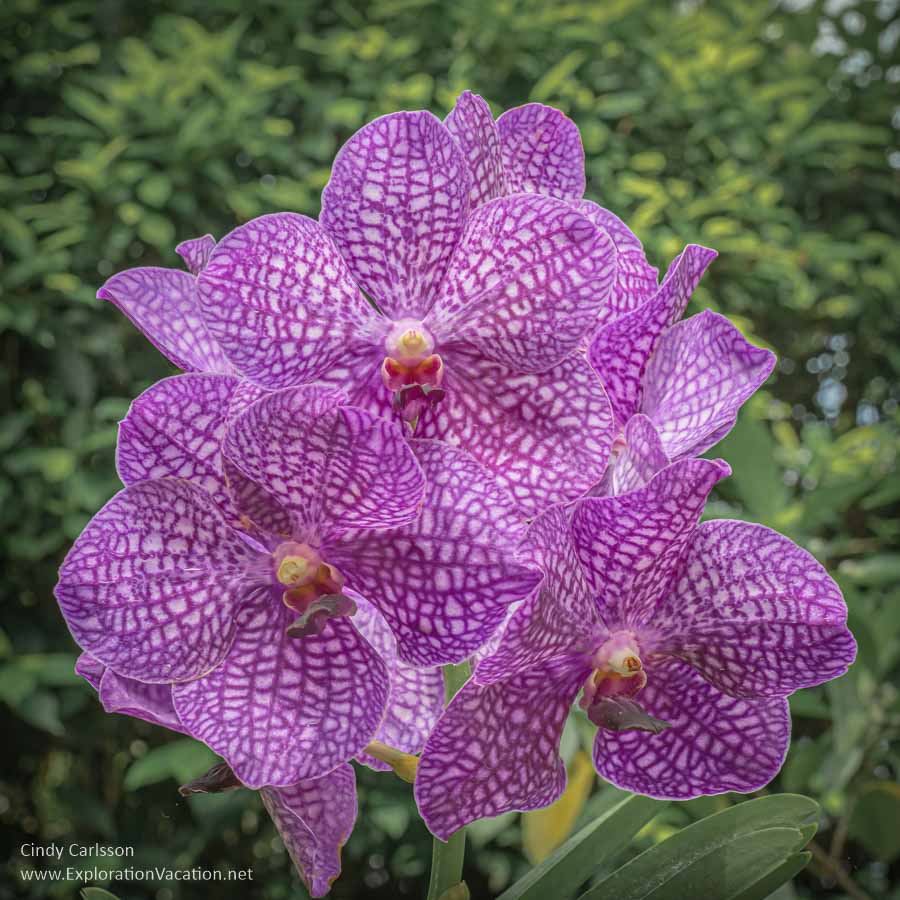
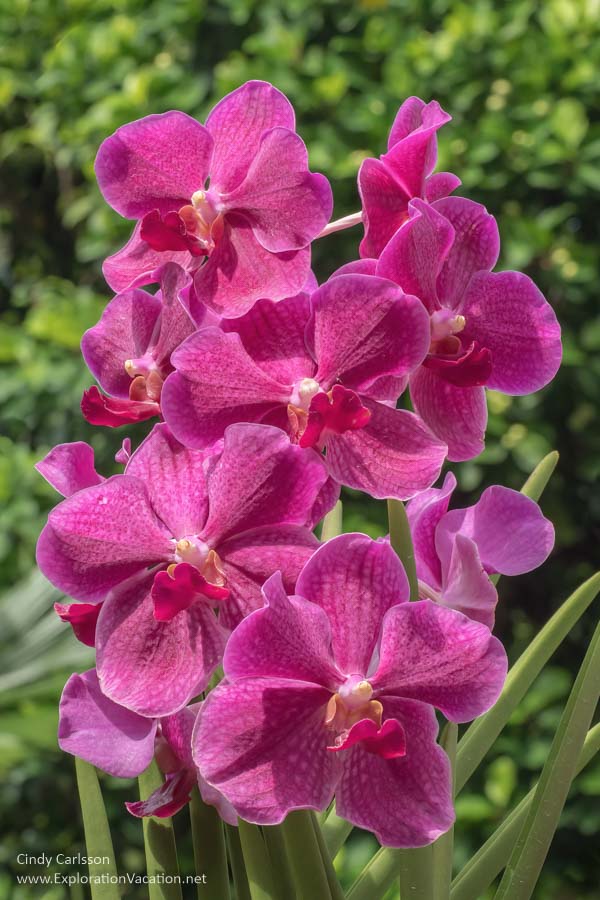

Because this was a group tour where we were getting an introduction to everything in Singapore in one morning, we had less than 2 hours to explore the garden. During that time, I walked almost all of the paths in the Orchid Garden. However, I didn’t visit any of the greenhouses – a few of which didn’t seem to be fully open anyway because of the major renovation and expansion that opened last year was already underway. But I easily could have spent the whole morning right in the National Orchid Garden and adjoining Ginger Garden.
New features at the National Orchid Garden since 2018
I visited the National Orchid Garden late in 2018. I’d love to return, as the greatly expanded mist and cool houses are now incorporated into a mix of landscapes that take visitors through a wide variety of tropical orchid habitats. It looks absolutely amazing.
You can see a video of this reimagined part of the garden here.
Plan your visit to the National Orchid Garden
I visited the National Orchid Garden as part of a larger package tour. This is NOT the way to visit. We had about two hours to see the orchid garden and/or any other area of the Singapore Botanic Gardens we wanted to visit. That wasn’t enough time for someone who loves gardens to see everything in the National Orchid Garden, let alone the rest of this UNESCO World Heritage site!
Even if you aren’t an orchid or other garden fanatic, plan at least a half-day in the gardens. It really is spectacular, and you’ll find plenty of spots to relax or enjoy a meal. However, if you really love plants, gardens, or just wandering through a beautiful landscape, plan a full day to visit the Orchid Garden as well as other gardens and exhibitions in the Singapore Botanic Gardens.
👉 Read more about visiting the National Orchid Garden in Singapore
How to get to the garden
The National Orchid Garden is located near the middle of the Singapore Botanic Gardens. The nearest access is the Tyersall Gate. Both a taxi drop-off area and car parking are available nearby.
The Tyersall entrance is not served by transit. The National Orchid Garden is about a 25-minute walk from either the Botanic Gardens Train Station or the bus stop at the Bukit Timah Gate. It’s a slightly shorter walk from the Tanglin Gate bus stop. Bicycle parking is available at all entrances.
You can see detailed directions for getting to each of the main entrances by transit or private vehicle on the garden’s Visit Us page.
You can see a map of the National Orchid Garden (pdf) here.
Or take a look at a map of the entire Singapore Botanic Gardens.
Once you are in the Singapore Botanic Gardens
Most outdoor areas at the Singapore Botanic Garden are free and open daily from 5 am until midnight.
However, the National Orchid Garden has both shorter hours and charges an admission fee. (Currently $15 for foreign adult visitors and $3 for seniors and students.) This is the only part of the Singapore Botanic Gardens that charges a fee.
Most galleries, museums, other exhibit areas, and some gardens also have shorter hours or close one or more day each month. Be sure to check the schedule before you visit if there is something you are particularly keen to see.
And leave your dog at home. Dogs are prohibited almost everywhere in the Botanic Gardens.
👉 Read less
Other things to do at the Singapore Botanic Gardens
The Singapore Botanic Gardens is a UNESCO World Heritage Site with more than 200 acres that includes gardens of all types, native forests and arboretums, active recreation and play areas, greenhouses, art galleries, science exhibits, museums, a bandstand, and more. A variety of restaurants, from multi-course fine dining to refreshment stands, are available throughout the Botanic Gardens. You’ll also find a number of historic buildings and lots of sculpture.
You can learn more about all your options on the Singapore Botanic Gardens website, but here’s a quick look at what is available.
👉 Read more about things to do at the National Orchid Garden
Tyersall Entrance
Besides the National Orchid Garden, the Tyersall Entrance is where you’ll find the Ginger Garden, the Learning Forest and Walk of Giants elevated boardwalk, and a restored wetland with native orchids.
The Halia Restaurant (TripAdvisor) and Provisions carryout are also in this area.
The Tanglin Entrance
The Tanglin Entrance is actually the main entrance to the Singapore Botanical Gardens. It’s also the oldest part of the garden. As such, some of the park’s oldest and most traditional gardens, the heritage museum, and many of the historic buildings are located here. But you’ll also find a small Bonsai Garden and a desert garden.
The Botany Center with its Orchid Breeding and Micropropagation Laboratory is also located here. If you want to see how orchids are propagated and grown in a state-of-the-art facility, this is the place to go!
Food is available at the Fusion Spoon Café (TripAdvisor) right inside the garden entrance.
The Gallop Entrance
The Gallop Extension is a newly developed area near the Orchid Garden. The Botanical Art Gallery is located here, along with forest-themed exhibits, a children’s play area, and hiking trails.
The Bee’s Knees Petite Café (TripAdvisor) is located at the far end of the Gallop Extension near the Adventure Grove.
The Nassim Entrance
Beyond the Nassim Entrance visitors will find a rare remnant of Singapore’s native rain forest, a palm collection that includes more than 220 species, a healing garden, a fragrant garden (best in the evening), and a garden that shows how plants evolved over time.
A historic house in this part of the garden houses the Michelin-starred Corner House restaurant (TripAdvisor). For a less formal dining experience, try the Cluny Food Court in the historic Raffles Building. Both are near the healing garden.
The Bukit Timah Entrance
Visitors to the Bukit Timah portion of the Singapore Botanical Gardens will find a mix of gardens and exhibits featuring plants used by humans. Some of these have economic value in the contemporary world, while others are important to various traditional cultures found in the Malay Archipelago, Indochina, and South Asia. And, if you want a splash of bright color, the bougainvillea collection is also located here.
This area also has a Children’s Garden and the Botanic Gardens’ Seed Bank.
Refreshments are available near the Children’s Garden.
Near the Cluny Park Gate and Foliage Garden, the historic garage houses the Bee’s Knees Café and Botanico Restaurant. (TripAdvisor links)
👉 Read less
Want to know more?
Find out everything you need to know to plan your visit on the Singapore Botanic Gardens website.
Want to know more about the history of the Singapore Botanic Gardens and the National Orchid Garden? A Walk Through History – A Guide to the Singapore Botanic Gardens takes readers from the gardens’ colonial beginnings to its designation as a UNESCO World Heritage Site in 2015. It seems to still be available, so check at the Gardens Shop when you visit or check online.
Other gardens in Singapore
Singapore’s hot, humid climate is ideal for lush tropical gardens. But giant state-of-the-art temperature-controlled greenhouses (to keep things cool) are also found in parks and shopping malls alike. They are a great way to enjoy lush greenery in comfort! So here are few more gardens and greenhouses to visit while in Singapore.
Gardens by the Bay
Despite its UNESCO World Heritage status, I suspect the Singapore Botanical Garden is NOT the most famous garden in Singapore. Instead, that title likely goes to the amazing Gardens by the Bay complex.
Best known for its grove of super trees (metal structures up to 16 stories high with plants growing around and on them), Gardens by the Bay also has two impressive conservatories.

👉 Read more about Gardens by the Bay
Of the two, the Cloud Forest Conservatory is the most dramatic and my favorite. It’s both a technical marvel and a wonderful horticultural escape.
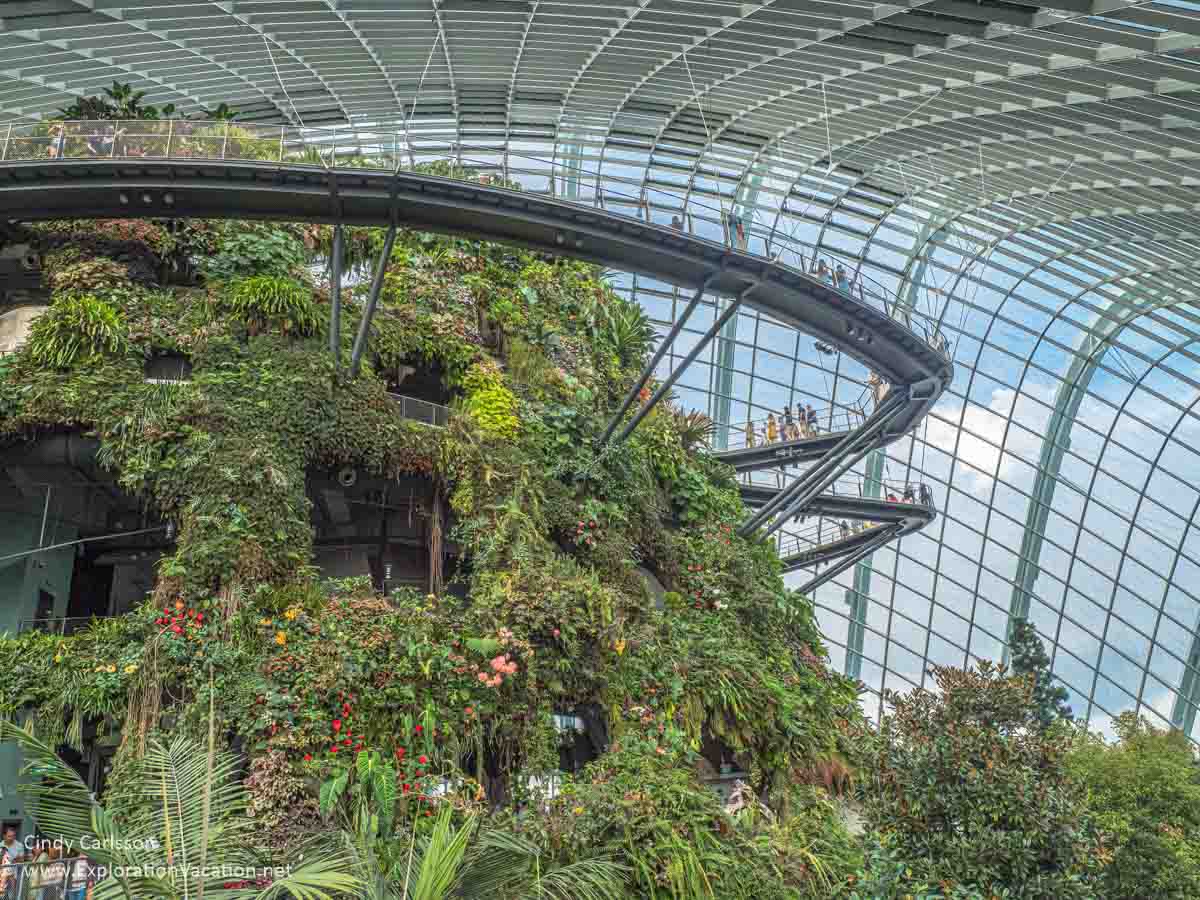
It’s best known for its 10-story mountain, aerial walkways, and waterfall; but there are lots and lots of orchids and other interesting plants on display. All of which usually grow only in mountain cloud forests.
I was less impressed with the Flower Dome, although I loved the desert plant display around the lower edges.
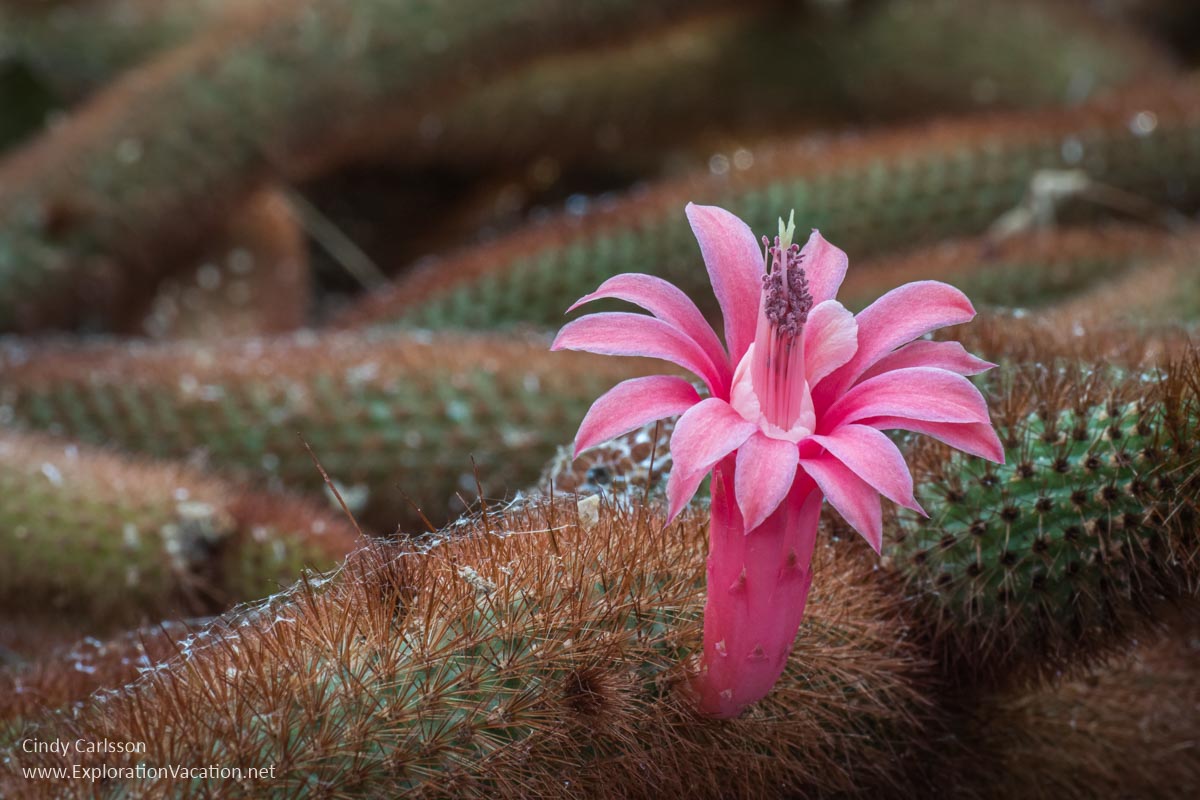
The central part of the Flower Dome changes seasonally and is largely an enormous vegetative background for fun and colorful family pictures and selfies.
These and the other gardens in Singapore’s Gardens by the Bay development are home to more than a million plants representing 19,000 species. There really is a lot of horticulture happening in this high-tech and highly Instagramable area.
An admission fee is required to enter either of the conservatories or go up in the supergrove skywalk.
👉 Read less
Sang Nila Utama Garden
Fort Canning Park includes nine historical gardens, including Sang Nila Utama Balinese Garden. It looks absolutely gorgeous, if not very large.
Jurong Lake Gardens
Jurong Lake Gardens are mostly restored natural areas with lots of great walking trails and a few basic gardens. The exception is on the islands, where what looks to be very elaborate Japanese and Chinese gardens are located. But, when I visited, both of these were closed for renovation.
See photos from the National Orchid Garden at CindyCarlsson.com